Hi, what do you want to do?





Smithsonian Institution
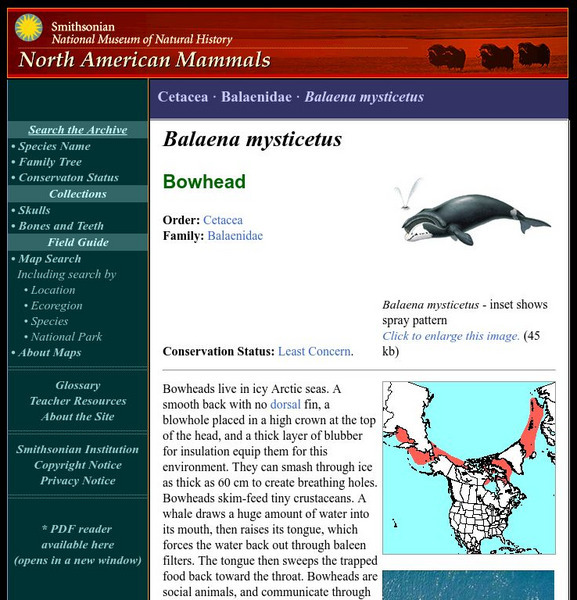
National Museum of Natural History: American Mammals: Bowhead Whale
Bowheads live in icy Arctic seas. A smooth back with no dorsal fin, a blowhole placed in a high crown at the top of the head, and a thick layer of blubber for insulation equip them for this environment. Learn more about the Balaena...
Smithsonian Institution
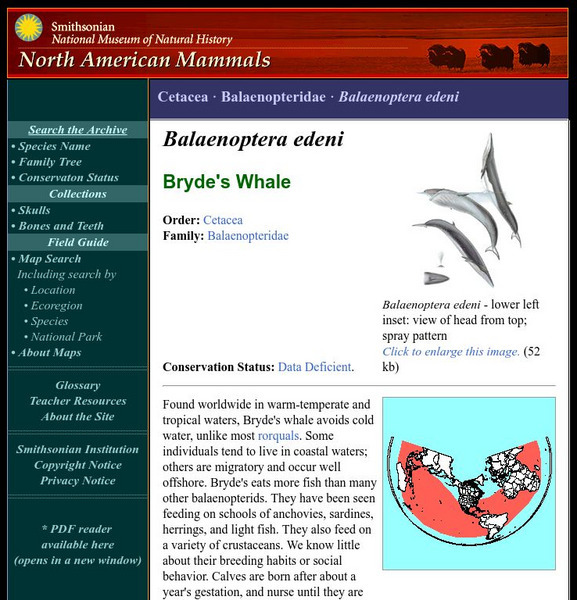
National Museum of Natural History: American Mammals: Bryde's Whale
Found worldwide in warm-temperate and tropical waters, Bryde's whale avoids cold water, unlike most rorquals. Some individuals tend to live in coastal waters; others are migratory and occur well offshore. Learn more about the...
Smithsonian Institution
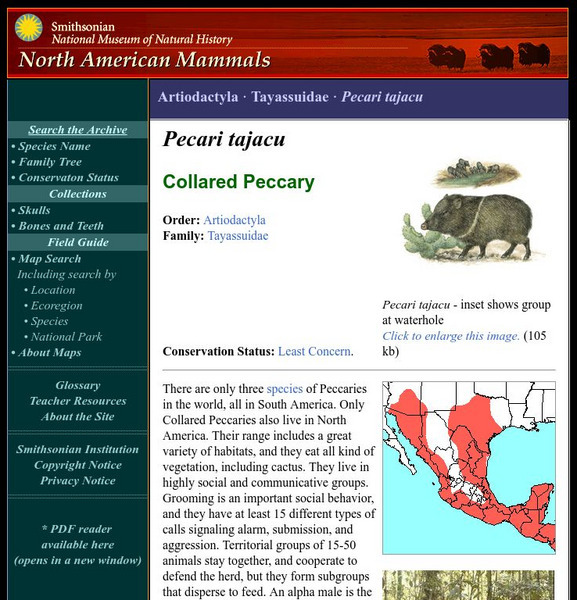
National Museum of Natural History: American Mammals: Collared Peccary
There are only three species of Peccaries in the world, all in South America. Only Collared Peccaries also live in North America. Learn more about the Pecari tajacu, more commonly known as a Collared Peccary, in this easy-to-read species...
Smithsonian Institution
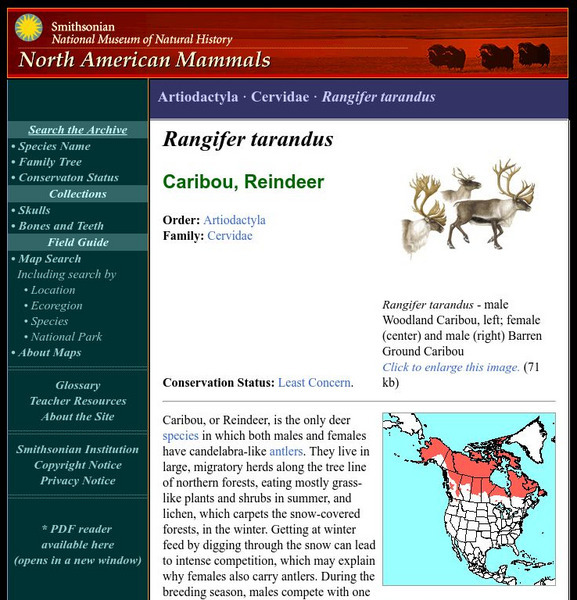
National Museum of Natural History: American Mammals: Caribou
Caribou, or Reindeer, is the only deer species in which both males and females have candelabra-like antlers. They live in large, migratory herds along the tree line of northern forests, eating mostly grass-like plants and shrubs in...
Smithsonian Institution
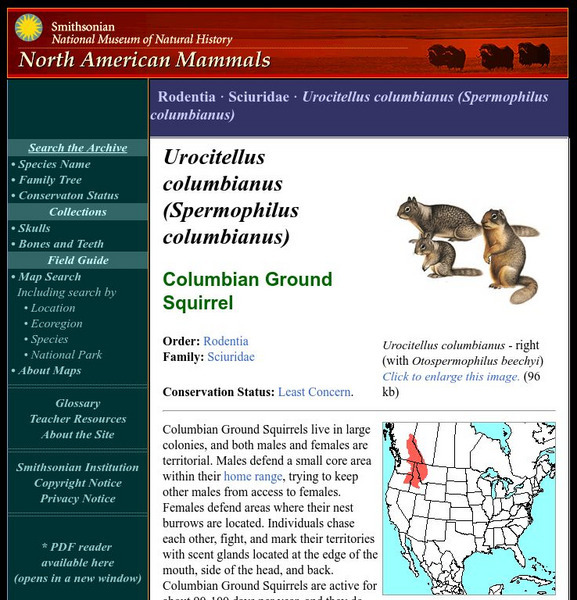
National Museum of Natural History: American Mammals: Columbian Ground Squirrel
Columbian Ground Squirrels live in large colonies, and both males and females are territorial. Males defend a small core area within their home range, trying to keep other males from access to females. Learn more about the Spermophilus...
Smithsonian Institution
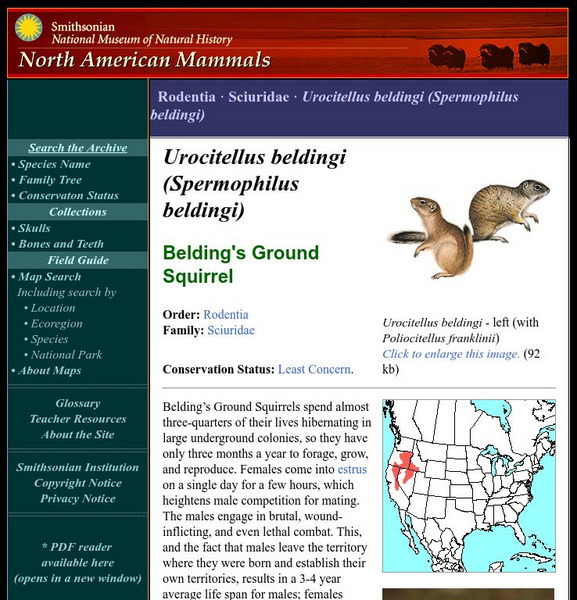
National Museum of Natural History: American Mammals: Belding's Ground Squirrel
Belding's Ground Squirrels spend almost three-quarters of their lives hibernating in large underground colonies, so they have only three months a year to forage, grow, and reproduce. Females come into estrus on a single day for a few...
Smithsonian Institution
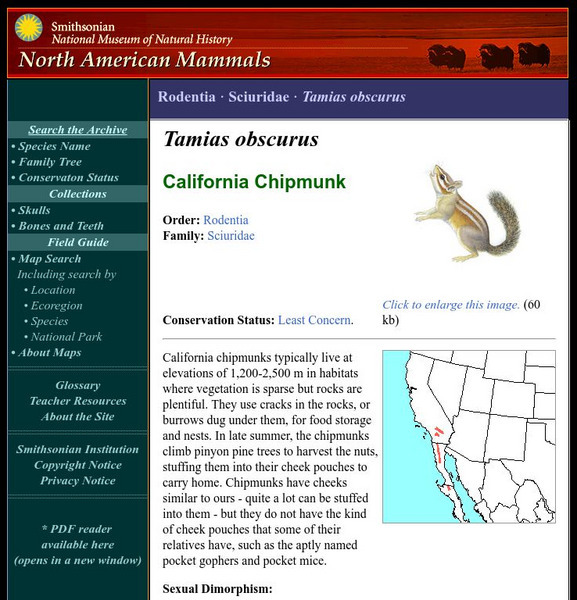
National Museum of Natural History: American Mammals: California Chipmunk
California chipmunks typically live at elevations of 1,200-2,500 m in habitats where vegetation is sparse but rocks are plentiful. They use cracks in the rocks, or burrows dug under them, for food storage and nests. Learn more about the...
Smithsonian Institution
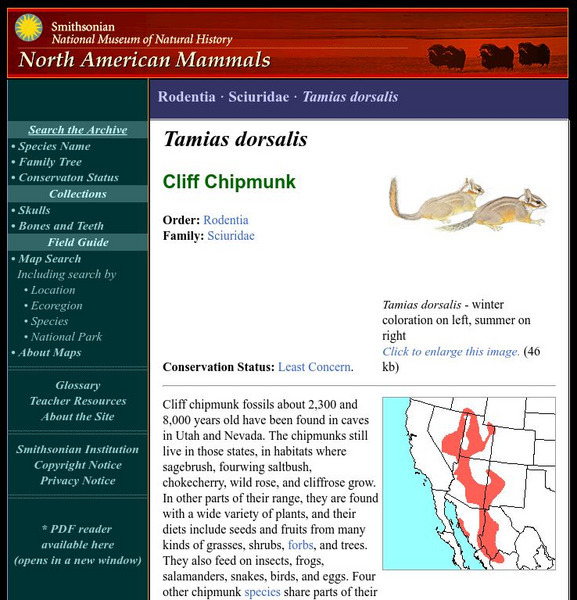
National Museum of Natural History: American Mammals: Cliff Chipmunk
Cliff chipmunk fossils about 2,300 and 8,000 years old have been found in caves in Utah and Nevada. The chipmunks still live in those states, in habitats where sagebrush, fourwing saltbush, chokecherry, wild rose, and cliffrose grow....
Smithsonian Institution
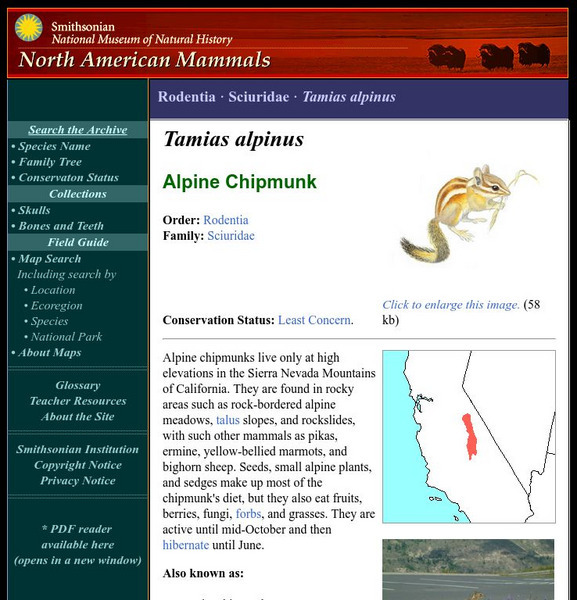
National Museum of Natural History: American Mammals: Alpine Chipmunk
Alpine chipmunks live only at high elevations in the Sierra Nevada Mountains of California. They are found in rocky areas such as rock-bordered alpine meadows, talus slopes, and rockslides, with such other mammals as pikas, ermine,...
Smithsonian Institution
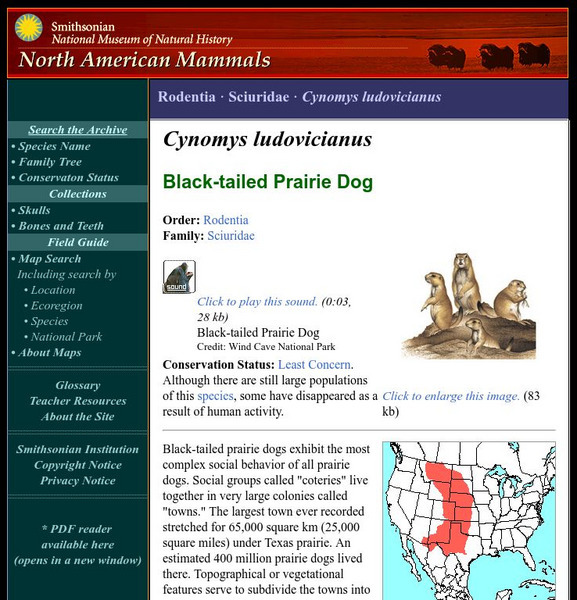
National Museum of Natural History: American Mammals: Black Tailed Prairie Dog
Black-tailed prairie dogs exhibit the most complex social behavior of all prairie dogs. Social groups called "coteries" live together in very large colonies called "towns. Learn more about the Cynomys ludovicianus, more commonly known as...
Smithsonian Institution
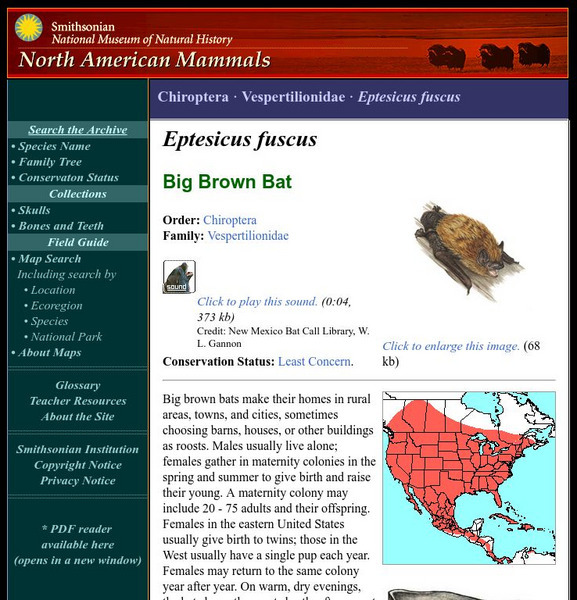
National Museum of Natural History: American Mammals: Big Brown Bat
Big brown bats make their homes in rural areas, towns, and cities, sometimes choosing barns, houses, or other buildings as roosts. Males usually live alone; females gather in maternity colonies in the spring and summer to give birth and...
Smithsonian Institution
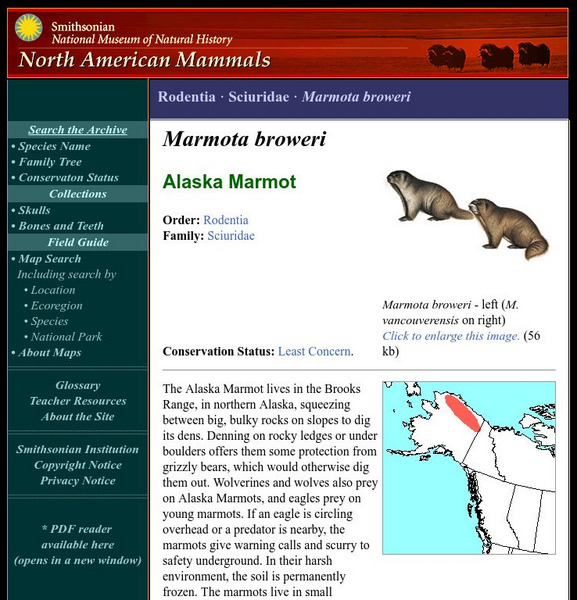
National Museum of Natural History: American Mammals: Alaska Marmot
The Alaska Marmot lives in the Brooks Range, in northern Alaska, squeezing between big, bulky rocks on slopes to dig its dens. Denning on rocky ledges or under boulders offers them some protection from grizzly bears, which would...
Smithsonian Institution
National Museum of Natural History: American Mammals: Abert's Squirrel
Abert's Squirrels have a complicated relationship with ponderosa pine trees. These squirrels mostly live in pine forests and use the trees for shelter, nesting sites, and food. Learn more about the Sciurus aberti, more commonly known as...
Smithsonian Institution
National Museum of Natural History: American Mammals: Richardson's Ground Squirrel
Richardson's Ground Squirrels inhabit short grass prairie, and when prairie lands are cultivated, they are perfectly happy to eat grain and forage crop, so they are considered pests. Like other ground squirrels, they spend most of their...
Smithsonian Institution
National Museum of Natural History: American Mammals: Short Finned Pilot Whale
The short-finned pilot whale is one of two species of the genus Globicephala living in North American waters, mostly in tropical to temperate waters of the continental shelf. "Globicephala" translates directly to the most prominent...
Smithsonian Institution
National Museum of Natural History: American Mammals: Long Finned Pilot Whale
Long-finned pilot whales live in the cool waters of the North Atlantic continental shelf and slope. Pods move seasonally inshore or offshore following their prey, mainly squid and Atlantic mackerel. Learn more about the Globicephala...
Smithsonian Institution
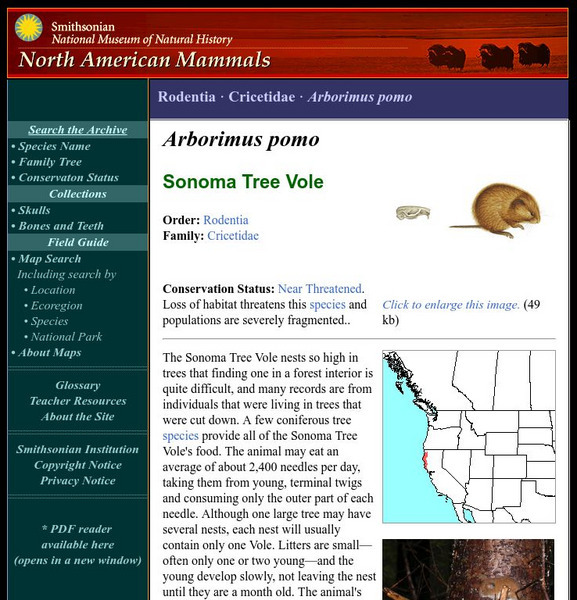
National Museum of Natural History: American Mammals: Sonoma Tree Vole
The Sonoma Tree Vole nests so high in trees that finding one in a forest interior is quite difficult, and many records are from individuals that were living in trees that were cut down. A few coniferous tree species provide all of the...
Smithsonian Institution
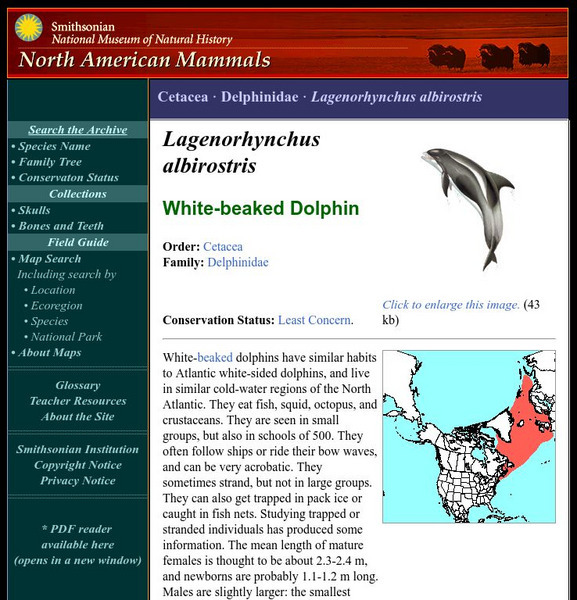
National Museum of Natural History: American Mammals: White Beaked Dolphin
White-beaked dolphins have similar habits to Atlantic white-sided dolphins and live in similar cold-water regions of the North Atlantic. They eat fish, squid, octopus, and crustaceans. Learn more about the Lagenorhynchus albirostris,...

Smithsonian Institution
National Museum of Natural History: American Mammals: Mexican Long Nosed Bat
The Mexican long-nosed bat feeds mainly on the nectar and pollen of agaves, and is found in Texas in June and July when the plants are in bloom there. Then it migrates southward into Mexico, where it lives in pine-oak forests and...

Smithsonian Institution
National Museum of Natural History: American Mammals: White Tailed Jackrabbit
White-tailed Jackrabbits live at a remarkably broad range of elevations, from 40 m to 4,300 m, and where they are in competition with Black-tailed Jackrabbits, they tend to move toward higher elevations. They are slightly larger than...
Smithsonian Institution
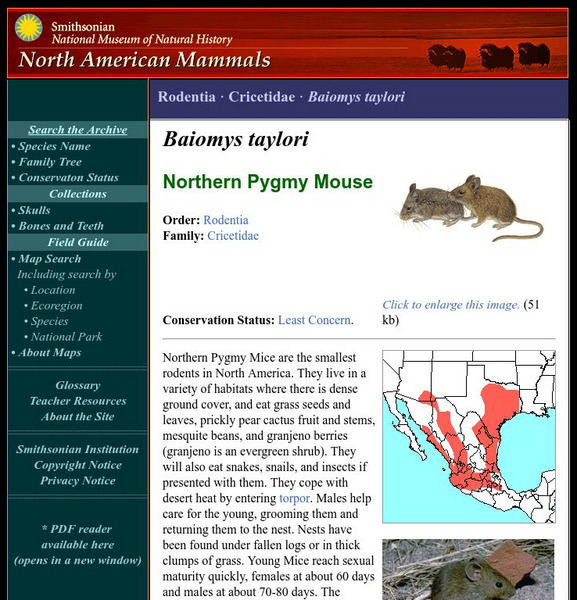
National Museum of Natural History: American Mammals: Northern Pygmy Mouse
Northern Pygmy Mice are the smallest rodents in North America. They live in a variety of habitats where there is dense ground cover and eat grass seeds and leaves, prickly pear cactus fruit and stems, mesquite beans, and granjeno berries...
Smithsonian Institution
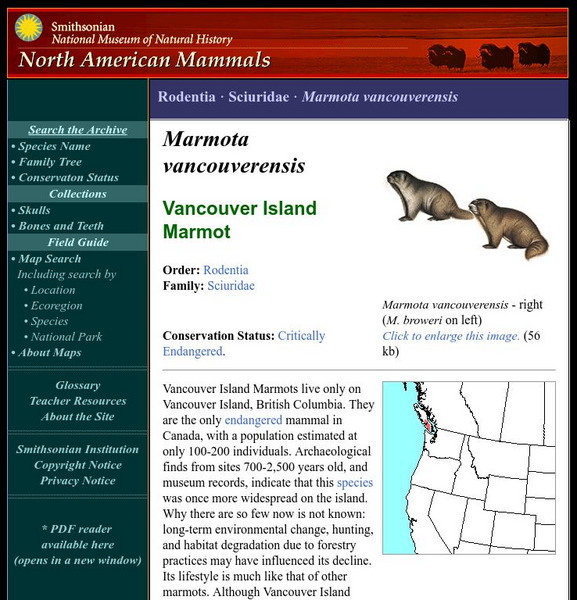
National Museum of Natural History: American Mammals: Vancouver Marmot
Vancouver Marmots live only on Vancouver Island, British Columbia. They are the only endangered mammal in Canada, with a population estimated at only 100-200 individuals. Learn more about the Marmota vancouverensis, more commonly known...

Smithsonian Institution
National Museum of Natural History: American Mammals: Olympic Marmot
Olympic Marmots are highly social, living in groups made up of an adult male, one or more adult females, two-year-olds, yearlings, and young. Their diet consists of grasses and sedges, with flowering plants in season. Learn more about...
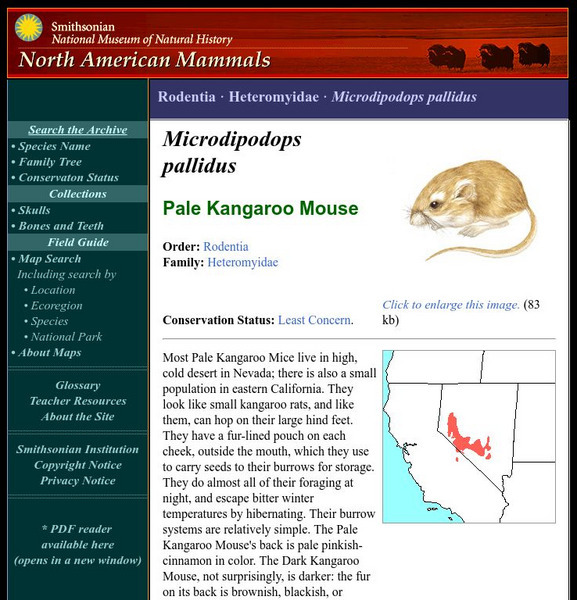
Smithsonian Institution
National Museum of Natural History: American Mammals: Pale Kangaroo Mouse
Most Pale Kangaroo Mice live in high, cold desert in Nevada; there is also a small population in eastern California. They look like small kangaroo rats, and like them, can hop on their large hind feet. Learn more about the Microdipodops...
Other popular searches
- Create a Living Museum
- Creating a Living Museum
- Historical Living Museum
- Social Studies Living Museum
- Historic Living Museum
- World History Living Museum
- Living Museum Us History