Hi, what do you want to do?





Smithsonian Institution
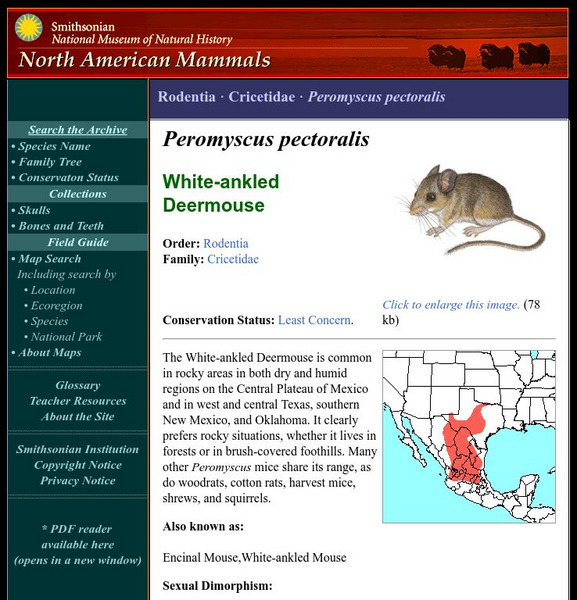
National Museum of Natural History: American Mammals: White Ankled Mouse
The White-ankled Mouse is common in rocky areas in both dry and humid regions on the Central Plateau of Mexico and in west and central Texas, southern New Mexico, and Oklahoma. It clearly prefers rocky situations, whether it lives in...
Smithsonian Institution
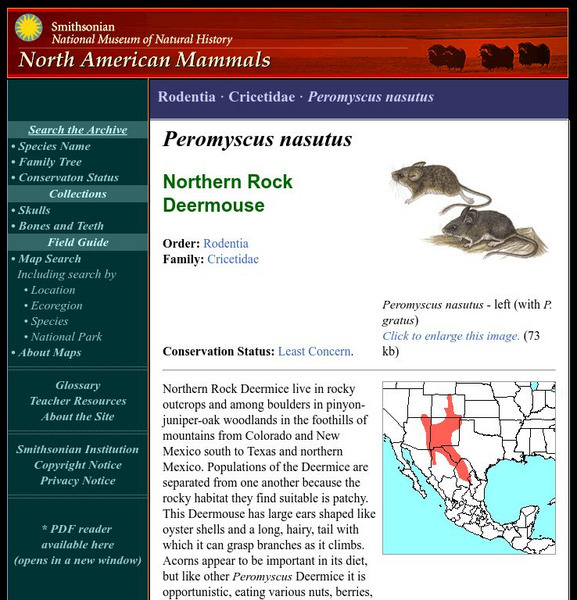
National Museum of Natural History: American Mammals: Northern Rock Deermouse
Northern Rock Deermice live in rocky outcrops and among boulders in pinyon-juniper-oak woodlands in the foothills of mountains from Colorado and New Mexico south to Texas and northern Mexico. Populations of the Mice are separated from...
Smithsonian Institution
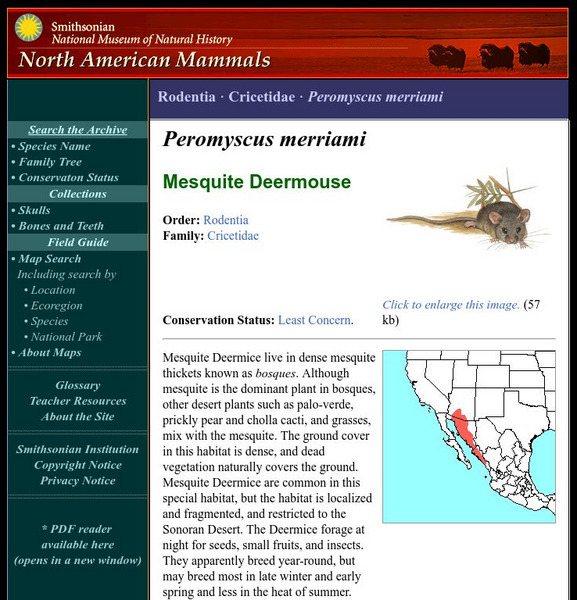
National Museum of Natural History: American Mammals: Mesquite Mouse
Mesquite Mice live in dense mesquite thickets known as bosques. Although mesquite is the dominant plant in bosques, other desert plants such as palo-verde, prickly pear, and cholla cacti, and grasses, mix with the mesquite. Learn more...
Smithsonian Institution
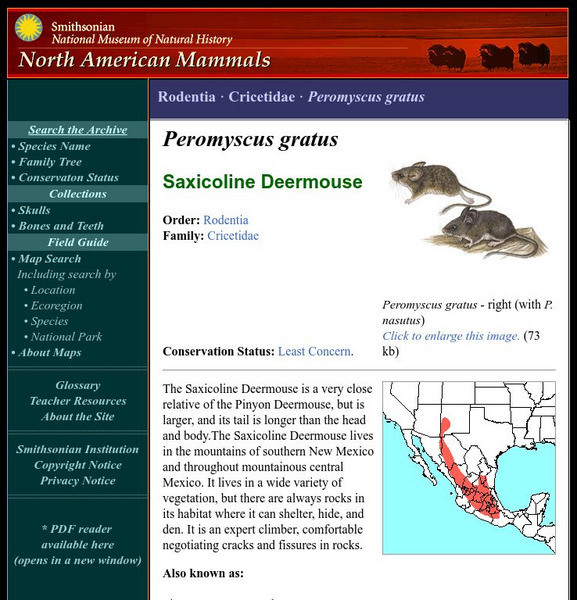
National Museum of Natural History: American Mammals: Osgood's Mouse
Osgood's Mouse is a very close relative of the Pinyon Mouse but is larger, and its tail is longer than the head and body. Osgood's Mouse lives in the mountains of southern New Mexico and throughout mountainous central Mexico. Learn more...
Smithsonian Institution
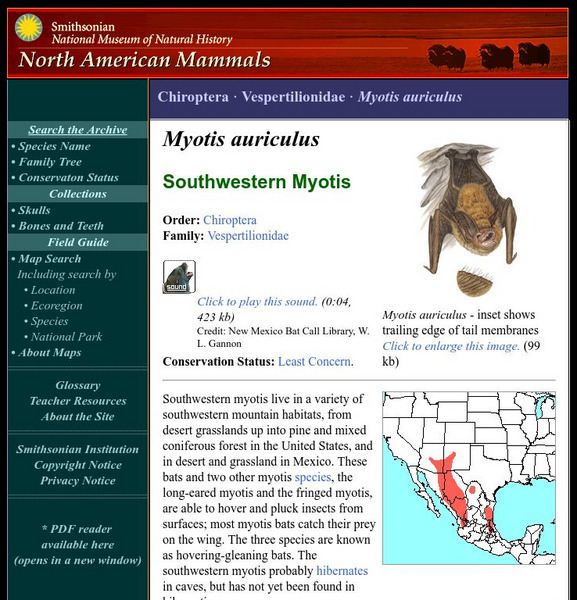
National Museum of Natural History: American Mammals: Southwestern Myotis
Southwestern myotis live in a variety of southwestern mountain habitats, from desert grasslands up into pine and mixed coniferous forest in the United States, and in desert and grassland in Mexico. These bats and two other myotis...
Smithsonian Institution
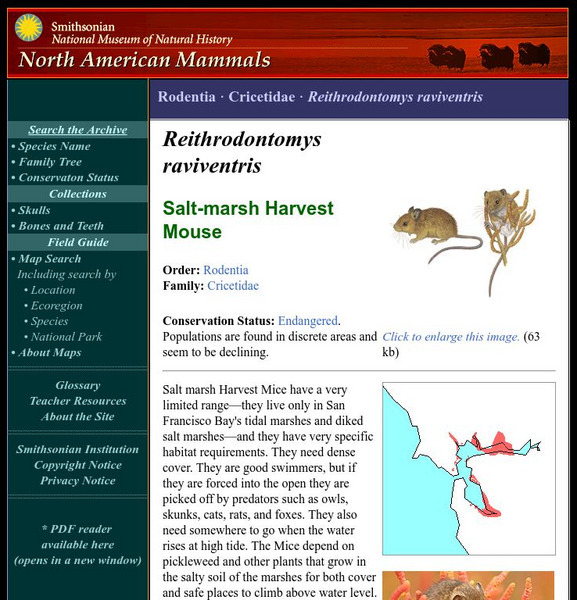
National Museum of Natural History: American Mammals: Salt Marsh Harvest Mouse
Salt-marsh Harvest Mice have a very limited range, they live only in San Francisco Bay's tidal marshes and diked salt marshes and they have very specific habitat requirements. They need dense cover. Learn more about the Reithrodontomys...
Smithsonian Institution
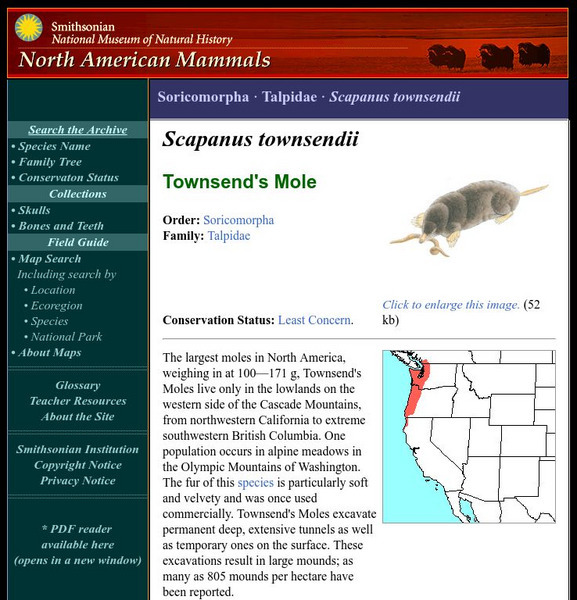
National Museum of Natural History: American Mammals: Townsend's Mole
The largest moles in North America, weighing in at 100 - 171 grams, Townsend's Moles live only in the lowlands on the western side of the Cascade Mountains, from northwestern California to extreme southwestern British Columbia. One...
Smithsonian Institution
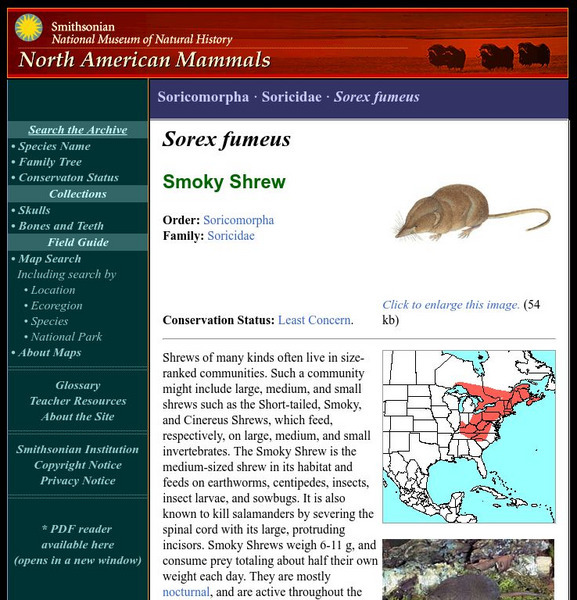
National Museum of Natural History: American Mammals: Smoky Shrew
Shrews of many kinds often live in size-ranked communities. Such a community might include large, medium, and small shrews such as the Short-tailed, Smoky, and Cinereus Shrews, which feed, respectively, on large, medium, and small...
Smithsonian Institution
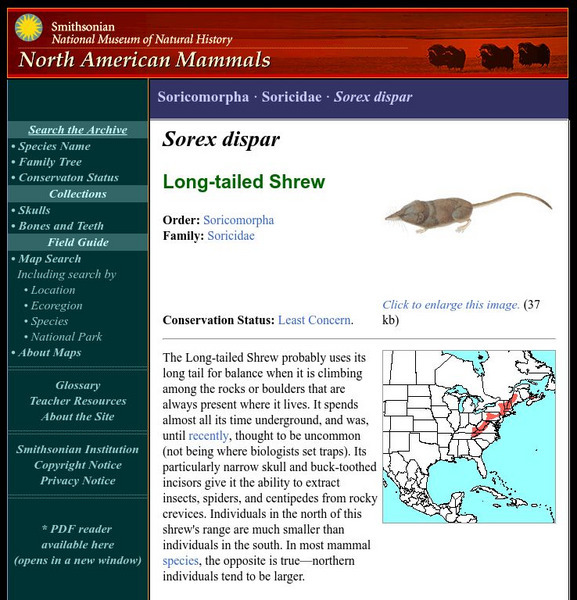
National Museum of Natural History: American Mammals: Long Tailed Shrew
The Long-tailed Shrew probably uses its long tail for balance when it is climbing among the rocks or boulders that are always present where it lives. It spends almost all its time underground, and was, until recently, thought to be...
Smithsonian Institution
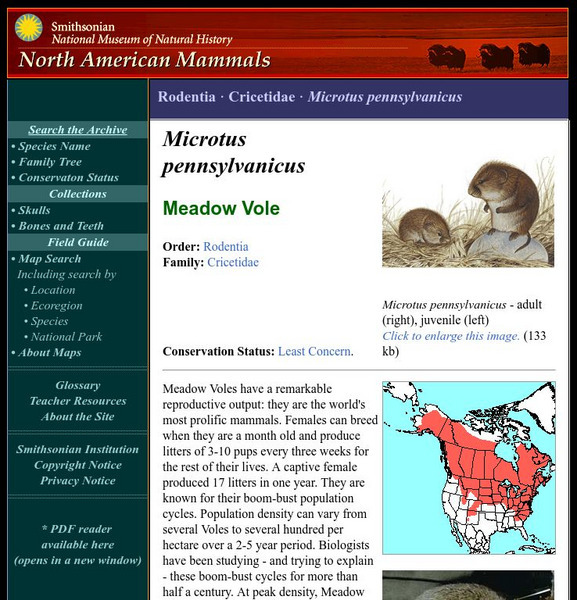
National Museum of Natural History: American Mammals: Meadow Vole
Meadow Voles have a remarkable reproductive output: they are the world's most prolific mammals. Females can breed when they are a month old and produce litters of 3-10 pups every three weeks for the rest of their lives. Learn more about...
Smithsonian Institution
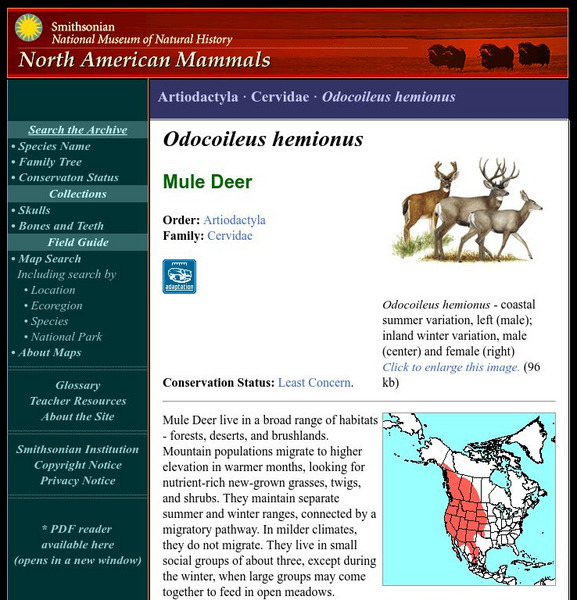
National Museum of Natural History: American Mammals: Mule Deer
Mule Deer live in a broad range of habitats - forests, deserts, and brushlands. Mountain populations migrate to higher elevation in warmer months, looking for nutrient-rich new-grown grasses, twigs, and shrubs. Learn more about the...
Smithsonian Institution
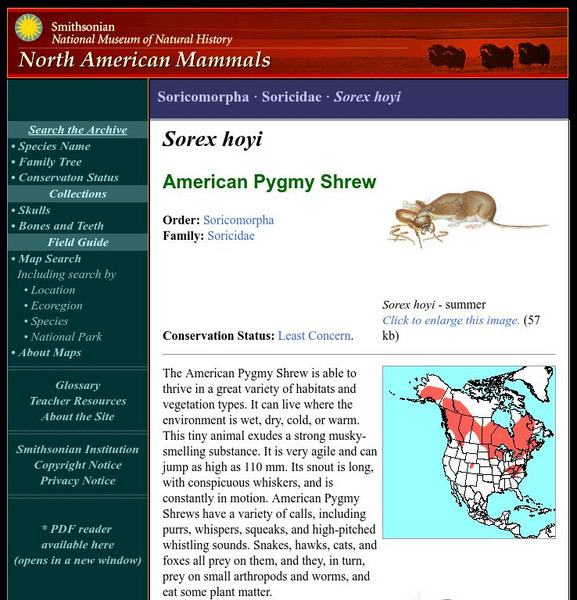
National Museum of Natural History: American Mammals: American Pygmy Shrew
The American Pygmy Shrew is able to thrive in a great variety of habitats and vegetation types. It can live where the environment is wet, dry, cold, or warm. Learn more about the Sorex hoyi, more commonly known as a Pygmy Shrew, in this...
Smithsonian Institution
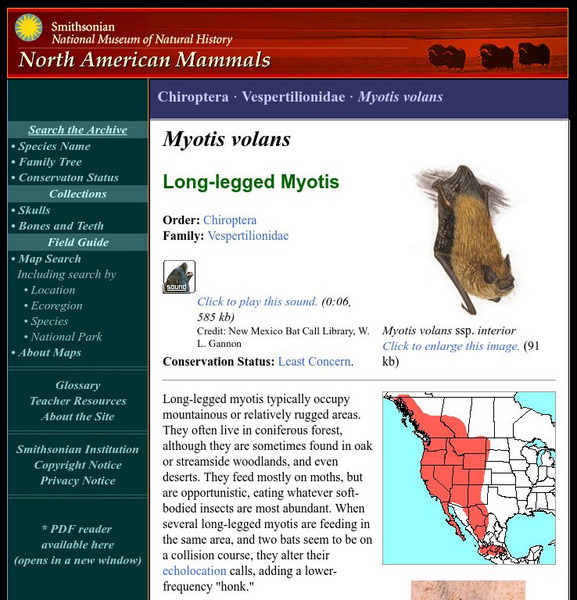
National Museum of Natural History: American Mammals: Long Legged Myotis
Long-legged myotis typically occupy mountainous or relatively rugged areas. They often live in coniferous forests, although they are sometimes found in oak or streamside woodlands, and even deserts. Learn more about the Myotis volans,...
Smithsonian Institution
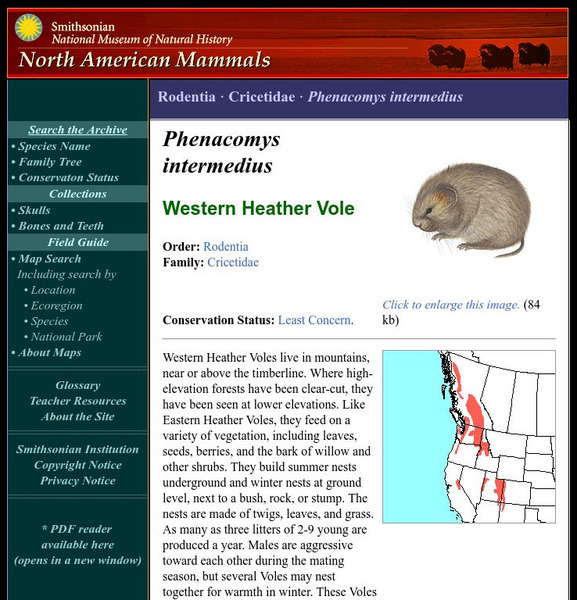
National Museum of Natural History: American Mammals: Western Heather Vole
Western Heather Voles live in mountains, near or above the timberline. Where high-elevation forests have been clear-cut, they have been seen at lower elevations. Learn more about the Phenacomys intermedius, more commonly known as a...
Smithsonian Institution
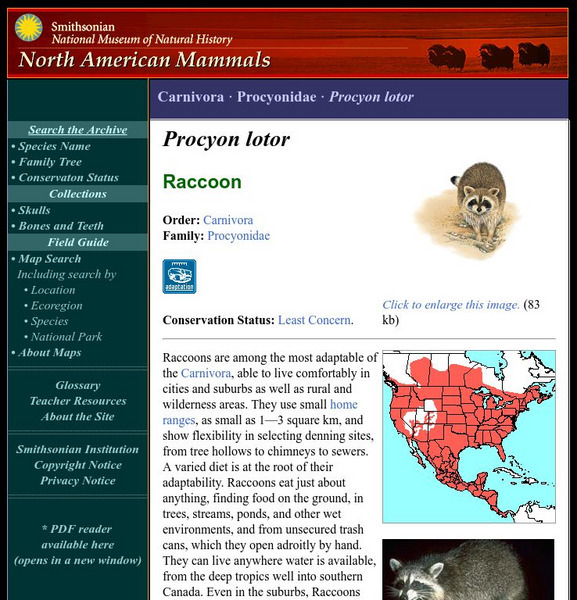
National Museum of Natural History: American Mammals: Northern Raccoon
Raccoons are among the most adaptable of the Carnivora, able to live comfortably in cities and suburbs as well as rural and wilderness areas. They use small home ranges, as small as 1x3 square km, and show flexibility in selecting...
Smithsonian Institution
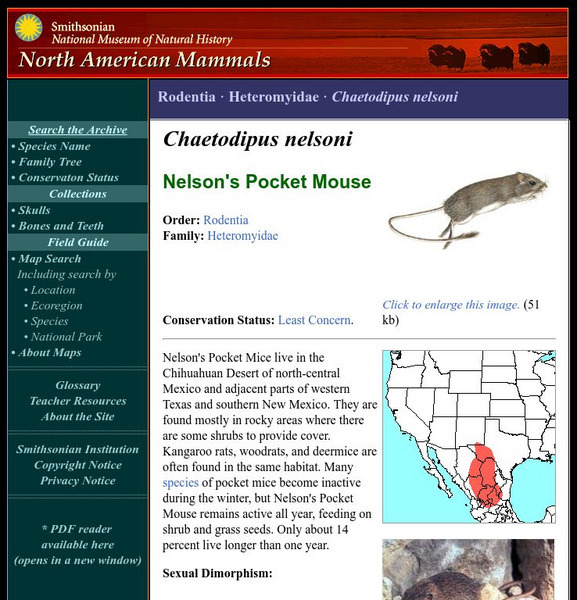
National Museum of Natural History: American Mammals: Nelson's Pocket Mouse
Nelson's Pocket Mice live in the Chihuahuan Desert of north-central Mexico and adjacent parts of western Texas and southern New Mexico. They are found mostly in rocky areas where there are some shrubs to provide cover. Learn more about...
Smithsonian Institution
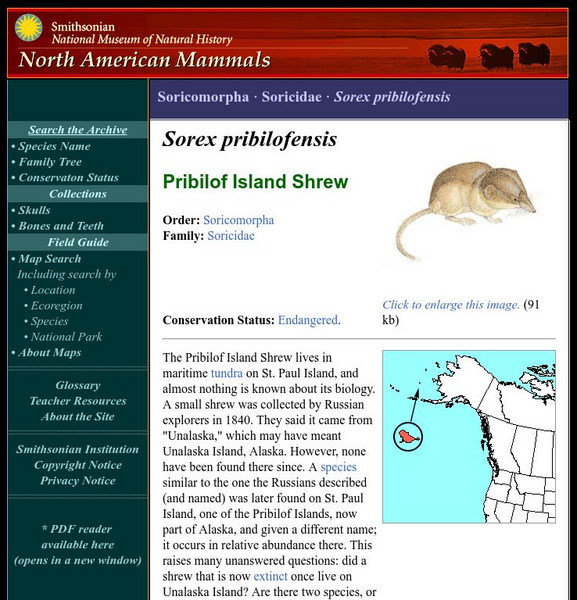
National Museum of Natural History: American Mammals: Pribilof Island Shrew
The Pribilof Island Shrew lives in maritime tundra on St. Paul Island, and almost nothing is known about its biology. Learn more about the Sorex pribilofensis, more commonly known as a Pribilof Island Shrew, in this easy-to-read species...
Smithsonian Institution
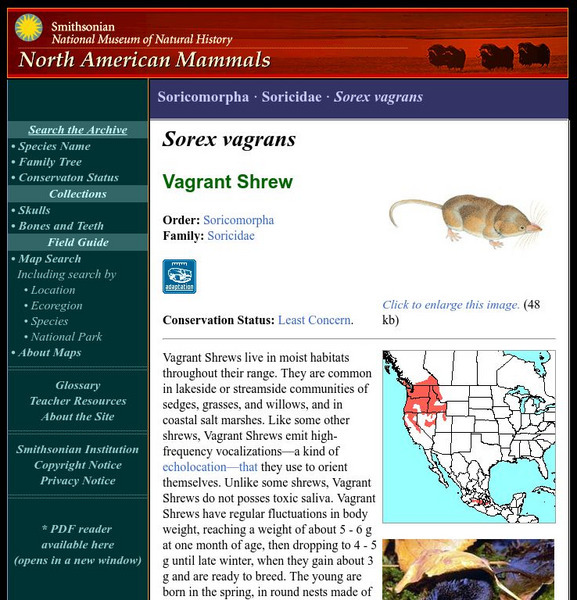
National Museum of Natural History: American Mammals: Vagrant Shrew
Vagrant Shrews live in moist habitats throughout their range. They are common in lakeside or streamside communities of sedges, grasses, and willows, and in coastal salt marshes. Learn more about the Sorex vagrans, more commonly known as...
Smithsonian Institution
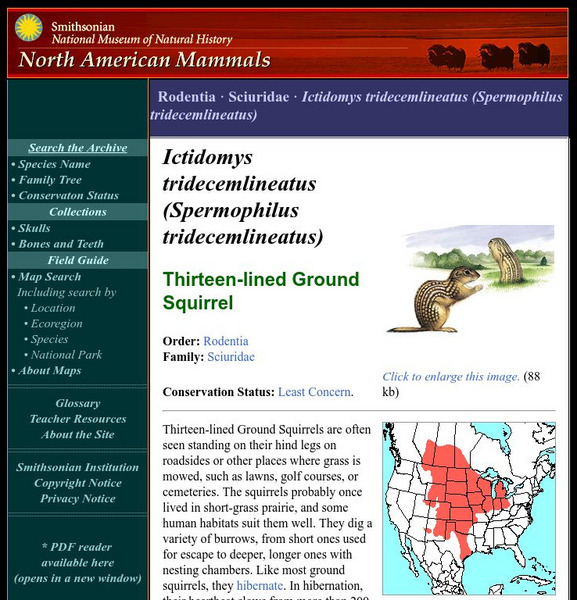
National Museum of Natural History: American Mammals: Thirteen Lined Ground Squirrel
Thirteen-lined Ground Squirrels are often seen standing on their hind legs on roadsides or other places where grass is mowed, such as lawns, golf courses, or cemeteries. The squirrels probably once lived in short-grass prairie, and some...

Smithsonian Institution
National Museum of Natural History: American Mammals: Merriam's Ground Squirrel
Merriam's Ground Squirrels live in high desert habitat dominated by big sagebrush, western juniper, and greasewood, and are also found in grasslands and agricultural lands. They eat grasses and forbs. Learn more about the Spermophilus...
Smithsonian Institution
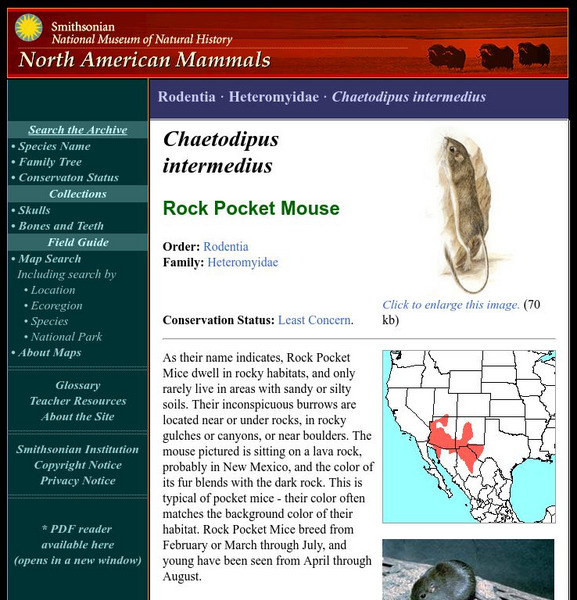
National Museum of Natural History: American Mammals: Rock Pocket Mouse
As their name indicates, Rock Pocket Mice dwell in rocky habitats, and only rarely live in areas with sandy or silty soils. Their inconspicuous burrows are located near or under rocks, in rocky gulches or canyons, or near boulders. Learn...
Smithsonian Institution
National Museum of Natural History: American Mammals: Marsh Rabbit
Marsh Rabbits live only in marshy areas, and like Swamp Rabbits, are good swimmers. They are often found in habitats with pools of brackish water and plants such as cattails, water hyacinth, rush, centella, and marsh pennywort. Learn...
Smithsonian Institution
National Museum of Natural History: American Mammals: Mountain Cottontail
At dawn and dusk in the mountainous regions of the western United States, the Mountain Cottontail forages for sagebrush, western juniper, and grasses, almost always close to cover. As befits a rabbit that lives where it gets very cold,...
Smithsonian Institution
National Museum of Natural History: American Mammals: Palmer's Chipmunk
Palmer's chipmunks live in a "sky island" mountains in southwestern Nevada surrounded by deserts the chipmunks cannot cross. They are common there, foraging where rocks or fallen logs provide cover. Learn more about the Tamias palmeri,...
Other popular searches
- Create a Living Museum
- Creating a Living Museum
- Historical Living Museum
- Social Studies Living Museum
- Historic Living Museum
- World History Living Museum
- Living Museum Us History