Hi, what do you want to do?





Smithsonian Institution
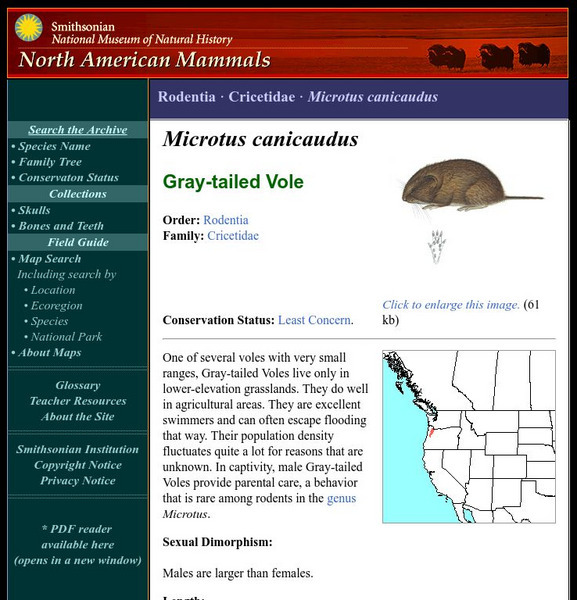
National Museum of Natural History: American Mammals: Gray Tailed Vole
One of several voles with very small ranges, Gray-tailed Voles live only in lower-elevation grasslands. They do well in agricultural areas. Learn more about the Microtus canicaudus, more commonly known as a Gray-tailed Vole, in this...
Smithsonian Institution
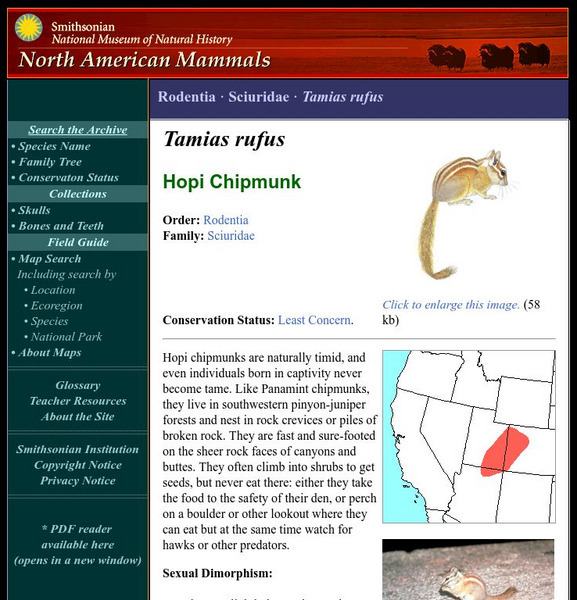
National Museum of Natural History: American Mammals: Hopi Chipmunk
Hopi chipmunks are naturally timid, and even individuals born in captivity never become tame. Like Panamint chipmunks, they live in southwestern pinyon-juniper forests and nest in rock crevices or piles of broken rock. Learn more about...
Smithsonian Institution
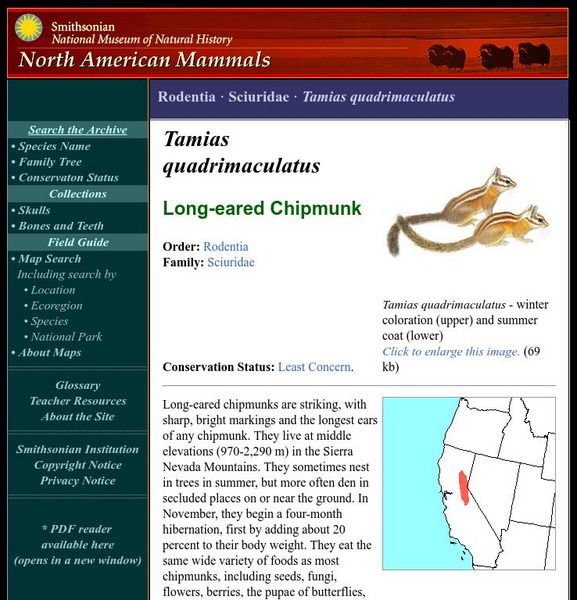
National Museum of Natural History: American Mammals: Long Eared Chipmunk
Long-eared chipmunks are striking, with sharp, bright markings and the longest ears of any chipmunk. They live at middle elevations (970-2,290 m) in the Sierra Nevada Mountains. Learn more about the Tamias quadrimaculatus, more commonly...
Smithsonian Institution
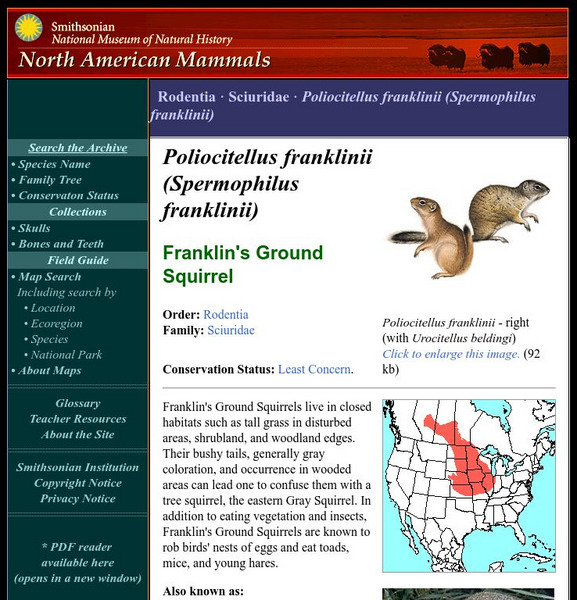
National Museum of Natural History: American Mammals: Franklin's Ground Squirrel
Franklin's Ground Squirrels live in closed habitats such as tall grass in disturbed areas, shrubland, and woodland edges. Their bushy tails, generally gray coloration, and occurrence in wooded areas can lead one to confuse them with a...
Smithsonian Institution
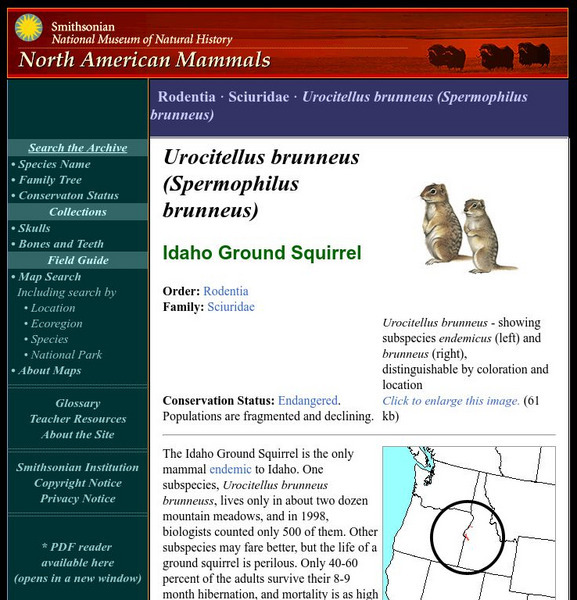
National Museum of Natural History: American Mammals: Idaho Ground Squirrel
The Idaho Ground Squirrel is the only mammal endemic to Idaho. One subspecies, Spermophilus brunneus brunneus, lives only in about two dozen mountain meadows, and in 1998, biologists counted only 500 of them. Learn more about the...
Smithsonian Institution
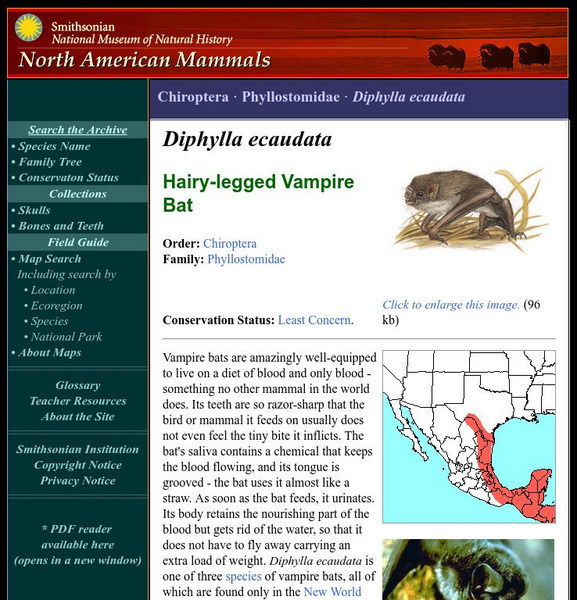
National Museum of Natural History: American Mammals: Hairy Legged Vampire Bat
Vampire bats are amazingly well-equipped to live on a diet of blood and only blood - something no other mammal in the world does. Its teeth are so razor-sharp that the bird or mammal it feeds on usually does not even feel the tiny bite...
Smithsonian Institution
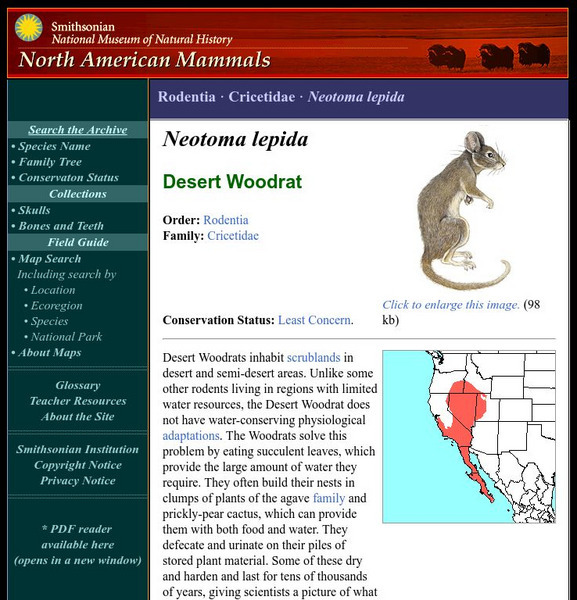
National Museum of Natural History: American Mammals: Desert Woodrat
Desert Woodrats inhabit scrublands in desert and semi-desert areas. Unlike some other rodents living in regions with limited water resources, the Desert Woodrat does not have water-conserving physiological adaptations. Learn more about...
Smithsonian Institution
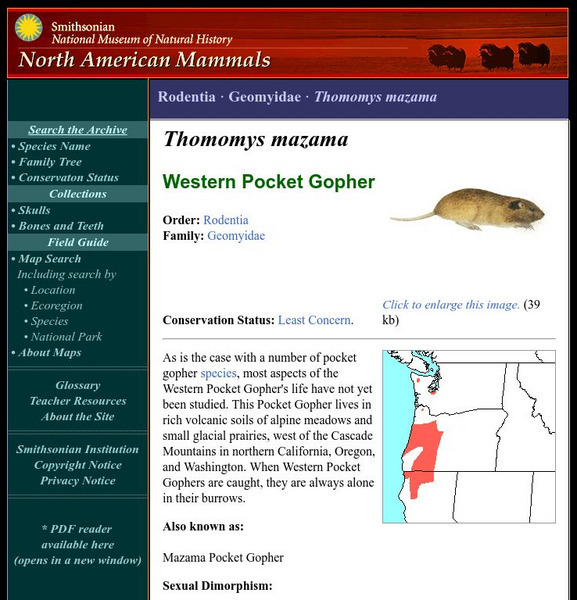
National Museum of Natural History: American Mammals: Western Pocket Gopher
As is the case with a number of pocket gopher species, most aspects of the Western Pocket Gopher's life have not yet been studied. This Pocket Gopher lives in rich volcanic soils of alpine meadows and small glacial prairies, west of the...
Smithsonian Institution
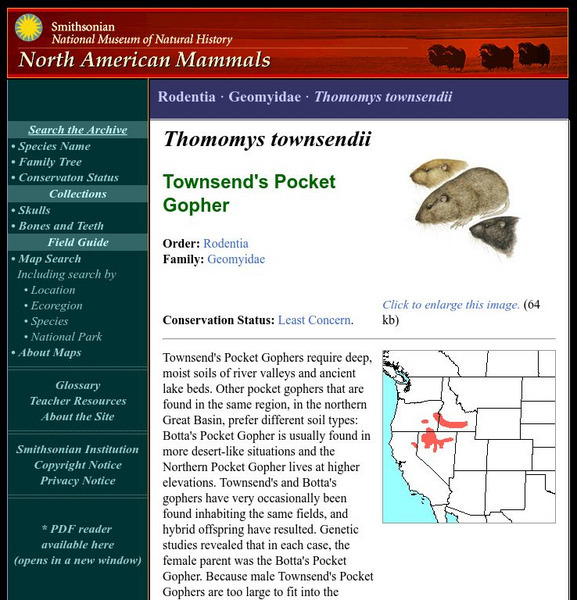
National Museum of Natural History: American Mammals: Townsend's Pocket Gopher
Townsend's Pocket Gophers require deep, moist soils of river valleys and ancient lake beds. Other pocket gophers that are found in the same region, in the northern Great Basin, prefer different soil types: Botta's Pocket Gopher is...
Smithsonian Institution
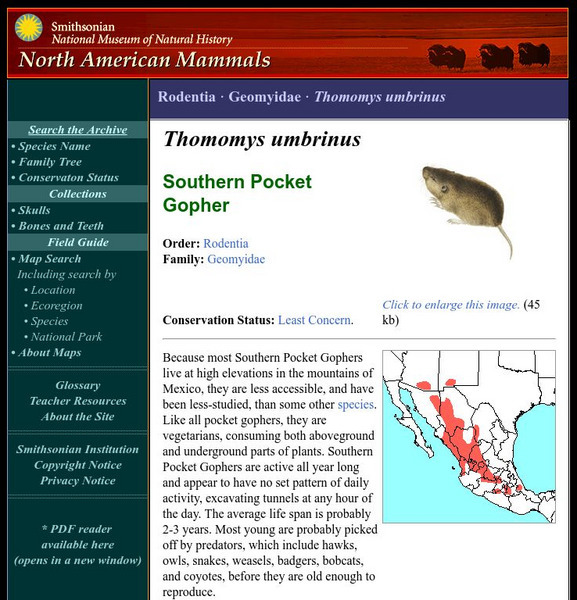
National Museum of Natural History: American Mammals: Southern Pocket Gopher
Because most Southern Pocket Gophers live at high elevations in the mountains of Mexico, they are less accessible, and have been less-studied, than some other species. Like all pocket gophers, they are vegetarians, consuming both...
Smithsonian Institution
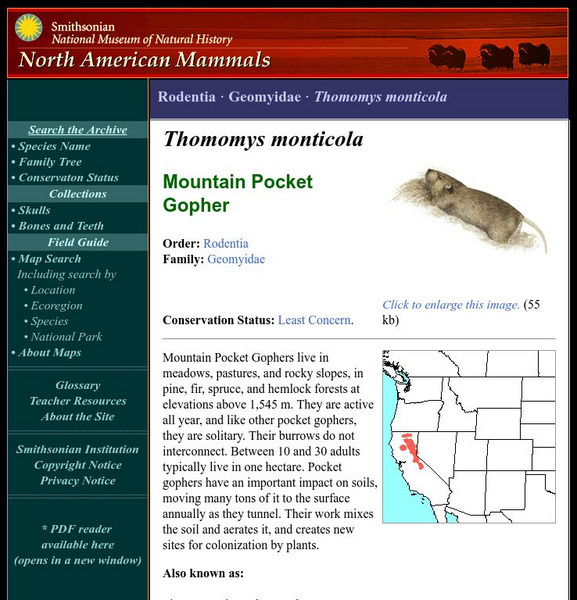
National Museum of Natural History: American Mammals: Mountain Pocket Gopher
Mountain Pocket Gophers live in meadows, pastures, and rocky slopes, in pine, fir, spruce, and hemlock forests at elevations above 1,545 m. They are active all year, and like other pocket gophers, they are solitary. Learn more about the...
Smithsonian Institution
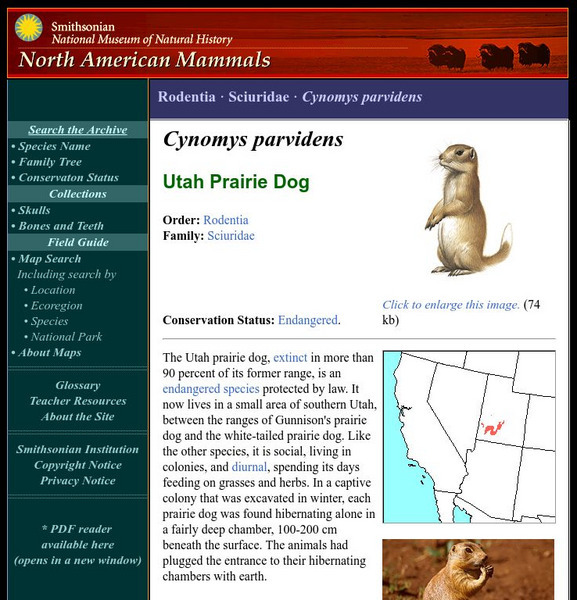
National Museum of Natural History: American Mammals: Utah Prairie Dog
The Utah prairie dog, extinct in more than 90 percent of its former range, is an endangered species protected by law. It now lives in a small area of southern Utah, between the ranges of Gunnison's prairie dog and the white-tailed...
Smithsonian Institution
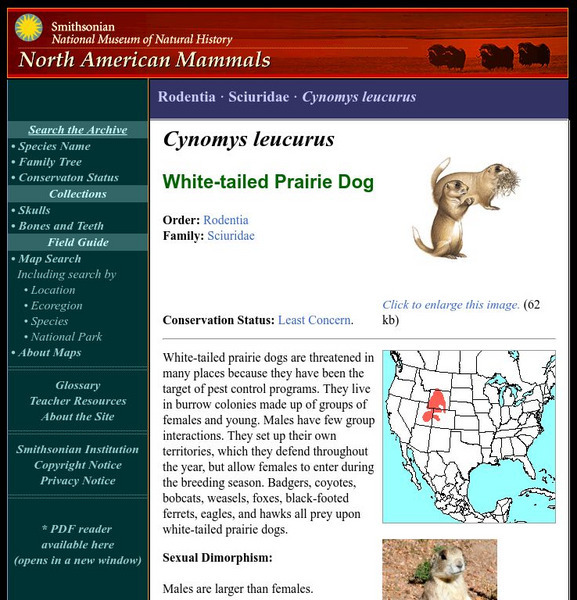
National Museum of Natural History: American Mammals: White Tailed Prairie Dog
White-tailed prairie dogs are threatened in many places because they have been the target of pest control programs. They live in burrow colonies made up of groups of females and young. Learn more about the Cynomys leucurus, more commonly...
Smithsonian Institution
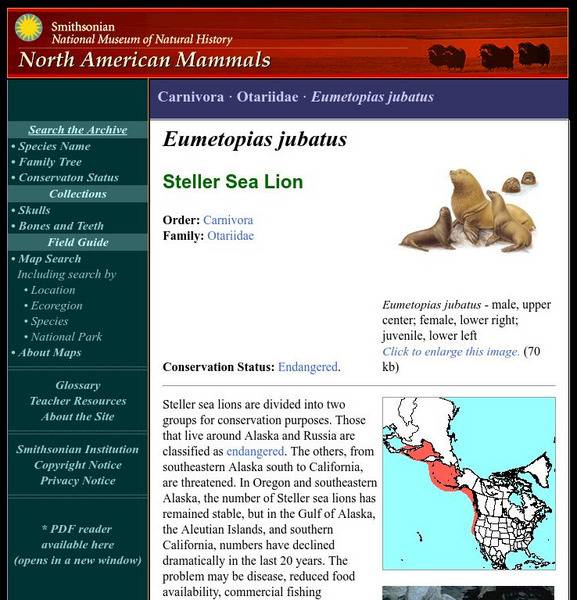
National Museum of Natural History: American Mammals: Steller Sea Lion
Steller sea lions are divided into two groups for conservation purposes. Those that live around Alaska and Russia are classified as endangered. Learn more about the Eumetopias jubatus, more commonly known as a Steller Sea Lion, in this...
Smithsonian Institution
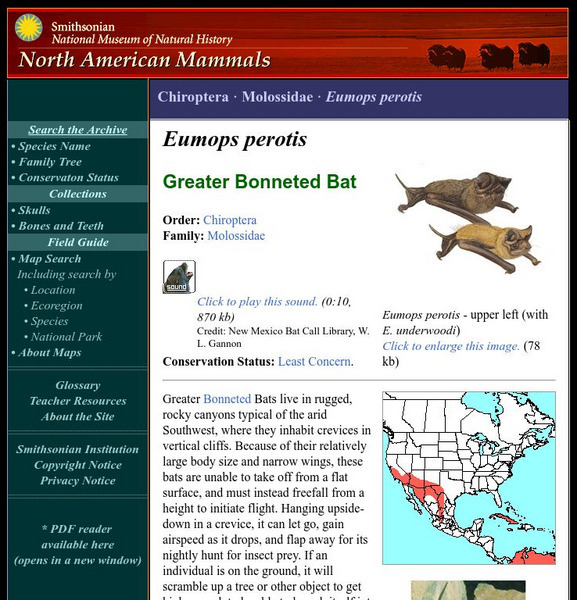
National Museum of Natural History: American Mammals: Greater Bonneted Bat
Greater Bonneted Bats live in rugged, rocky canyons typical of the arid Southwest, where they inhabit crevices in vertical cliffs. Because of their relatively large body size and narrow wings, these bats are unable to take off from a...

Birmingham Museums Trust (UK)
Birmingham Museum & Art Gallery: Homes for Rich People
Explore how people with money live in the present day!
Other popular searches
- Create a Living Museum
- Creating a Living Museum
- Historical Living Museum
- Social Studies Living Museum
- Historic Living Museum
- World History Living Museum
- Living Museum Us History