Hi, what do you want to do?





Learn Engineering
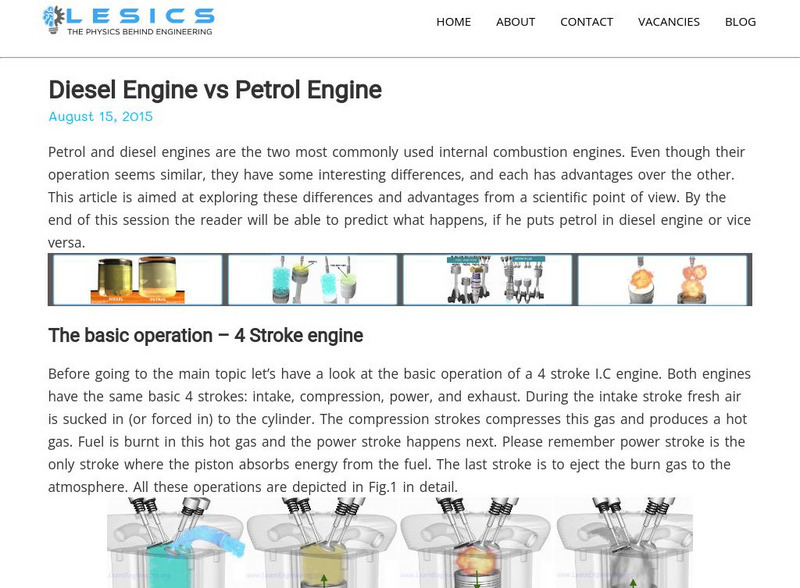
Learn Engineering: Diesel Engine vs. Petrol Engine
This video and article explore the differences and the similarities between petrol and diesel engines. The article discusses all topics found in the video. [4:06]
TeachEngineering
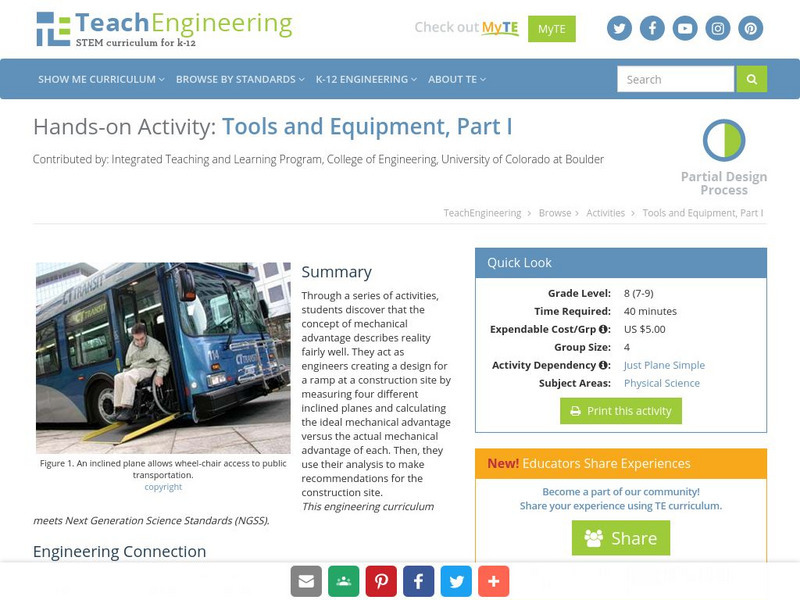
Teach Engineering: Tools and Equipment, Part I
Through a series of activities, students discover that the concept of mechanical advantage describes reality fairly well. They act as engineers creating a design for a ramp at a construction site by measuring four different inclined...
TeachEngineering
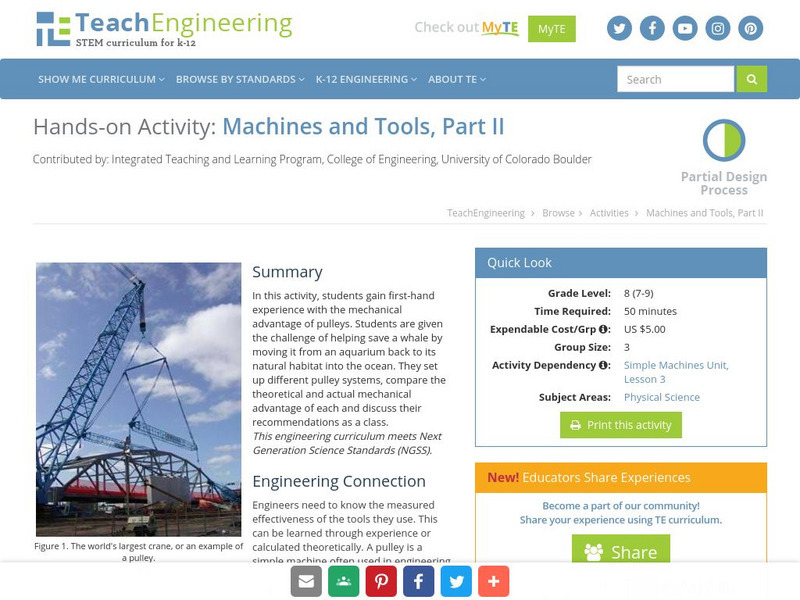
Teach Engineering: Machines and Tools, Part Ii
In this activity, students gain first-hand experience with the mechanical advantage of pulleys. Students are given the challenge of helping save a whale by moving it from an aquarium back to its natural habitat into the ocean. They set...
TeachEngineering
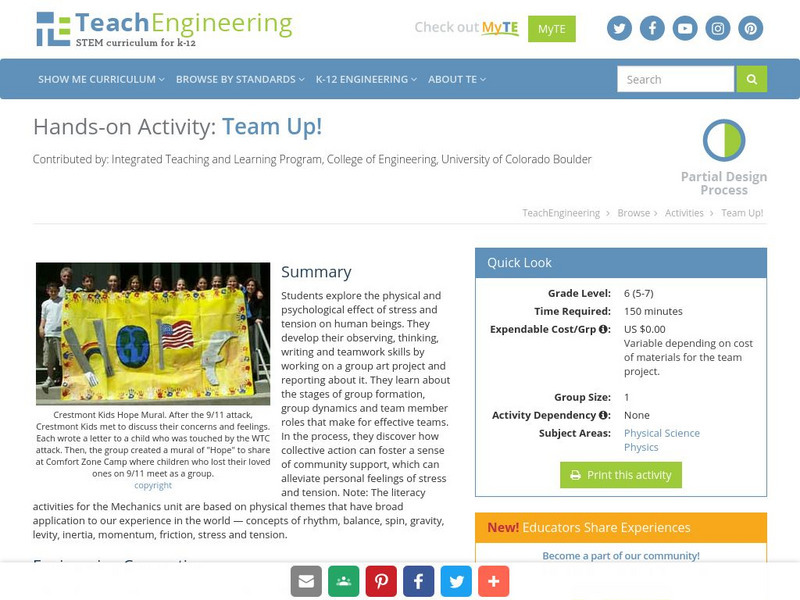
Teach Engineering: Team Up!
Students explore the physical and psychological effect of stress and tension on human beings. They develop their observing, thinking, writing and teamwork skills by working on a group art project and reporting about it. They learn about...

TryEngineering
Try Engineering: Get It Write
Students learn about the engineering design process by working in teams to design and build a pen out of everyday materials that can deliver a controlled amount of ink to a sheet of paper.
TeachEngineering
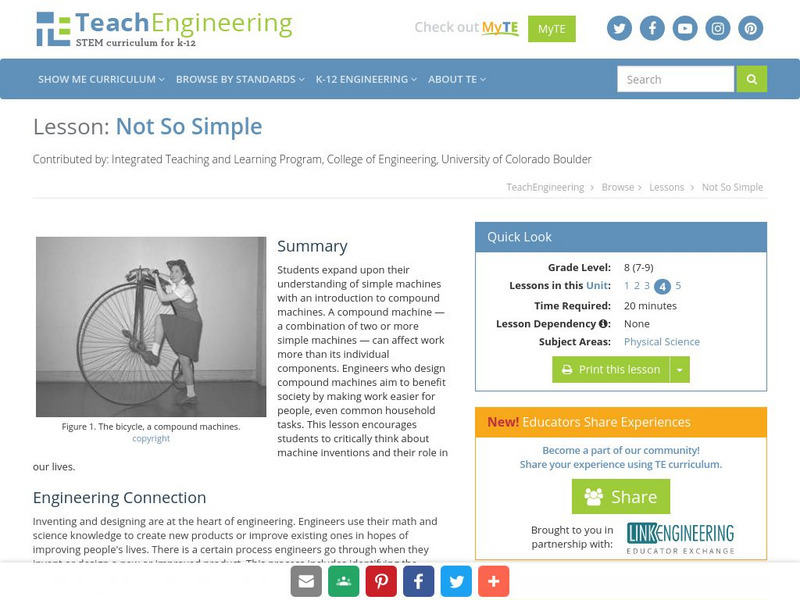
Teach Engineering: Not So Simple
Middle schoolers expand upon their understanding of simple machines with an introduction to compound machines. A compound machine - a combination of two or more simple machines - can affect work more than its individual components....
Learn Engineering
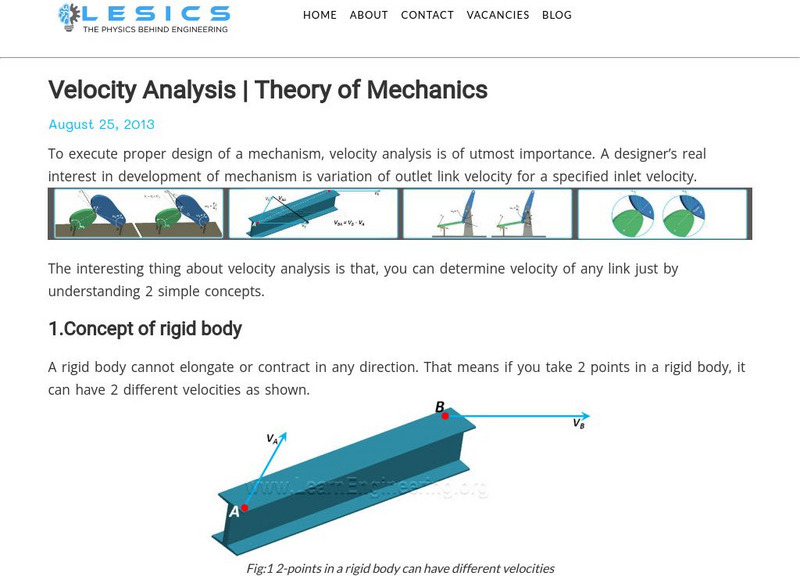
Learn Engineering: Velocity Analysis: Mechanics
Learn how a velocity analysis is necessary to make sure a mechanism is properly designed. This video will discuss how a velocity analysis is completed. Site also includes an article which discusses concepts found in video. [5:07]

Science Buddies
Science Buddies: Knock Your Blocks Off: The Mechanics of Carnival Games
Why are those "simple" games at the fairs, carnivals, and boardwalks so hard? Is it really lack of skill or coordination or do those concessionaires use some basic laws of science to help them set up the games in their favor? This...

TeachEngineering
Teach Engineering: Simple Machines and Modern Day Engineering Analogies
Students apply the mechanical advantages and problem-solving capabilities of six types of simple machines (wedge, wheel and axle, lever, inclined plane, screw, pulley) as they discuss modern structures in the spirit of the engineers and...
TeachEngineering
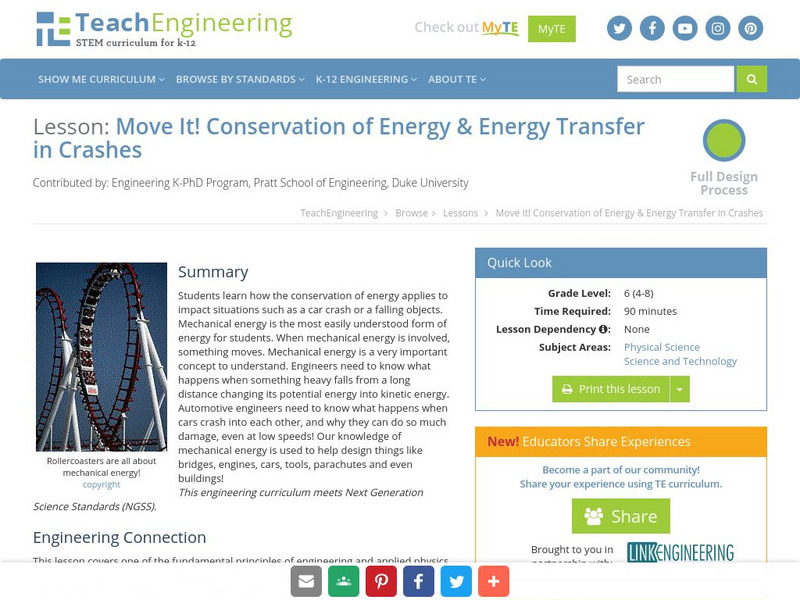
Teach Engineering: Move It!
Mechanical energy is the most easily understood form of energy for students. When there is mechanical energy involved, something moves. Mechanical energy is a very important concept to understand. Engineers need to know what happens when...

TeachEngineering
Teach Engineering: Pulley'ing Your Own Weight
Using common materials (spools, string, soap), students learn how a pulley can be used to easily change the direction of a force, making the moving of large objects easier. They see the difference between fixed and movable pulleys, and...
TeachEngineering
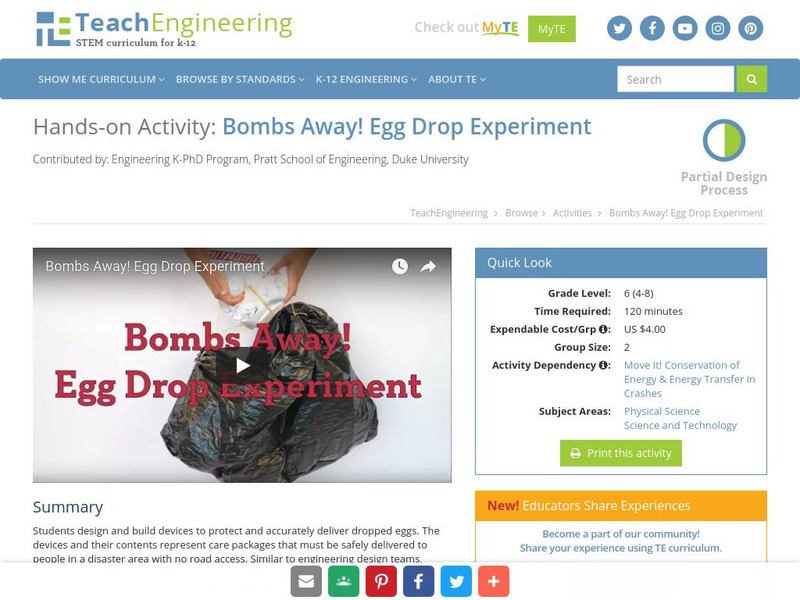
Teach Engineering: Bombs Away!
In this hands-on activity students learn create a device to protect a dropped egg and deliver it close to a target. Students learn about engineering as well as potential and kinetic energy and energy transfer
TeachEngineering
Teach Engineering: Riding the Gravity Wave
Students write a biographical sketch of an artist or athlete who lives on the edge, riding the gravity wave, to better understand how these artists and athletes work with gravity and manage risk. Note: The literacy activities for the...
TeachEngineering
Teach Engineering: The Big Mo
Momentum is not only a physical principle; it is a psychological phenomenon. Students learn how the "Big Mo" of the bandwagon effect contributes to the development of fads and manias, and how modern technology and mass media accelerate...
TeachEngineering
Teach Engineering: It Takes Two to Tangle
Students explore the theme of conflict in literature. They learn the difference between internal and external conflict and various types of conflicts, including self against self, self against other, and self against nature or machine....
Learn Engineering
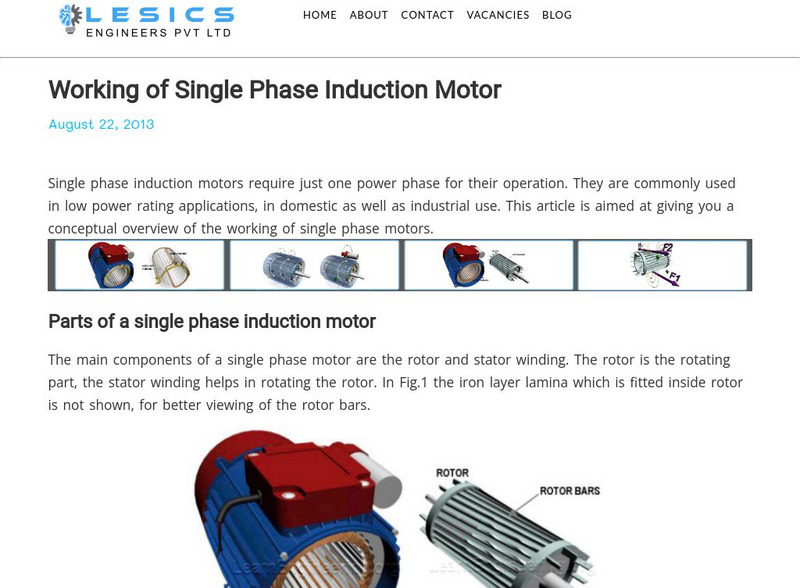
Learn Engineering: Working of Single Phase Induction Motors
A video and article giving information about how single phase induction motors function and what parts they contain. The accompanying article explains the concepts further using detailed illustrations. [4:06]

Learn Engineering
Learn Engineering: How Does an Induction Motor Work?
An article and video about the most commonly used electrical machine called an induction motor. Learn about the parts of the motors that allow the motor to function. [4:43]
Learn Engineering
Learn Engineering: Single Phase Motors
Learn about how a single phase motor produces a rotating magnetic field in this video. The accompanying article discusses topics found in the video. [2:00]
Learn Engineering
Learn Engineering: Understanding Rotating Magnetic Field & Synchronous Speed
Get information about rotating magnetic fields and how electric machines use them for their operation. Discusses synchronous speed and number of poles on an electrical machine. The accompanying article discusses the topics found in the...
Science Buddies
Science Buddies: You Nailed It! Hammering Force for Different Types of Wood
This Science Buddies project explains how to build a mechanism that will reproducibly swing a hammer so you can determine the amount of force needed to hammer a nail through various densities of wood. The Science Buddies project ideas...
Science Buddies
Science Buddies: Fractography: The Way Things Break
When something goes wrong, do you like to try to figure out why? Engineers do this all the time. They even have a fancy name for it: failure analysis. Understanding how different materials break is an important part of failure analysis....

University of Houston
University of Houston: Engines of Our Ingenuity: No. 1031: Antikythera Mechanism
This site contains the history of and a description of the Antikythera Mechanism in written and audio form.
Michigan Technological University
Michigan Tech: Materials Science and Engineering: Tensile Test Experiment
Take a closer look at what is meant by the strength of a material. This easy experiment provides information about the strength or the mechanical behavior of a material, called the tensile test.
Science Struck
Science Struck: How to Rebuild a Hydraulic Cylinder
Describes the basic structure of a hydraulic system and what is involved in rebuilding a hydraulic cylinder. It presents three different problem scenarios and strategies for repairing the cylinder.