Hi, what do you want to do?





Other
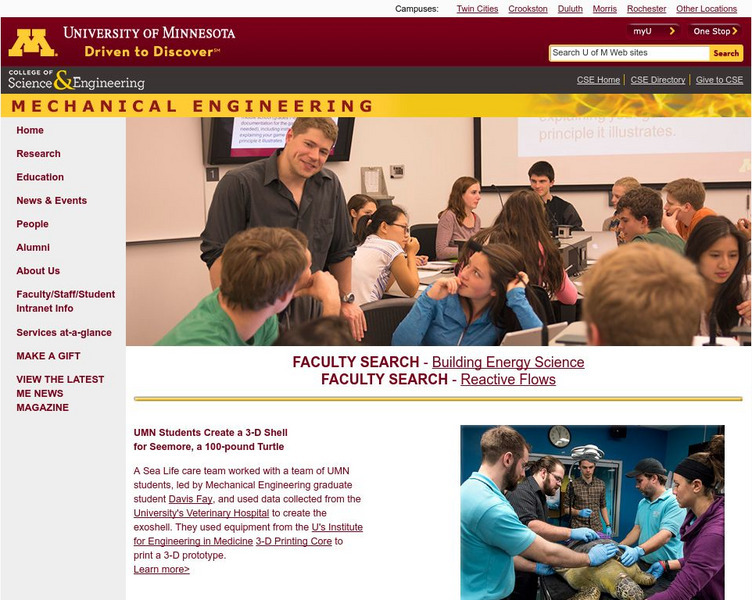
University of Minnesota Deptartment of Mechanical Engineering
Website of the Department of Mechanical Engineering at the University of Minnesota. The site has information on degree programs, research, etc.
TeachEngineering
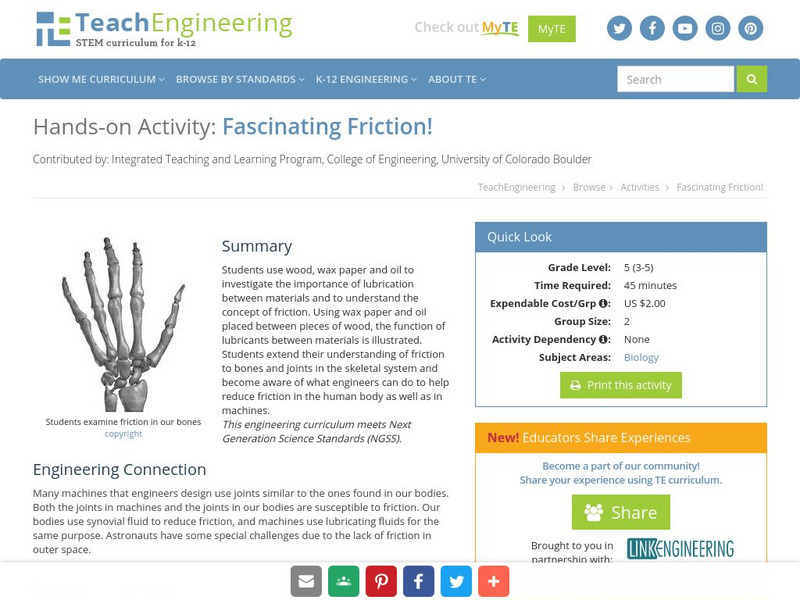
Teach Engineering: Fascinating Friction!
In this activity, students use wood, wax paper and oil to investigate the importance of lubrication between materials and to understand the concept of friction. Using wax paper and oil placed between pieces of wood, the function of...
TeachEngineering
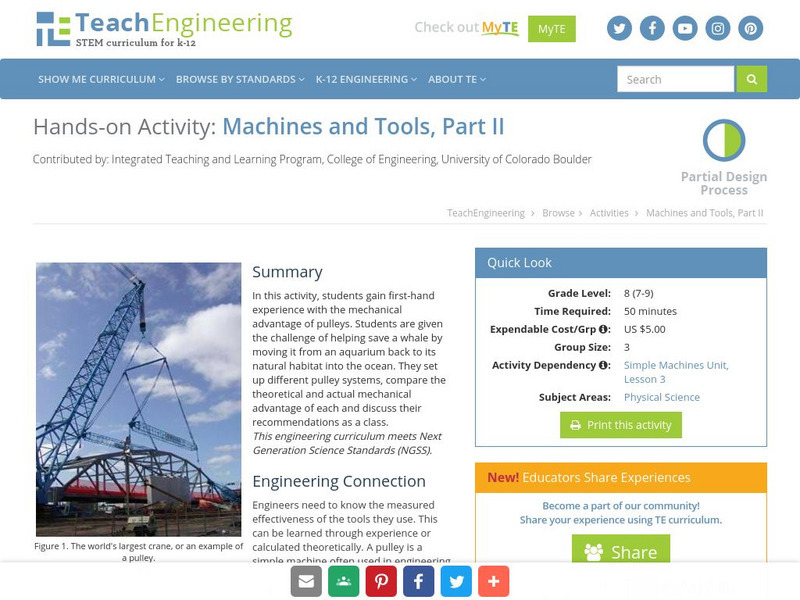
Teach Engineering: Machines and Tools, Part Ii
In this activity, students gain first-hand experience with the mechanical advantage of pulleys. Students are given the challenge of helping save a whale by moving it from an aquarium back to its natural habitat into the ocean. They set...
TeachEngineering
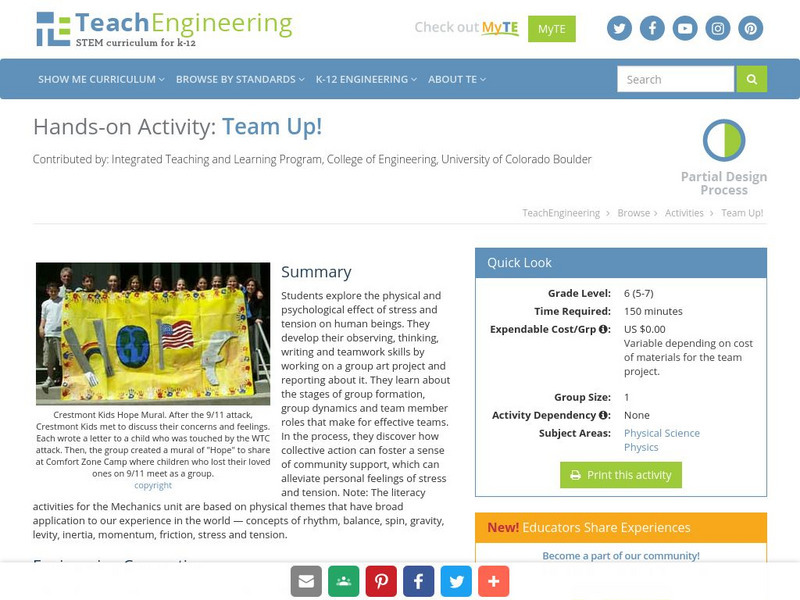
Teach Engineering: Team Up!
Students explore the physical and psychological effect of stress and tension on human beings. They develop their observing, thinking, writing and teamwork skills by working on a group art project and reporting about it. They learn about...
TeachEngineering
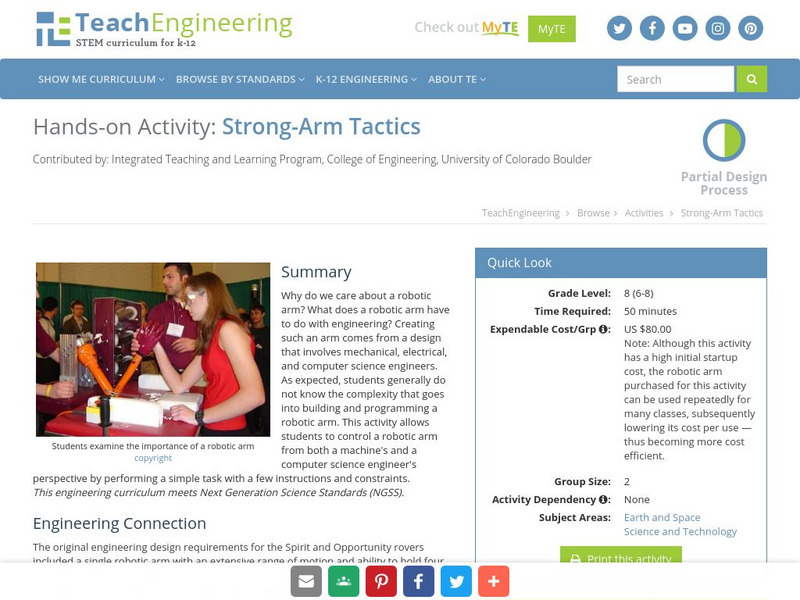
Teach Engineering: Strong Arm Tactics
Students generally do not know the complexity that goes into building and programming a robotic arm. In actuality, creating such an arm comes from a design that involves mechanical, electrical, and computer science engineers. This...
TeachEngineering
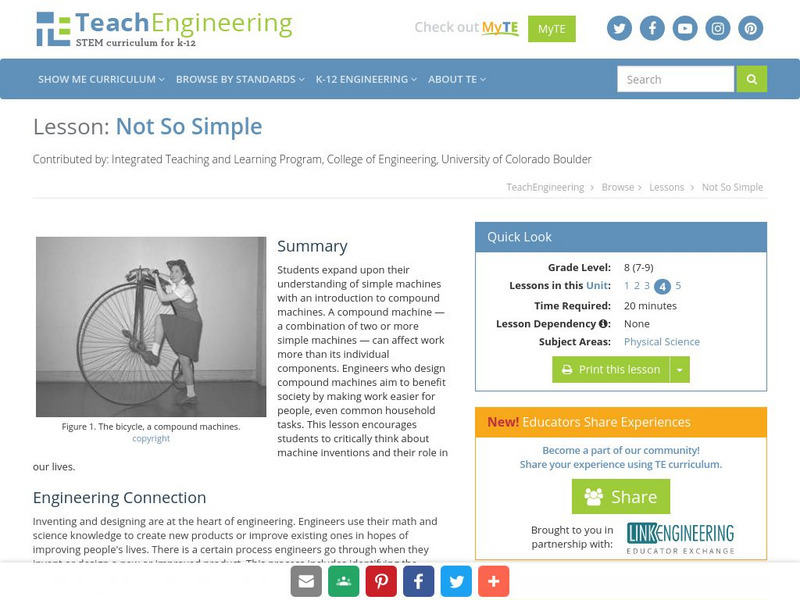
Teach Engineering: Not So Simple
Learners expand upon their understanding of simple machines with an introduction to compound machines. A compound machine - a combination of two or more simple machines - can affect work more than its individual components. Engineers who...
TeachEngineering
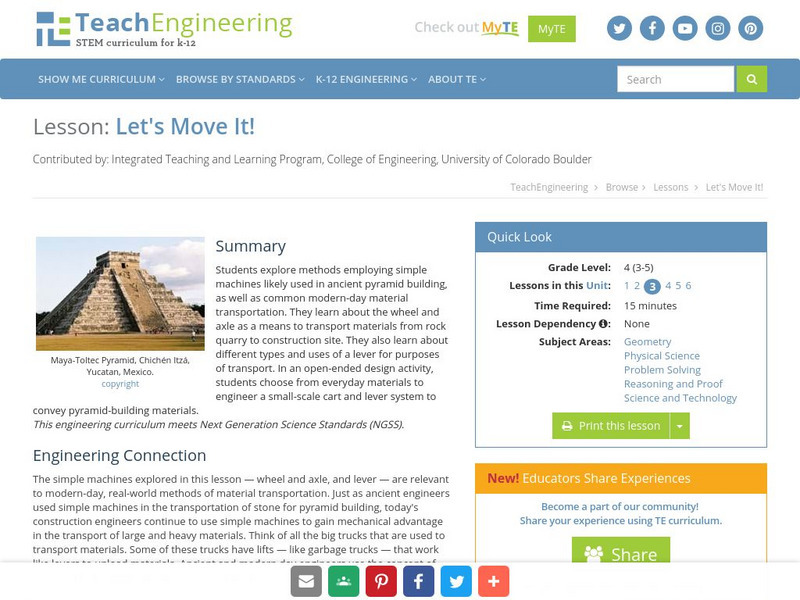
Teach Engineering: Let's Move It!
Young scholars explore methods employing simple machines likely used in ancient pyramid building, as well as common modern-day material transportation. They learn about the wheel and axle as a means to transport materials from rock...
TeachEngineering
Teach Engineering: Bombs Away!
In this hands-on activity students learn create a device to protect a dropped egg and deliver it close to a target. Students learn about engineering as well as potential and kinetic energy and energy transfer
TeachEngineering
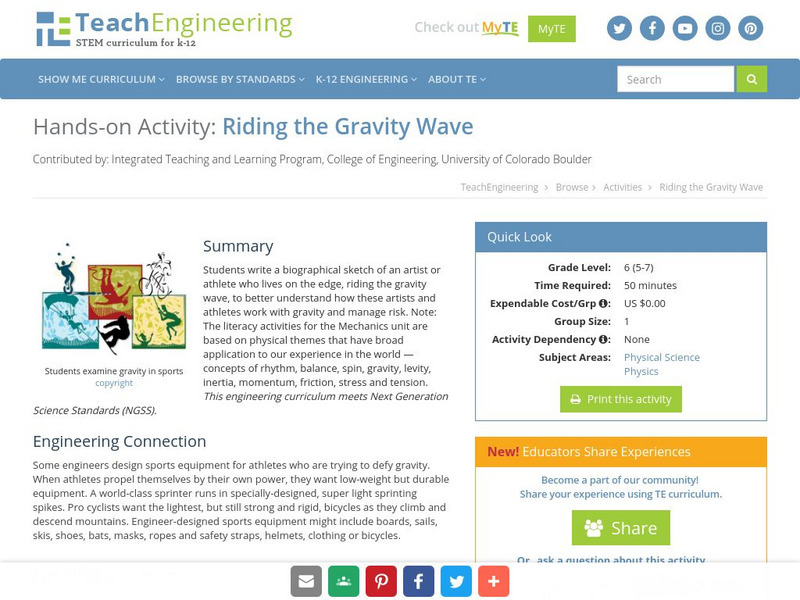
Teach Engineering: Riding the Gravity Wave
Students write a biographical sketch of an artist or athlete who lives on the edge, riding the gravity wave, to better understand how these artists and athletes work with gravity and manage risk. Note: The literacy activities for the...
TeachEngineering
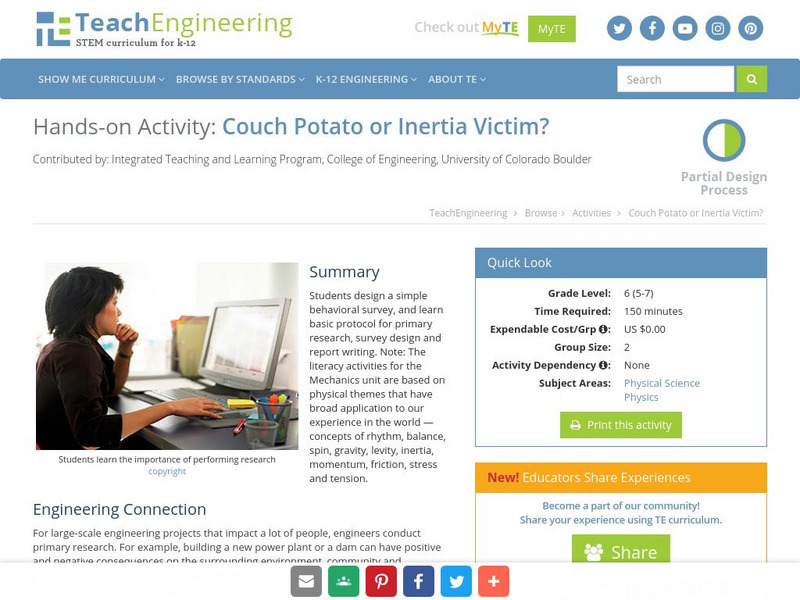
Teach Engineering: Couch Potato or Inertia Victim?
Students design a simple behavioral survey, and learn basic protocol for primary research, survey design and report writing. Note: The literacy activities for the Mechanics unit are based on physical themes that have broad application to...
TeachEngineering
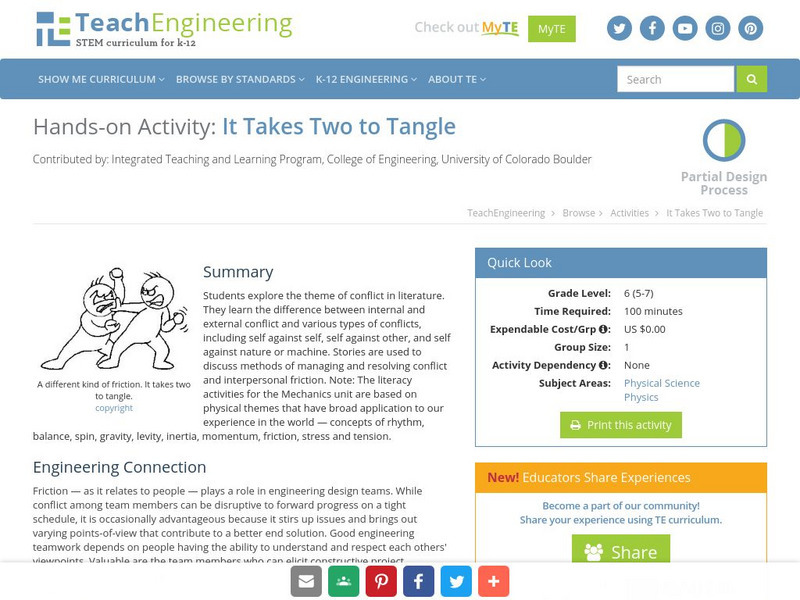
Teach Engineering: It Takes Two to Tangle
Students explore the theme of conflict in literature. They learn the difference between internal and external conflict and various types of conflicts, including self against self, self against other, and self against nature or machine....
TeachEngineering
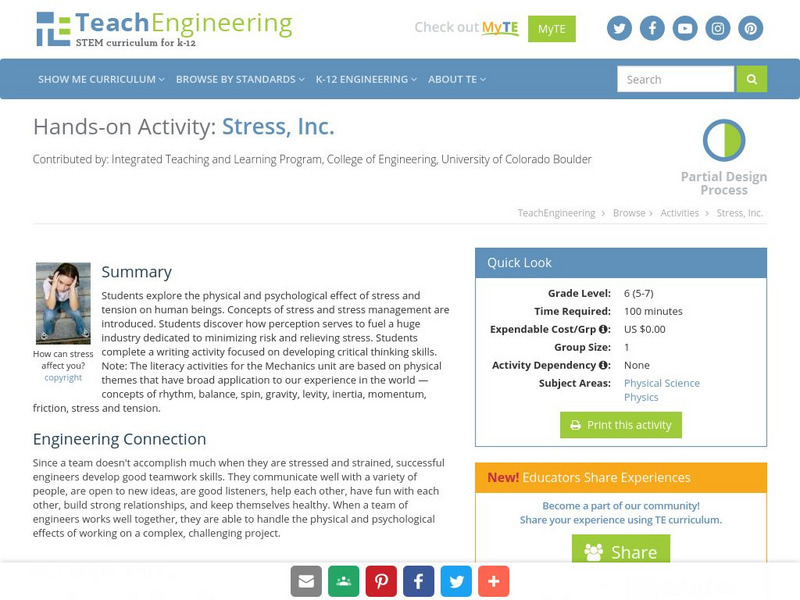
Teach Engineering: Stress, Inc.
Students explore the physical and psychological effect of stress and tension on human beings. Concepts of stress and stress management are introduced. Students discover how perception serves to fuel a huge industry dedicated to...
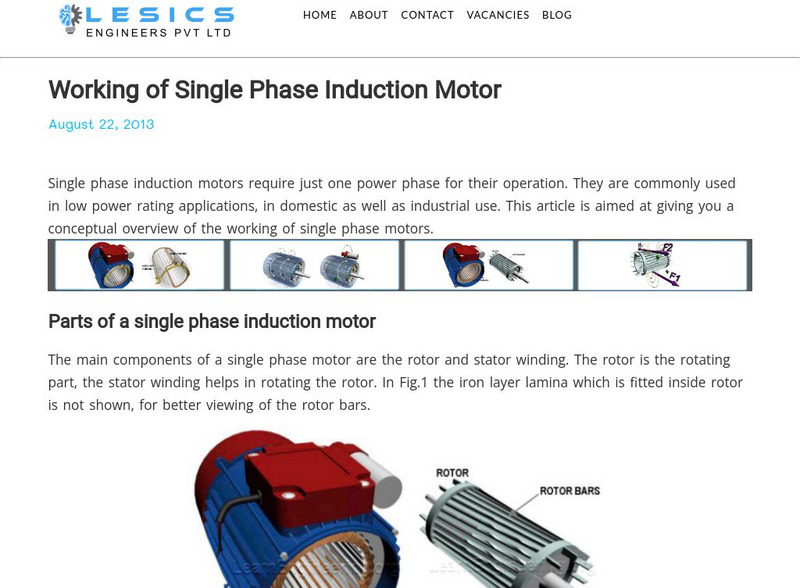
Learn Engineering
Learn Engineering: Working of Single Phase Induction Motors
A video and article giving information about how single phase induction motors function and what parts they contain. The accompanying article explains the concepts further using detailed illustrations. [4:06]
Science Buddies
Science Buddies: Gears Go Round!
Music boxes, bicycles, and clocks all have one thing in common: GEARS. You might say that gears make the world turn, since they are in so many mechanical instruments. How do they work and how do you know which gears to use? Find out in...
Science Buddies
Science Buddies: You Nailed It! Hammering Force for Different Types of Wood
This Science Buddies project explains how to build a mechanism that will reproducibly swing a hammer so you can determine the amount of force needed to hammer a nail through various densities of wood. The Science Buddies project ideas...
Science Buddies
Science Buddies: Fractography: The Way Things Break
When something goes wrong, do you like to try to figure out why? Engineers do this all the time. They even have a fancy name for it: failure analysis. Understanding how different materials break is an important part of failure analysis....

University of Houston
University of Houston: Engines of Our Ingenuity: No. 1031: Antikythera Mechanism
This site contains the history of and a description of the Antikythera Mechanism in written and audio form.
TeachEngineering
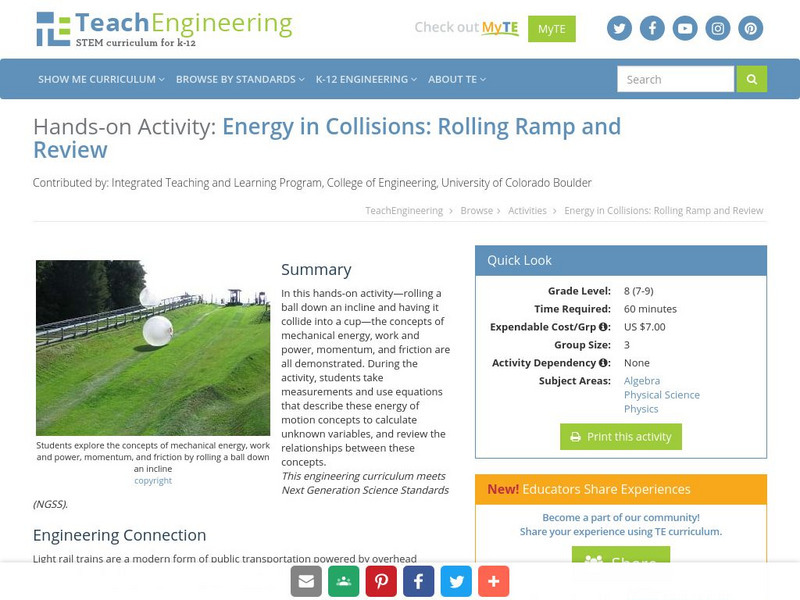
Teach Engineering: Ramp and Review
In this hands-on activity - rolling a ball down an incline and having it collide into a cup - the concepts of mechanical energy, work and power, momentum, and friction are all demonstrated. During the activity, students take measurements...
TeachEngineering
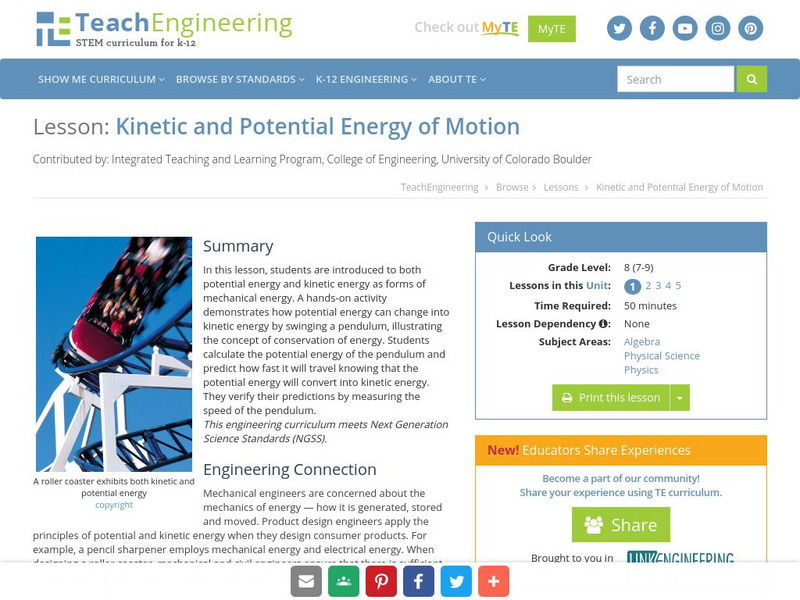
Teach Engineering: Kinetic and Potential Energy of Motion
In this lesson, students are introduced to both potential energy and kinetic energy as forms of mechanical energy. A hands-on activity demonstrates how potential energy can change into kinetic energy by swinging a pendulum, illustrating...
TeachEngineering
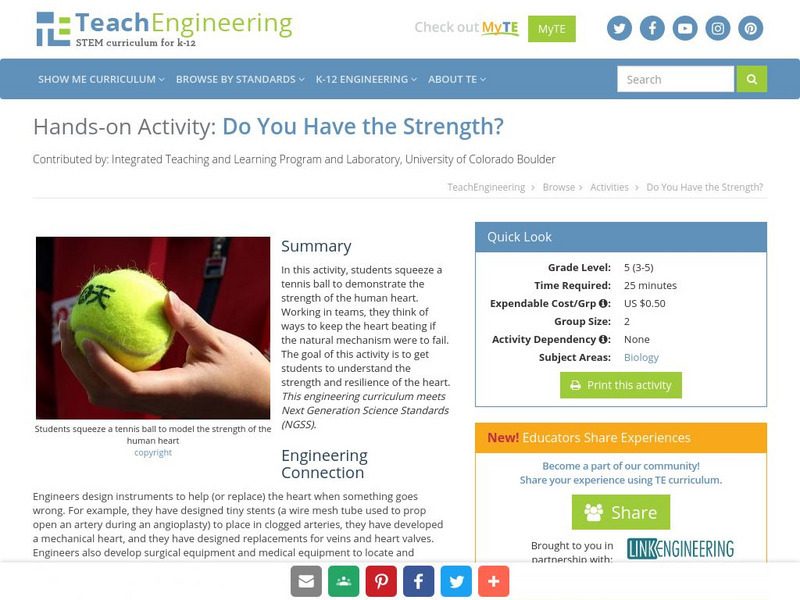
Teach Engineering: Do You Have the Strength?
In this activity, students squeeze a tennis ball to demonstrate the strength of the human heart. Working in teams, they think of ways to keep the heart beating if the natural mechanism were to fail. The goal of this activity is to get...
TeachEngineering
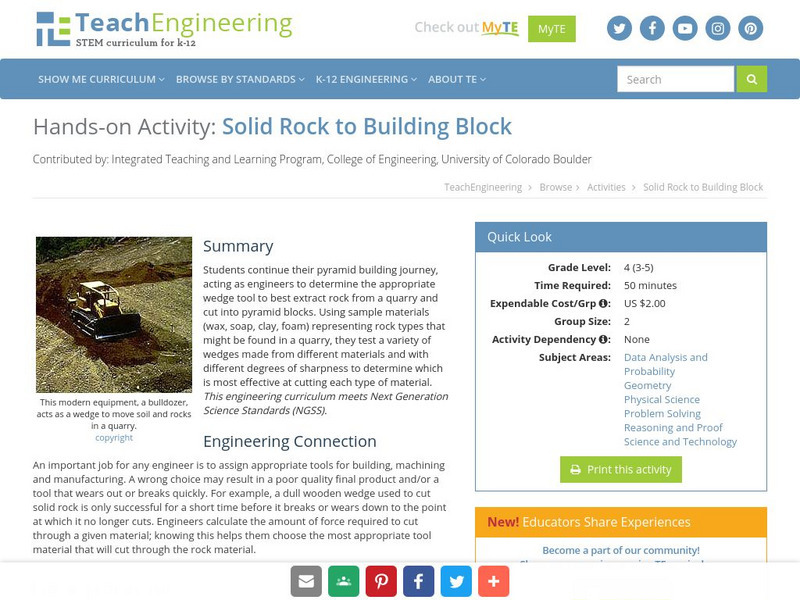
Teach Engineering: Solid Rock to Building Block
Students continue their pyramid building journey, acting as engineers to determine the appropriate wedge tool to best extract rock from a quarry and cut into pyramid blocks. Using sample materials (wax, soap, clay, foam) representing...
TeachEngineering
Teach Engineering: Pyramid Building: How to Use a Wedge
Students learn how simple machines, including wedges, were used in building both ancient pyramids and present-day skyscrapers. In a hands-on activity, students test a variety of wedges on different materials (wax, soap, clay, foam)....

TeachEngineering
Teach Engineering: Ramp and Review (For High School)
In this hands-on activity - rolling a ball down an incline and having it collide into a cup - the concepts of mechanical energy, work and power, momentum, and friction are all demonstrated. During the activity, students take measurements...
TeachEngineering
Teach Engineering: Wow! That Captures It!
Students learn how motion capture (mo-cap) technology enables computer animators to create realistic effects. They learn the importance of center of gravity in animation and how to use the concept of center of gravity in writing an...