Hi, what do you want to do?





University of Washington
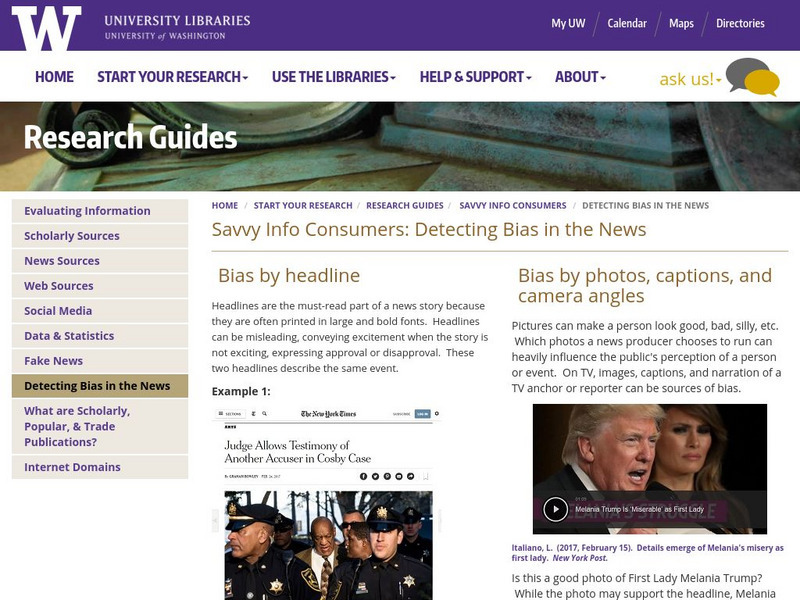
Bias in the News
This handy page clearly explains various ways in which bias can creep into news reports. Examples of each method are given.

American Institute of Biological Sciences
Action Bioscience: Beach Closings: Science Versus Public Perception
The media is relaying inaccurate information as to why an increasing number of beaches are being closed. Understand the scientific reasoning for the closures versus the political and economic motivated reasons.
Other
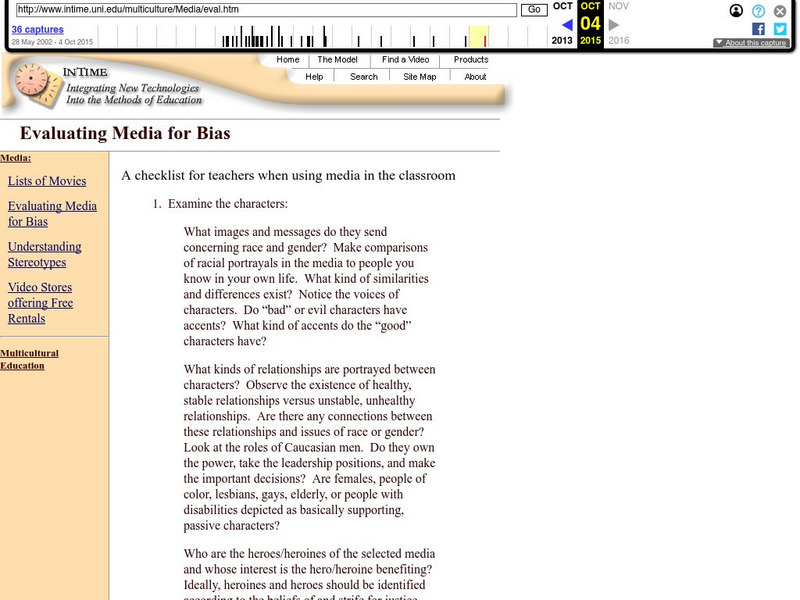
In Time: Evaluating Media for Bias
This site provides a checklist, especially helpful for teachers, that details the way to check media elements to be used in the classroom for biases. This site provides six questions to help evaluate the effectiveness of the media in...

PBS
Pbs Learning Media: Point of View: Who, Me? Biased?: Understanding Implicit Bias
In this interactive lesson, students explore the extent to which society (and they themselves) may discriminate based on factors they're not even aware of, implicit biases. Why haven't laws been enough to eliminate discrimination? After...
Johns Hopkins University
Johns Hopkins University Sheridan Libraries: Information and Its Counterfeits
Distinguishing information from propaganda, biased reporting and misinformation is an important skill. This short article defines each of these, and provides examples of each.

McGraw Hill
Glencoe: Recognizing Propaganda: Loaded Language
Lesson plan designed for consumer health class, that is also useful for media literacy. Contains a link to an ad for an abdominal strengthening machine that provides the basis of the lesson. SL.9-10.2 eval & integrate sources
Other
Webliminal: Critically Evaluating Information on the Internet
This site gives excellent information on why it's important to evaluate the content of everything you find in cyberspace, and also tells you how to do so. It also contains information about using search engines effectively and how to...

Library of Congress
Loc: The Titanic: Shifting Responses to Its Sinking
In 1912, popular media headlined the sinking of the world's largest luxury passenger ocean liner while on its maiden voyage. Newspapers captivated the world's attention with stories from survivors and about victims who did not survive....
Other
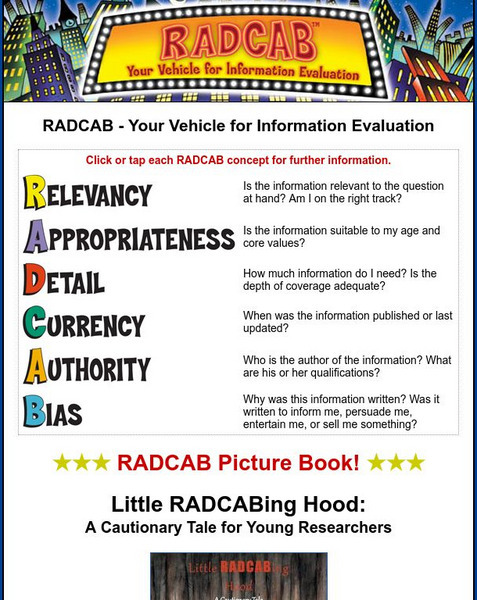
Radcab: Your Vehicle for Information Evaluation
How do you know you are using a trustworthy source when writing a research paper? Use this acronym for easy questions to ask yourself to make sure you have a reliable source. Click on each one for further details.
Louisiana Department of Education
Louisiana Doe: Louisiana Believes: English Language Arts: Grade 8: The Tell Tale Heart
Eighth graders explore the role of the narrator and point of view in a text. Students will understand how the narrative voice of a text can blur the line between fact and fiction and how a story truth is often different from but relates...
Annenberg Foundation
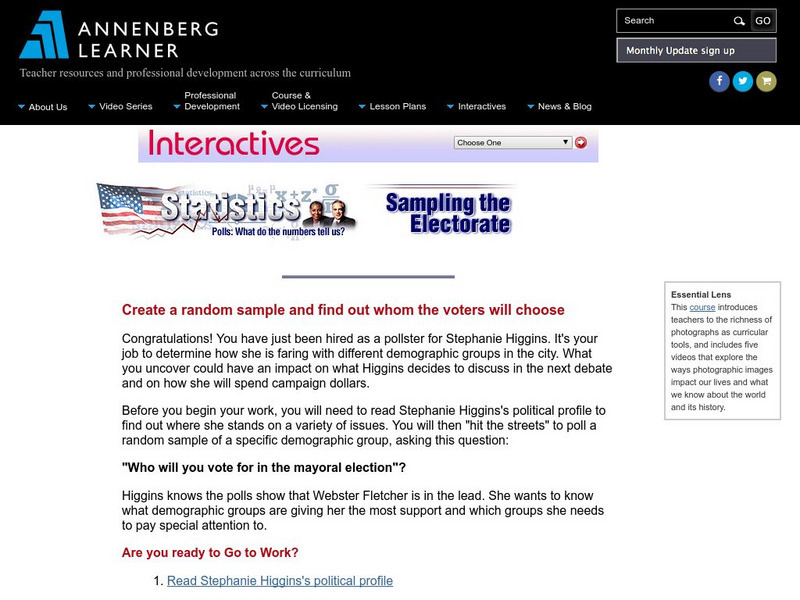
Annenberg Learner: Sampling the Electorate
As the pollster for candidate Higgins, you need to know how she is faring with different groups. Read her political profile, view the demographic profile of the city, decide on the groups to poll, review the results and learn about...
iCivics
I Civics: Propaganda: What's the Message?
Students will learn what propaganda is and how it uses different techniques to sway public opinion by looking at examples of advertisements and campaigns used by governments and private businesses.
Other popular searches
- Bias in the Media
- Media Bias Iraq War
- Bias in the News Media
- News Bias and Discrimination
- Identifying Media Bias
- Detecting Media Bias
- News Bias
- Iraq Media Bias
- Iran Media Bias
- Television News Bias
- Bias in News Media
- Bias in News Media Race