Hi, what do you want to do?






McGraw Hill
Orbital Velocity Interactive
Why does it take Pluto 90,000 days to orbit the sun, but it only takes Mercury 88 days? An interactive lesson helps pupils find a connection between the speed of orbit and distance a planet is from the sun. The simulation allows for...

Concord Consortium
Sunlight, Infrared, CO2, and the Ground
How bright are your classes? An interactive lesson has scholars explore how light interacts with carbon dioxide in the air and the surface of the earth. They watch a temperature scale as light interacts with the environment.

PBS
Why Isn't There an Eclipse Every Month?
Searching for an eclipse activity that sends scholars over the moon? Try an interesting interactive to get their minds active! The resource, part of an extensive Space series from PBS Learning Media, uses modeling and data analysis to...

Curated OER
Make A Crossword Puzzle - Vocabulary Challenge
In this crossword puzzle instructional activity, students make a crossword puzzle from their vocabulary words. Students follow 6 sets of directions to make the online puzzle.
Harvard University
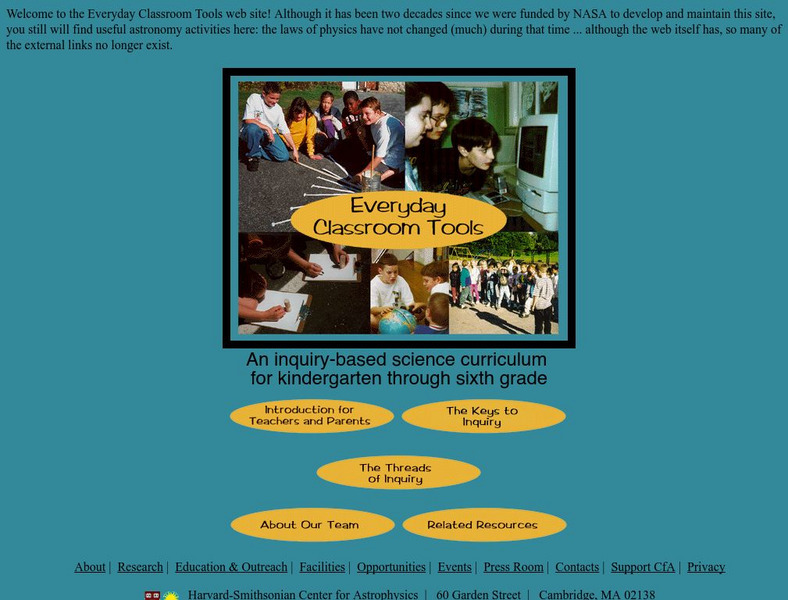
Harvard Smithsonian: Everyday Classroom Tools
The focus of this series of lessons is to engage students in an exploration of the world around them. The emphasis is on inquiry as students learn about the earth, sun, light, shapes and more.
Concord Consortium
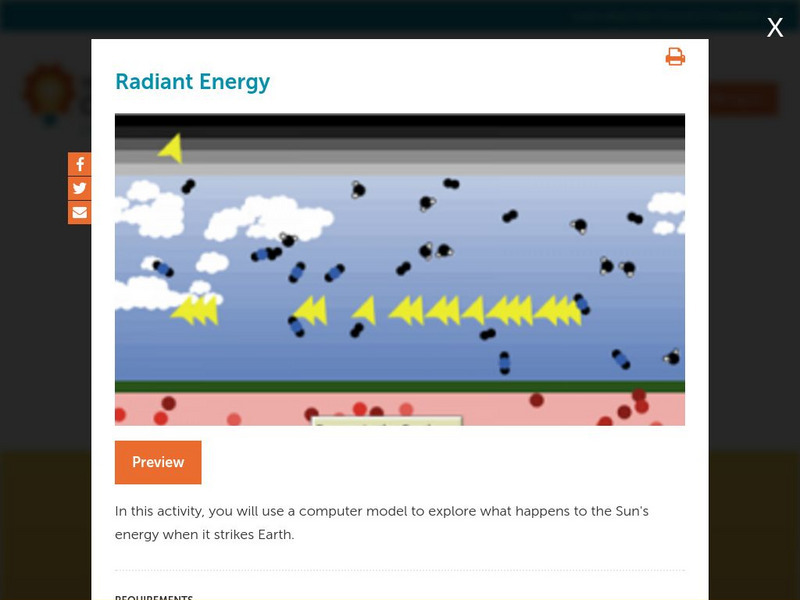
Concord Consortium: Stem Resources: Radiant Energy Flow
A virtual lab to look at the physical features of Earth that affect the amount of the Sun's energy that hits Earth. Students investigate how solar and infrared radiations enters and leaves the atmosphere with this model. Virtual lab...