Hi, what do you want to do?






Council for Economic Education
Econ Ed Link: Money Doesn't Grow on Trees
This lesson plan helps students distinguish between earned and unearned income by identifying methods for getting money.
Goodwill
Gcf Global: Assessing How You Manage Money
This lesson examines how to manage your money safely.

Khan Academy
Khan Academy: Lesson Summary: Banking and the Expansion of the Money Supply
This lesson summary from Khan Academy is intended for students who are taking the AP Macroeconomics course. In this lesson summary will review key terms and calculations related to fractional reserve banking, required reserves, excess...

Council for Economic Education
Econ Ed Link: No Funny Money, Honey I Want the Real Thing!
Do you know what funny money is? It's NOT the real thing! Find out how our government tries to make our money hard to copy in this instructional activity about real and fake money.
Better Lesson
Better Lesson: Counting Up the Cost!
Fourth graders love to shop! In this exciting instructional activity, 4th graders will discover how to count money using some real world activities. This instructional activity includes a detailed lesson plan, printable worksheets, and a...

Khan Academy
Khan Academy: Lesson Summary: Public Policy and Economic Growth
In this instructional activity summary review and remind yourself of the key terms and concepts related to how policymakers can influence economic growth. This resource is designed as a review for the AP Macroeconomics Test or a...

Scholastic
Scholastic: Adventures in Math: Lesson 2: Money Planning
What can we do with money? Deciding on the best use of our money requires planning. Learners will identify ways that money can be used: spending, saving, and giving.
Practical Money Skills
Visa: Practical Money Skills: Lesson Plans for Grades 7 8
Fourteen financial literacy lesson plans for middle school students cover topics such as budgeting, living on your own, the influence of advertising, and saving and investing.

Scholastic
Scholastic: Adventures in Math: Lesson 1: Money Basics
Why do we use money? Learn why we need money and to identify bills and coins.
Science and Mathematics Initiative for Learning Enhancement (SMILE)
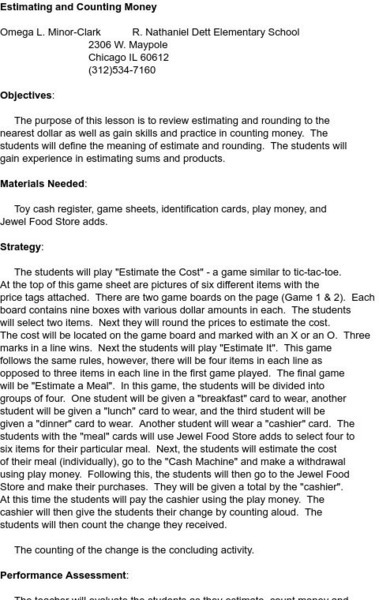
Smile: Estimating and Counting Money
The purpose of this activity from the Illinois Institute of Technology is to review estimating and rounding to the nearest dollar as well as gain skills and practice in counting money. The learners will define the meaning of estimate and...
Other
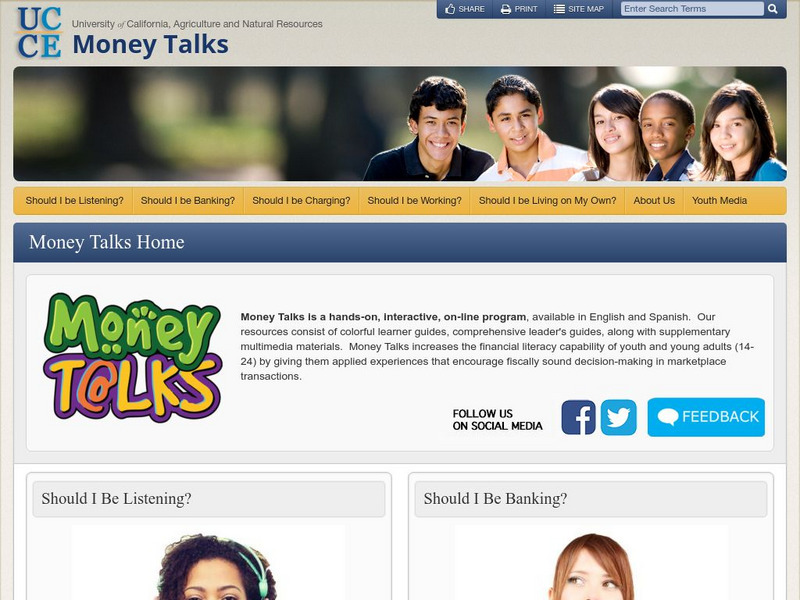
Ucce: Money Talks
This resource provides activities such as: savings video, youth money newletters, financial literacy games, related links, and a teacher section.
Internal Revenue Service
Irs: How Taxes Influence Behavior Lesson Plan
This lesson plan will help young scholars understand how taxes may influence the way people spend and save their money.
Council for Economic Education
Econ Ed Link: Money or Barter?
Economics website with interactive lesson teaching students the characteristics of money and barter. Students will be asked to categorize statements as money, barter, or both.

University of Missouri
University of Missouri: Wise Pockets: Berenstain Bears' Trouble With Money
Using a Berenstain Bears' book, students are introduced to concepts such as spending, goods, services, income, saving, and interest. Lesson is detailed and has good activities. Includes questions about the story that teach students about...
Love To Know Media
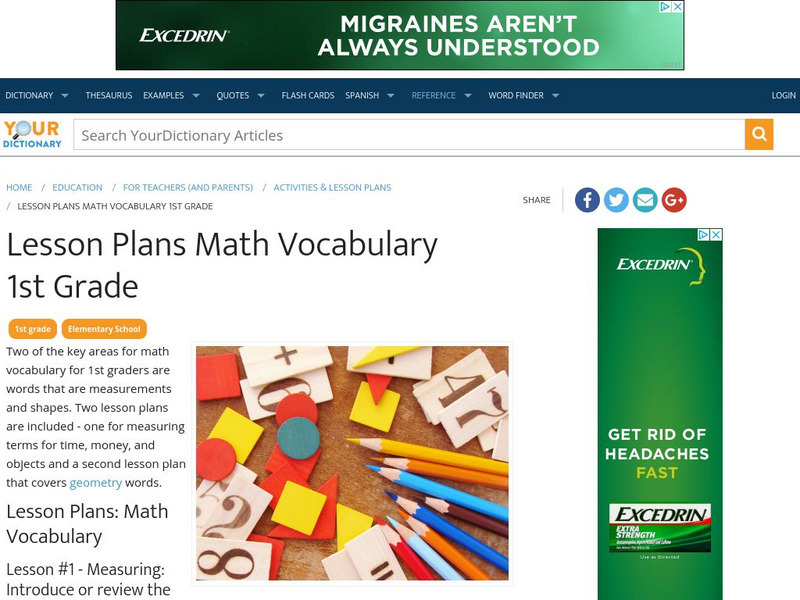
Your Dictionary: Lesson Plans Math Vocabulary 1st Grade
This site includes two first grade math vocabulary lesson plans: one for measurement terms and time and money, and another for geometry terms
Purple Math
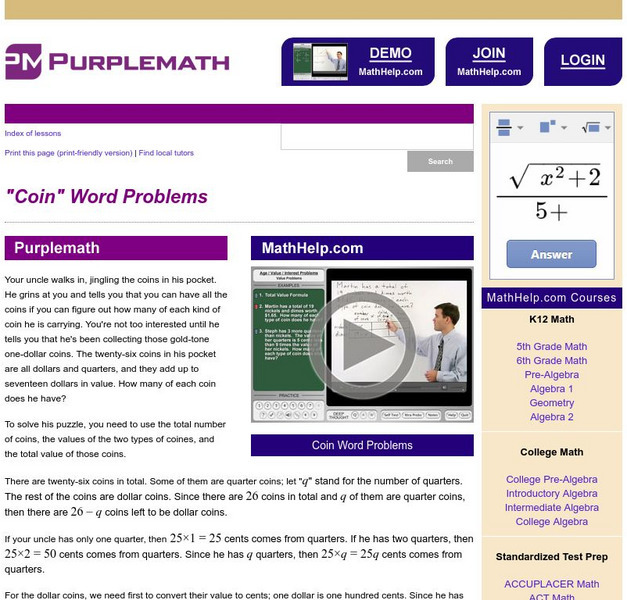
Purplemath: "Coin" Word Problems
This site demonstrates how to solve 'coin' word problems, given relationships between the types of coins.

Scholastic
Scholastic: Adventures in Math: Lesson 4: How to Use Your Money
In this lesson, learners will identify why having a budget and keeping records of their spending and saving habits helps them make better financial choices.
NumberNut
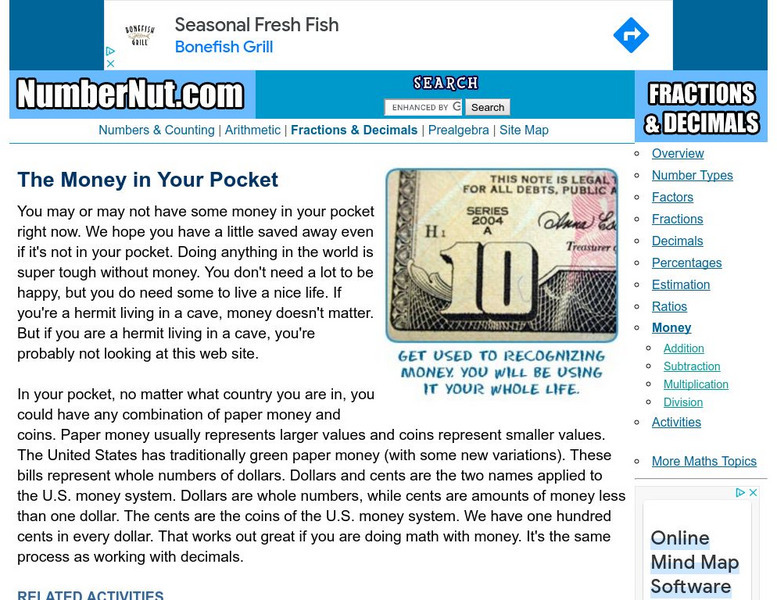
Number Nut: The Money in Your Pocket
What do you know about the money in your pocket? Get a basic understanding of the United States monetary system and how it works in this lesson. Access links to four interactive games to practice your money and number sense skills. All...
iCivics
I Civics: Executive Roles: Money Doesn't Grow on Trees?
Students learn the role of the executive branch in creating and carrying out laws and how the executive and legislative branches work together to create a new coin.

TED Talks
Ted: Ted Ed: Doug Levinson: What Gives a Dollar Bill Its Value?
The value of money is determined by how much (or how little) of it is in circulation. But who makes that decision, and how does their choice affect the economy at large? Doug Levinson takes a trip into the United States Federal Reserve,...

TED Talks
Ted: Ted Ed: How to Spot a Counterfeit Bill
Authentic dollar bills are equipped with many security features to make them difficult to forge. But that doesn't stop counterfeiters from trying to fool people with fakes. Luckily, anyone can help catch a counterfeit; all you need are a...
Council for Economic Education
Econ Ed Link: Hawaiian Economics: Barter for Fish & Poi
Use this lesson to learn more about the Hawaiian economics system. Learn how they developed and used this specialized type of money system. "In this lesson, you will learn how specialization and division of labor increased productivity...
PBS
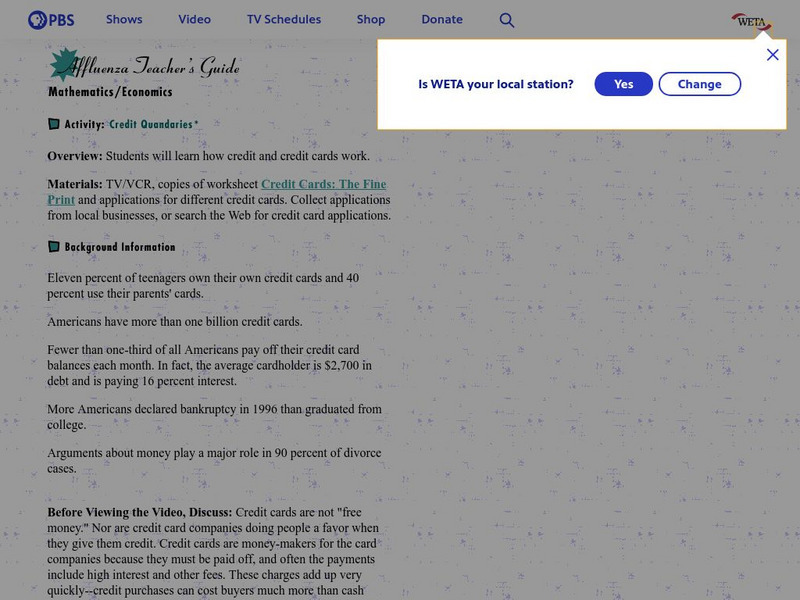
Pbs Lesson Plan (Affluenza): Credit Quandaries
"Credit cards are not free money." Just how do credit cards work? This site provides a instructional activity in which young scholars investigate the lure of credit card companies, the pitfalls of credit debt, and the impact of credit...
Council for Economic Education
Econ Ed Link: Clean Land Thanks to Us! (Student Page)
How does the government raise money to fund government agencies like the EPA? Through taxes. This lesson looks at the different taxes that are paid by US citizens and how the money is used for things such as cleaning up the environment.
Other popular searches
- Money Lessons Giving Change
- Counting Money Lessons
- Canadian Money Lessons
- Second Grade Money Lessons
- 2nd Grade Money Lessons
- Australian Money Lessons
- Shopping Money Lessons
- Math Money Lessons
- Money Lessons Elementary
- Fun Money Lessons
- Counting Money Math Lessons
- Adding Money Amounts Lessons