Hi, what do you want to do?






Global Oneness Project
Exploring Cultural Sustainability
Small groups learn about a present-day nomadic culture in Mongolia and the threats to its existence by exploring a photo essay. The resource includes thoughtful discussion and writing prompts about cultural sustainability, the...

American Museum of Natural History
Going Gobi: The Hunt for Fossils in Mongolia
Take a trip on a fossil hunt. Pupils read about a trip to the Gobi Desert by a group of paleontologists to find fossils. Learners view pictures taken on the trip and determine what the scientists go through in the search for answers to...

American Museum of Natural History
Layer of Time
Dig through the layers for a better understanding of fossils. Scholars learn that fossils form in layers of sedimentary rock. Pupils arrange virtual layers to show the fossil record of different species. Once the layers are correct, they...

American Museum of Natural History
Fighting Dinos
A famous fossil of fighting dinosaurs holds as many questions as answers. Scholars first analyze the fossil itself by virtually highlighting the specific bones of the dinosaurs and read about their function and importance. They then test...

American Museum of Natural History
Ask a Scientist About Dinosaurs
Who doesn't want to know more about the mysterious dinosaurs? Learners read about dinosaurs and the process scientists use to continue learning more about the animals in an interview-type format. A paleontologist responds to submitted...

American Museum of Natural History
The Pre-History Proudly Presents: Face-To-Fossil
An engaging interview allows scholars to get to know Proto Andy, a protoceratops fossil. Following along with the transcript, learners delve into six questions, including how he became a fossil, what he was like when he was alive, and...

Curated OER
Pandemic Flu
Students review the difference between viruses and bacteria, and provide examples of illnesses that each can cause. To help students comprehend how quickly an influenza infection can spread, they perform an activity. They are placed in...

Curated OER
Archaeology and Erosion
Sixth graders study how erosion affects archaeology sites. In this investigative lesson, 6th graders construct a model of a pyramid using sugar cubes. They will investigate in groups how water, wind, and sunlight affects their model...

Curated OER
What about Continental Drift?
Fifth graders research the Continental Drift by researching for evidence of continental movement. The teaching explains the theory of plate tectonics and the Earth's magnetic field. They conclude the lesson by watching the video of "In...

Curated OER
Quiz: Dinosaurs
In this science worksheet, 3rd graders will respond to questions pertaining to dinosaurs. Students will answer ten questions consisting of true/false, and multiple choice.

Curated OER
Drifting Continents
For this plate tectonics worksheet, students study the continents map and complete 8 short answer questions related to them. They predict what the Earth will look like millions from now.

Curated OER
Arsenic Contamination: Water Filtration
Students work in groups to design a filtration process that will separate clean water from polluted water. They organize data in tables or graphs and present their findings to the class. Students identify further safety protocols that...

Other
Field Trip Earth: Takhi Recovery in the Gobi
Field Trip Earth takes a look at the Prezewalski Horse Recovery done in Mongolia's Gobi desert. This was a species of horse that was brought back from near extinction. Learn about the project, the species, and the region it inhabits....
National Geographic Kids
National Geographic Kids: Animals: Bactrian Camel
Great site for youngers researching the Bactrian camel. Video clip, photos, and easy to read facts about habitat, young, enemies, food, adaptation to environment, and humps!
Museums Victoria
Melbourne Museum: Meet the Skeletons: Tarbosaurus Bataar
Tarbosaurus bataar was a large, meat-eating theropod from the Late Cretaceous Period, discovered in Mongolia. Some information and pictures can be found here.
Museums Victoria
Melbourne Museum: Meet the Skeletons: Talarurus Plicatospineus
Talarurus plicatospineus was an herbivorous ankylosaur from Mongolia that lived during the Late Cretaceous Period. Some information and pictures can be found here.
Lincoln Park Zoo
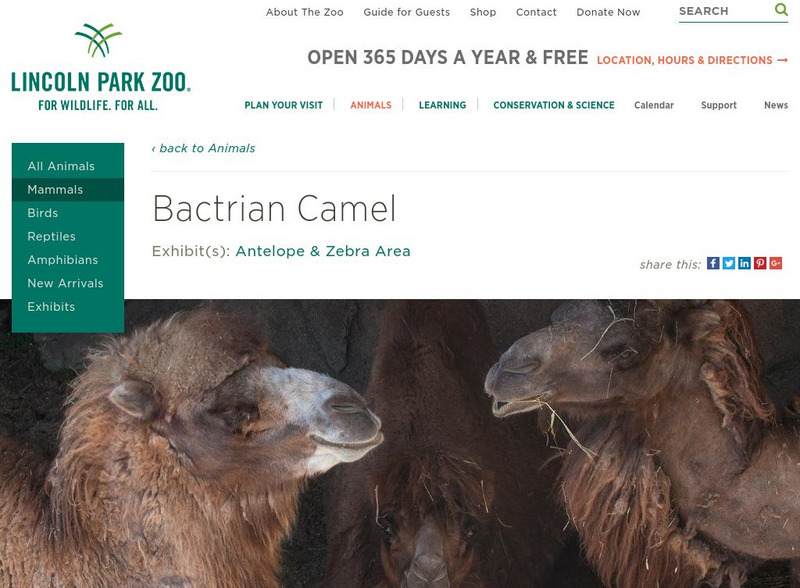
Lincoln Park Zoo: Bactrian Camel
Get the facts about the Bactrian Camel. Information includes where it lives in the wild, its niche environment, what its diet consists of, what it looks like as well as its reproduction habits.
Other
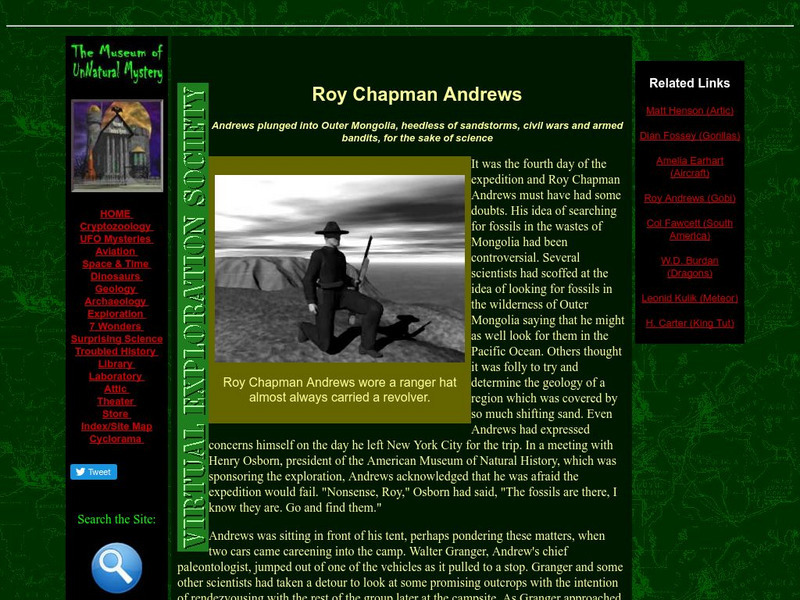
Virtual Exploration Society: Roy Chapman Andrews
Read about a real life Indiana Jones. Roy Andrews was a paleontologist who discovered fossils from the Cretaceous period in the middle of the Gobi Desert.
American Museum of Natural History
American Museum of Natural History: O Logy: What Do You Know? Horses
A quick way to learn horse vocabulary. Students take an interactive quiz, check their answers, and then read why each answer is correct or incorrect.
Canadian Museum of Nature
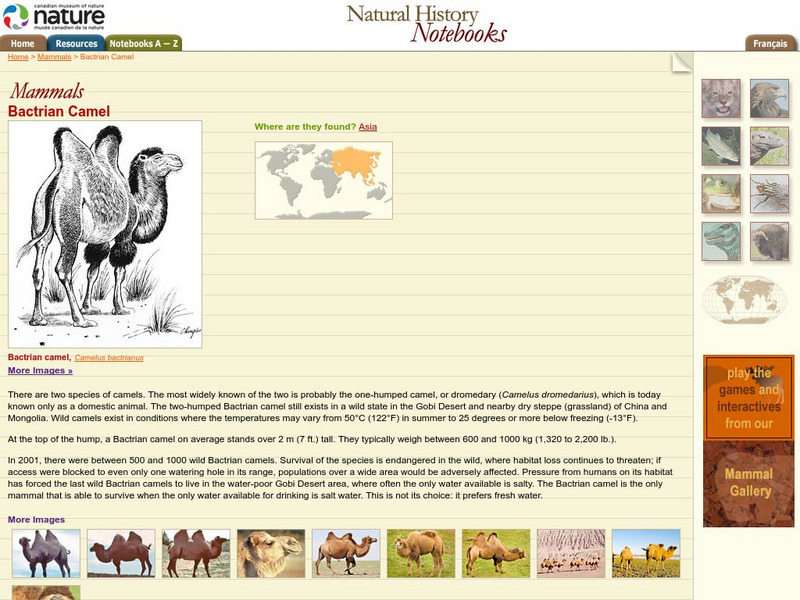
Canadian Museum of Nature: Bactrian Camel
Bactrian camels are found wild in the Gobi Desert, and in the grasslands of China and Mongolia. Details about this animal can be found here along with photos.

American Museum of Natural History
American Museum of Natural History: Gobi Expeditions O Logy Card
Flip this interactive card to start learning about Gobi Expeditions. Answer multiple-choice and fact-or-fiction questions and review some fast facts about this expedition where paleontologists and scientists gather to collect Cretaceous...
Canadian Museum of Nature
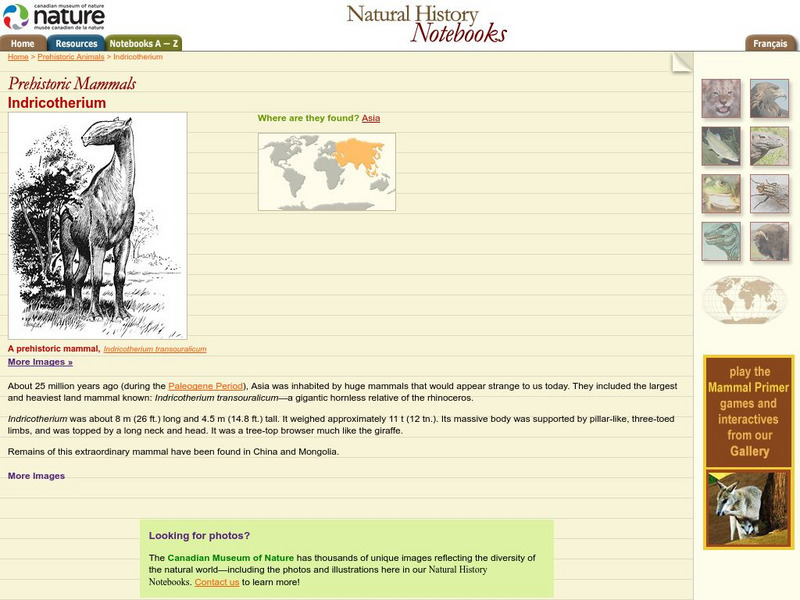
Canadian Museum of Nature: Indricotherium
The Canadian Museum profiles the largest land mammal known to humans-the Indricotherium.
Other popular searches
- Mongolia History and Culture
- Mongolian Empire
- Mongolia History
- Mongolia Map
- Lesson Plans for Mongolia
- Flags Mongolia
- Animals of Mongolia
- Cultures of Mongolia
- Rodeo Mongolia
- Landforms in Mongolia
- Geography of Mongolia
- Religions of Mongolia