Hi, what do you want to do?





![Edutopia: Goods and Services [Pdf] Activity](https://statictemp.lp.lexp.cloud/images/attachment_defaults/resource/large/FPO-knovation.png "Edutopia: Goods and Services [Pdf] Activity")
Edutopia
Edutopia: Goods and Services [Pdf]
A unit that teaches the difference between goods and services, the difference between producers and consumers, the difference between human, natural, and capital resources, and the difference between bartering/trading and buying/selling....
Other
Scottish Natural Heritage: Riverbank Resource
Lesson plans designed to help students have an understanding of the natural and human world around a river. This site includes excellent lesson materials for teaching biodiversity.
Virginia Tech
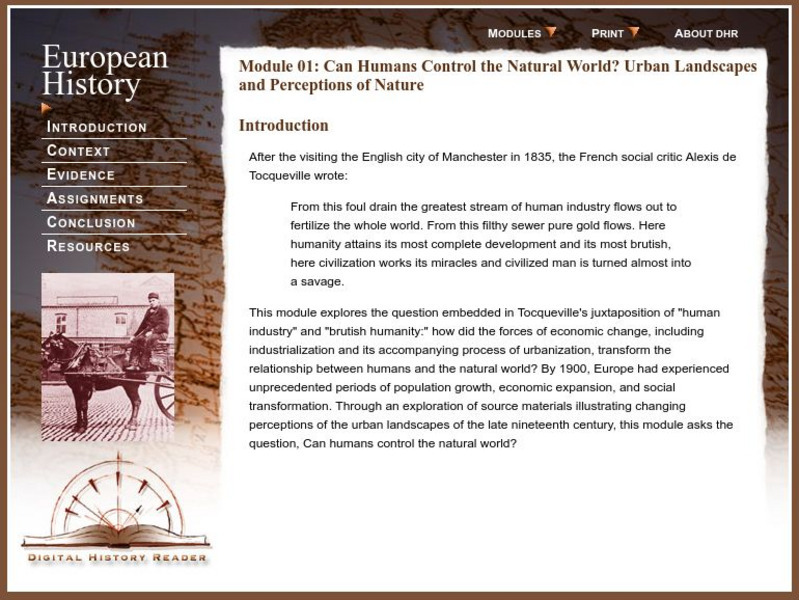
Digital History Reader: Can Humans Control the Natural World?
The course of industrialization and migration of society forced a shift within the natural world. Through context, writing assignments, reports, articles, visual materials, and bibliographical resources this unit dives into the question,...

TeachEngineering
Teach Engineering: Environment
Through 10 lessons and more than 20 hands-on activities, students are introduced to the concept of an environment and the many interactions within it. As they learn about natural and human-made environments, as well as renewable and...
The World Bank
World Bank: Data Catalog
This resource provides statistical data on numerous categories for nearly every country in the world. A great tool for a comparative analysis. Human, natural, and capital resources are all included.
PBS
Pbs Learning Media: Historic Relationships Between Dogs and Humans
In this video segment from Nature, learn the history of the world's first domesticated animal, the dog. [7:34]
Scholastic
Scholastic: Study Jams! Science: Energy, Light and Sound: Natural Resources
A slideshow and a short quiz on natural resources, the difference between renewable and nonrenewable resources, and the impact humans have on the Earth's natural resources.

PBS
Pbs Nature Critter Guide: Llama
Learn more about llamas when you check out this resource. This site features a clear and concise picture of how these fascinating mammals live and what purpose they serve to other animals and humans.
Council for Economic Education
Econedlink: Scarcity Video and Quiz
This video teaches the concept of Scarcity and includes a quiz. The total resources of society, including natural resources, human resources, capital goods and entrepreneurship, are limited, causing scarcity to exist. [1:13]

Khan Academy
Khan Academy: Us History: 1945 1980: Environment/natural Resources 1968 to 1980
A quick comprehension check on the environment and natural resources from 1968 to 1980.
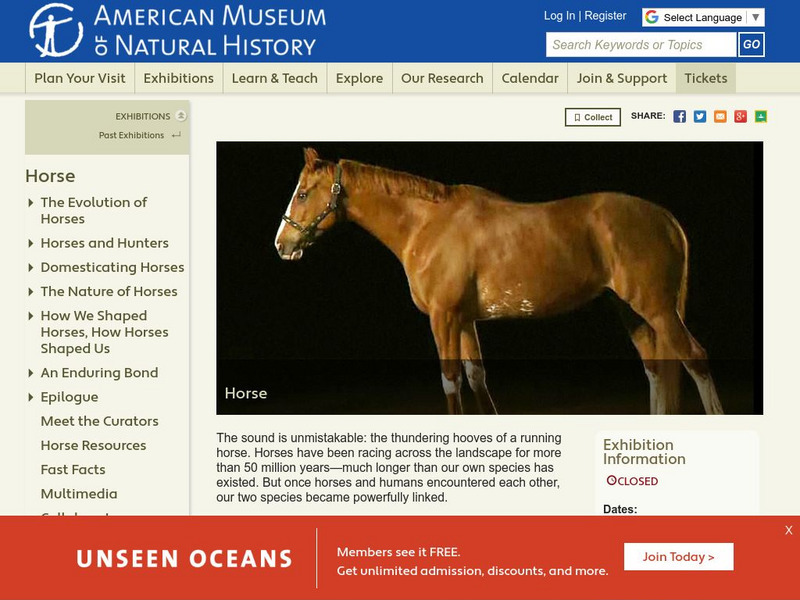
American Museum of Natural History
American Museum of Natural History: The Horse
This resource presents illustrated essays about horses, developed in conjunction with museum-mounted exhibition, cover a wide range of topics, including the evolution of horses, the domestication of horses, the nature of horses, and the...
E-learning for Kids
E Learning for Kids: Science: Denmark: What Are Natural Resources and Why Are They Important?
Learn about natural resources, both renewable and nonrenewable, and the impact humans have on the natural world.
Columbia University
Nasa: Sedac: Land Use and Land Cover Change
[Free Registration/Login Required] A collection of twenty-six data sets from SEDAC (Socioeconomic Data and Applications Center) that examine land use and how human activities have impacted on land cover. They look at agriculture, loss of...
Federal Reserve Bank
Federal Reserve Bank of St. Louis: Tortilla Factory [Pdf]
This lesson plan accompanies a story by Gary Paulsen called Tortilla Factory, and teaches students to identify the different types of resources (human, capital, natural, etc.) that go into creating corn tortillas and other products.
American Museum of Natural History
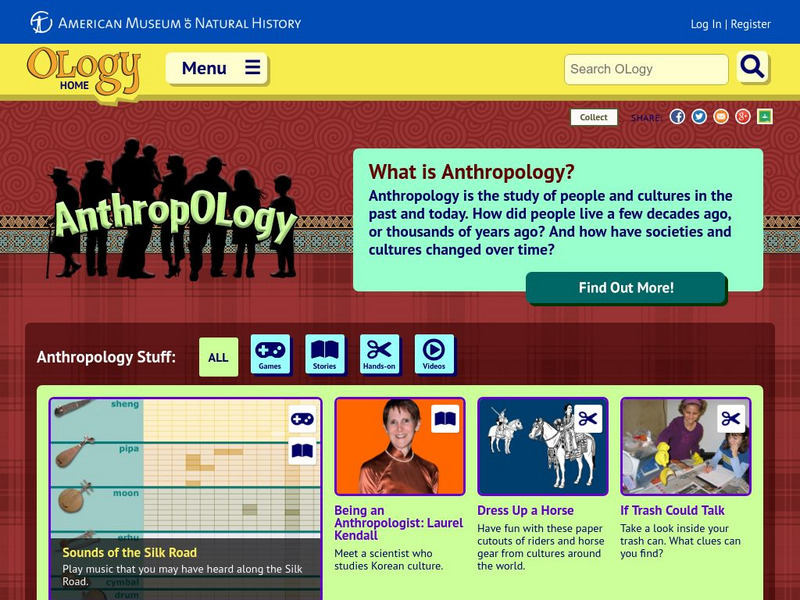
American Museum of Natural History: Anthropology
This resource allows students to discover the world of anthropology in a completely new way. The signficance of studying the human race is explained, along with interactive games, activities, and interviews. Design an ancient flowerpot,...
American Museum of Natural History
American Museum of Natural History: Anthropology
This resource allows students to discover the world of anthropology in a completely new way. The signficance of studying the human race is explained, along with interactive games, activities, and interviews. Design an ancient flowerpot,...

Science Education Resource Center at Carleton College
Serc: Disaster Dynamics
The goal of the Disaster Dynamics project is to create games that teach players about the interaction between natural hazards and human decisions.
Ohio Department of Natural Resources
Ohio Department of Natural Resources: Small Game Hunting Regulations
Lists Ohio and federal hunting laws for small game, including dove, squirrel, grouse, rabbit, pheasant, quail and other small game.
PBS
Pbs Learning Media: Religion and Ethics Weekly: Dr. Francis S. Collins Interview
Read a discussion with Francis S. Collins, director of the Human Genome Project, who touches on the role that faith plays in his profession. Collins discusses the Human Genome Project and its goals and results, genetic disorders, and the...

Khan Academy
Khan Academy: Us History: 1945 1980: Stagflation and the Oil Crisis
Read about the economic downturn of the 1970s and the OPEC oil embargo of 1973-1974.
Council for Economic Education
Econ Ed Link: The Civil War: A War of Resources
The North won the Civil War in large part due to its superior resources. In this activity students will learn the difference between capital resources, human capital, and natural resources. They will investigate and compare the resources...
The Wonder of Science
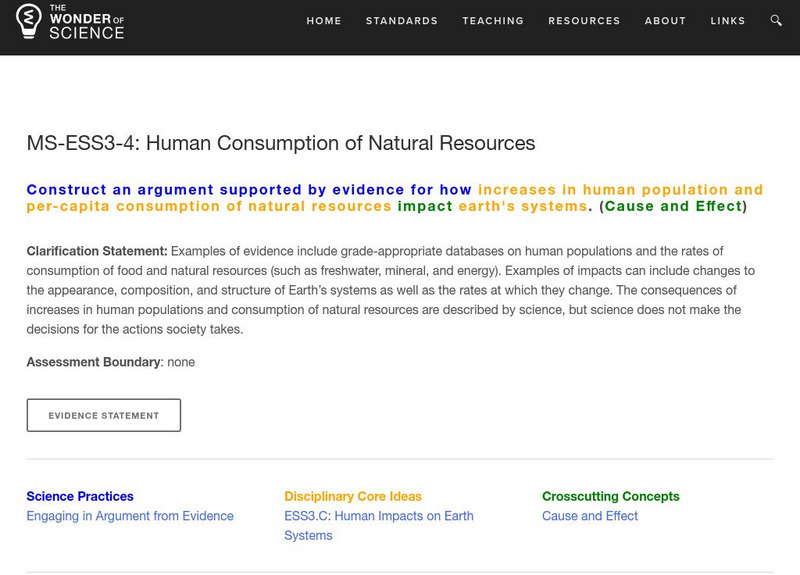
The Wonder of Science: Ms Ess3 4: Human Consumption of Natural Resources
Assessment templates, videos, examples, lesson plans, and photos of student work that directly address standard MS-ESS3-4: human consumption of natural resources.
Other
Maryland Department of Natural Resources: Chesapeake Bay
This site, from the Maryland Department of Natural Resources, explains the effects that humans have had on Chesapeake Bay. It explores the changes in the bay that have occurred over time.
American Museum of Natural History
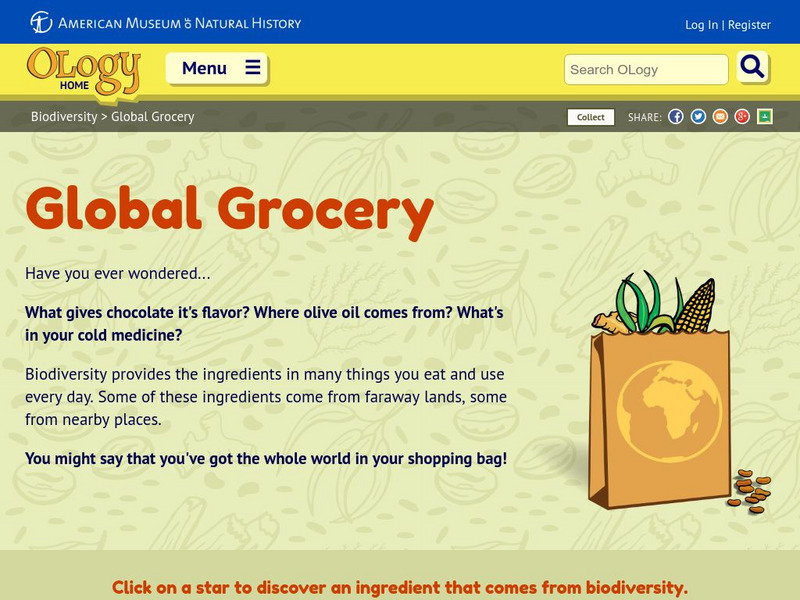
American Museum of Natural History: O Logy: Global Grocery
Did you ever wonder where tapioca pudding comes from? Did you know that cacao beans were once used as money? Learn about the human uses of plants (to make common foods and medicines) at the Global Grocery.