Hi, what do you want to do?






PBS
Pbs Learning Media: Sharks in Our Future
In this video segment from Nature, see the value that sharks can have on the tourism industry in an area. [1:41]
PBS
Pbs Learning Media: Primary Source: Environmental Preservation Progressive Era
This collection uses primary sources to environmental preservation in the Progressive Era.
Globio
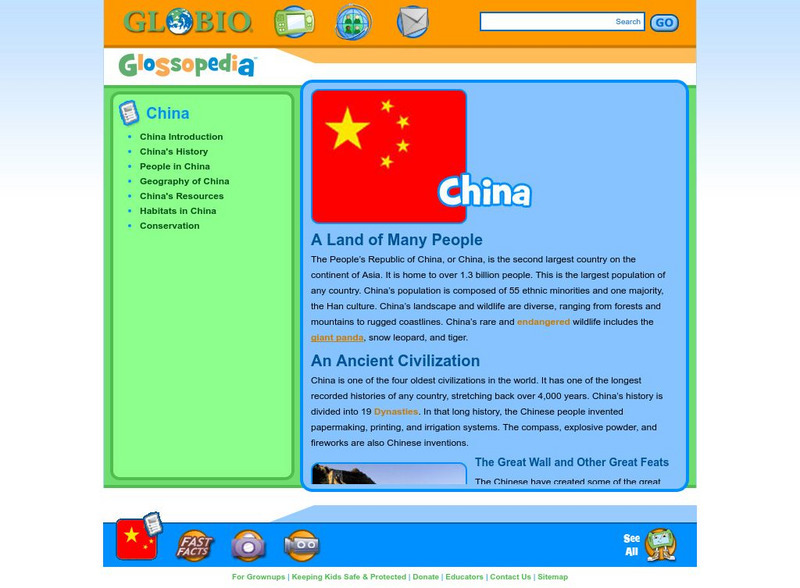
Glossopedia: China
China is the second largest country in Asia with the largest population in the world. This article discusses China's long history, many inventions, and basic cultural information. China's varied topography is introduced as well as...
Environmental Education for Kids
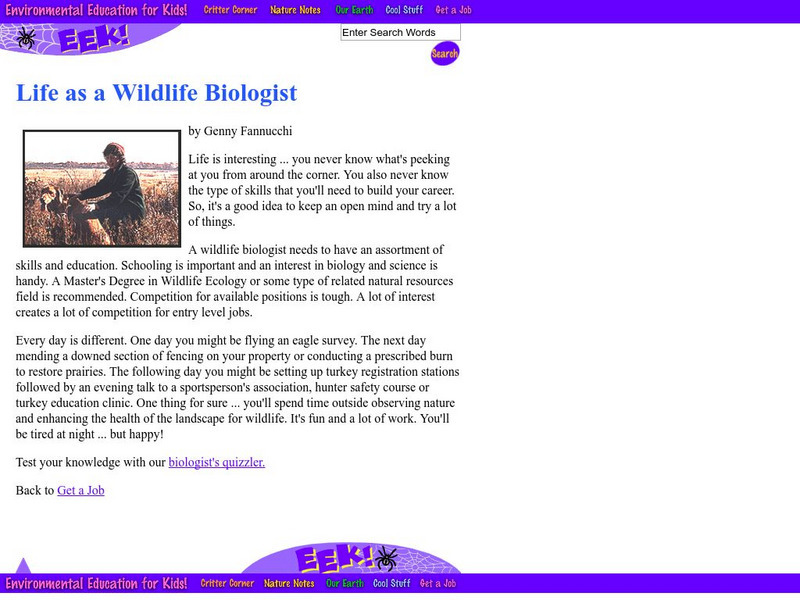
Eek!: Life as a Wildlife Biologist
This site describes the skills needed for a career in Wildlife Biology. Includes link to a quiz that tests the student's knowledge of Wildlife issues.
World Wildlife Fund for Nature
World Wildlife Fund: Ranger Club (Dutch Version)
The Dutch version of the World Nature Fun's Ranger Club children's site. Students learn about endangered animals in different habitats, obtain pictures through the animal library and play games. Some sections of the resource offer paid...
Other
Manitoba Model Forest Network: Interaction Within Forest Ecosystems [Pdf]
This comprehensive Grade 7 Science unit has three chapters on forest ecosystems, natural cycles in a forest, and human interactions with a forest. Each chapter has experiments, activities and questions complete with answers. There are...
PBS
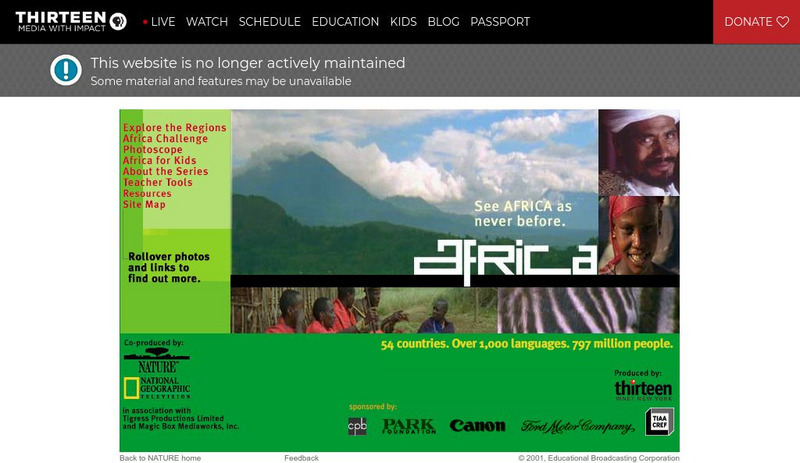
Wnet: Thirteen: Eco Challenges
Research and report on two pressing environmental concerns in Africa: the scarcity of clean water and the desertification of farmland. Respond to these issues through activities involving art, drama and journalism.
Text Project
Text Project: Fyi for Kids: Counting Endangered Animals [Pdf]
This FYI for Kids (Volume 5, Issue 2) article focuses on counting endangered animals including how they count them and why. It uses two examples of the use of modern technology to count endangered animals: panthers and humpback whales.
Other
Alberta Riparian Habitat Management Society: Digital Stories
A selection of good-quality videos that teach about riparian areas are available here. The videos promote an understanding of riparian shorelines and explain the importance of preserving these areas.
Cynthia J. O'Hora
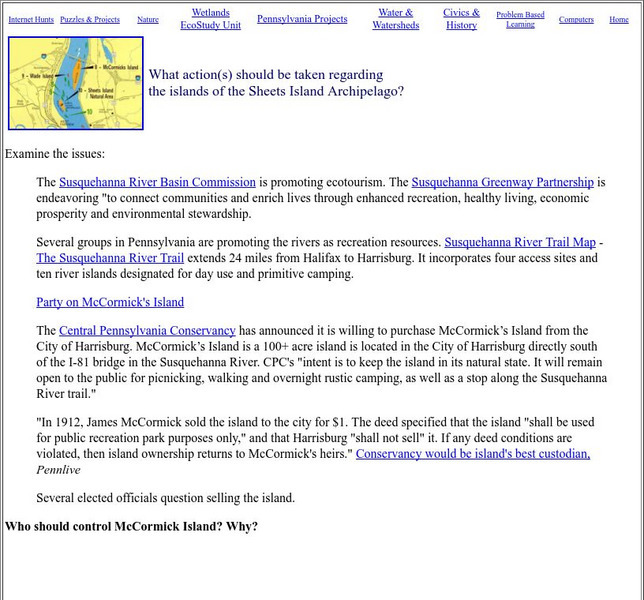
Mrs. O's House: Sheets Island Archipelago
The city of Harrisburg, Pennsylvania and Central Pennsylvania Conservancy are deciding who should own a small island in the Susquehanna River, deeded to the city by it's original inhabitant, James McCormick, in 1912 under the conditions...

BBC
Bbc: Animals on the Edge: Elephants
What are the threats to elephants? What specific species are in trouble and what can you do about it? These questions are all addressed by this resource.
CK-12 Foundation
Ck 12: Earth Science: Flow of Matter in Ecosystems
[Free Registration/Login may be required to access all resource tools.] In this module, students will learn about the cycles of nature (water, carbon, nitrogen, and phosphorus) that support the flow of nutrient matter through an...
US Energy Information Administration
U.s. Eia Energy Kids
This extensive resource provides information on renewable energy, nonrenewable energy and energy conservation.
American Geosciences Institute
American Geosciences Institute: Earth Science Week: Mapping Your Soil
Use the Web Soil Survey developed by the USDA-Natural Resources Conservation Service to determine what soil is around your school and how it can be used.
Other
Ancon Homepage
This is the homepage of ANCON, an environmental organization whose goal is to conserve the biodiversity and natural resources of Panama. The page contains links to learn more about their organization as well as beautiful pictures of the...

Alabama Learning Exchange
Alex: Save the Forest
President Theodore Roosevelt believed in the need for conservation and was called America's first environmental president. What steps did he take to help preserve the environment and its natural resources? Today we can enjoy the beauty...
Smithsonian Institution
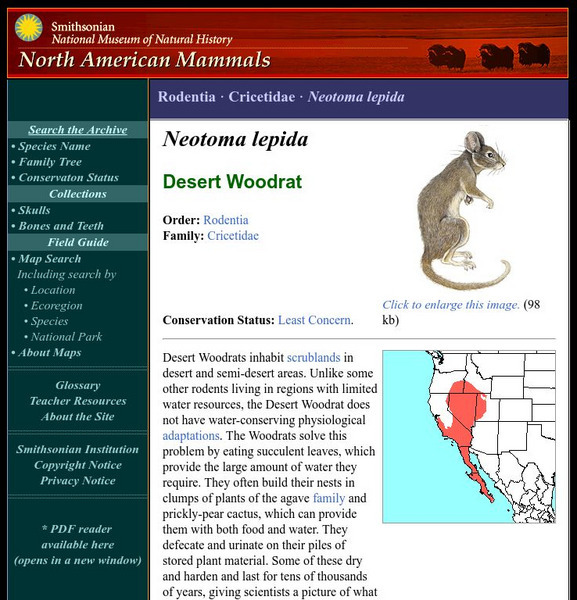
National Museum of Natural History: American Mammals: Desert Woodrat
Desert Woodrats inhabit scrublands in desert and semi-desert areas. Unlike some other rodents living in regions with limited water resources, the Desert Woodrat does not have water-conserving physiological adaptations. Learn more about...
Other
Hilton Pond Center
This Hilton Pond Center site is a resource for teachers, students and researchers who are interested in the environment and environmental conservation of animals and plants.

Alabama Learning Exchange
Alex: Endangered Species
Young scholars research and create a brochure project on an endangered species of their choice integrating aspects of math, science, social studies, art, reading and writing. This project allows the students to make connections across...