Hi, what do you want to do?





Maine Historical Society
Maine Historical Society: How 19th Century Artists Viewed the Separation of Civilization and Nature
Combining art and literature, this lesson plan takes a look at how artists drew the line between civilization and wilderness in 19th century America.

Lumen Learning
Lumen: Romanticism: "The American Scholar" by Ralph Waldo Emerson
"The American Scholar" is a speech given by Ralph Waldo Emerson on August 31, 1837, to the Phi Beta Kappa Society at Cambridge, Massachusetts. He was invited to speak in recognition of his groundbreaking work "Nature" in which he...
National Endowment for the Humanities
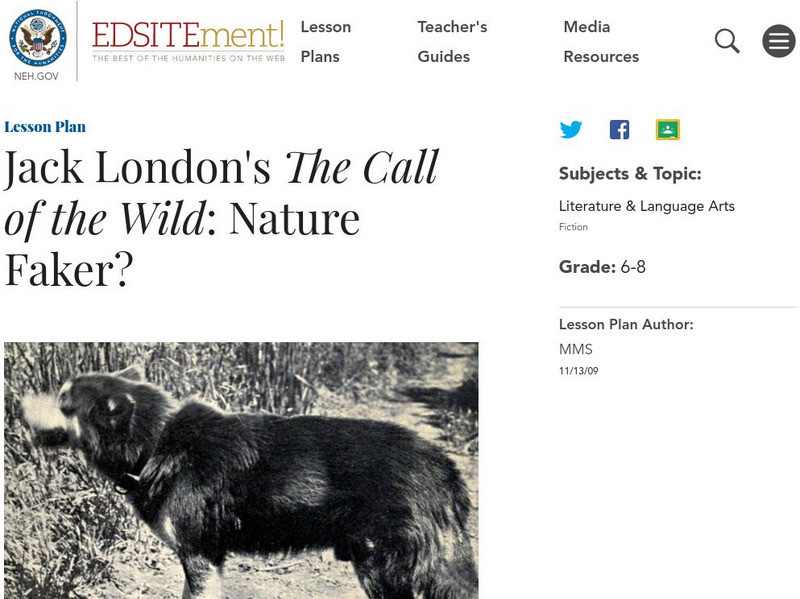
Neh: Edsit Ement: Jack London's the Call of the Wild: "Nature Faker"?
In this lesson plan, young scholars will consider "Jack London's The Call of the Wild: "Nature Faker"?." The plan includes worksheets and other student materials that can be found under the resource tab.

Other
A Literature of Place
Author Barry Lopez shares his observations about the literature of place in the United States. In this piece he examines how nature writing addresses the universal theme of connection between humans and the environment.
National Endowment for the Humanities
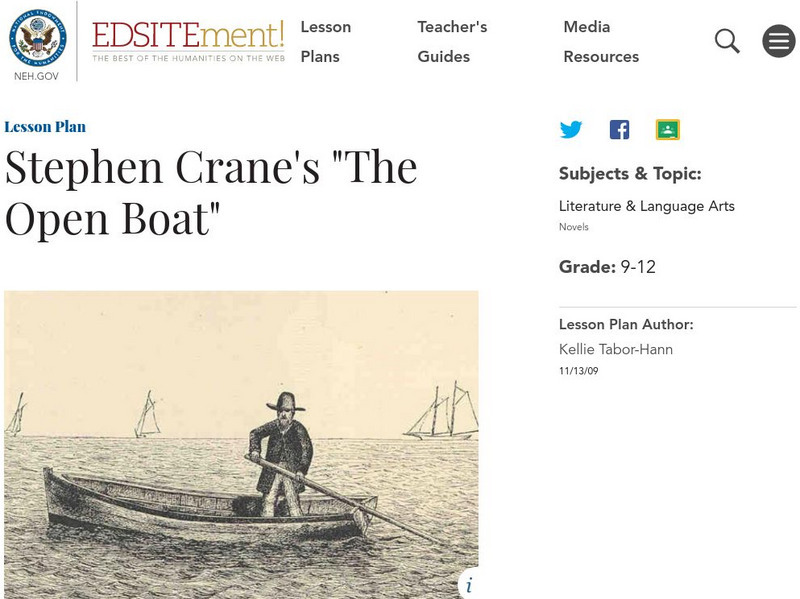
Neh: Edsit Ement: Stephen Crane's "The Open Boat"
In this lesson, students will examine the relationship of man and nature as portrayed in "The Open Boat," based on Crane's suffering from a shipwreck on The Commodore in which he spent thirty hours on a small boat at sea before being...
Annenberg Foundation
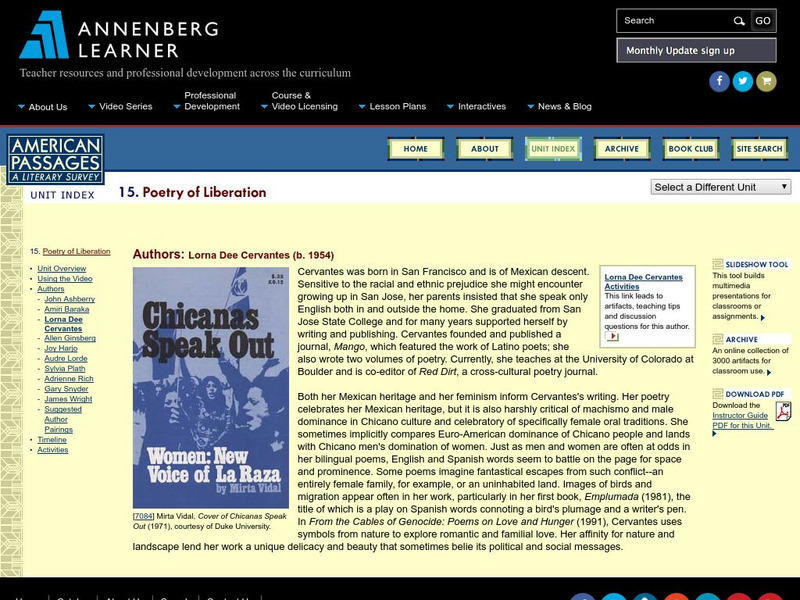
Annenberg Learner: American Passages: Poetry of Liberation: Lorna Dee Cervantes
Lorna Dee Cervantes is presented in this brief biography, drawing attention to political and social messages which are camouflaged by vivid use of nature in her writings. See "Lorna Dee Cervantes Activities" for related materials.
Other
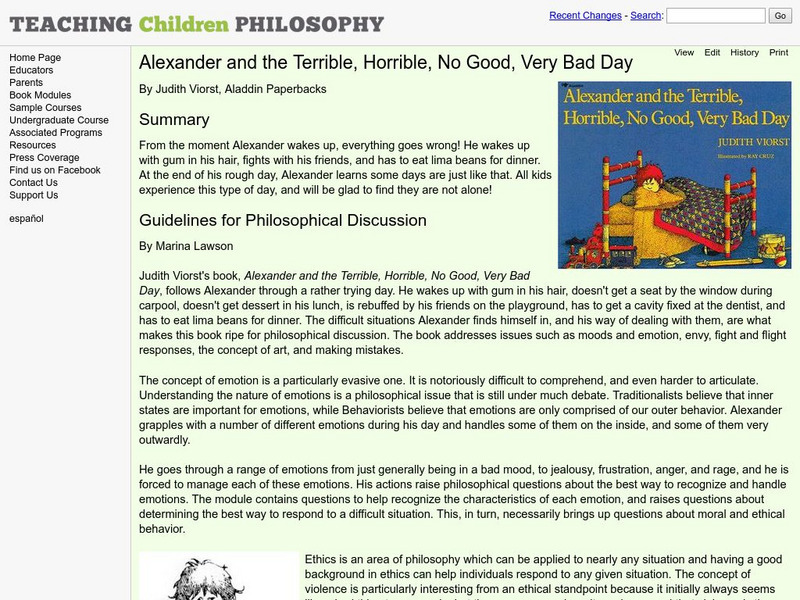
Teaching Children Philosophy: Alexander and the Terrible, by Judith Viorst
This lesson outline summarizes the philosophical issues embedded in the book Alexander and the Terrible, Horrible, No Good, Very Bad Day by Judith Viorst. This is followed by question sets that teachers can use to guide students in a...
Famous Scientists
Famous Scientists: Beatrix Potter
Beatrix Potter may be a familiar name in children's literature, but what a lot do not know is that she is a notable woman of science as well. Find out in this short biography.
Lumen Learning
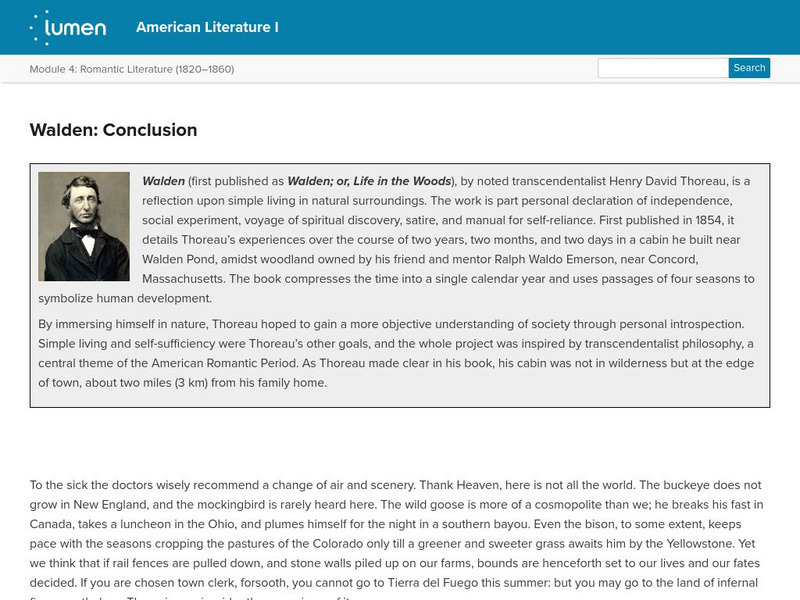
Lumen: American Romanticism: Walden: Conclusion
This is the text of Chapter 18 of Walden by transcendentalist Henry David Thoreau. By immersing himself in nature, Thoreau hoped to gain a more objective understanding of society through personal introspection. Simple living and...
TheatreHistory.com
Theatre History: Restoration Drama
This site from TheatreHistory.com provides great information on restoration drama. Links are given throughout for additional information on related subjects. The article is medium sized in length and discusses everthing from women...
Authors Calendar
Author's Calendar: Guy De Maupassant
This site has biographical information on the life and works of Guy de Maupassant. Also included is French text from some of his stories. Listed here are his stories written in French.
Bartleby
Bartleby.com: Later New England Historians
Describes the changing nature of historical writing during the later Colonial period in America.