Hi, what do you want to do?






Curated OER
Teaching Poetry Using DARTs
Students interact with texts. They are given the first four lines of Walt Whitman's poem "When I heard the learned astronomer." Students read them and discuss what they think Walt Whitman did when he heard the astronomer.

Curated OER
Electronic Journals about Latin American Folktales
Students exchange folktales with a key-pal using dialog journal writing. They write out a folktale from their own cultural background and exchange it with students of another. They record their impressions of each other's folktales.

Curated OER
A Map is Worth a Thousand Words
Students read the story, "The Most Dangerous Game," by Richard Connell. They discuss specific parts of the story with a group and put their lists on the board. They write a summary of the plot and setting of the story.
Wikimedia
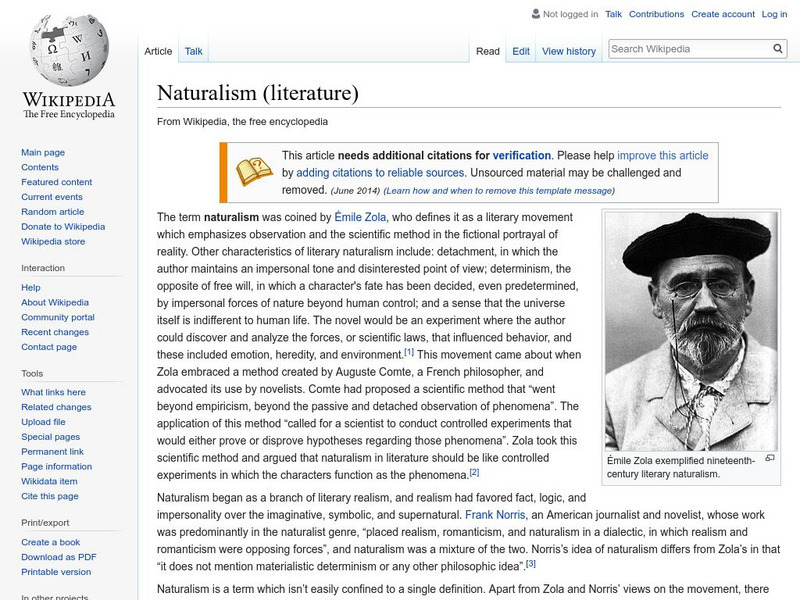
Wikipedia: Naturalism (Literature)
Wikipedia offers several paragraphs of information on Naturalism in literature inspired by the evolutionary theory of Charles Darwin.
Lumen Learning
Lumen: American Romanticism: The Use of Nature in American Gothic
This article "The Use of Nature in American Gothic" focuses on how nature is used in American Gothic literature.

PBS
Pbs: The American Novel: Literary Movements: 1890s to 1920s Naturalism
Part of an American literature timeline that describes the naturalism movement, including information about its founders and notable authors during that time.
![America Dept. Of State: Outline of American Literature [Pdf] eBook](http://lessonplanet.com/content/resources/thumbnails/410155/large/bwluav9tywdpy2symdiwmduymc0yotc0ny0xzhf5cgiwlmpwzw.jpg?1589985629 "America Dept. Of State: Outline of American Literature [Pdf] eBook")
Other
America Dept. Of State: Outline of American Literature [Pdf]
This online book presents an overview of American literature chronologically. Eras and movements are explained and biographies of significant authors are provided. This is a good way to understand the background and influences of...
TeachEngineering
Teach Engineering: It Takes Two to Tangle
Students explore the theme of conflict in literature. They learn the difference between internal and external conflict and various types of conflicts, including self against self, self against other, and self against nature or machine....

Encyclopedia Britannica
Encyclopedia Britannica: Romanticism
This is an encyclopedia article which defines the period of Romanticism from the late 18th to the mid-19th century. It describes the characteristics of Romanticism in general and in literature, visual arts, and music.
PBS
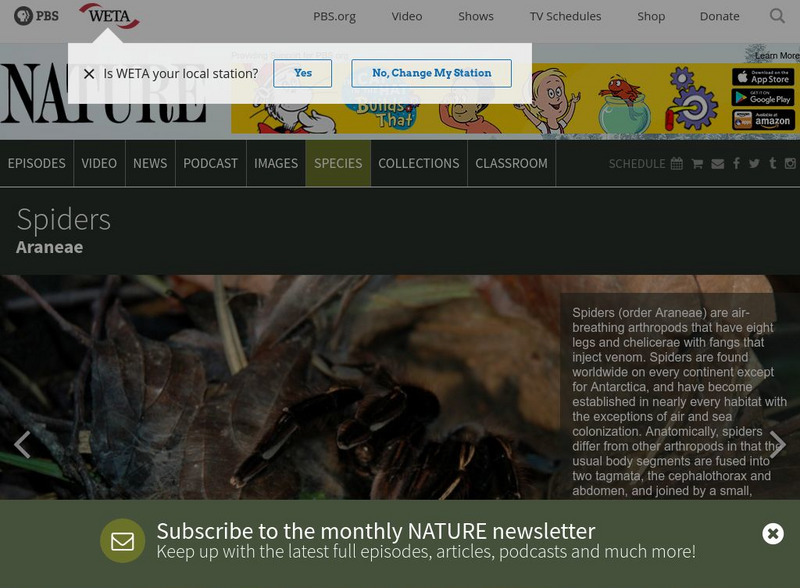
Pbs Nature: Spider
There are about 35,000 known species of spiders in the world and this research resource site surveys these animals in text and images.
The Newberry Library
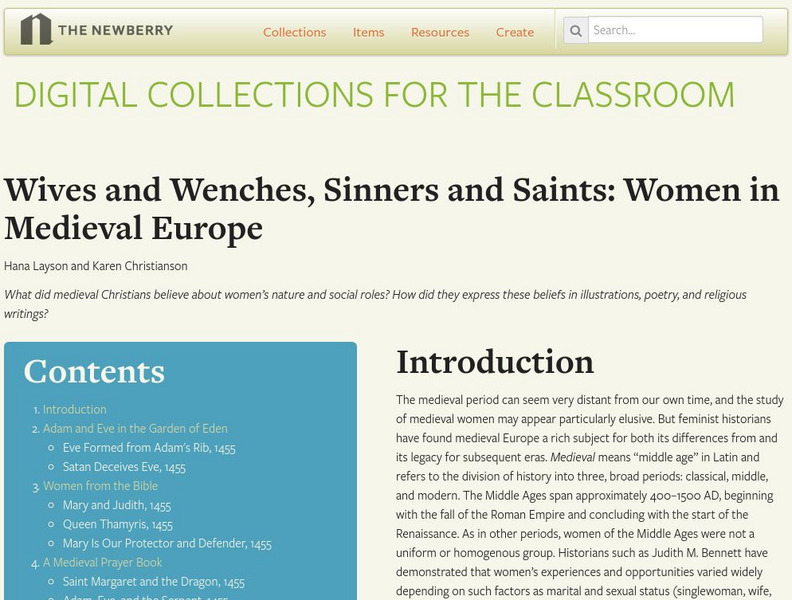
Newberry: Wives and Wenches, Sinners and Saints: Women in Medieval Europe
Learning module on women in Europe during the Middle Ages teaches about medieval Christian beliefs about women's nature and social roles and how they were expressed in illustrations, poetry, and religious writings.

Other
Interaction Design Foundation: 5 Stages in the Design Thinking Process
Understanding the five stages of Design Thinking will empower anyone to apply the Design Thinking methods in order to solve complex problems that occur around us. The article stresses that design thinking is by its nature non-linear and...
Washington State University
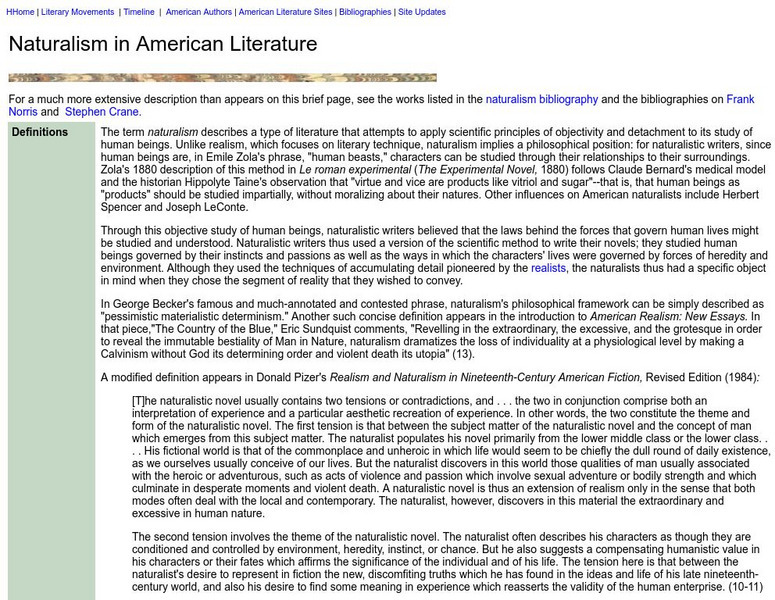
Washington State University: Literary Movements: American Naturalism
This site includes a definition of the term naturalism, important characteristics and themes of the literature movement, quotes pertaining to it, links to important figures in naturalism, and further bibliographical information.
HotChalk
Hot Chalk: Lesson Plans Page: The Nature of the Antagonist
This lesson plan teaches students to understand the differences between protagonists and antagonists, to recognize a "villain" in storytelling, and to understand conflict as used in literature.
Maine Historical Society
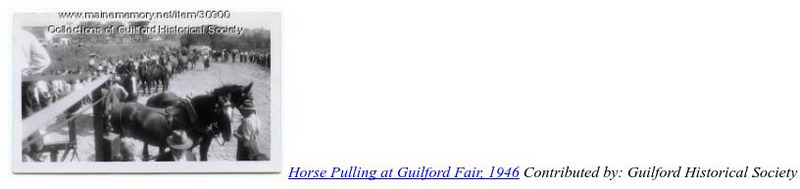
Maine Historical Society: How 19th Century Artists Viewed the Separation of Civilization and Nature
Combining art and literature, this lesson takes a look at how artists drew the line between civilization and wilderness in 19th century America.
University of Florida
Baldwin Library: Gleanings in Natural History
A scanned copy of the 1896 publication of Gleanings in Natural History by Edward Jesse, a nonfiction book for children.
Georgia Department of Education
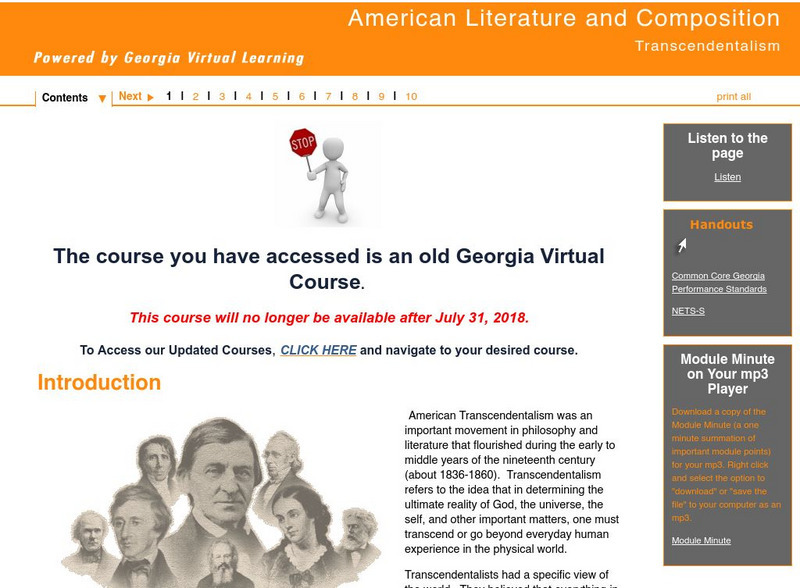
Ga Virtual Learning: American Literature and Composition: Transcendentalism
This is an introduction to the Transcendentalism period (1836-1860) in American Literature. It focuses on the beliefs and characteristics of transcendentalism and its leading authors: Henry David Thoreau and Ralph Waldo Emerson and...

Other
Classroom Clues: Children's Literature for Understanding Economics
How do you teach obscure economic concepts to younger elementary students? One way is through children's literature. This site has a large variety of children's picture books that teach various economic concepts such as supply and...
Children's Museum
The Children's Museum of Indianapolis: Native Americans and the Natural World
Explore the rich cultures of Native Americans through literature, storytelling, and fun, hands-on activities. Learners will gain an understanding of how and where Native Americans lived in the past and today, as well as their...

University of Groningen
American History: Outlines: Rise of Realism
This resource provides a wealth of information about the period of American literature from 1860-1914. There are eight good articles discussing the movements of realism, regionalism, and naturalism, the rise of black American literature,...

Lumen Learning
Lumen: Romanticism: "The American Scholar" by Ralph Waldo Emerson
"The American Scholar" is a speech given by Ralph Waldo Emerson on August 31, 1837, to the Phi Beta Kappa Society at Cambridge, Massachusetts. He was invited to speak in recognition of his groundbreaking work "Nature" in which he...
Louisiana Department of Education
Louisiana Doe: Louisiana Believes: English Language Arts: Grade 6: Hatchet
This unit teaches students about survival in the face of grave danger and overwhelming odds. Students will evaluate survival stories to learn about the importance of positive thinking, slowing down to think clearly, problem solving, and...
National Endowment for the Humanities
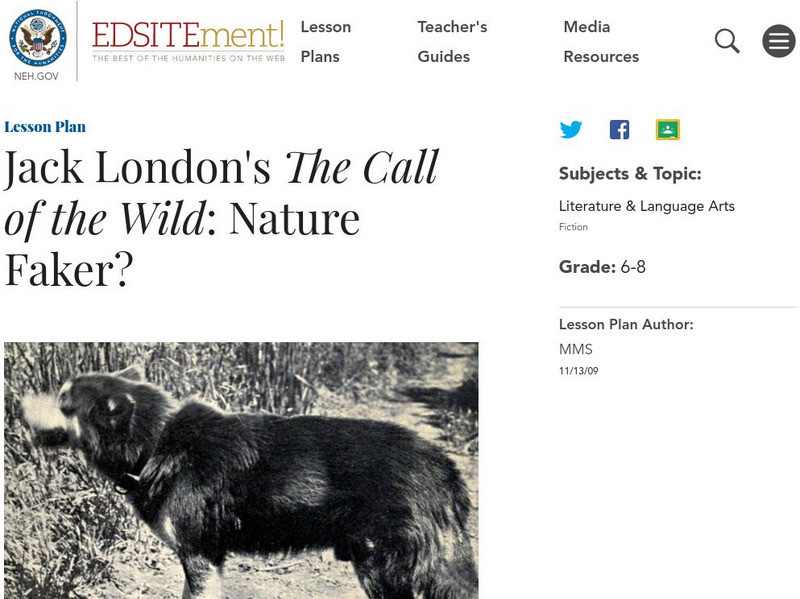
Neh: Edsit Ement: Jack London's the Call of the Wild: "Nature Faker"?
In this lesson plan, learners will consider "Jack London's The Call of the Wild: "Nature Faker"?." The plan includes worksheets and other student materials that can be found under the resource tab.
Other
A Literature of Place
Author Barry Lopez shares his observations about the literature of place in the United States. In this piece he examines how nature writing addresses the universal theme of connection between humans and the environment.