Hi, what do you want to do?





![Energy4me: Energy Sources of the World [Ppt] PPT](https://static.lp.lexp.cloud/images/attachment_defaults/resource/large/FPO-knovation.png "Energy4me: Energy Sources of the World [Ppt] PPT")
Energy4Me
Energy4me: Energy Sources of the World [Ppt]
Learn about the many different energy resources available from our Earth. Find out the pros and cons of each type: both renewable and nonrenewable.
Scholastic
Scholastic: Study Jams! Science: Energy, Light and Sound: Fossil Fuels
A slideshow and a short quiz on the types of fossil fuels we use and the impact this has on the environment.
TeachEngineering
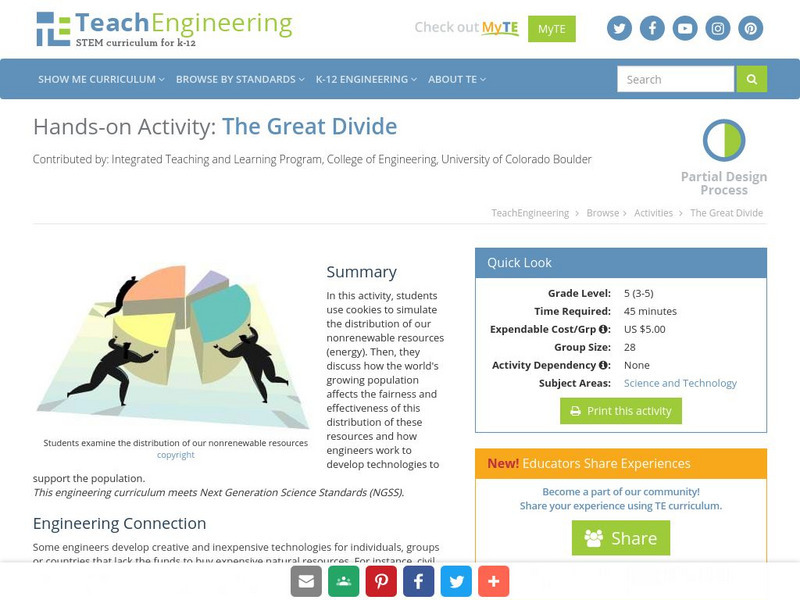
Teach Engineering: The Great Divide
In this activity, students will use cookies to simulate the distribution of our nonrenewable resources (energy). Then, they will discuss how the world's growing population affects the fairness and effectiveness of this distribution of...
CommonLit
Common Lit: Book Pairings: "The Chocolate War" by Robert Cormier
When Jerry Renault refuses to sell chocolate for the school's annual chocolate fundraising drive, the rest of the student body turns against him. Selected (8) reading passages (grades 9-11) to pair with "The Chocolate War" by Robert...
Interactive Mathematics
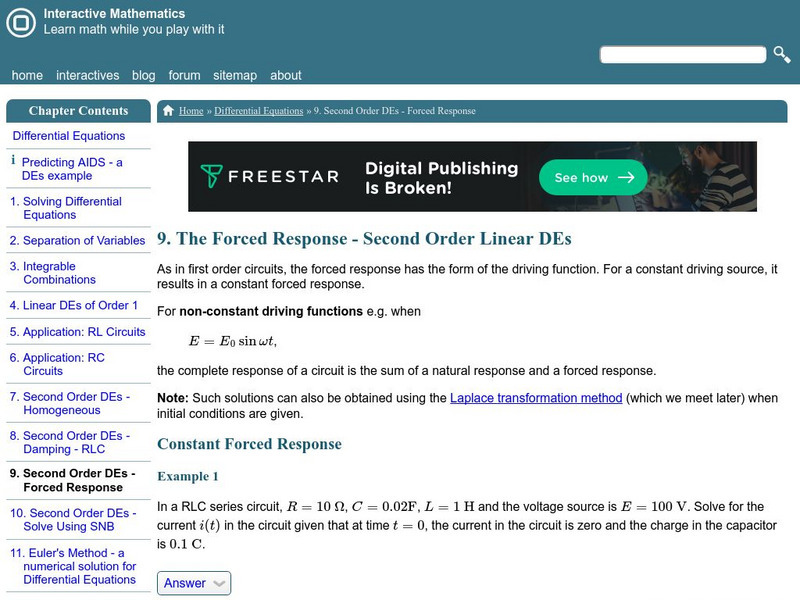
Interactive Mathematics: 2nd Order D Es (Forced Response)
This lesson covers constant, natural, and non-constant forced responses. Very detailed examples are included that work the problems step by step, with graphs, to assist in visual understanding.
EL Education
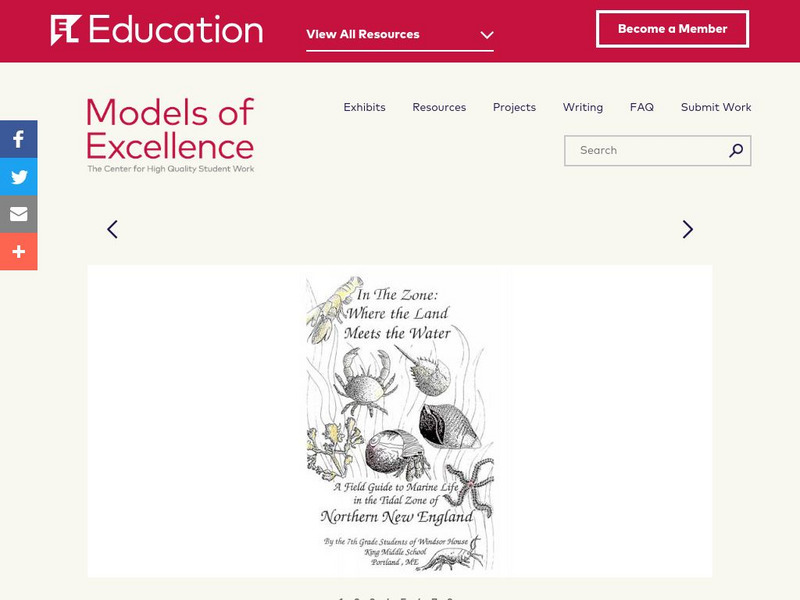
El Education: In the Zone: Where the Land Meets the Water
This field guide to the marine organisms of the intertidal zone of Casco Bay was created by 7th grade students in Portland, Maine, as part of a Learning Expedition called, "In the Zone." Students were engaged in scientific research at...
Curated OER
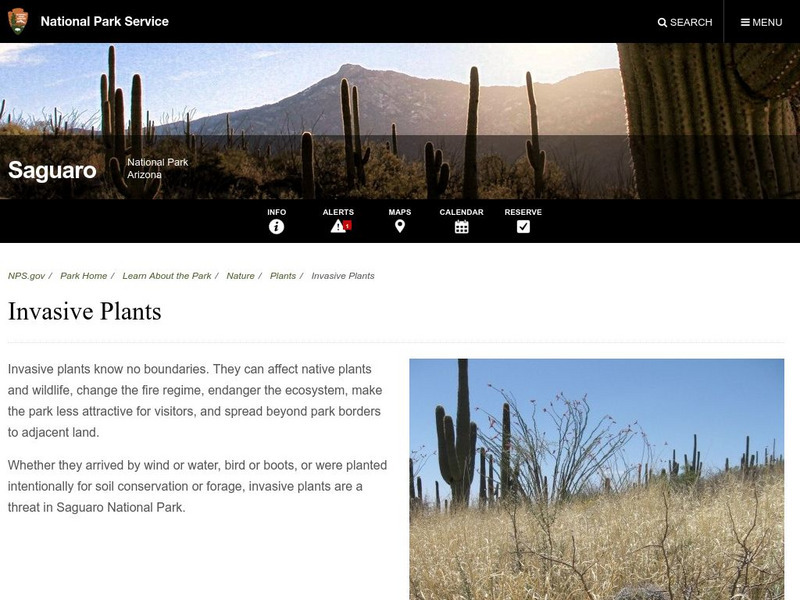
National Park Service: Invasive Plants: Saguaro National Park
Learn about the plants from other regions that now reside in Arizona's Saguaro National Park.
Museum of Science
The Atoms Family
Let this classic family of monsters guide you as you learn about energy. Interactive exercises, experiments, and demonstrations help to build knowledge and raise questions.
BioEd Online
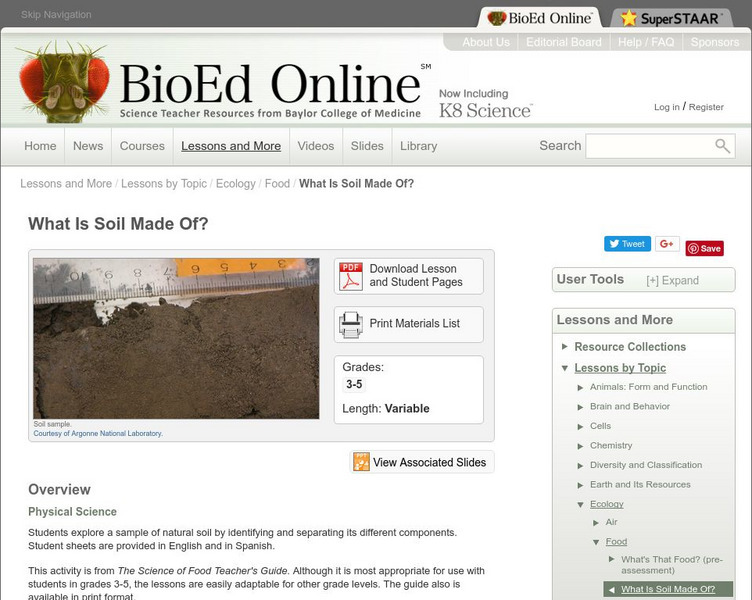
Bio Ed Online: What Is Soil Made Of?
Do you know what makes up soil? Soil is a combination of many different living and non-living things and provides raw materials needed by all living things. In this lesson students will explore a sample of natural soil by identifying and...
TeachEngineering
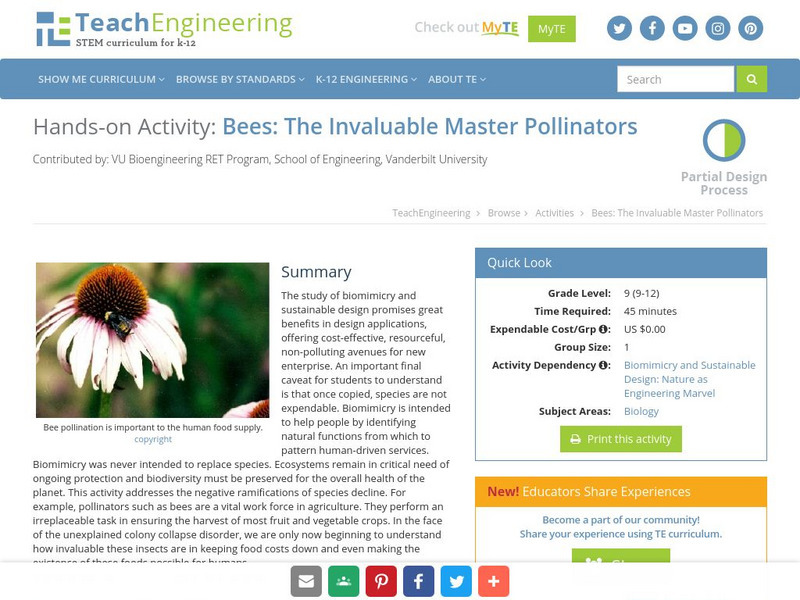
Teach Engineering: Bees Are Master Pollinators
The study of biomimicry and sustainable design promises great benefits in design application. It affords means by which to promote cost-effective, resourceful, non-polluting avenues for new enterprise. These "blueprints" have existed...
Columbia University
Columbia University: Introduced Species Summary Project
The purpose of this website is to provide information that would help a natural resources manager or concerned citizen to understand the basic biology of a non-native species and whether and how to respond to its arrival. Most of the...
Other
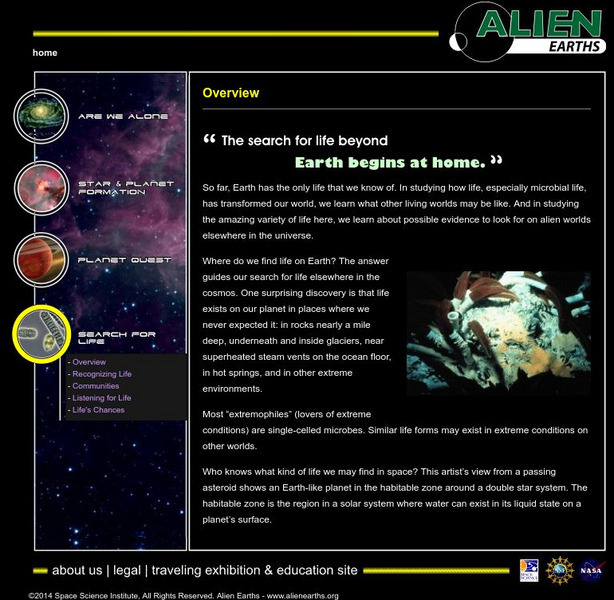
Space Science Institute: Alien Earths: Search for Life
How do you recognize life on another planet? What tests do scientists use to determine if something is a life form when they are many light years away from being able to observe it directly? Try your hand at interactives to create a...
Other
Interaction Design Foundation: 5 Stages in the Design Thinking Process
Understanding the five stages of Design Thinking will empower anyone to apply the Design Thinking methods in order to solve complex problems that occur around us. The article stresses that design thinking is by its nature non-linear and...
Australian Museum
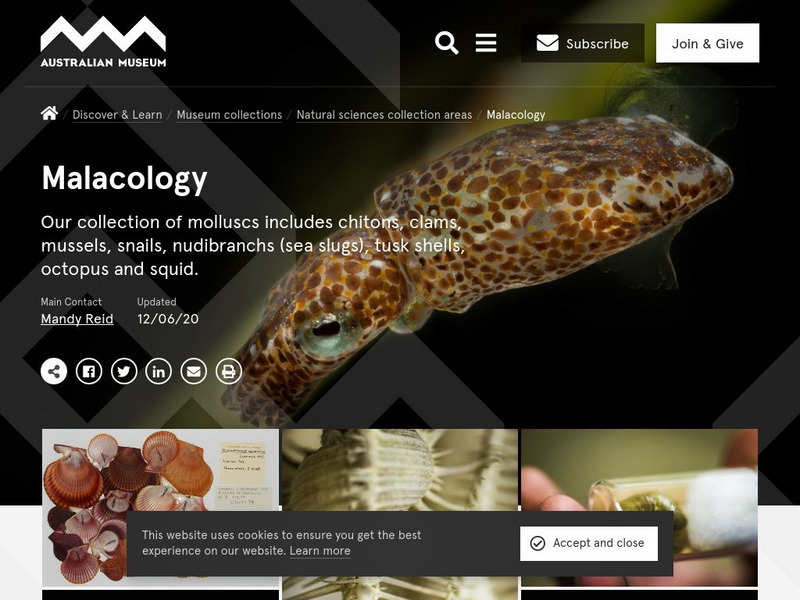
Australian Museum: Malacology
See the Australian Museum Online collection of mollusca. Read about how the sea slug defends itself and the history of the bivalve pulvinitidae.
Science Education Resource Center at Carleton College
Serc: Our Big Backyard
An activity for students to fine tune their observation skills using their senses in their own backyard. During this activity, students will record their observation to compare and contrast living things over a period of different seasons.
US Environmental Protection Agency
Epa: Land, Waste, and Cleanup Topics
This site is loaded with information on solid waste and hazardous waste. It includes industries' effects on the environment, waste programs, treatment, control, pollution prevention, recycling, and cleanup programs.
Energy for Sustainable Development
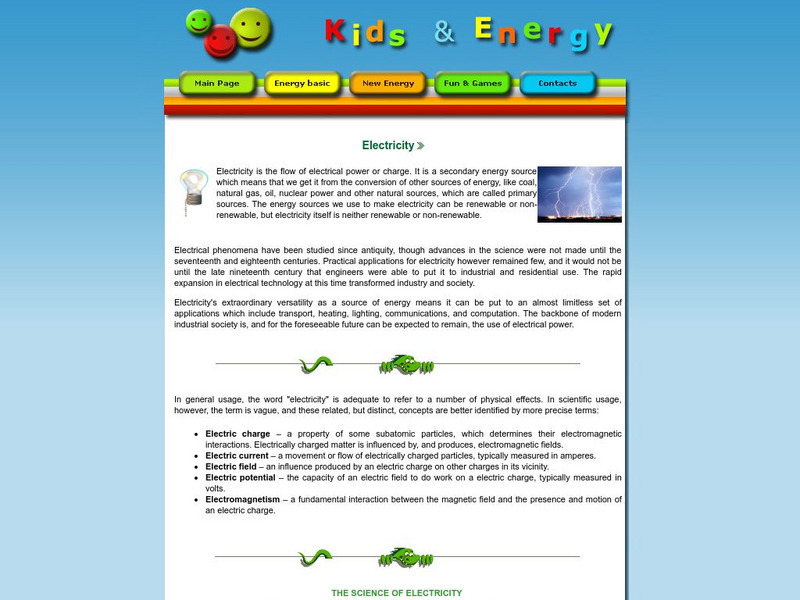
Esd Bulgaria: Kids & Energy: Electricity
Electricity is the flow of electrical power or charge. It is a secondary energy source which means that we get it from the conversion of other sources of energy, like coal, natural gas, oil, nuclear power and other natural sources, which...
Illustrative Mathematics
Illustrative Mathematics: Painting a Room
The purpose of this task is to provide students with a situation in which it is natural for them to divide a unit fraction by a non-zero whole number. Determining the amount of paint that Kulani needs for each wall illustrates an...
Science Education Resource Center at Carleton College
Serc: Introducing a New Representation of the Process of Science
This activity introduces young scholars to the process of science which involves testing ideas about the natural world with data from the natural world. Students are introduced to the Science Flowchart and are asked to plot the...
Texas Instruments
Texas Instruments: Numb3 Rs: That's So Random
Based off of the hit television show NUMB3RS, this lesson shows students how apparently random data is not always quite so random. This is done with a standard deck of 52 cards, which students analyze after dealing for randomness. In...

National High Magnetic Field Laboratory
Magnet Academy: Heinrich Rohrer
Swiss physicist Heinrich Rohrer co-invented the scanning tunneling microscope (STM), a non-optical instrument that allows the observation of individual atoms in three dimensions, with Gerd Binnig. The achievement garnered the pair half...
CK-12 Foundation
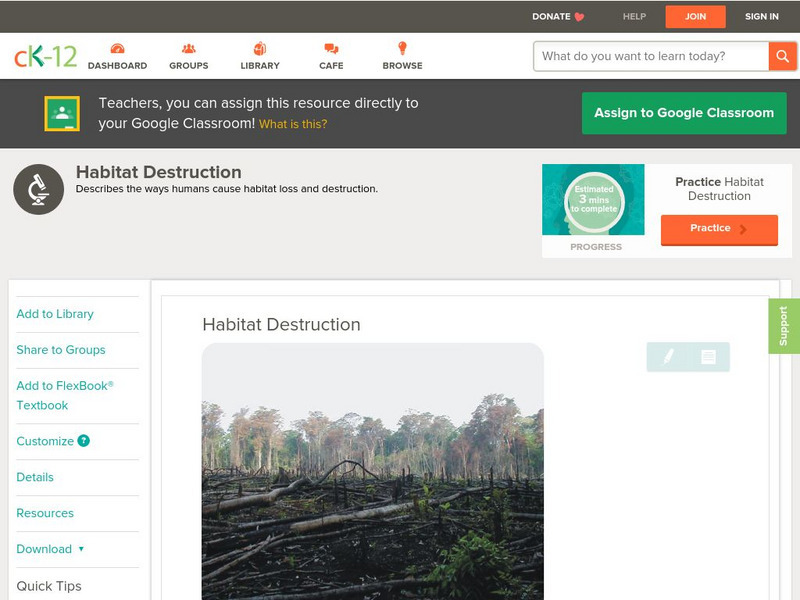
Ck 12: Life Science: Habitat Destruction
[Free Registration/Login may be required to access all resource tools.] From a human point of view, a habitat is where you live, go to school, and go to have fun. Your habitat can be altered, and you can easily adapt. Most people live in...
Physics Aviary
Physics Aviary: Curling Stone Momentum Lab
This lab is designed to have students investigate the nature of a nonlinear collision using curling stones. Students will be able to look at how the velocities before the collision and the mass of the stones affects the results of the...
Council for Economic Education
Econ Ed Link: Be an Energy Saver
This lesson focuses on the scarce and non-renewable nature of fossil fuels in order to stimulate student thinking about energy conservation. It emphasizes the fact that saving energy can be good for the wallet as well as the earth's...
Other popular searches
- Drama Non Naturalism
- Drama+ Non Naturalism
- Non Naturalism Theater
- Non Naturalism Year 12
- Non Naturalism in Drama
- Non Naturalism Theatre
- Drama Non Naturalism