Hi, what do you want to do?






Curated Video
How Nuclear Bombs Work: Atomic vs. Hydrogen Bombs Explained
Hydrogen bomb how does it work? The bomb on Hiroshima released the energy equivalent of 15,000 tons of TNT. The first hydrogen bomb released the energy equivalent of 10,000,000 tons of TNT.
While...
While...
Curated Video
How Robert J. Oppenheimer became the ‘Father of the Atomic Bomb’
Robert J. Oppenheimer, born on April 22, 1904, is known as the father of the atomic bomb. Oppenheimer was awarded a PhD in theoretical physics and was interested in the emerging field of quantum physics. As a scientist at the University...
Science ABC
How Robert J. Oppenheimer became the ‘Father of the Atomic Bomb’
Robert J. Oppenheimer, born on April 22, 1904, is known as the father of the atomic bomb. Oppenheimer was awarded a PhD in theoretical physics and was interested in the emerging field of quantum physics. As a scientist at the University...
Curated Video
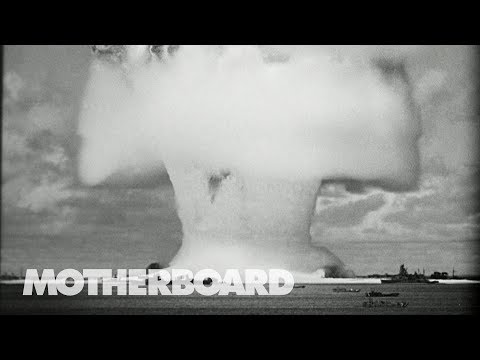
What Does a Nuclear Bomb Explosion Feel Like?
The existential threat of nuclear war is no longer a Cold War memory. With nine countries armed with around 15,000 atomic bombs up to 53 times stronger than those dropped in the Second World War, the stakes are arguably higher. Ahead of...
The March of Time
1945: HIROSHIMA: VS Atomic nuclear bomb destruction on city few standing structures. US Soldiers pointing out monument stone etched by heat of blast silhouette of person burned INTO pavement by waterfront railing.
MOT 1945: HIROSHIMA: VS Atomic nuclear bomb destruction on city few standing structures. US Soldiers pointing out monument stone etched by heat of blast silhouette of person burned INTO pavement by waterfront railing.
Espresso Media
Garwin: Perspectives from Hiroshima Survivors and Witnesses
Garwin part 3/11:This video discusses the development and deployment of nuclear weapons, specifically the bombings of Hiroshima and Nagasaki during World War II. It includes personal accounts from individuals involved in the bombings and...
One Minute History
051 Truman and the Atomic Bomb - One Minute History
The use of atomic weapons forced the Japanese to surrender. Many argue that the bombings were unnecessary, stating that more conventional methods may have been as effective. Casualty estimates for an invasion of mainland Japan were in...
Espresso Media
Garwin: The Cold War and Nuclear Deterrence
Garwin part 6/11: In this video, Richard Garwin discusses the historical context of nuclear weapons and the concept of deterrence during the Cold War. He highlights the massive number of nuclear weapons possessed by both the United...
Espresso Media
Garwin: The History of FAS and the Future of Nuclear Weapons
Garwin part 8/11: This video features a conversation about the history of the Federation of American Scientists (FAS) and their work in reducing nuclear dangers and advocating for civilian control of nuclear technology. It also discusses...
Crash Course
The Atomic Bomb: Crash Course History of Science
The story picks up where we left off last time, with Einstein writing the president of his new homeland, the United States, urging him to build a nuclear weapon before Hitler. This is the tale of the most destructive force humans have...
Curated Video
Inside the Making of Oppenheimer: The Legacy of the Little Boy and Fat Man
Little Boy And Fat Man are the nicknames given to the two weapons of mass destruction that devastated Hiroshima and Nagasaki, seem ridiculous when thinking about what they were capable of doing. Little Boy was the first nuclear bomb to...
Science ABC
Inside the Making of Oppenheimer: The Legacy of the Little Boy and Fat Man
Little Boy And Fat Man are the nicknames given to the two weapons of mass destruction that devastated Hiroshima and Nagasaki, seem ridiculous when thinking about what they were capable of doing. Little Boy was the first nuclear bomb to...
Espresso Media
Garwin: Inside the Historic Site of Nuclear Weapon Assembly
Garwin part 4/11: This video provides a glimpse into the historical significance of Los Alamos, the site where the first atomic bomb was assembled during the Manhattan Project. The video also touches on the transition from the Manhattan...
Espresso Media
Garwin: The Role of a Scientist in the Development of Hydrogen Bombs
Garwin part 5/11: This video features scientist Richard Garwin reflecting on his role in developing the hydrogen bomb and the ethical implications of his work. He discusses the process of creating the bomb, witnessing its destructive...
Curated Video
Hiroshima – City of Peace and Resilience in Japan
Hiroshima, once a powerful castle town under Mori Terumoto and later the Asano Clan, features historical landmarks like the five-story fortress and Shukkei-En garden, which exemplify its transformation from a military stronghold to a...
Curated Video
The Legacy of the Atomic Bomb: From Hiroshima to the Cold War
This video provides a concise yet comprehensive overview of the impact of the atomic bombings of Hiroshima and Nagasaki during World War II, the subsequent nuclear testing at Bikini Atoll, and the development of nuclear weapons through...
Higgsino Physics
Why you can live in Hiroshima but not in Chernobyl
Radiation and fallout in Hiroshima vs in the Chernobyl accident. Hiroshima and Chernobyl both suffered a major atomic disaster, where radioactive atoms was released. Hiroshima was nuked by the uranium fissile atomic bomb, little boy...
Hip Hughes History
The Decision to Drop the Atomic Bomb on Hiroshima and Nagasaki
The decision to drop the Atomic bomb in Japan to end WWII are controversial to this day. Explore the decision that Harry Truman had to make and then make up your own mind.
Curated Video
Landmarks - Genbaku Dome Hiroshima
GENBAKU DOME, HIROSHIMA THIS IS THE ENOLA GAY AND IT IS CARRYING AN ATOMIC BOMB. WHAT BEGAN AS A FINE SPRING DAY IN THE JAPANESE CITY OF HIROSHIMA IN AUGUST 1945 BECAME ONE OF THOSE HISTORY DEFINING MOMENTS THAT CHANGED THE WORLD. THIS...
Curated Video
How America Prepared for Nuclear War
This is the untold story of how the US prepped citizens for a potential atom-bomb Armageddon.
Curated Video
Castle Bravo: The Largest Nuclear Explosion in US History
In 1954, the US Government conducted a series of secret nuclear tests in the Marshall Islands. The idyllic coral island Bikini Atoll became the epicentre of the largest nuclear test disaster in US history. The affects of radiation...
One Minute History
President Truman and the Decision to Drop the Atomic Bomb - World War II - One Minute History
The history behind President Truman and his decision to use atomic weapons at the end of World War II

Curated Video
Soviet Tsar Bomba - The King of Bombs
Subscribe to Naked Science –http://goo.gl/wpc2Q1' target='_blank' rel='nofollow'>Science – Every other Wednesday we present a new video, so join us to see the truth laid bare... 1st November 1952, US government scientists in the...
The March of Time
Recon photos Japan Hiroshima
MOT 1944: 20TH AIR FORCE AERIAL RECON PHOTOS: Bomb damage inland smoke. Bomb damage near waterfront smoke. Air Intelligence photo of Hiroshima coatline after 20th Air force Enola Gay dropped ''Little Boy'' nuclear bomb on August 6 1945.