Hi, what do you want to do?





Rice University
Rice University: Ocean Currents and Tides
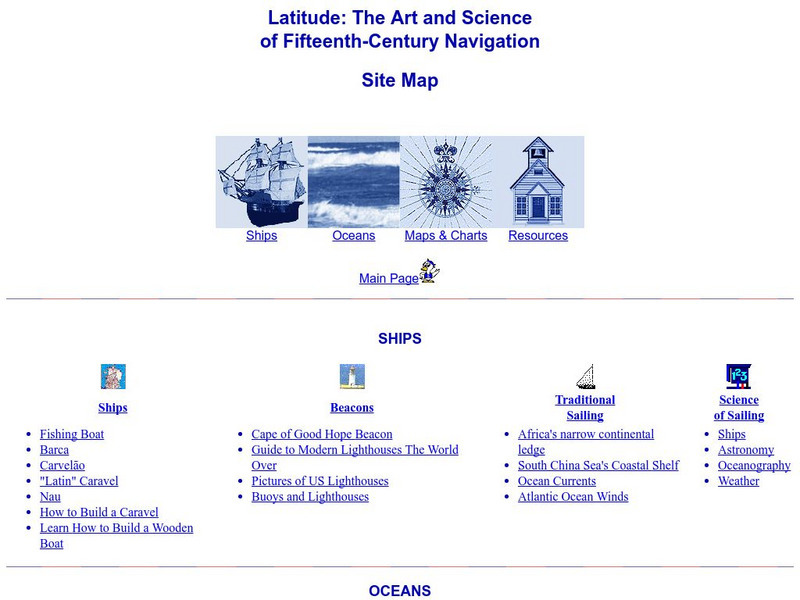
This URL will start you out at the site map for Rice University's study of longitude and navigation. Scroll to the section titled "Oceans" and you will find some very good information on surface currents, especially those of the South...
CK-12 Foundation
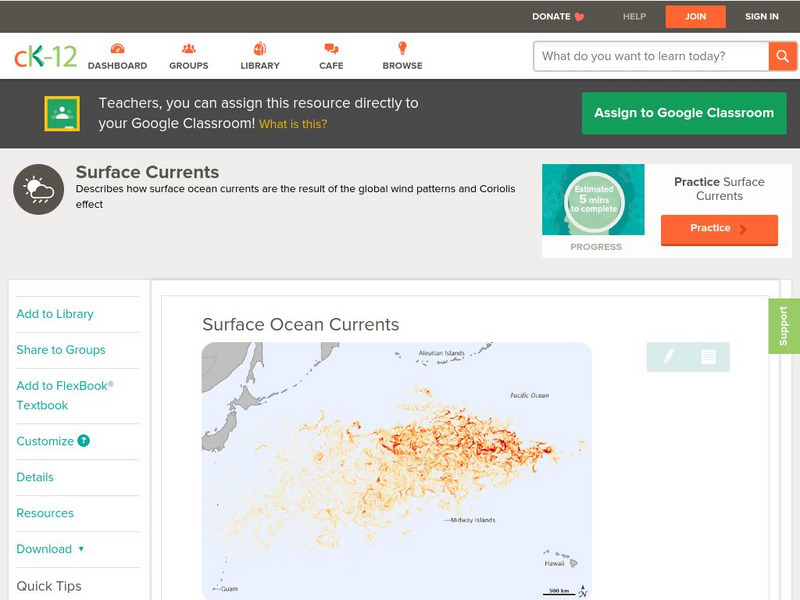
Ck 12: Earth Science: Surface Ocean Currents
[Free Registration/Login may be required to access all resource tools.] Describes how wind patterns and other factors cause ocean surface currents.
Georgia Department of Education
Ga Virtual Learning: Moving Water
Students learn about surface currents, wave characteristics, and the forces that cause tides in the World Ocean.
Smithsonian Institution
National Museum of Natural History: Ocean Planet: Staying on Top
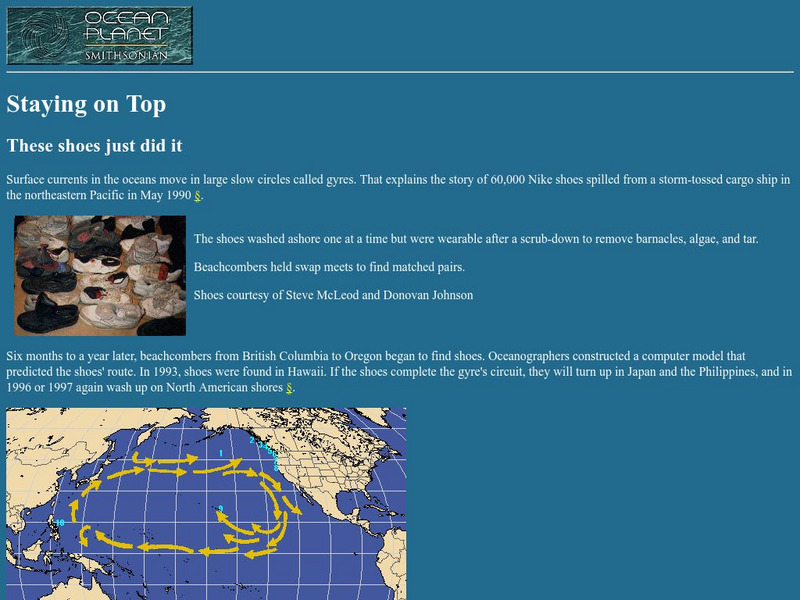
This is the story of the infamous Nike shoes that washed off a cargo ship. The shoes later showed up along beaches, giving oceanographers another clue as to how ocean currents move.
![Nanoos: Well, Well, Well [Pdf] Lesson Plan](https://static.lp.lexp.cloud/images/attachment_defaults/resource/large/FPO-knovation.png "Nanoos: Well, Well, Well [Pdf] Lesson Plan")
Other
Nanoos: Well, Well, Well [Pdf]
This lesson provides learners the opportunity to investigate the relationship between winds, surface currents, sea temperature and upwelling and downwelling off the coast of Oregon and Washington.

Other
Rutgers: c.o.o.l. Class: Physics Project: Plankton and Ocean Current
This c.o.o.l. Project focuses on tiny sea plankton and how they move in the oceans. Follow the scientific process outlined on the left, calculate and collect data to form your own predictions.
Other
Earth Science: Earth's Surface and Heat [Pdf]
This textbook chapter looks at the role of temperature in sustaining life on Earth and on weather and climate. It discusses the Earth's movements and the seasons, the circulation of the oceans, wind and weather, and the water cycle....
Climate Literacy
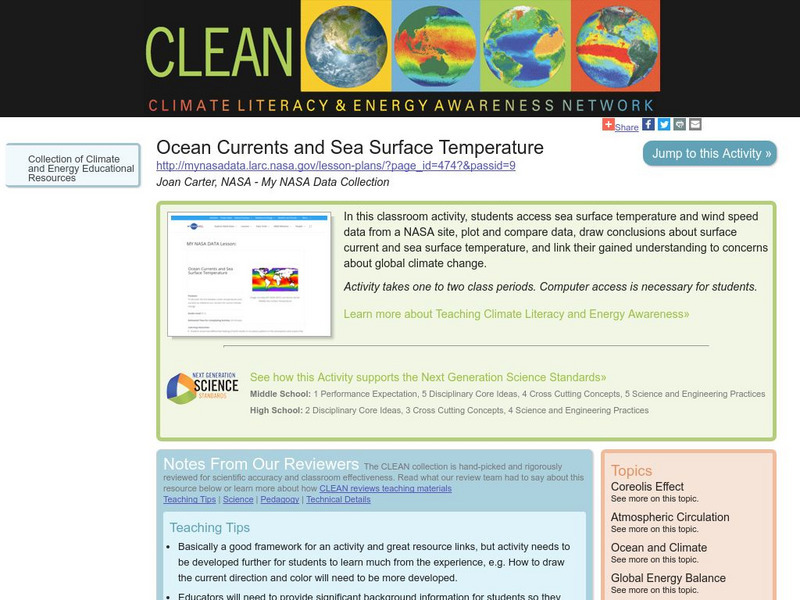
Clean: Ocean Currents and Sea Surface Temperature
To discover the link between ocean temperatures and currents as related to our concern for current climate change.
Climate Literacy
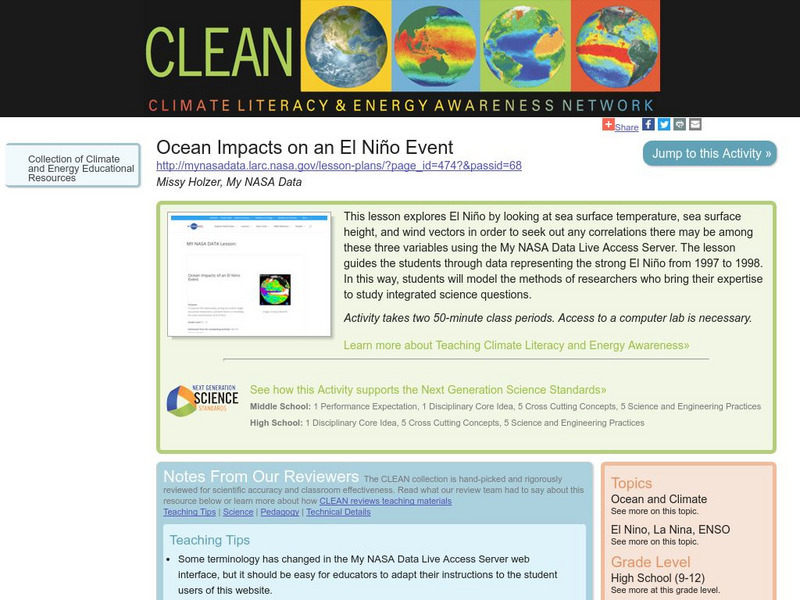
Clean: Ocean Impacts on an El Nino Event
Students examine the relationships among sea surface height, sea surface temperature, and wind vectors in classifying the ocean characteristics of an El Nino.
NOAA
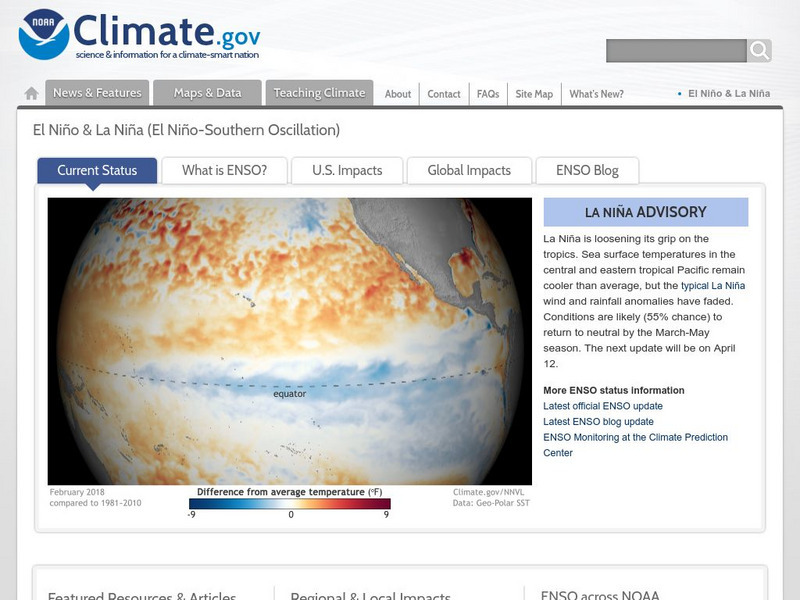
Noaa: El Nino and La Nina
La Nina is characterized by unusually cold ocean temperatures in the equatorial Pacific, as compared to El Nino, which is characterized by unusually warm ocean temperatures in the equatorial Pacific. Find more general info, Forecasts,...

Science Education Resource Center at Carleton College
Serc: Chesapeake Interactive Modeling Project
Understand the basic characteristics of circulation in the Chesapeake Bay, by allowing students to change the wind speed and velocity, and the freshwater forcing through a number of subestuaries, and observe the resulting surface height,...
Curated OER
Rice University: Ocean Currents and Tides
This URL will start you out at the site map for Rice University's study of longitude and navigation. Scroll to the section titled "Oceans" and you will find some very good information on surface currents, especially those of the South...
NASA
Nasa Space Science Data Archive: Ice on Europa
With the exception of Earth, Europa currently appears to be the only body in the solar system which potentially harbors a global ocean of liquid water. The possibility of liquid water raises the possibility of life, as well. This NASA...
TeachEngineering
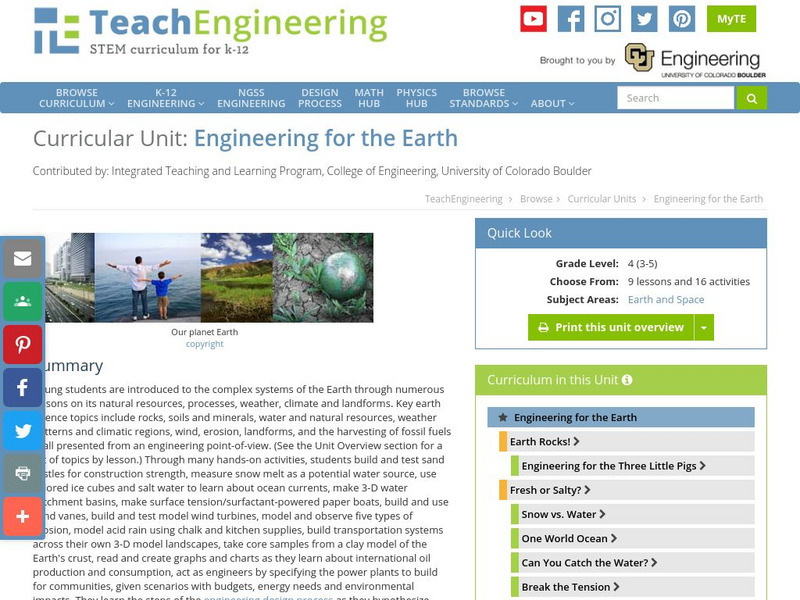
Teach Engineering: Engineering for the Earth
Young students are introduced to the complex systems of the Earth through numerous lessons on its natural resources, processes, weather, climate and landforms. Key earth science topics include rocks, soils and minerals, water and natural...
TeachEngineering
Teach Engineering: The Great Pacific Garbage Patch
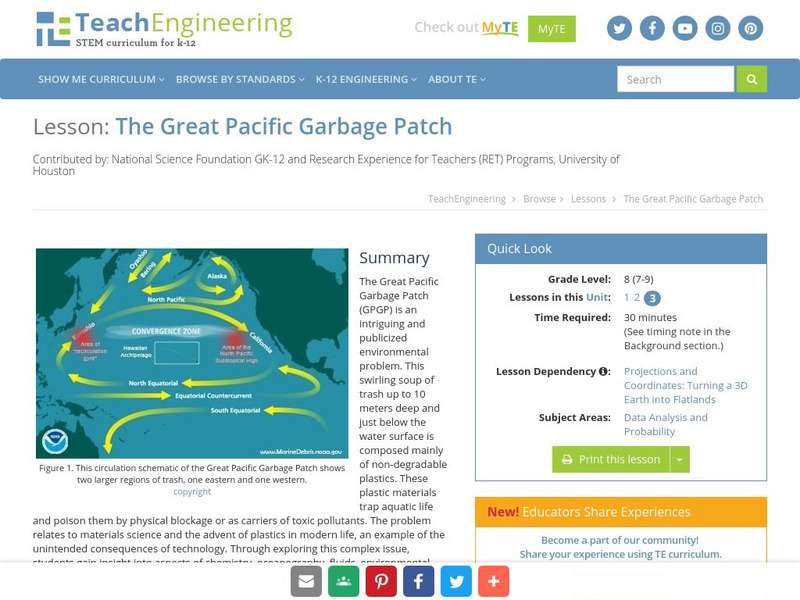
The Great Pacific Garbage Patch (GPGP) is an interesting and somewhat publicized environmental problem. A swirling soup of trash up to 10 meters deep and just below the water surface is composed mainly of non-degradable plastics. These...

TED Talks
Ted: Ted Ed: Making Waves: The Power of Concentration Gradients
The constant motion of our oceans represents a vast and complicated system involving many different drivers. Sasha Wright explains the physics behind one of those drivers- the concentration gradient- and illustrates how our oceans are...