Hi, what do you want to do?






Curated OER
Genetic Engineering
Learners will apply their knowledge acquired from two guest speakers to writing a three hundred-word essay on either the pros or cons of genetic engineering. They will try to persuade the reader of their essays to agree with their stance...

Curated OER
Education of the Heart
Sixth graders compare and discuss a given set of quotes by Pericles and Cesar Chavez and how they relate to a peaceful society. They respond to a variety of quotes and discuss the animal issue of animal tested cosmetics then discuss...

Curated OER
Teaching Voluntary Reading
Students participate in a variety of activities to increase their fluency and read for pleasure. They read books of their choice, participate in author talks and book talks, write book reviews, and select favorite books for a class...

Curated OER
Fairy Tales
Fourth graders read numerous examples of fairy tales. Using the text, they identify the organization styles and conventions within them and write their own for a class book. They practice using descriptive language and receive...

Curated OER
Pathways
Students are introduced to how to use a flow diagram. As a class, they brainstorm all of the steps to a specific task and discuss the importance of completing them in the correct sequence. They read books that have an alternate ending...

Curated OER
Chinese Lanterns - Technology
Fifth graders investigate the type and use of lanterns in Chinese history, their cultural significance and their role in today's society. They watch a lantern maker and describe the process. Students compare and discuss a range of...

Curated OER
Calligraphy: Symbols & Signs - Visual Arts
Students research the forms and significance of calligraphy in traditional and contemporary Chinese society. They design a mixed media scroll on paper, developing symbols for use as calligraphic images. Students describe how selected...

Curated OER
A "State of the Arts" Coin K-3
Students recognize the U.S. penny, nickel, dime, and quarter by design, size, and denomination and that the portraits and other images depicted on the coins were designed by artists. They study common Texas symbols and choose one to draw...

Curated OER
A Walk In Someone Else's Shoes
Seventh graders create a PowerPoint presentation documenting their research on the plight of the less fortunate. Using internet research and sources, they gather information about their topic and use the provided template to create...

Curated OER
Peer Review of My School and Community Activities
Twelfth graders complete activities to explore life goals. For this career goals lesson, 12th graders write a list of their community activities and write a statement of their life goals. Students discuss their life goals with a peer.

Curated OER
Egyptian Scarab Lesson Plan
Students investigate and create an Egyptian scarab. In this Egyptian art lesson, students analyze and discuss the Egyptian scarab. Students use Sculpey clay to create their own scarabs.
American Academy of Achievement
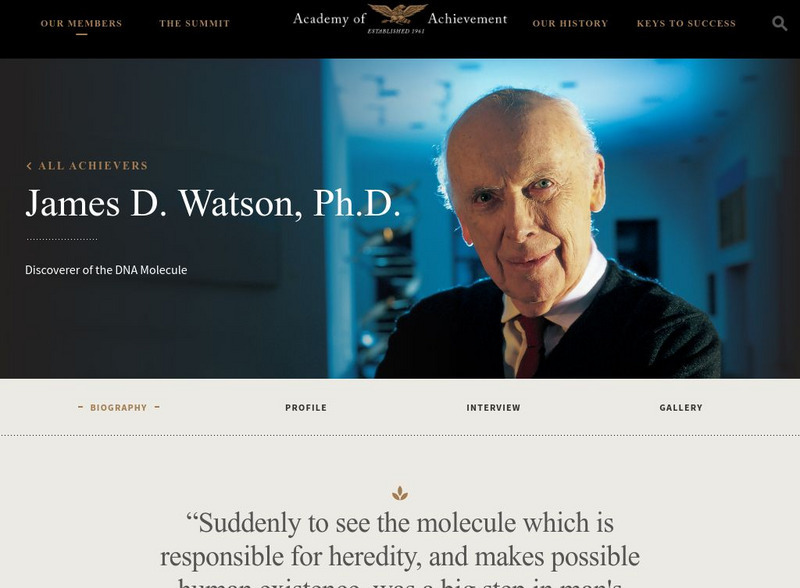
Academy of Achievement: James D. Watson, ph.d.
A biography of James Dewey Watson who, along with Francis Crick, discovered the structure of DNA. They were awarded the Nobel Prize for Physiology and Medicine in 1962. Watson was later the first person to lead the Human Genome Project....
American Academy of Achievement
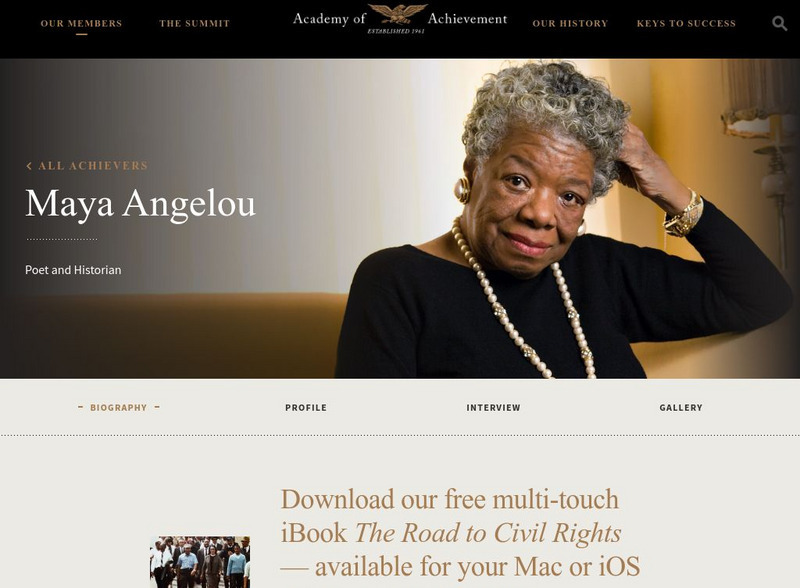
Academy of Achievement: Maya Angelou
A well-written biography of Maya Angelou. Includes a profile, interview and photo gallery. In the interview, she talks at length about her friendship with Martin Luther King, Jr. and what he was like as a person.
American Academy of Achievement
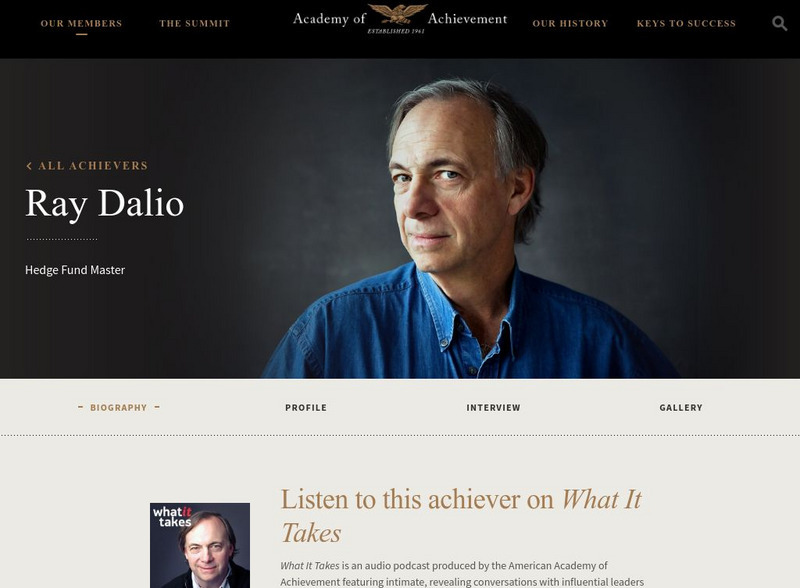
Academy of Achievement: Ray Dalio
Biography of Ray Dalio, financial investor and hedge fund operator, who was become a sought after speaker and advisor as well as one of the countries richest persons in the country, well-known for his philanthropic pursuits.
American Academy of Achievement
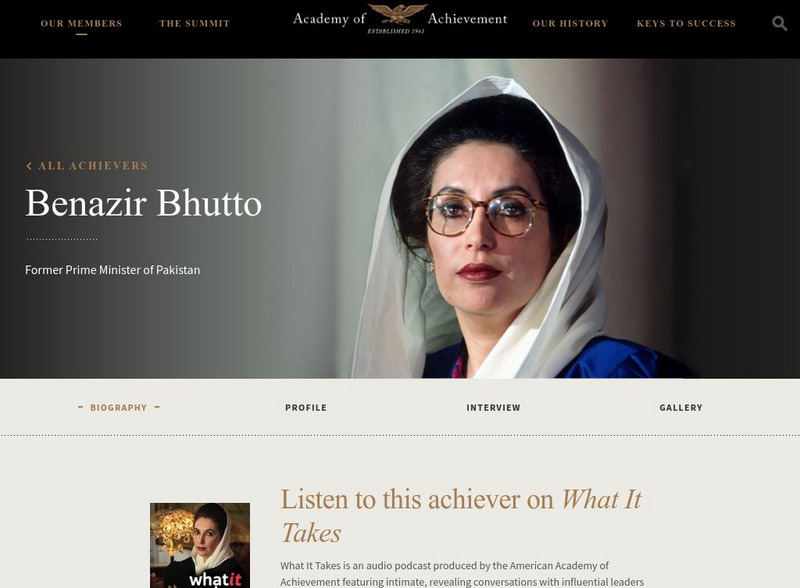
Academy of Achievement: Benazir Bhutto
At age 35, Benazir Bhutto was one of the youngest chiefs of state in the world. More than that, she was the first woman ever to serve as prime minister of an Islamic country, but the road that brought her to power had already led through...
University of Texas at Austin
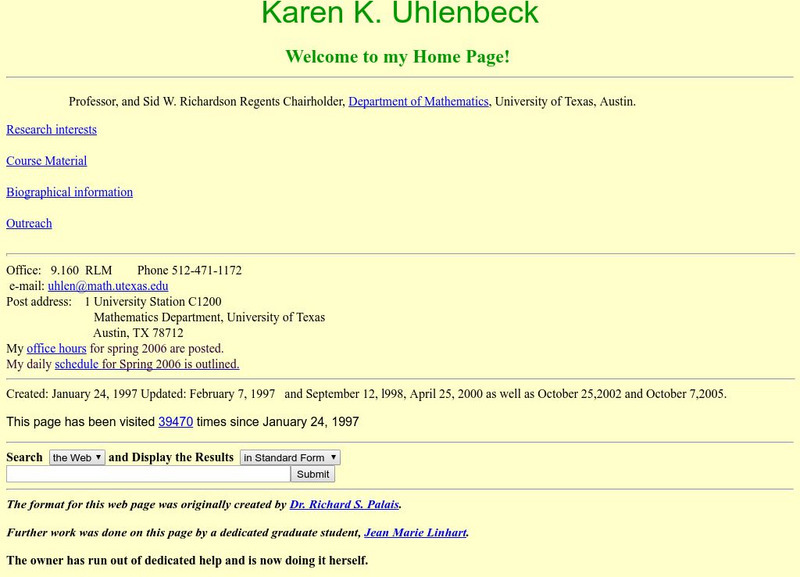
University of Texas: Karen Uhlenbeck's Personal Homepage
This personal homepage features recent accomplishments of this important woman mathematician.
Alabama Learning Exchange
Alex: Personal Economics
Students will be able to explain the various services available to protect consumer rights. They will develop a PowerPoint presentation in their student achievement teams which contains the required information along with a question...
Curated OER
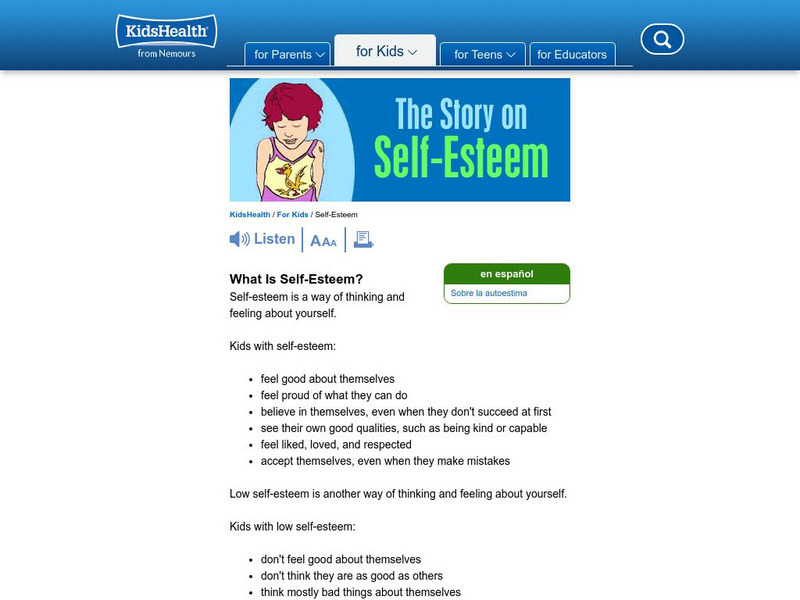
Kids Health: The Story on Self Esteem
Self-esteem is something that we all have. It is how you look at yourself, how highly you value yourself. If you have good self-esteem, you're bound to be a little more confident and proud of yourself than a person who has a lower level...
Wikimedia
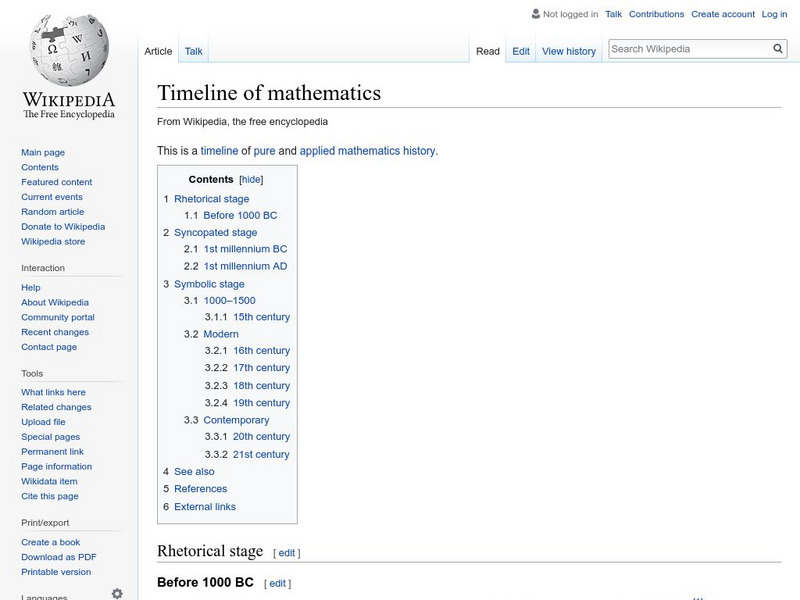
Wikipedia: Timeline of Mathematics
Wikipedia gives a timeline of all of the important mathematical accomplishments from 2400 BC to 2002. Most names and concepts are linked to further information specific to that person or idea.

Other
Thebigview.com: Pythagoras
Easy to read biography of Pythagoras that discusses his life, work, and questions raised by his ideas. Includes some interesting stories about some of his personal beliefs.

Khan Academy
Khan Academy: A Learn's Summer Math Program
See how ALearn and Khan Academy help solve the achievement gap.

Khan Academy
Khan Academy: How to Use Nwea Map Recommended Practice
A guide to using Khan Academy's MAP Recommended Practice tool to provide personalized practice for students.

PBS
Pbs: Hold an Awards Ceremony
Identify your own personal talents and design an award celebrating those skills and accomplishments. Participate in an awards ceremony that recognizes the talent in everyone.
Huntington Library
Huntington Library: Six Important People From Our Nation's History
In this lesson, 5th graders examine the lives of six people who were important in early American history. They include Abigail and John Adams, Benjamin Franklin, Thomas Jefferson, Thomas Paine, and George Washington. Readings include...