Hi, what do you want to do?





Other
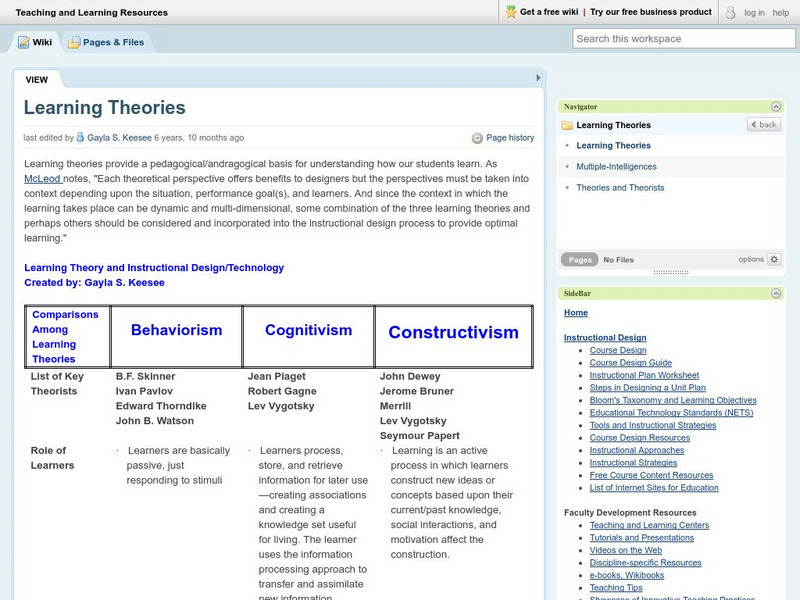
Teaching and Learning Resources: Learning Theories
Presents a table comparing three major learning theories - behaviorism, cognitivism, and constructivism. Lists major theorists for each, the role of the teacher, key ideas, how learning happens, the place of educational technology,...

Other
Ccsso: The Interstate Teacher Assessment and Support Consortium (In Tasc)
The Interstate Teacher Assessment and Support Consortium (InTASC) is a consortium of state education agencies and national educational organizations dedicated to the reform of the preparation, licensing, and on-going professional...
Other
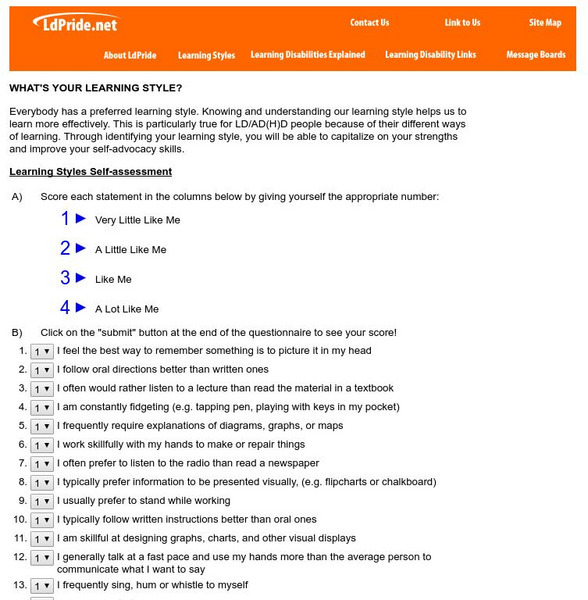
Ld Pride Online: Learning Styles & Multiple Intelligence
Are you looking to find out how you learn best? Explore the world of learning styles and multiple intelligences through on online quiz. Through identifying your learning style, you will be able to capitalize on your strengths and skills.
Travel Document Systems
Tds: Belarus: Economy
Read about the current state of the economy of Belarus, its strengths and weaknesses. Information is from the U.S. State Dept. Background Notes.
Physics Classroom
The Physics Classroom: Electrostatics: Lesson 4: Electric Field Intensity
A lesson enhancing students understanding of electrostatics. Recognize electric fields and know the strengths they can have. Identify the formula to determine the strength of those fields. Check out the interactive featured in the...
Simon Fraser University
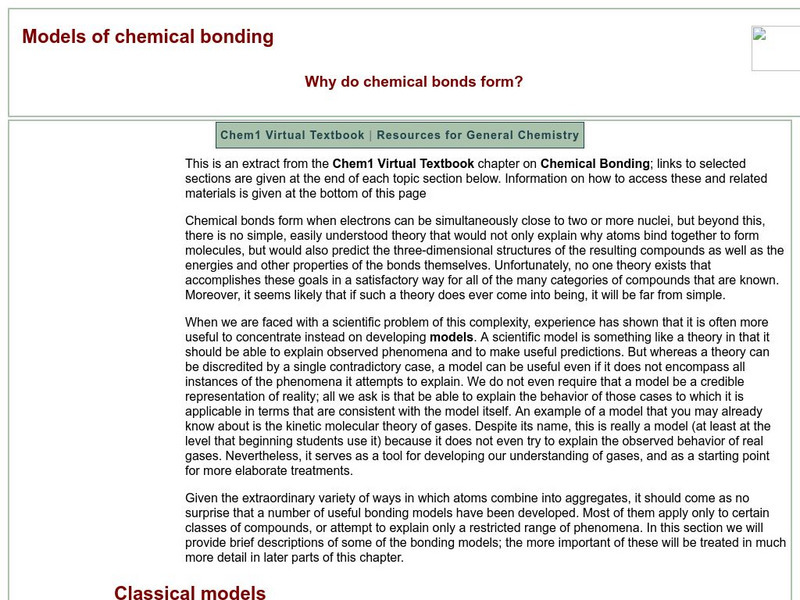
Chem1 Virtual Textbook: Models of Chemical Bonding: Why Do Chemical Bonds Form?
This extensive overview on chemical bonding seeks initially to answer the question, why do chemical bonds form? Information is provided on classical models of chemical bonding and quantum mechanical models of the chemical bond.
Siteseen
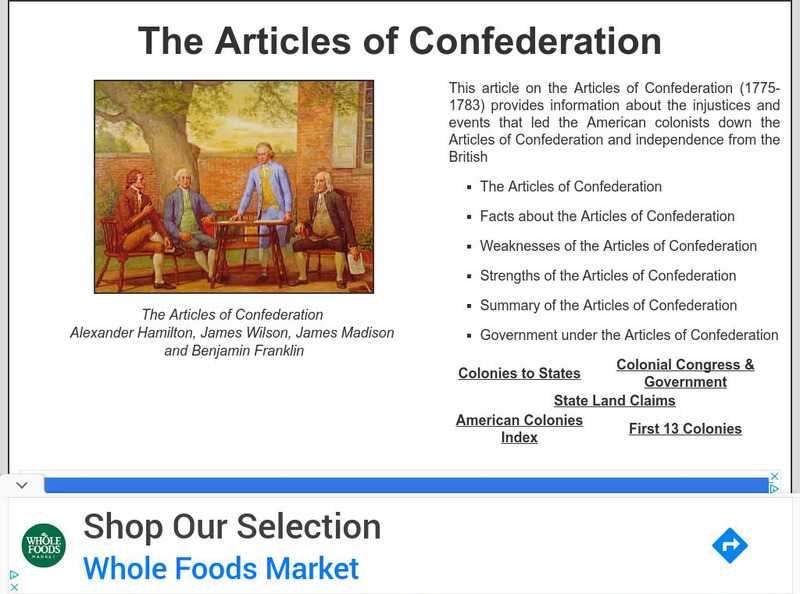
Siteseen: Land of the Brave: The Articles of Confederation
This article summarizes the Articles of Confederation, its strengths and weaknesses, and how it led to the Constitution.