Hi, what do you want to do?





TeachEngineering
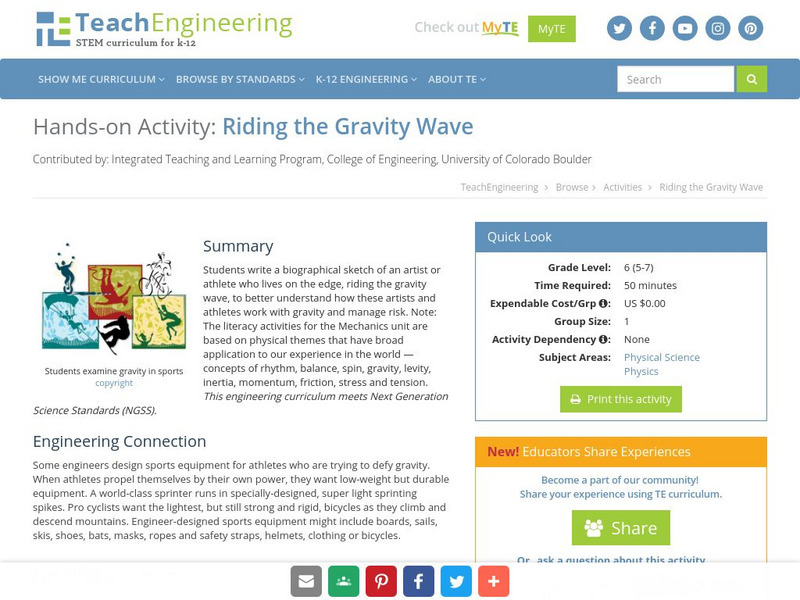
Teach Engineering: Riding the Gravity Wave
Students write a biographical sketch of an artist or athlete who lives on the edge, riding the gravity wave, to better understand how these artists and athletes work with gravity and manage risk. Note: The literacy activities for the...
TeachEngineering
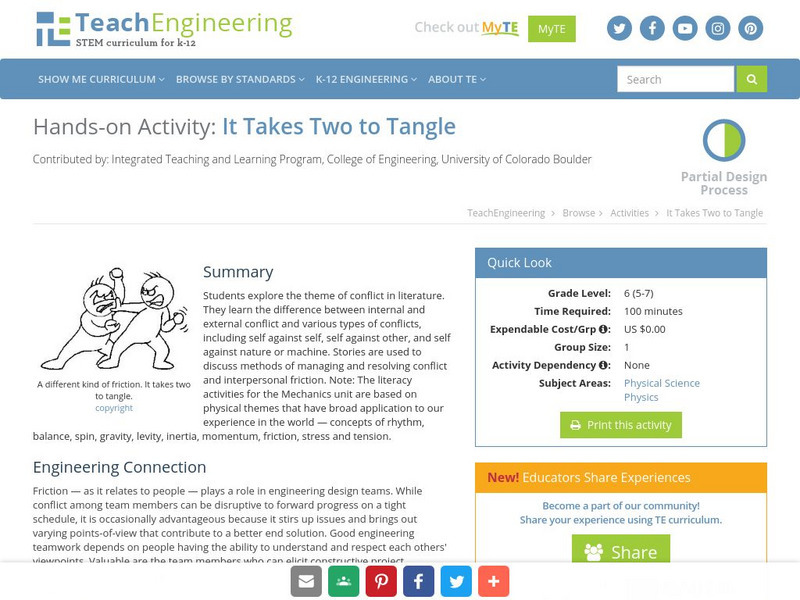
Teach Engineering: It Takes Two to Tangle
Students explore the theme of conflict in literature. They learn the difference between internal and external conflict and various types of conflicts, including self against self, self against other, and self against nature or machine....

Texas Education Agency
Texas Gateway: Fictitious Forces and Non Inertial Frames: The Coriolis Force
By the end of this section, you will be able to discuss the inertial frame of reference, discuss the non-inertial frame of reference, and describe the effects of the Coriolis force.

Khan Academy
Khan Academy: Newton's First Law Review
Review the key concepts, equations, and skills for Newton's first law of motion, including the difference between mass and weight.
TeachEngineering
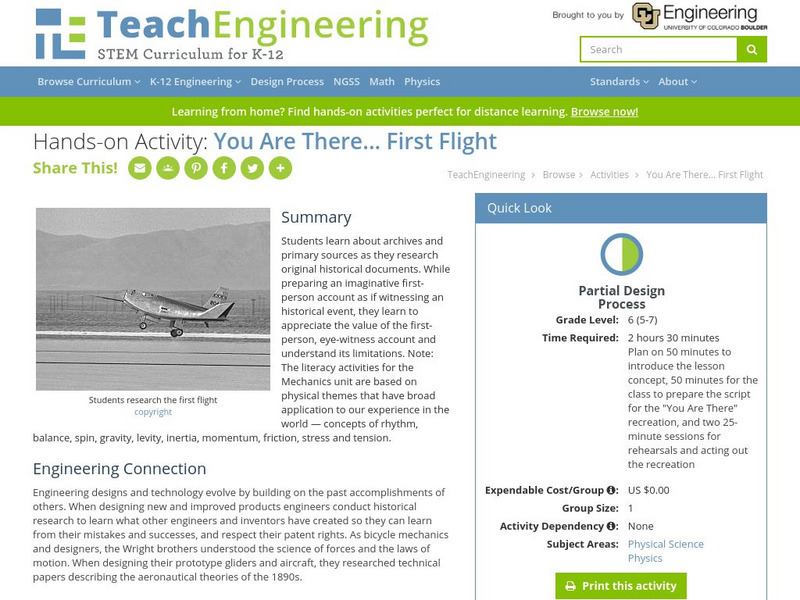
Teach Engineering: You Are There, First Flight
Students learn about archives and primary sources as they research original historical documents. While preparing an imaginative first-person account as if witnessing an historical event, they learn to appreciate the value of the...
TeachEngineering
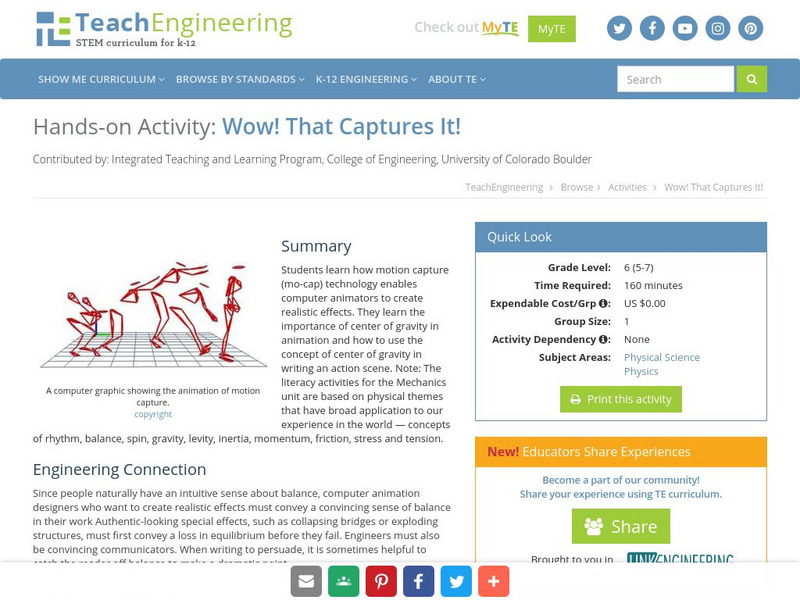
Teach Engineering: Wow! That Captures It!
Students learn how motion capture (mo-cap) technology enables computer animators to create realistic effects. They learn the importance of center of gravity in animation and how to use the concept of center of gravity in writing an...
TeachEngineering
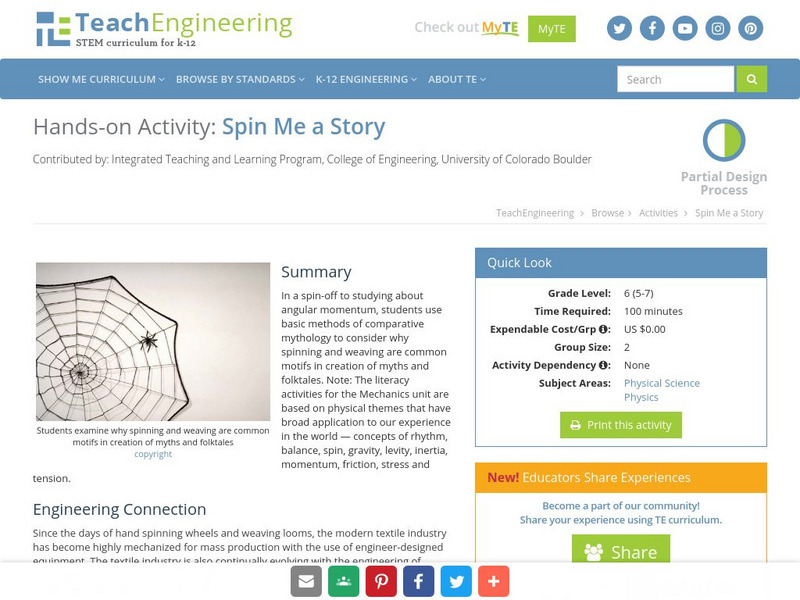
Teach Engineering: Spin Me a Story
In a spin-off to studying about angular momentum, students use basic methods of comparative mythology to consider why spinning and weaving are common motifs in creation myths and folktales. Note: The literacy activities for the Mechanics...