Lumen Learning
Lumen: Finding and Evaluating Research Sources
This lesson focuses on how to find, evaluate, and use primary and secondary sources using printed and online sources. It provides practice writing activities such as examining the same topic through primary and secondary sources and...

Internet History Sourcebooks Project
Fordham University: Medieval Sourcebook: History Through Primary Sources
This site from the Medieval Sourcebook answers the question: Why Study History Through Primary Sources? It provides complete information, a list of review questions, and bibliography information.

E Reading Worksheets
E Reading Worksheets: Patterns of Organization: Compare and Contrast
This learning module provides an explanation of the compare and contrast text structure. An explanation of the compare and contrast text structure is provided, and the compare and contrast text structure is demonstrated in a video...
Center for Innovation in Engineering and Science Education, Stevens Institute of Technology
Ciese: Historical Treasure Chests
After learning to distinguish between primary and secondary sources, students will examine four primary documents and address a set of questions for each.
Stanford University
Sheg:document Based History: Reading Like a Historian: New Deal and World War Ii
[Free Registration/Login Required] An inclusive unit on the New Deal and World War II with lessons about Social Security, the Zoot Suit Riots, the Dust Bowl, Mexican migration in the 1930s, the atomic bomb, Japanese internment, and the...
Other
University College at Dublin: Women's Writing in the Renaissance and Reformation
Useful for research and for focusing on women's writing during this influential period, this article includes a lengthy bibliography of primary and secondary sources.
Thinkport Education
Thinkport: One Person Can Change the World
In this module, students will read primary and secondary sources about events from the Reformation movement. They will identify the central ideas of the texts, and cite evidence from the text that supports the central idea.
Other
Sadlier School: Comparing and Contrasting Firsthand & Secondhand Texts
This unit uses first- and second-hand accounts to explore the life of Ruby Bridges and revolves around the book "Through My Eyes" by Ruby Bridges. This detailed lesson includes a full literacy unit, tips for small group and independent...
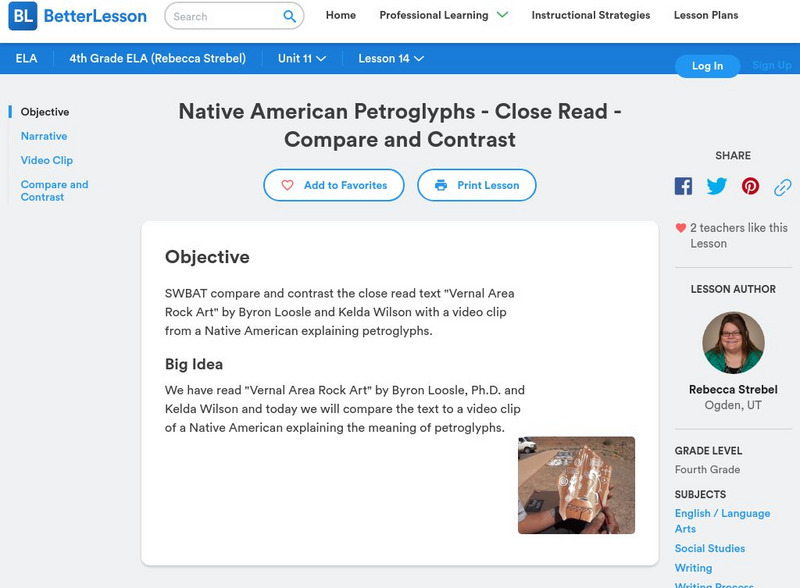
Better Lesson
Better Lesson: Native American Petroglyphs Close Read Compare and Contrast
Students will read an article by Byron Loosle on the meaning of Native American symbols and compare that to a video clip of an actual Native American explaining the symbols. There is a difference of opinion and students will weigh both...
National Women’s History Museum
National Women's History Museum: Congresswoman Jeannette Rankin
Students will explore the life of Congresswoman Jeannette Rankin by critically reading primary and secondary sources to determine her worldview, political beliefs, and core values.
Library of Congress
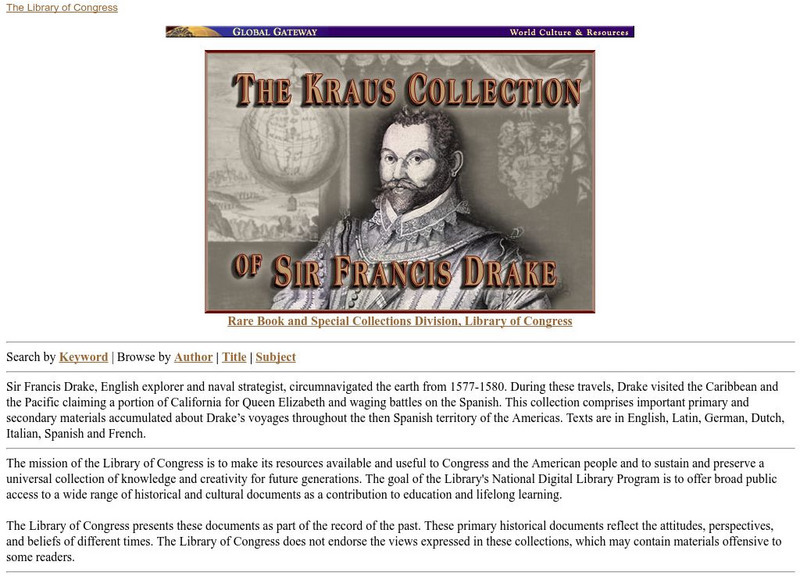
Loc: Global Gateway: Kraus Collection of Sir Francis Drake
From the rare book and special collections of the Library of Congress, presents important primary and secondary source materials by and about Sir Francis Drake.
National Women’s History Museum
National Women's History Museum: The Triangle Shirtwaist Fire
Student will use primary and secondary sources to gain a richer understanding of women's activism and how the Triangle Shirtwaist Fire led to changes in labor and safety regulations in America.
ReadWriteThink
Read Write Think: Researching Information: Comparing Electronic and Print Texts
This lesson allows students to compare and contrast print text structure with that of an online site. Students work together and use worksheets in comprehending the informational text. CCSS.ELA-Literacy.WHST.6-8.7 Conduct short research...
Better Lesson
Better Lesson: Ruby Bridges a Firsthand Account
In this lesson, we will read and understand the story "Through My Eyes" by Ruby Bridges. We will then compare and contrast this first-hand account with the secondhand account of "The Story of Ruby Bridges" by Robert Cole. A video...

National Humanities Center
National Humanities Center: America in Class: The Columbian Exchange
Lesson on the Columbian Exchange and the unintended consequences that resulted. Lesson includes teacher's notes, primary or secondary sources, background, strategies for analysis and Close reading, follow-up assignment and vocabulary.
Curated OER
Mc Graw Hill: Part 1 Reading: Literature: Summarize
Summarizing is a key skill needed in reading comprehension. This page describes how to summarize main ideas in a text. Click on Model button for a model with explanation and then click on Practice (Bottom Right)
AdLit
Ad lit.org: Classroom Strategies: Summarizing
Summarizing teaches students how to take a large selection of text and reduce it to the main points for a more concise understanding. Upon reading a passage, summarizing helps students learn to determine essential ideas and consolidate...
TeachEngineering
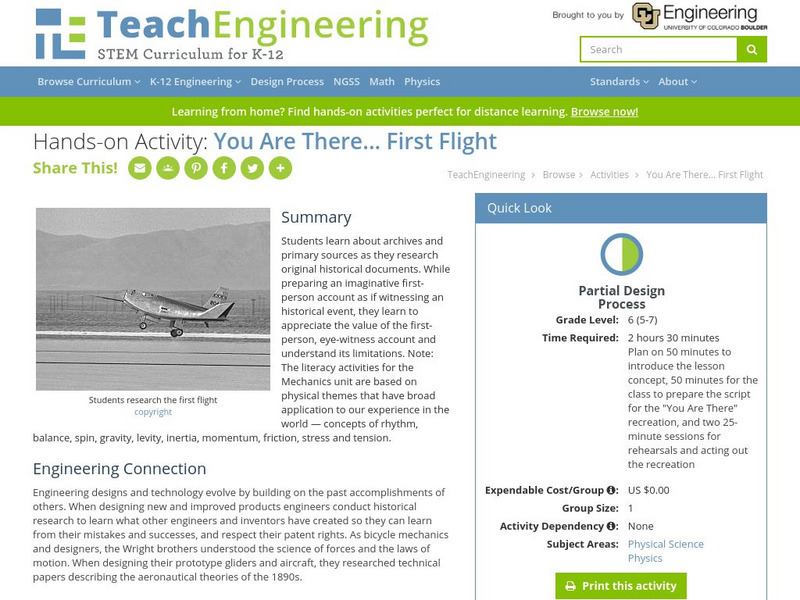
Teach Engineering: You Are There, First Flight
Students learn about archives and primary sources as they research original historical documents. While preparing an imaginative first-person account as if witnessing an historical event, they learn to appreciate the value of the...
EL Education
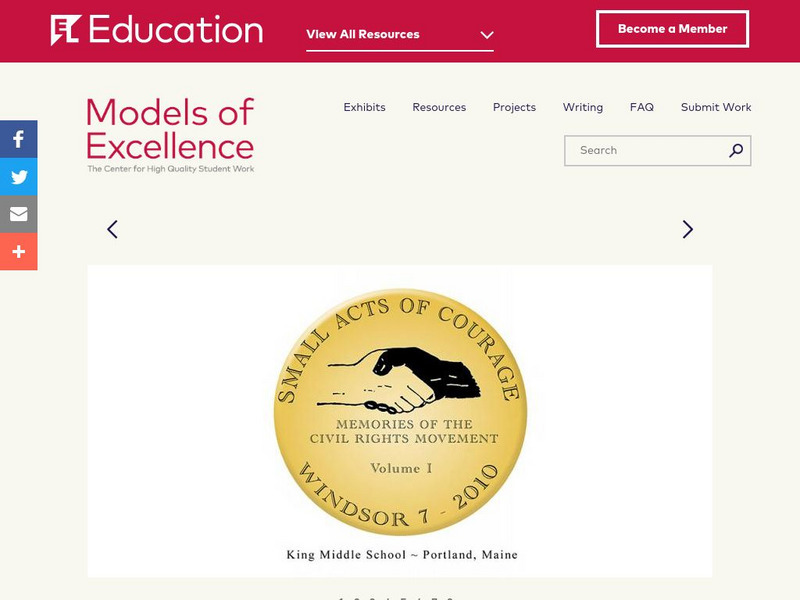
El Education: Small Acts of Courage
After researching local heroes of the civil rights movement through secondary sources and through primary source interviews, students write biographies of these unsung heroes. The biographies, along with digital photographs, are compiled...
British Library
British Library: Coleridge's Kubla Khan: Composition
This activity, which aims to develop students' understanding of 'Kubla Khan' after completing an initial study of Samuel Taylor Coleridge's poem, will encourage students to make links between the poem and a number of historical sources.
National Humanities Center
National Humanities Center: Toolbox Library: Power, American Beginnings: 1492 1690
Fifty seven primary sources-historical documents, literary texts, and visual images-and one secondary historical account that explore imperial conflict, European economic rivalry, and the impact of colonial rule on native peoples.