Hi, what do you want to do?






Curated OER
Understanding the Importance of Cyber Ethics
Students play a paper clip game which leads to a lesson on cyber ethics. In this cyber ethics lesson plan, students play the game, and then discuss the proper rules of how society should act and view their internet usage.

ISTE
The New Digital Citizenship
Boost digital citizenship with an engaging infographic that promotes the importance of being a positive digital agent, self, and interactor.

Education Outside
Our Water Planet
Fresh water is a precious resource. Most kids don't realize how little of the water on Earth is actually drinkable. This lesson will help to illuminate them on this important topic. They discus the ratio of water to land, where most...

Curated OER
What Does the Public Know About You? --Does it Matter?
Young people today have to be very careful with how they present themselves online. Show them the possible impact of their online activity and what employers might see when performing a basic search. The instructional activity provides a...

Curated OER
Geometric Figures and Applications
High schoolers study geometric figures. They use graph paper or Geometer's Sketchpad to construct and decorate geometric shapes, and also create a 3-D polygon using construction paper and a given template.

Curated OER
Farewell to Manzanar
Students investigate themes of justice and rights while reading the novel Farewell to Manzanar. They research contemporary civil rights issues and write reports. They also research the background of internment camps during World War II.

Curated OER
Typos Can Lead to Imposter Sites
Students explore the concept of phishing attacks. In this phishing attacks lesson, students read an article about imposter websites. Students discuss dangers of imposter websites and what to do if they fall victim to a phishing attack.

Curated OER
Freedom of Information Day
In this Freedom of Information Day worksheet, students complete activities such as reading a passage, phrase matching, fill in the blanks, correct words, multiple choice, spelling sequencing, scrambled sentences, asking questions,...
Get Safe Online
Get Safe Online: Protect Your Privacy
Many people that use the internet seem to be more willing to give out personal information than they would in other settings. This can be very dangerous. This resource describes how to protect your privacy while using the internet.

Other
What Students Need to Know: Freedom of Information and Protection of Privacy
This lesson unit published by the Information and Privacy Commissioner of Ontario has four activities that explore the concept of privacy and prompt the discussion of privacy issues in students' own lives. The lessons refer to privacy...
Other
Pc World: Privacy 2000 in Web We Trust?
PC World provides an enormous article on internet privacy. Includes examples, problem areas, and tips and solutions resulting in more safety and privacy on the Internet.
Read Works
Read Works: Protect Your Privacy Online
[Free Registration/Login Required] An informational text about never giving out personal information online. A question sheet is available to help students build skills in reading comprehension.
Federal Trade Commission
Ftc: Consumer Information: Privacy, Identity and Online Security
Knowing how to protect your personal information and your identity is a must in the 21st century. Here are some tips for doing it effectively.
Federal Trade Commission
On Guard Online: Protect Kids Online
Become cyber smart! Learn some practical tips that will help guard you against Internet fraud and protect your personal information. Topics include kids' privacy laws, computer security, informational videos, and internet quizzes.
Other
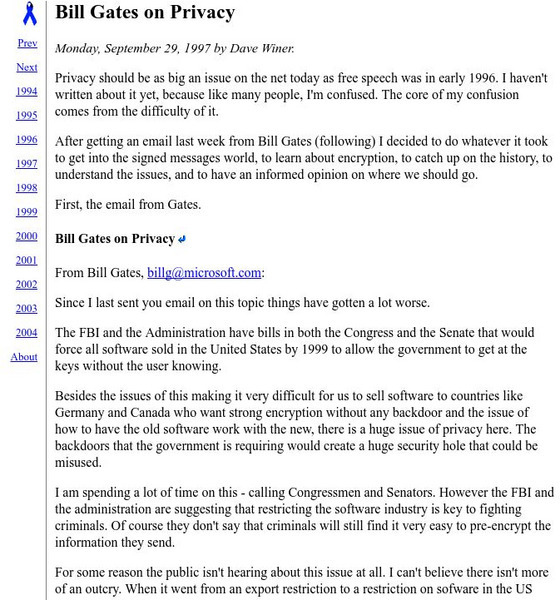
Dave Net: Bill Gates on Privacy
Dave Winer ponders the issues of privacy on the Internet, citing an email from Bill Gates and discussing digital encryption. Goes into depth about the debate on free speech and censorship of the internet.
Common Sense Media
Common Sense Media: Education: Privacy Rules: Grades 3 5
Students learn that children's websites must protect their private information. They learn to identify these secure sites by looking for their privacy policies and privacy seals of approval. They discuss a scenario in which their private...
Childnet
Childnet: Online Safety: Privacy Settings
Privacy settings (sometimes called privacy controls) are the tools provided as part of an online account to protect the information and content you are sharing. This site features questions, answers, and tips about privacy settings.
Council for Economic Education
Econ Ed Link: Cybersecurity and Economics: Protecting Your Identity Online
Help students answe the esential question, "What should you do before you share information on the Internet?"
Bill of Rights Institute
Bill of Rights Institute: Internet Copyright and Piracy Bills
A lesson focused on SOPA, Stop Online Privacy Act, which protects online businesses from counterfeiters and from folks using copyrighted materials without appropriate permissions.

Media Smarts
Media Awareness Network: Privacy Pirates
Sail away on the open seas in order to protect your online privacy from the privacy pirates. This animated game helps students become responsible digital citizens as they learn how to keep their personal information secure.
Other
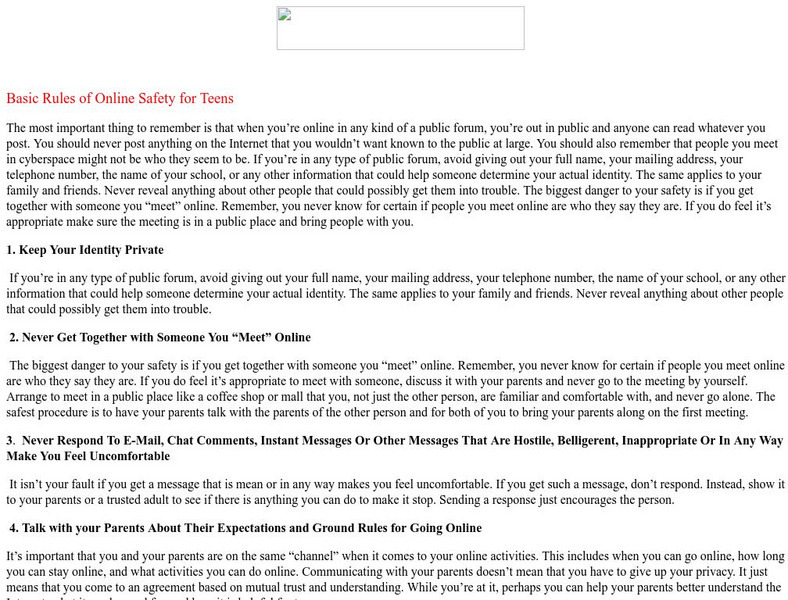
Safe teens.com: Online Safety Project
Find information on the internet as well as guidelines to follow in order to make surfing a fun and safe experience. The site also provides a link for parents to help them with children that will be using the internet.
Common Sense Media
Common Sense Media: Education: Strong Passwords (3 5)
Young scholars learn how to create secure passwords in order to protect their private information and accounts online. They learn tips for creating safe passwords. They explore scenarios in which two characters choose passwords, and they...
Common Sense Media
Common Sense Media: Education: Private and Personal Information (3 5)
As students visit sites that request information about their identity, they learn to adopt a critical inquiry process that empowers them to protect themselves and their families from identity theft. They learn the difference between...
Get Safe Online
Get Safe Online: Safeguarding Children
The internet is a great resource, but it can also be dangerous. This resource contains many links to online safety resources for parents, teachers and students.