Hi, what do you want to do?






Curated OER
The Impact of the Civil Rights Movement
Deepen understanding of the Civil Rights Movement with this collection of primary documents. This resource contains 22 video transcripts about desegregation, voting rights, black power, Dr. Martin Luther King Jr., and more. You might...
John F. Kennedy Presidential Library & Museum
Jfk Presidential Library & Museum: James Farmer
Letters and telegrams from the co-founder of the Congress of Racial Equality (CORE), James farmer, help tell the story of his fight against segregation during the Kennedy years.

Georgia Humanities Council and the University of Georgia Press.
New Georgia Encyclopedia: Atlanta Race Riot of 1906
Article that retells the story behind the Atlanta race riots of 1906 where white mobs killed and wounded dozens of blacks in reaction to newspaper headlines of alleged assaults of white females by blacks, general racial tensions, the...
Stanford University
Mlk and the Global Freedom Struggle: Albany Movement
Encyclopedia entry examines the Albany Movement, a desegregation coalition formed in Albany, Ga. in 1961 with the purpose of ending all forms of racial segregation in the city.

Khan Academy
Khan Academy: Brown v. Board of Education of Topeka
Discusses the famous Supreme Court decision that ended school segregation, Brown v. Board of Education of Topeka (1954).

Yale University
Yale New Haven Teachers Institute: Race and the Community
Discusses the issues of cultural and racial differences and how these should be addressed in schools. Includes objectives and lesson activities.
Digital History
Digital History: Simple Justice
Follow the civil rights quest for integrated schools from the beginning in 1849 through the 1954 Supreme Court decision in Brown v. the Topeka Board of Education and the struggle that ensued for decades following in the most reluctant...
Black Past
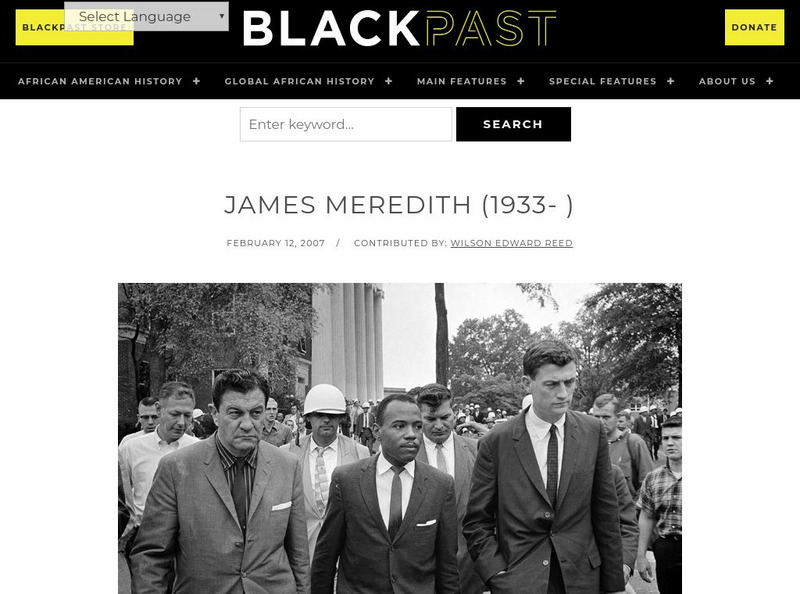
Black Past: Meredith, James
A brief encyclopedia entry about James Meredith, the first black to integrate the University of Mississippi. A link will take you to a website so you can see the papers he donated to Old Miss.
USA Today
Minorities Make a Choice to Live With Their Own
Intriguing article explaining the trend illustrated through the 2000 Census information that minorities have broken segregation ties but still choose to live in areas with other members of their racial background.

The History Cat
The History Cat: The Jim Crow Era: The Life and Death of Jim Crow
Looks at how Southerners continued to discriminate against blacks after the Civil War through Black Codes, or Jim Crow laws, which permitted practices such as segregation in public places and requiring literacy tests in order to vote.

PBS
Pbs: American Experience: Eugene "Bull" Connor
Brief biographical details on Eugene "Bull" Connor, Commissioner of Public Safety in Birmingham, AL in 1961. He was an ultra-segregationist with close ties to the KKK known for enforcing racial segregation and denying civil rights to...
National Women’s History Museum
National Women's History Museum: Ruby Bridges
A biographical look at Ruby Bridges who became famous at six years of age by being the first Black child to attend a desegregated school in America.
Digital History
Digital History: To the Heart of Dixie
In the early 1960s civil rights activists put the ban on segregation to the test. In 1961, "Freedom riders," boarded buses headed south to test the federal ban on segregated travel. And in 1962, the University of Mississippi was ordered...
Library of Congress
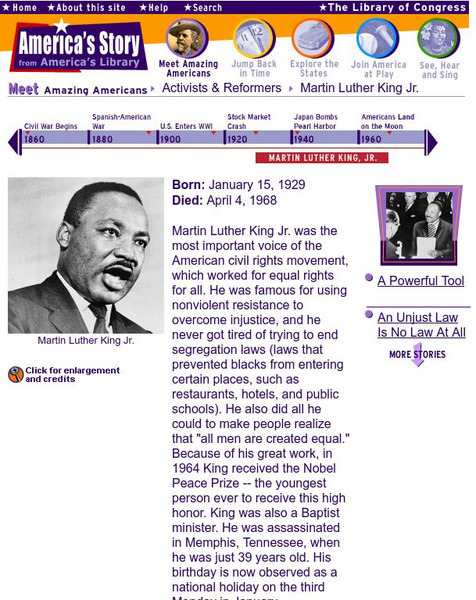
Loc: America's Story: Martin Luther King
This article gives a brief overview of the life of civil rights leader Dr. Martin Luther King Jr. while discussing the concept of non-violent resistance.
Black Past
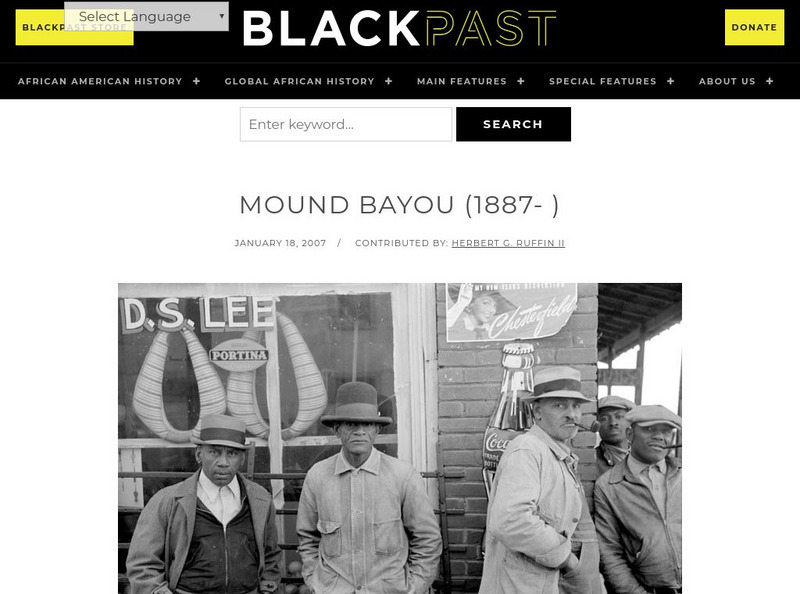
Black Past: Mound Bayou
This interesting encyclopedia article recounts the self-segregated community of Mound Bayou, Mississippi, which was founded as a place for blacks to find economic opportunity at a time of extreme racial violence in the South.
History Link
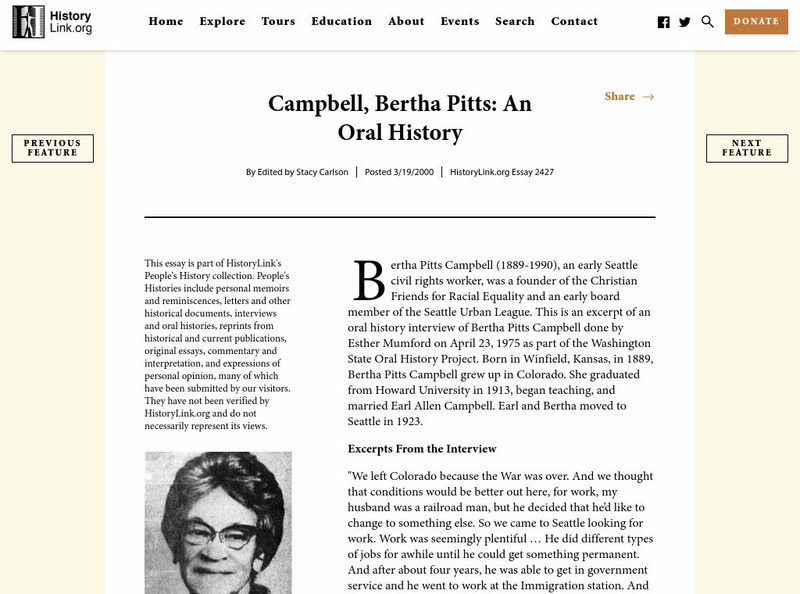
Bertha Pitts Campbell: An Oral History
From the Washington State Oral History Project comes this captivating interview with Bertha Pitts Campbell, an African American woman and early Seattle civil rights worker. Campbell talks about the discrimination and segregation she...
Khan Academy
Khan Academy: Sncc and Core
Read about the Congress for Racial Equality (CORE) and the Student Nonviolent Coordinating Committee (SNCC), two groups that played pivotal roles in organizing nonviolent protests during the Civil Rights Movement of the 1950s and 1960s.
Digital History
Digital History: The Mother of the Civil Rights Movement
On December 1, 1955, the late Rosa Parks refused to give up her bus seat and made civil rights history.
Khan Academy
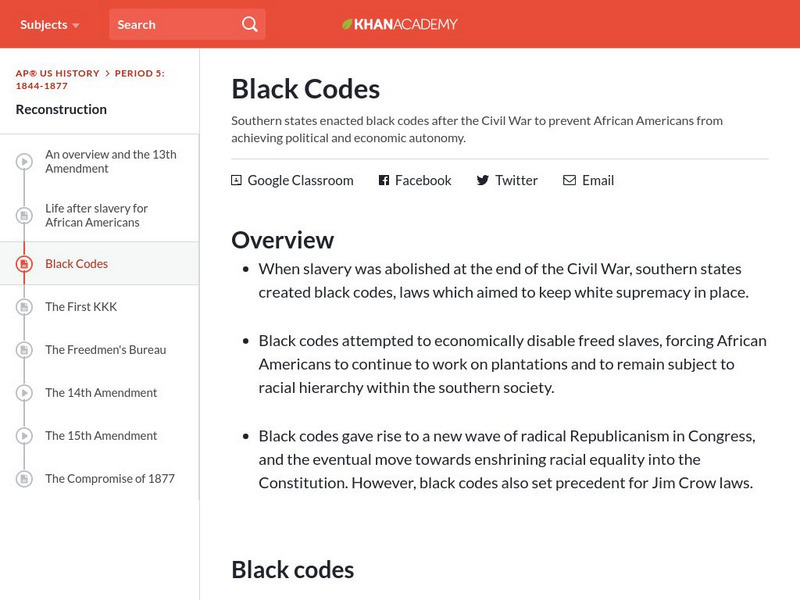
Khan Academy: Ap Us History: 1844 1877: Reconstruction: Black Codes
Discusses the Black Codes that white Southerners imposed on African Americans after the Civil War and the efforts by Republican politicians to protect their rights.
Scholastic
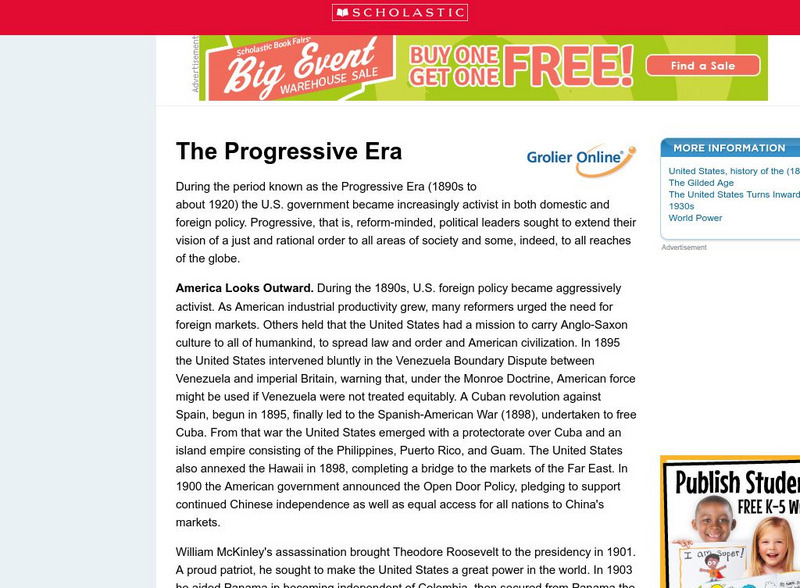
Scholastic: The Progresssive Era
This Grolier On-line Encyclopedia article hits the main points of the Progressive Era stretching from the 1890s until just after the end of World War I.
Khan Academy
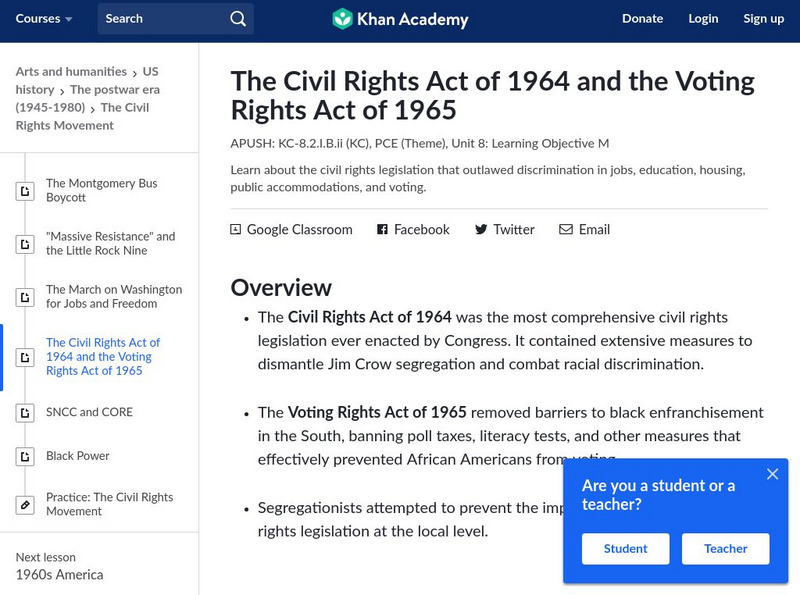
Khan Academy: The Civil Rights Act of 1964 and the Voting Rights Act of 1965
Read about the Civil Rights Act of 1964 and the Voting Rights Act of 1965 which sought to make discrimination illegal, and the resistance they faced from the public and government officials. As time passed, African Americans began to...
Khan Academy
Khan Academy: "Massive Resistance" and the Little Rock Nine
Read about the famous civil rights protest in Little Rock, Kansas in 1957 when nine African American students attempted to enter Central High School on the first day of school. Despite the presence of federal troops at the school for the...

Khan Academy
Khan Academy: Ap Us History: 1844 1877: Reconstruction: Life After Slavery
Discusses what life was like for African Americans who were freed from slavery after the Civil War. Includes questions for students.