Hi, what do you want to do?






University of Oklahoma
University of Oklahoma Law Library: Federalist Papers
The complete text of the 85 Federalist Papers which explained why the authors believed the new Constitution should be ratified.

Alabama Learning Exchange
Alex: Articles of Confederation
This lesson looks at the development of the constitutional government in the United States. Students use technology to explore history concepts.
Gilder Lehrman Institute of American History
Gilder Lehrman Institute: The New Nation, 1783 1815
[Free Registration/Login Required] This website documents the United States through its struggles to become a new nation. Site includes primary source documents for the Articles of Confederation, US Constitutional Convention, and George...
iCivics
I Civics: Race to Ratify
This simulation game set in the 1780s focuses on the ratification of the Constitution.

Library of Congress
Loc: Madison's Treasures
Documents presented here relate to two seminal events in which Madison played a major role: the drafting and ratification of the Constitution of the United States (1787-1788) and the introduction (1789) in the First Federal Congress of...
US National Archives
Docsteach: To Sign or Not to Sign
Students will consider the arguments made by members of the Continental Congress regarding whether or not to sign the Declaration of Independence. They will also have the opportunity to analyze each section of the Declaration to...

Scholastic
Scholastic: Explaining the Bill of Rights
Read about the need for a Bill of Rights to be added to the Constitution. Find out what each of the first ten amendments means.
Independence Hall Association
U.s. History: Unsettled Domestic Issues
The new United States government faced many threats to its success. Read this overview of the possible problems.
The Dirksen Congressional Center
Congress for Kids: Constitution: The Work Begins
Discover how the Constitution was initiated and read about the Constitutional Congress. After learning about the beginning stages of the Constitution, take a quiz to show your learning.
University of Chicago
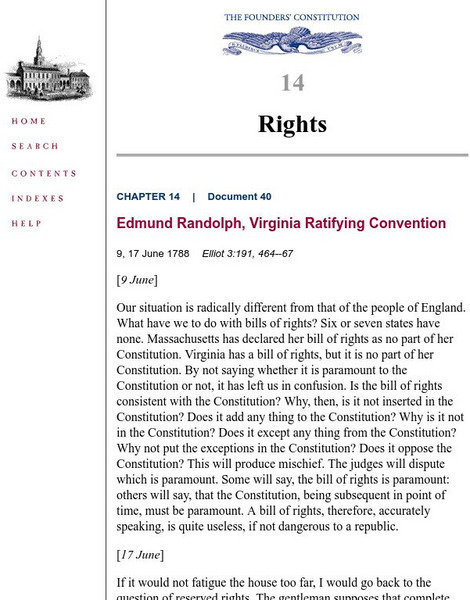
The Founders' Constitution: Notes From Virginia Ratifying Convention
Edmund Randolph's notes taken at the state convention of Virginia on ratification of the new Constitution.
Schools of California Online Resources for Education
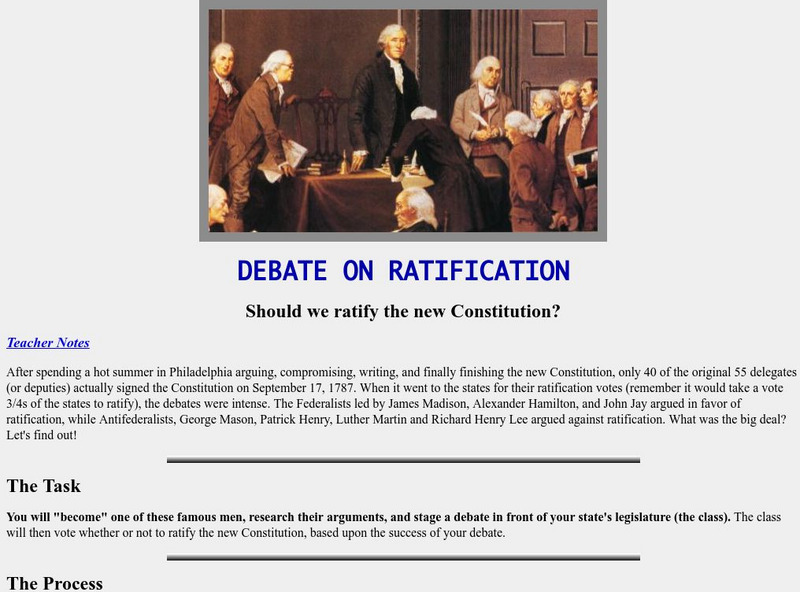
Score: Debate on Ratification
Students become one of the famous men who argued for or against ratification of the Constitution. They research and present their argumets to the class, who will then vote whether or not to ratify the new Constitution.
University of Chicago
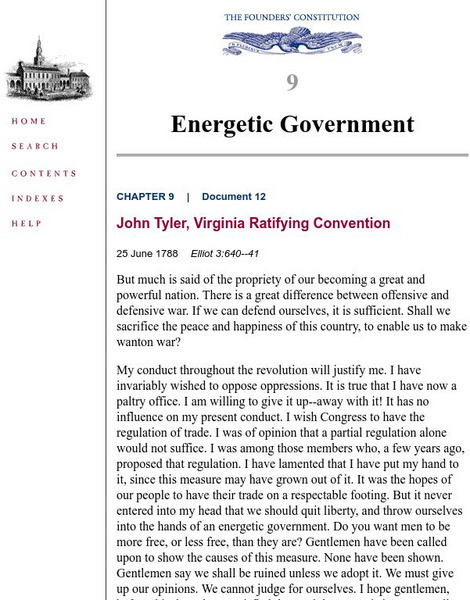
The Founders' Constitution: John Tyler, Virginia Ratifying Convention
The original text of a statement by John Tyler, member of the Virginia Constitutional Ratifying Convention, on his opposition to the new Constitution.
University of Chicago
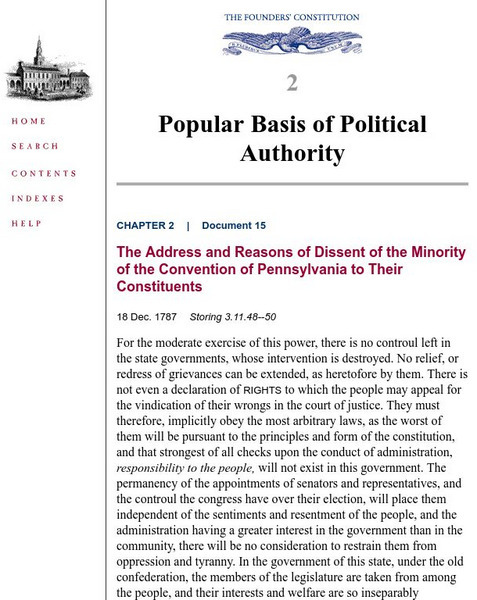
The Founders' Constitution: Popular Basis of Political Authority
This speech, "The Address and Reasons of Dissent of the Minority of the Convention of Pennsylvania to Their Constituents," contains some of the arguments for opposing the Constitution.

University of Chicago
The Founders' Constitution: Resolution & Letter to the Congress
The original and complete text of the letter approved by the Constitutional Convention on September 17, 1787 recommending the newly adopted U.S. Constitution to the Congress and the states for ratification.
Tom Richey
Tom richey.net: The u.s. Constitution: Framing, Principles and Ratification [Ppt]
Presents key ideas for examining how the Articles of Confederation were replaced with the Constitution and the compromises that were reached during debates.
Wikimedia
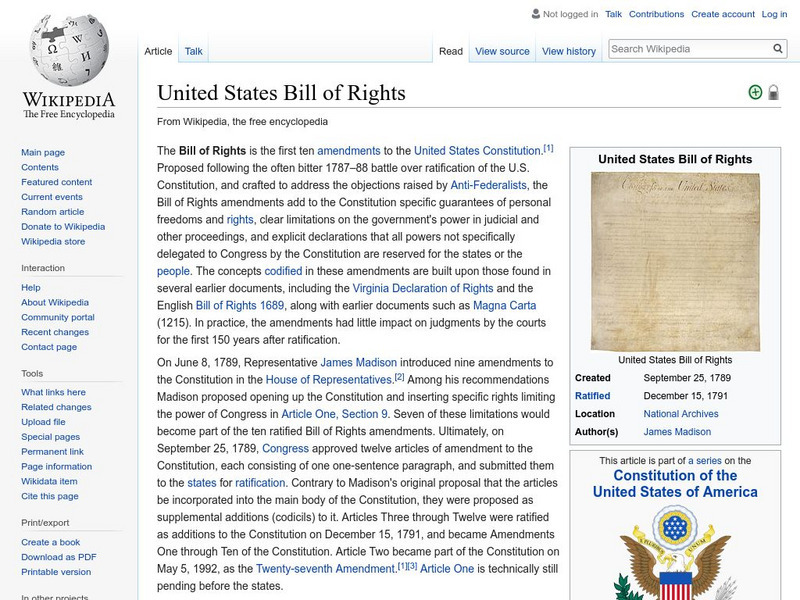
Wikipedia: United States Bill of Rights
This encyclopedia article from Wikipedia gives some background history to the creation of the Bill of Rights and contains a transcription of the first ten amendments to the Constitution in their original form.
Siteseen
Siteseen: Government and Constitution: Federalist Papers
The Federalist Papers were a series of 85 essays that promoted the ratification of the United States Constitution and the nature of a Republican government.
Curated OER
Etc: Maps Etc: United States at the Close of the Revolution, 1789
A map from 1872 of the country east of the Mississippi showing the newly formed United States after the ratification of the Constitution in 1789. The map is keyed to show the states at the time and the Spanish territories of West and...
Independence Hall Association
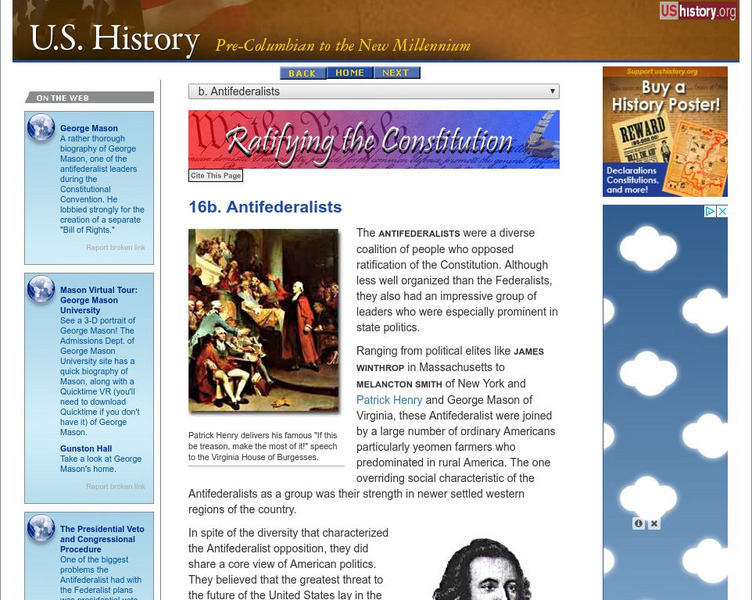
U.s. History: Antifederalists
The Anti-federalists, those who opposed the ratification of the Constitution, were a diverse group. They did have specific fears about carrying out the precepts of the Constitution. Read about their fears, especially the main one, no...
Center For Civic Education
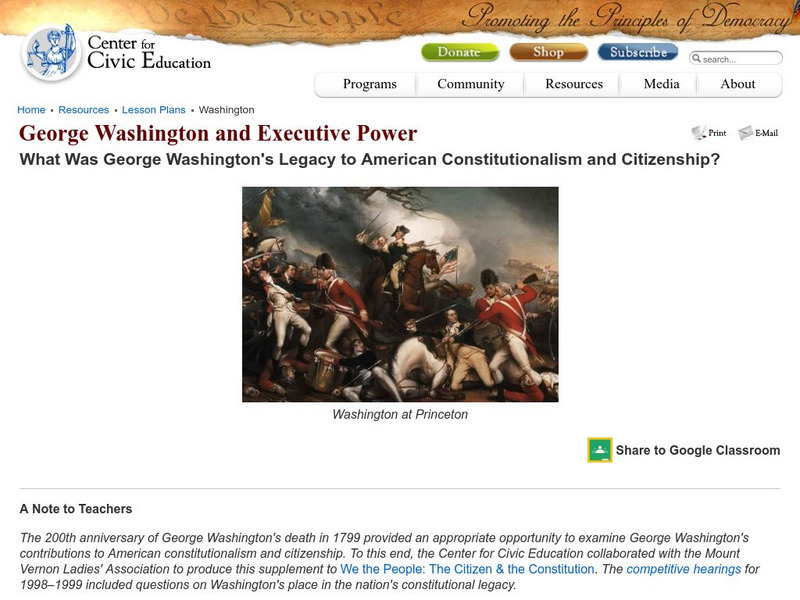
Center for Civic Education: George Washington and Executive Power
This instructional activity looks at the legacy of George Washington, perhaps the most influential leader in the creation of the American nation. Through his achievements as commander-in-chief during the Revolution, in support of the...
Curated OER
Etc: Distribution of Votes Ratification of Constitution in New England 1787 1790
A map showing the distribution of votes in the ratification of the Constitution (1787-1790) for the New England States. The map is keyed to show areas where the vote was a Federal majority, where there was an anti-Federal majority, and...
University of Groningen
American History: Biographies: Alexander Hamilton
This site is provided for by the University of Groningen. Alexander Hamilton represented the growing movement towards a strong national government. Read the beginning stages of the nationalist movement, the conflicting ideas of state...
Independence Hall Association
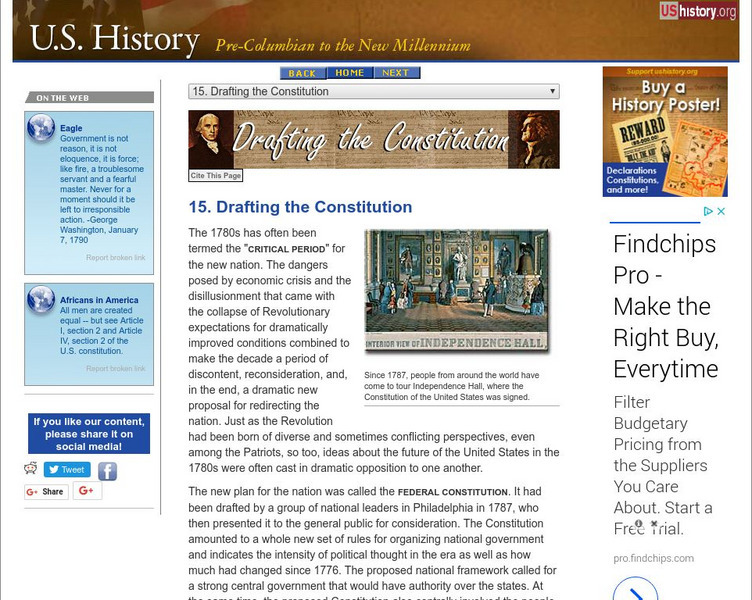
U.s. History: Drafting the Constitution
Problems with the new government of the United States led to rethinking the rules of governing. Read a brief overview of what the results were.
Teaching American History
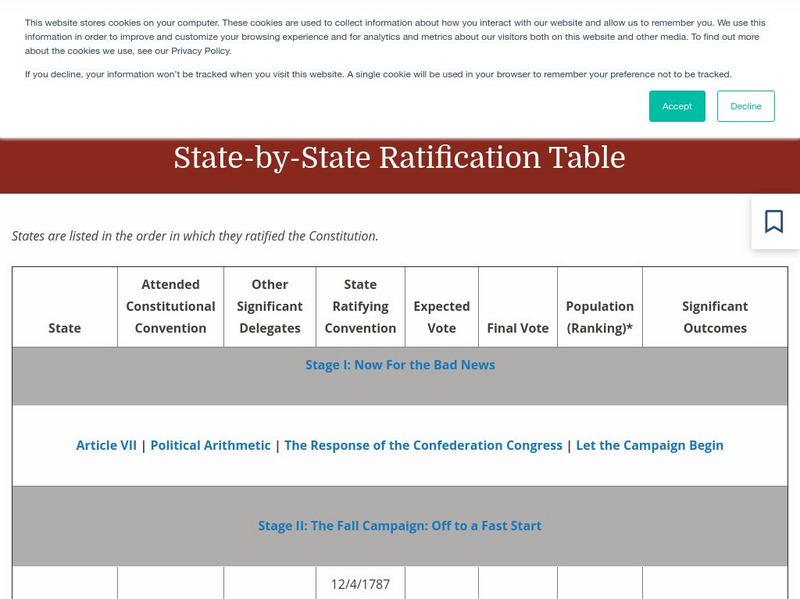
Teaching American History: State by State Ratification Table
A chart illustrating the order of states as they ratified the new constitution. Find the delegates from the states, vote, population, and outcomes.