Hi, what do you want to do?






University of Victoria (Canada)
Study Zone: Simple Past: Regular and Irregular Verbs
This practice quiz asks students to type the simple past tense of given regular and irregular verbs into boxes provided throughout a paragraph.
English Club
English Club: Basic Tenses: Regular Verbs
Notes and examples of verb tense including past, present, future, past participle, present participle, simple, continuous, perfect, and continuous perfect.
English Club
English Club: Learn English: Grammar: Verbs: Tense: English Tense System
Information about verb tenses with links to additional information: Tense and Time, Basic Tenses, Regular Verbs, Irregular Verbs, and Be.
PBS
Pbs Learning Media: When to Use the Past Tense for Irregular Verbs
Often when we write the past tense of a regular verb, we add an "-ed" after the last letter. Irregular verbs do not follow this rule! The simple past and simple participle of irregular verbs can end in a variety of ways with no...
Other
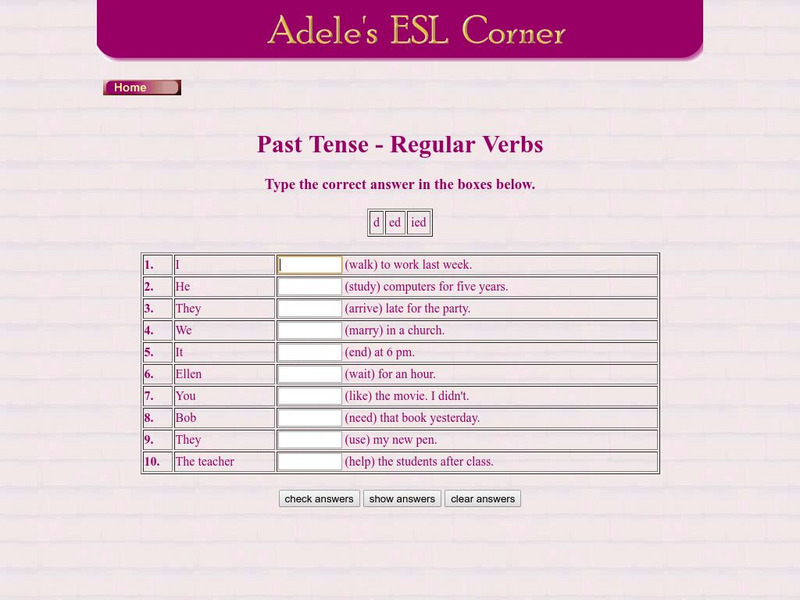
Adele's Esl Corner: Past Tense Regular Verbs
Change the verbs to past tense in each of the ten sentences in this exercise.
Quia
Quia: Past Tense Regular Verbs
Compete against a friend by changing each present tense verb into its past tense form.

Sophia Learning
Sophia: Regular vs. Irregular Verbs: Lesson 3
This lesson defines regular and irregular verbs and provides a list of common irregular verbs.

Other
Spanish Learn It Online: Spanish Verb Conjugation
A terrific tool from Spanish-Learn It Online for training students in understanding how to correctly conjugate regular verbs in the present tense. Complete conjugations for the selected verb tense are also available.
Robin L. Simmons
Grammar Bytes: Irregular Verbs: Rules for Use
Grammar rules are provided for irregular verbs. Includes examples and tables.
Languages Online
Languages Online: The Future Tense
A great explanation of how to conjugate the future tense introduces six exercises that practice regular and irregular verbs. The "vosotros" form is also used. One exercise involves converting the verbs from present tense to future, and...
Colby College
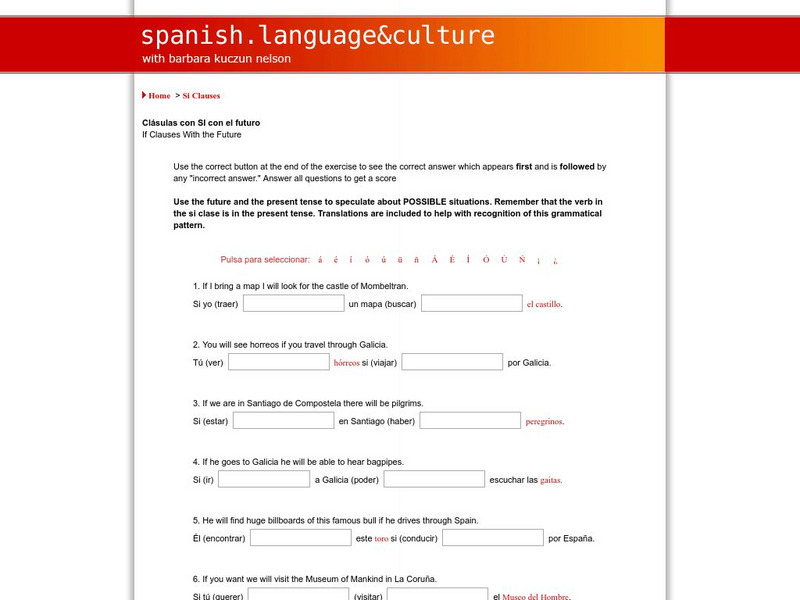
Spanish Language & Culture: Future Tense and Si Clauses
Great explanation of "if" clauses in the present indicative tense that are used in sentences with the future tense. A short exercise tests the student's mastery of the principle and reviews a variety of present and future tense...
Colby College
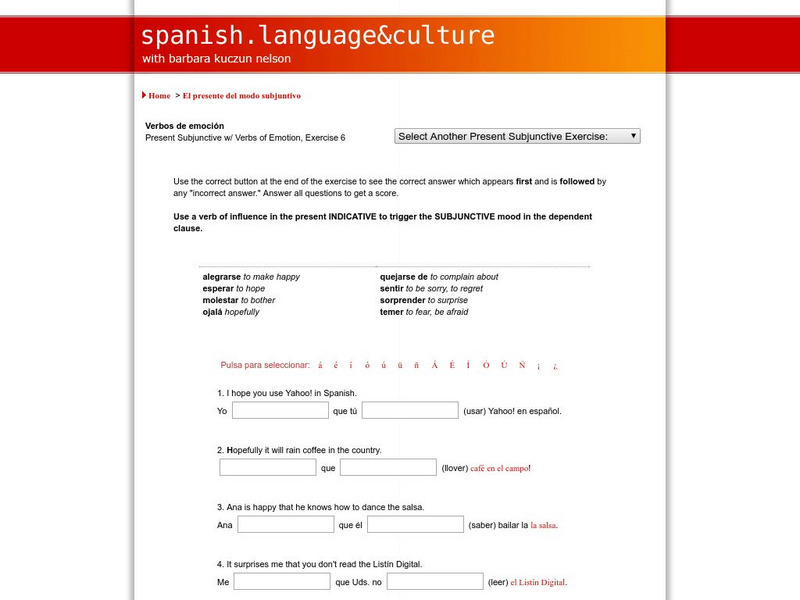
Spanish Language & Culture: Subjunctive Verbs of Emotion
With the English translation as a guide, the student completes the Spanish equivalent by conjugating the verb of emotion into the present indicative and the verb in the noun clause into the present subjunctive. Good practice for spelling...
Trent University
Mas Arriba: La Rutina Diaria ( Er, Ir Verbs)
In this activity, students practice using expressions with -ar, -er, and -ir verbs in the present indicative tense. Using the pictures and cues, complete each sentence using the correct form of each verb. To check your answer listen to...

Towson University
Towson University: Online Writing Support: Verbs
This entry focuses on types of verbs and their functions including action, auxiliary, linking, regular and irregular, transitive and intransitive, and indicative, imperative, and subjunctive mood. It explains and provides examples of each.

Grammarly
Grammarly Blog: Verb Forms
This page explains the five forms of verbs: root, third-person singular,present participle, past, and past participle and provides examples of each.
Colby College
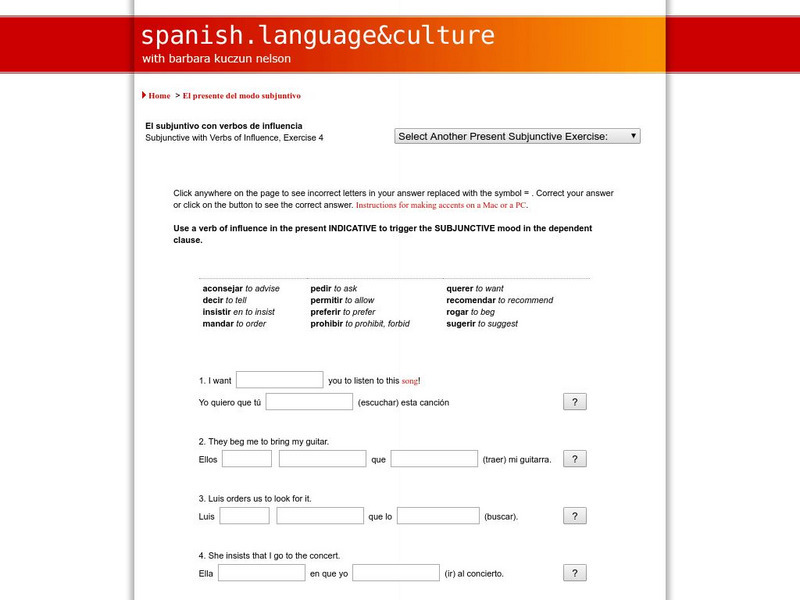
Spanish Language & Culture: Subjunctive Noun Clauses #4
This exercise practices the present subjunctive with verbs of influence: aconsejar, decir, insistir, mandar, necesitar, pedir, preferir, prohibir, querer, recomendar, rogar, and sugerir. An English translation is provided as a foundation...
Colby College
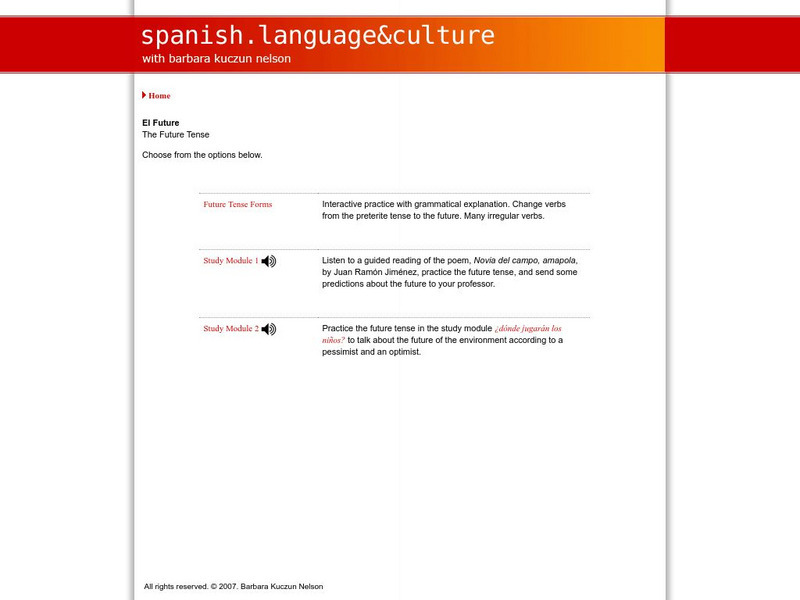
Spanish Language & Culture: The Future Tense
Colby College provides a great explanation of how to conjugate verbs in the future tense, with English translations of the examples. Twenty sentences provide fantastic practice in changing verbs from preterite tense to future tense...
University of Texas at Austin
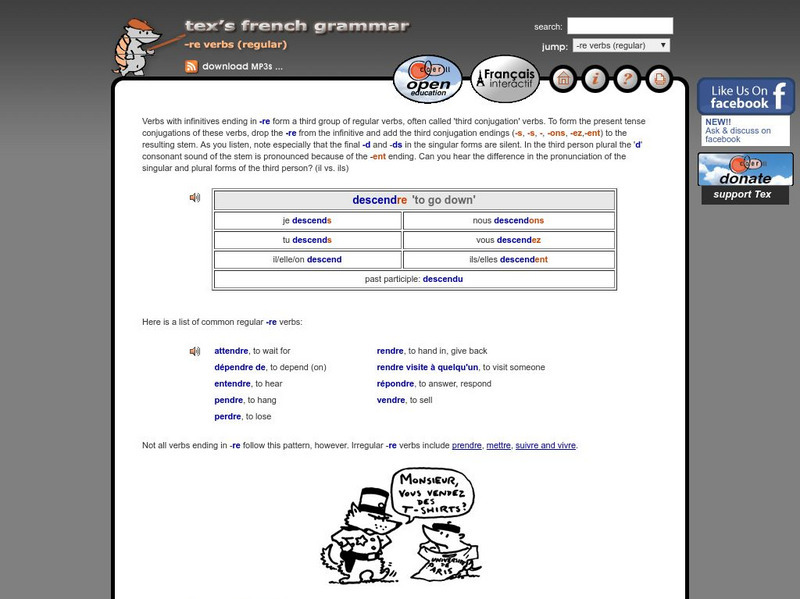
Tex's French Grammar: Regular "Re" Verbs Present Tense
Wonderful site with clear explanation of regular "re" verbs, with written and audio usage examples and interactive practice exercises.
Language Guide
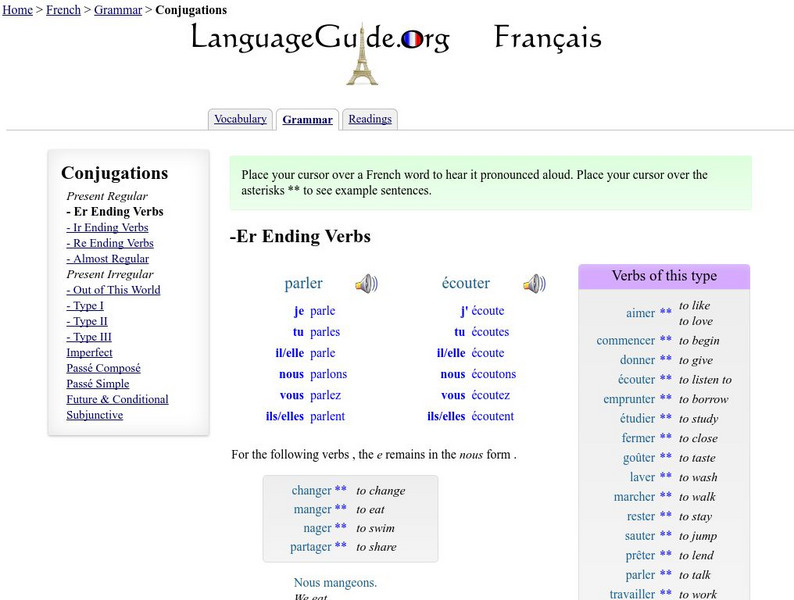
Language Guide: Regular Er Verbs(conjugation)
Learn French verb endings for regular "er" verbs in this tutorial that includes an audio pronunciation aid.
Colby College
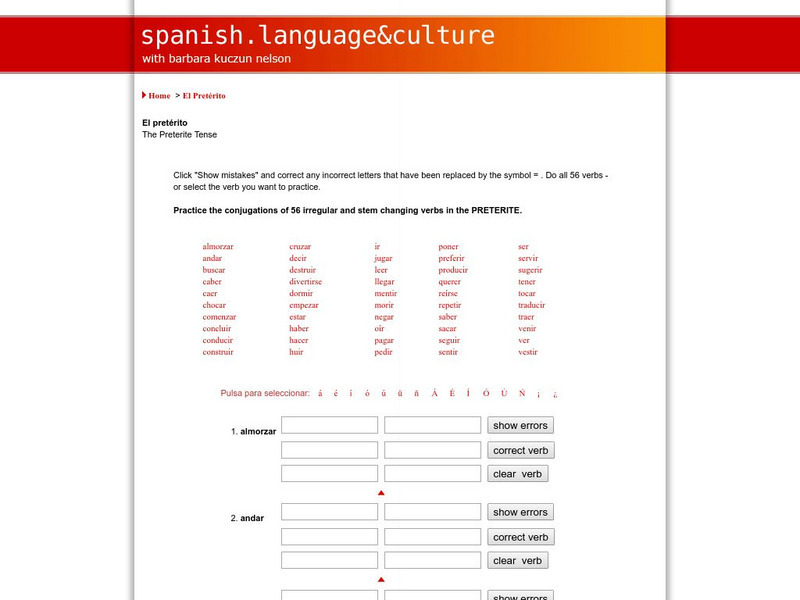
Spanish Language & Culture: The Preterite Tense
These exercises from Colby College provide a very extensive review of irregular verbs, stem-changers, and spelling changes in the preterite tense for more than 50 verbs. Practice conjugating these verbs in verb charts. Answers may be...
University of Texas at Austin
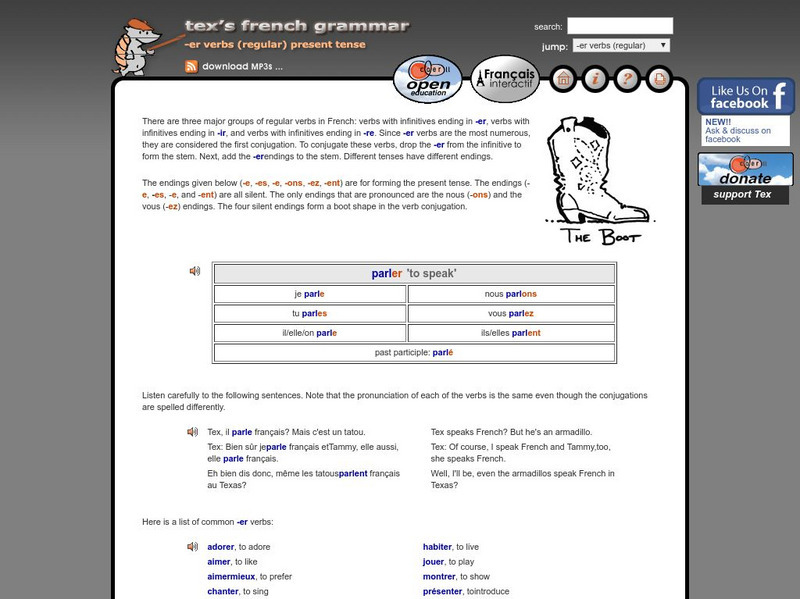
Tex's French Grammar: Regular "Er" Verbs
This site from Tex's French Grammar is a wonderful site with clear explanation of the "er" verbs, with usage examples and interactive practice exercises (written and audio).

Other
Spaleon: Future Tense
A great tool from Spanish-Learn It Online (Spaleon) to practice verb conjugations in the future tense. The student may choose the type of verb (regular, irregular, etc.) that needs to be drilled. As each answer is entered, the student...
Towson University
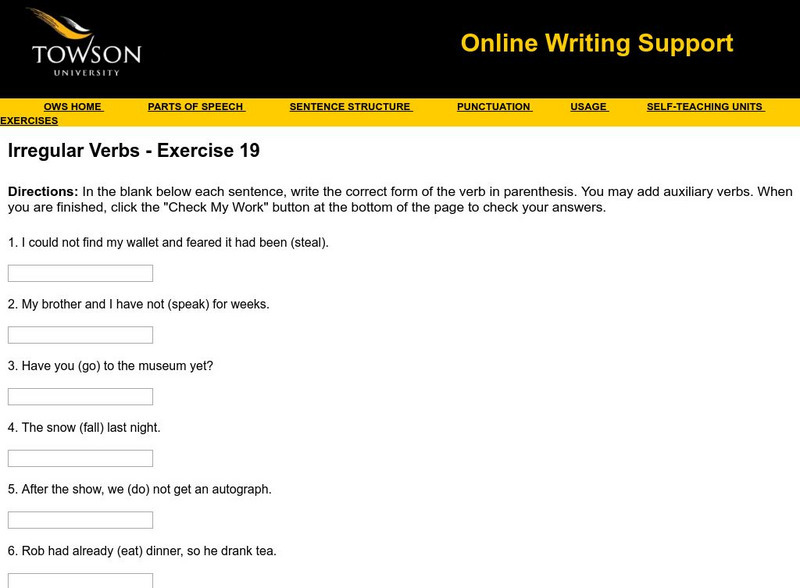
Towson University: Ows: Irregular Verbs Exercise 19
This is a 10-question, self-grading exercise/quiz on the using the correct forms of Irregular Verbs. It is suitable for ESL and regular English classes.
Other
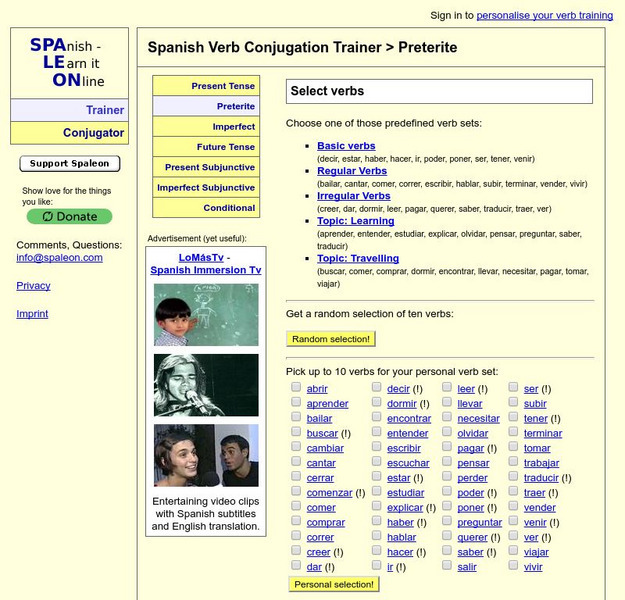
Spanish Verb Conjugation: Preterite
A great tool to practice verb conjugations in the preterite tense. The student may choose the type of verb (regular, irregular, etc.) that needs to be drilled. As each answer is entered, the student receives immediate feedback on the...
Other popular searches
- Irregular and Regular Verbs
- Spanish Regular Verbs
- Ed Regular Verbs
- Regular Verbs Pronunciation
- Regular Verbs Past Tense
- Conjugating Regular Verbs
- Conjugations of Regular Verbs
- Tenses of Regular Verbs
- Verbs Regular Verbs
- Past Tense of Regular Verbs
- Verbs, Regular Verbs
- Irregular vs. Regular Verbs