
National Geographic
National Geographic: Evaluating Other Energy Sources
A comprehensive lesson where students examine the different costs and benefits associated with renewable and nonrenewable sources of electricity. Includes a 22-question interactive module where they look at real-world data and images...

US Department of Energy
U.s. Department of Energy: Coal: Our Most Abundant Fuel
The U.S. has enough coal to last for the next 200-300 years. So why are we not using more of it? This article describes the different types or "ranks" of coal, the history, and the problems with burning coal for energy.
TeachEngineering
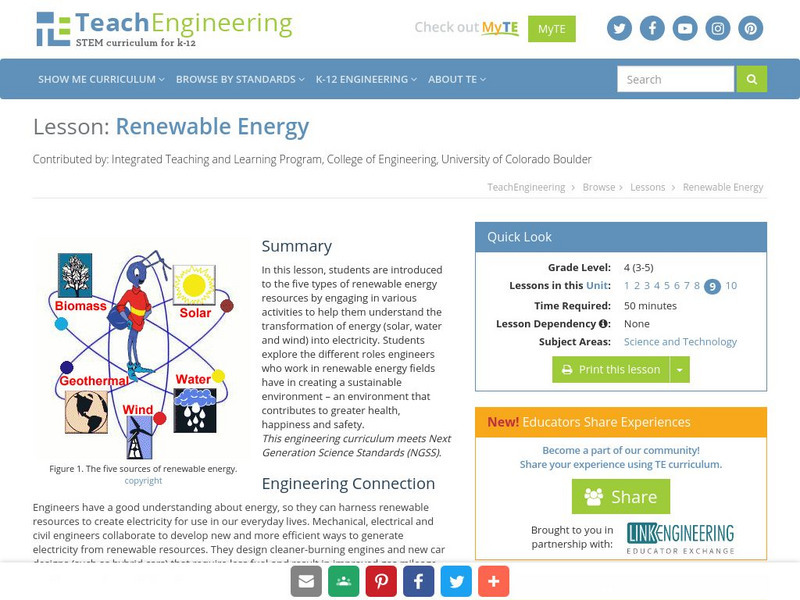
Teach Engineering: Renewable Energy
In this lesson, students are introduced to the types of renewable energy resources. They are involved in activities to help them understand the transformation of energy (solar, water and wind) into electricity. Students explore the...
OpenStax
Open Stax: World Energy Use
From a chapter on work and energy in a Physics textbook. This section of the chapter covers the difference between renewable and nonrenewable energy resources, the growth in the world's energy consumption, and the link between energy use...
TeachEngineering
Teach Engineering: Energy Conservation
Students are introduced to the idea that energy use impacts the environment and our wallets. They discuss different types of renewable and nonrenewable energy sources, as well as the impacts of energy consumption. Through a series of...
US Department of Energy
U.s. Department of Energy: Water Power Program: Types of Hydropower Plants
Learn about the three types of hydroelectric power plants used to capture the energy from water at a hydropower dam site.
Science Buddies
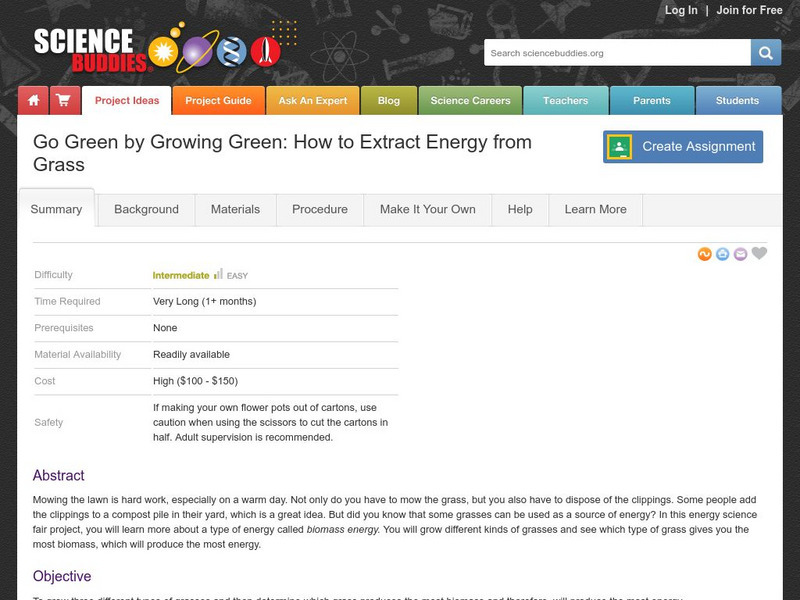
Science Buddies: Project Ideas: Growing Green: How to Extract Energy From Grass
In this energy science fair project, the student will experiment with three types of grasses and determine which variety yields the highest amount of biomass. The Science Buddies project ideas are set up consistently beginning with an...
Science Buddies
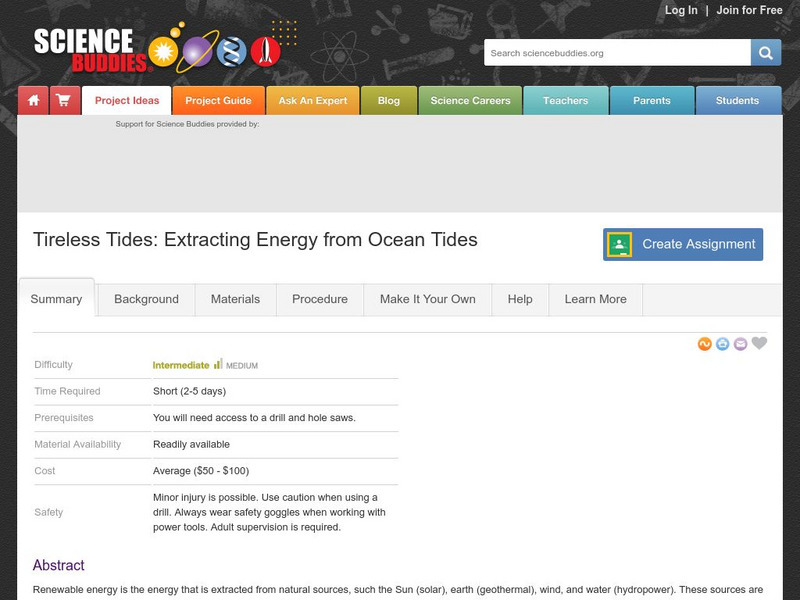
Science Buddies: Tireless Tides: Extracting Energy From Ocean Tides
Renewable energy is the energy that is extracted from natural sources, such the Sun (solar), earth (geothermal), wind, and water (hydropower). These sources are renewable because they can be replenished by the same natural sources within...
TeachEngineering
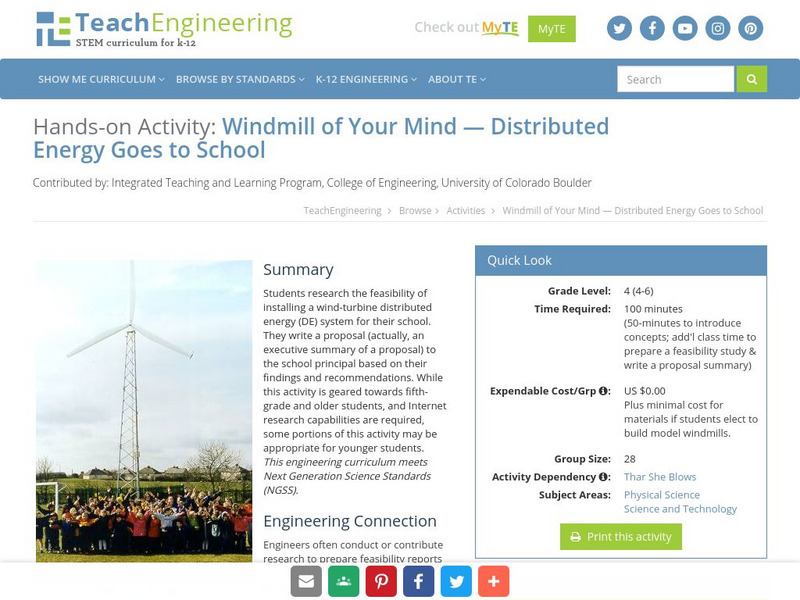
Teach Engineering: Windmill of Your Mind: Distributed Energy Goes to School
Students research the feasibility of installing a wind-turbine distributed energy (DE) system for their school. They write a proposal (actually, the executive summary of a proposal) to the school principal based on their findings and...
Georgia Department of Education
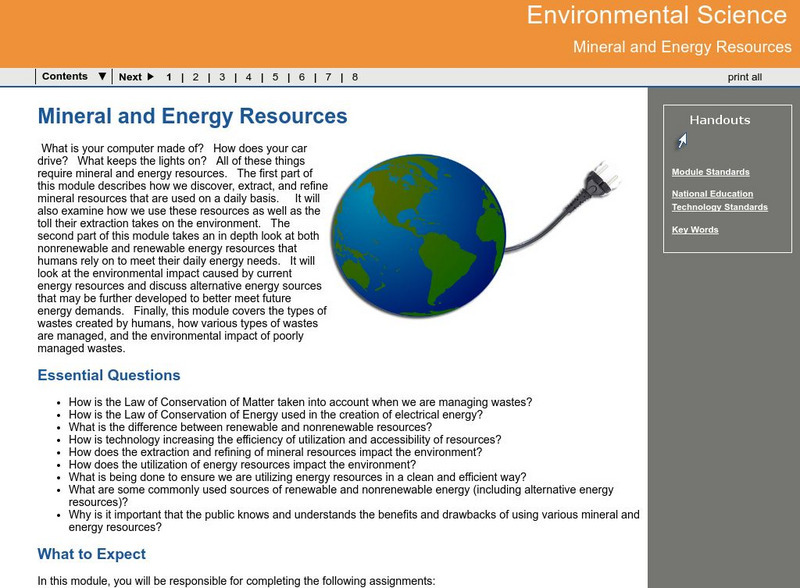
Ga Virtual Learning: Environmental Science: Mineral and Energy Resources
Students explore the topics of mineral extraction, renewable and nonrenewable resources, and hazardous wastes in this comprehensive, interactive module.
US Energy Information Administration
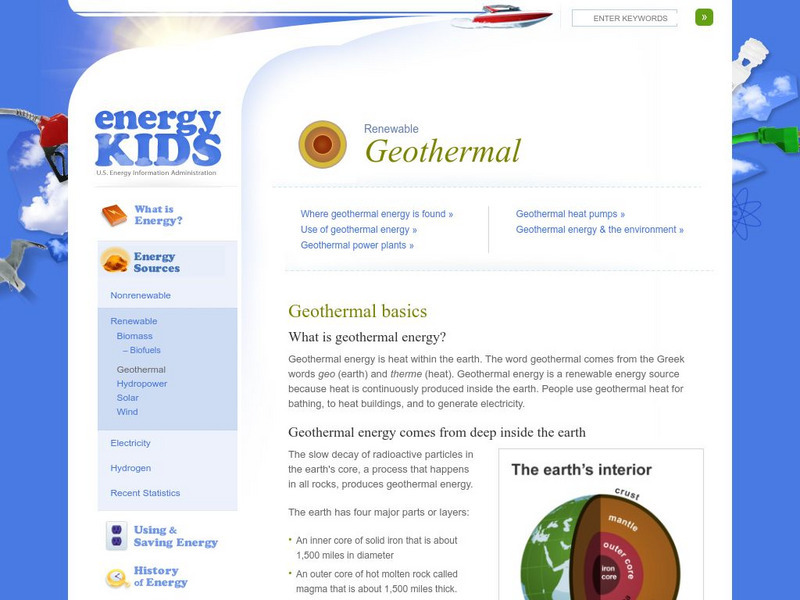
U.s. Eia Energy Kids: Renewable Geothermal Energy Energy From the Earth's Core
Did you know that the earth produces incredible amounts of heat or geothermal energy? This heat can escape in dramatic volcano eruptions, but it can also escape as steam through geysers and other sources. Learn how this heat can be...
American Geosciences Institute
American Geosciences Institute: Earth Science Week: Soil, Plants, and the Energy Cycle
Students explore what kind and how much bio-mass can be produced in an area around your city or town. They figure how many gallons of fuel can be expected from one acre of crop land, and how much carbon can be sequestered in the local area.
Other
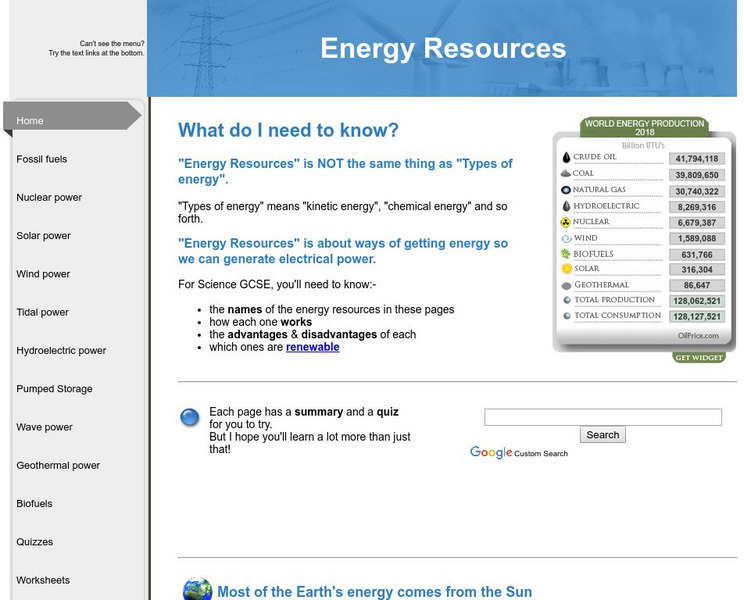
Energy Resources
Finding alternative energy sources is a challenge facing the leaders of today and tomorrow. Andy Darvill has created an impressive resource, summarizing various renewable and non-renewable energy resources.
Other
Florida Dept. Of Education: Conservation of Renewable and Nonrenewable Resources
In this learning module, students learn to differentiate between renewable and nonrenewable resources, and identify resources that fit into each category. It explains the environmental effects of using nonrenewable resources, such as...
Science4Fun
Science4 Fun: Solar Energy
What is solar energy? Learn about solar heating, solar electricity generation, and the advantages and disadvantages of solar power.

National Geographic
National Geographic: Energy Solutions: Tapping Into Topography of Lake Turkana
In this lesson, students read and analyze articles about the alkaline water in Lake Turkana in Kenya, and about a wind energy project near Lake Turkana. They then examine the many factors that must be considered when undertaking this...

US Energy Information Administration
U.s. Eia Energy Kids: Renewable Energy: Wind
Mankind has used the wind as an energy source for thousands of years. Discover other ways the wind is used to make energy.
TeachEngineering
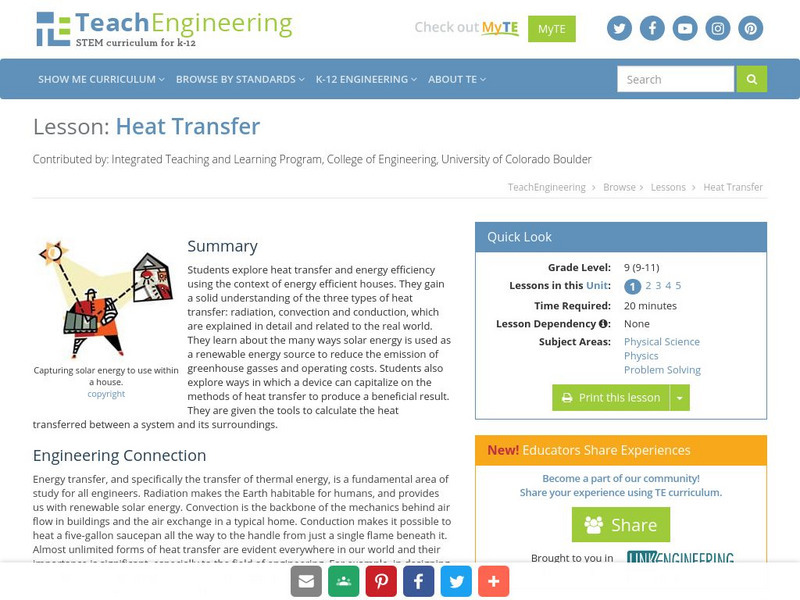
Teach Engineering: Heat Transfer
Students explore heat transfer and energy efficiency using the context of energy efficient houses. They gain a solid understanding of the three types of heat transfer: radiation, convection and conduction, which are explained in detail...
Science Buddies
Science Buddies: Catch the Wave!
In this energy science fair project, the student will use ocean buoy data to determine if any locations along the coasts of the United States are appropriate for building wave energy power systems.
Discovery Education
Discovery Education: Grade 3 5 Module: Designed for Efficiency [Pdf]
For this 3-5 teaching module, students conduct experiments, explore with online interactives, and watch videos that help them understand how vehicles work. Then, students demonstrate their understanding by designing energy efficient...
Other
Energy Resources: Fossil Fuels
Alternative forms of energy site showcases fossil fuels. Discover how it works, its' advantages and disadvantages as well as whether or not it's a renewable resource.

TED Talks
Ted: Ted Ed: How Do Solar Panels Work?
The Earth intercepts a lot of solar power: 173,000 terawatts. That's 10,000 times more power than the planet's population uses. So is it possible that one day the world could be completely reliant on solar energy? Richard Komp examines...
TeachEngineering
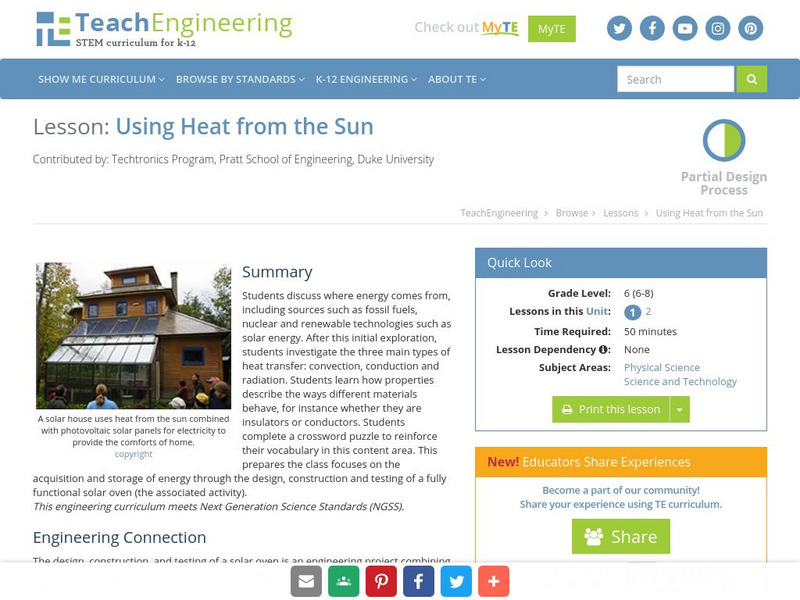
Teach Engineering: Using Heat From the Sun
For this lesson, students will first discuss where energy comes from, including sources such as fossil fuels, nuclear, and such renewable technologies as solar. After this initial exploration, students will investigate the three main...
TeachEngineering
Teach Engineering: Thar She Blows!
Young scholars learn about wind as a source of renewable energy and explore the advantages and disadvantages wind turbines and wind farms. They also learn about the effectiveness of wind turbines in varying weather conditions and how...