Hi, what do you want to do?





![Sandlot Science: The Impossible Triangle [Pdf] Activity](http://lessonplanet.com/content/resources/thumbnails/411256/large/bwluav9tywdpy2symdiwmduymc04otiwltflnzhom3uuanbn.jpg?1589993168 "Sandlot Science: The Impossible Triangle [Pdf] Activity")
Other
Sandlot Science: The Impossible Triangle [Pdf]
Plans for building a 3-D triangle with seemingly impossible structure. Good for projects and presentations.
Wolfram Research
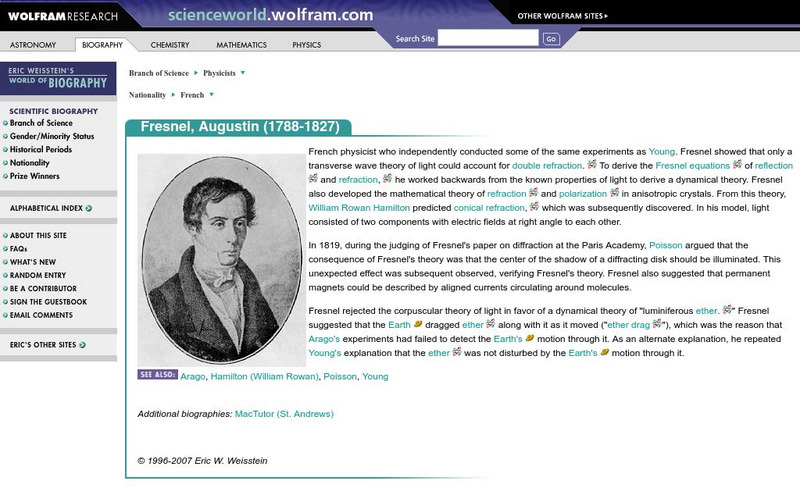
Wolfram Science World: Fresnel, Augustin
This site from ScienceWorld provides a short biographical sketch of Augustin Fresnel (1788-1827 CE) and describes his most notable scientific discoveries and contributions. Links are provided throughout for additional information.

Optical Society
Optical Society of America: Optics for Kids: What Causes Rainbows?
An experiment to demonstrate how to make a rainbow and why they form.
Optical Society
Optical Society of America: Optics for Kids: Make Money Appear Before Your Eyes
A simple experiment that clearly demonstrates how light bends when it passes through water. Accompanied by a good explanation of what's happening, and a link to an article on refraction.
Optical Society
Optical Society of America: Optics for Kids: Make a Green Gumball Black
An experiment to investigate what colors are seen when light is absorbed or reflected by colored gumballs. With links to scientific, academic articles that explain what is happening.
Optical Society
Optical Society of America: Optics for Kids: Lens Activity
An investigation into how lenses behave. Students explore using convex and concave lenses in various ways and record their observations. They are then are directed to another site to try activities where they can manipulate virtual lenses.
Optical Society
Optical Society of America: Optics for Kids: Mirror, Mirror on the Wall
A simple experiment that clearly demonstrates angles of reflection when light hits a mirror. Accompanied by a good explanation of what's happening, and a link to an article on reflection.
Exploratorium
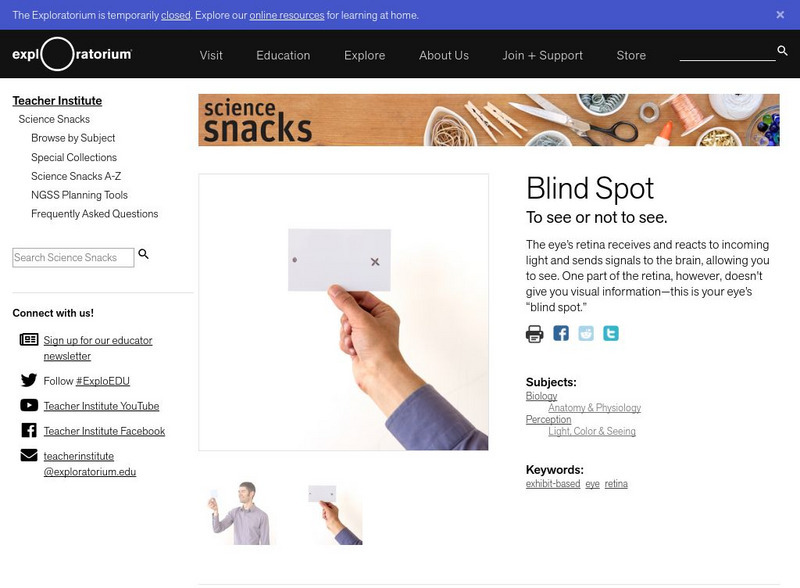
Exploratorium: Science Snacks: Blind Spot
Did you know that there is a part of your eye that does not give you any visual information? In this activity learn about this part of the retina called the "blind spot".
National Science Foundation
National Science Foundation: Optogenetics
In this full-color image, a neuron is expressing the light-gated cation channel channelrhodopsin-2 (small green shapes), and is being illuminated by a focused beam of blue light (coming from the top).
Other
Community Resources for Science: Seeing Is Believing?
This lesson plan focuses on the parts of our bodies that we use to see and how the brain actually causes changes in what we see. Specific instructions and talking points are provided along with multiple activities for the learners to...
Exploratorium
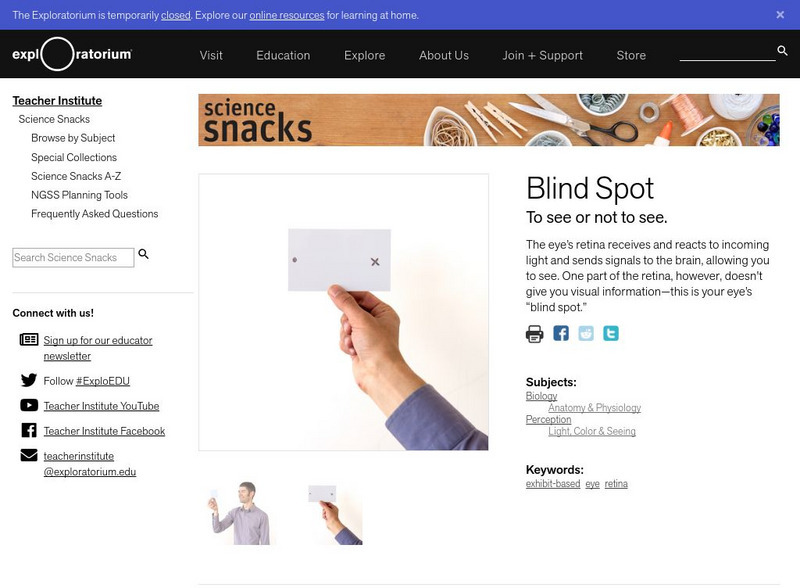
Exploratorium: Science Snacks: Blind Spot: To See, or Not to See
The blind spot in human vision is described and illustrated.
CK-12 Foundation
Ck 12: Physical Science: Vision and the Eye
[Free Registration/Login may be required to access all resource tools.] The structure and function of the eye and how we see.
Science Struck
Science Struck: Properties of Polystyrene
Explains what polystyrene is and its many different properties and uses.
Curated OER
Science Kids: Science Images: Fiber Optic
A number of strands of fiber optic cable emit a glowing light at the tips, the effect further enhanced by the black background.
Science Struck
Science Struck: The Compound Microscope Parts and Its Functions
Goes through the different structural and optical parts of a compound microscope and how a compound microscope functions.
Other
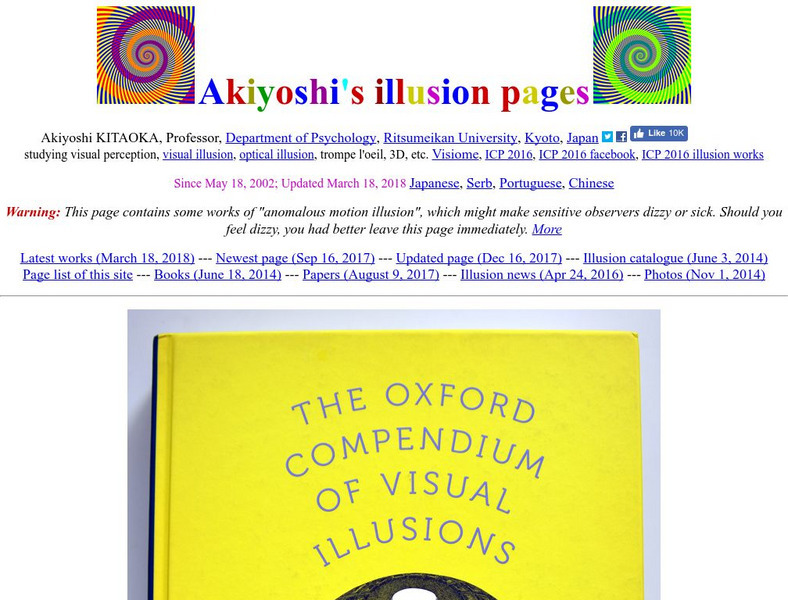
Ritsumeikan University: Akiyoshi's Illusion Pages
A large collection of visual illusions and anomalous motion illusions. The latter can potentially make a person feel dizzy and should be viewed or shared with caution.
Sophia Learning
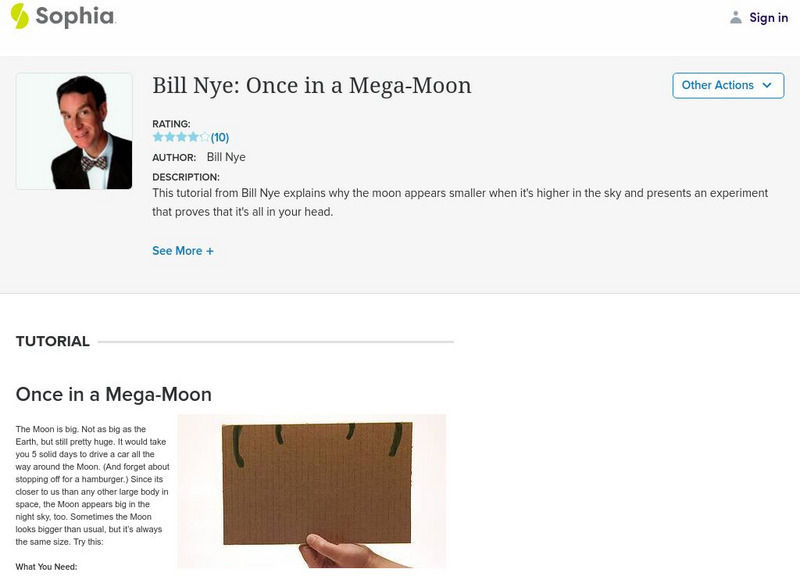
Sophia: Bill Nye: Once in a Mega Moon
Bill Nye explains why the moon appears smaller when it is higher in the sky, and he presents a Home Demo experiment that proves its an illusion. The experiment requires a bright moon on a clear night, a stiff piece of cardboard, and a...
Exploratorium
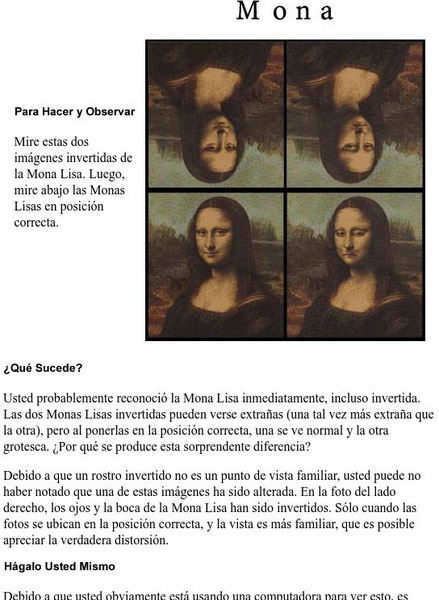
Exploratorium: Mona
An optical illusion created using Leonardo's well-known portrait of the Mona Lisa serves as source material for an exercise in perception.
Exploratorium
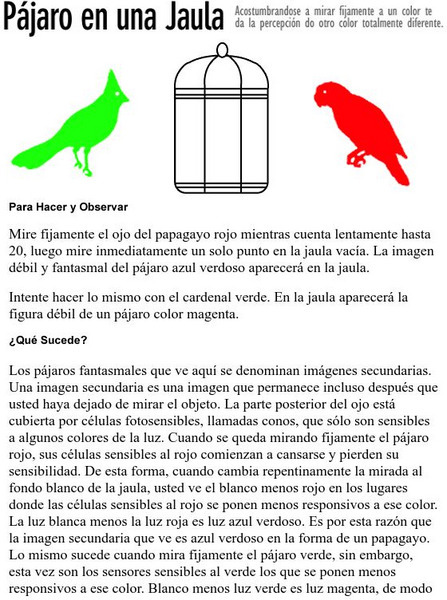
Exploratorium: Pajaro en Una Jaula
Two examples of optical illusions that demonstrate aspects of how we perceive color.
Other
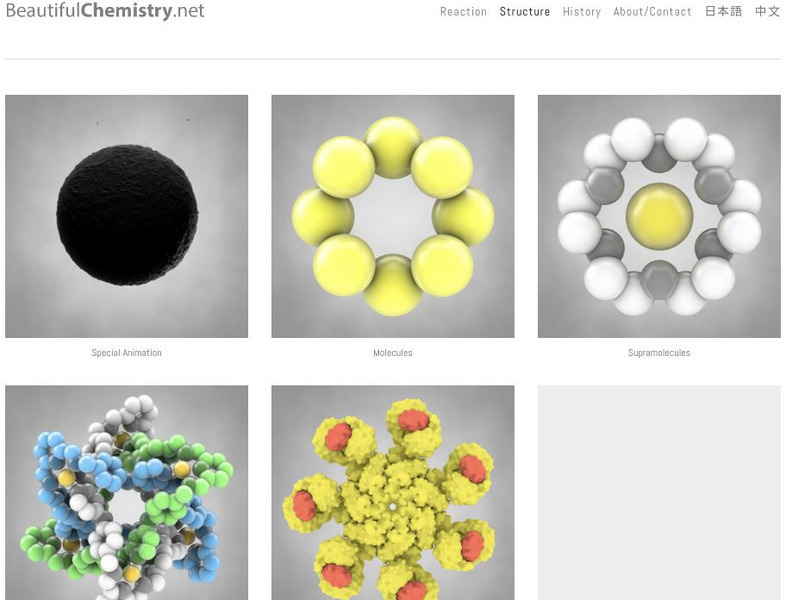
Beautiful Chemistry: Beautiful Structures: Crystals of Nanocrystals
A display of crystals of nanocrystals allows students to study the inner structure and components of these structures. Being able to precisely control the shape and size of nanocrystals and understand their self-assembly process might...
National High Magnetic Field Laboratory
Magnet Academy: Theodore Maiman
Theodore Maiman built the world's first operable laser. Ironically, Maiman's first paper announcing this momentous achievement, which many other scientists had been racing to complete themselves, was rejected. Since then, however, lasers...
Optical Society
Optical Society of America: Optics for Kids: Polarized Light (Pdf)
An investigation into how polarized light behaves, with instructions on how to make a polarizer using glass slides. With a link to an article explaining about polarized light. PDF (requires Adobe Reader).
Optical Society
Optical Society of America: Optics for Kids: Diffraction Between Wax Blocks
An activity to demonstrate how light behaves when encountering an obstacle, in this case, wax blocks placed in a ripple tank. Includes an explanation of the diffraction that occurs.
Optical Society
Optical Society of America: Optics for Kids: Interference in a Ripple Tank
An investigation, using a ripple tank, into how waves behave when they collide with each other. With an explanation of what is observed, and a link to an article on refraction.