Hi, what do you want to do?






American Museum of Natural History
How Did the Universe Begin?
The Big Bang Theory is more than a television show. Pupils read how Edwin Hubble observed other galaxies and noticed that the galaxies are moving away from each other. Scholars learn about the idea of the big bang and what happened next...

American Museum of Natural History
Planetary Mysteries
Get to know our little part of the vast universe. Learners read about the common and not-so-common facts about each of the planets in the solar system. The interactive lesson includes a large amount of information as well as a quiz to...

American Museum of Natural History
The Amazing Mundo
Rocks and minerals are great on their own, but they also turn into some pretty amazing stuff! An online lesson explains the different types of materials we get from rocks and minerals, including glass, plastic, and coins. An embedded...

American Museum of Natural History
Journey to the Stars
Fifteen detailed pictures and informative captions delve deep into the exploration of stars—their life cycle and importance in the universe.

American Museum of Natural History
What is Marine Biology?
A marine environment covers the majority of the earth but is arguably the least understood. Teach young scientists about the characteristics of oceans and ocean species using an interactive online lesson. The in-person or remote learning...

American Museum of Natural History
What is Biodiversity?
Not all dogs are the same just like not all finches are the same. An interactive online lesson helps individuals learn about the causes and limitations to biodiversity. The clickable sections describe the basics of the genetics of...

American Museum of Natural History
What is Astronomy?
Go study the universe. Pupils learn seven aspects about astronomy and astronomers. They begin to learn about constellations; distance and motion between objects; gravity; the electromagnetic spectrum; dark matter and energy; and teams of...

American Museum of Natural History
What is Earth?
Humans have only inhabited Earth for a short part of its existence. An online resource explains how scientists use clues from rocks and fossils to piece together information about Earth prior to humans. The online instruction includes...

American Museum of Natural History
Bio-Benefits
Kick-start a discussion of the importance of biodiversity with a colorful resource that touts the benefits of maintaining healthy ecosystems. The images stress the interdependence of all the elements of an ecosystem.

American Museum of Natural History
Going, Going...Gone?
Young environmentalists consider how scientists are attempting to save endangered species. They read about what causes extinction and steps to take to minimize the threats.
Smithsonian Institution
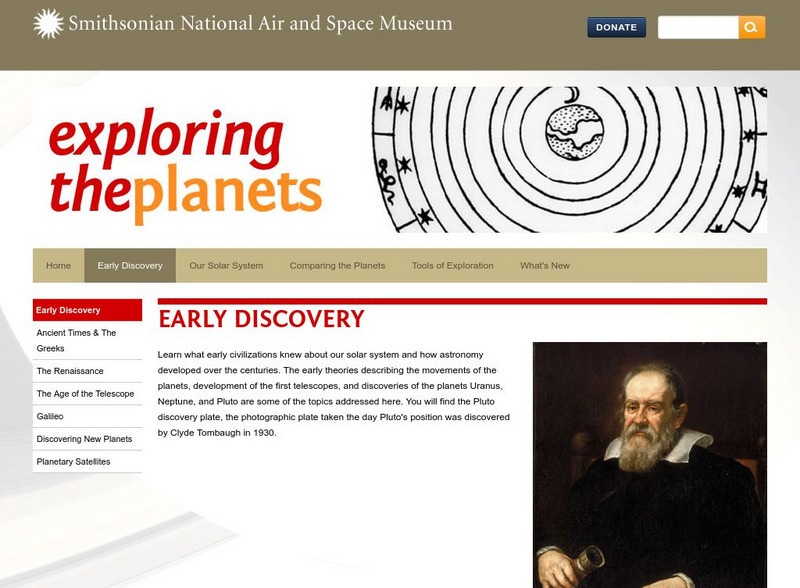
National Air and Space Museum: Exploring the Planets: Early Discovery
This section of the exhibition gives the history of the discovery and study of space starting with the Greeks and Romans through to the early 1900's.
California Institute of Technology
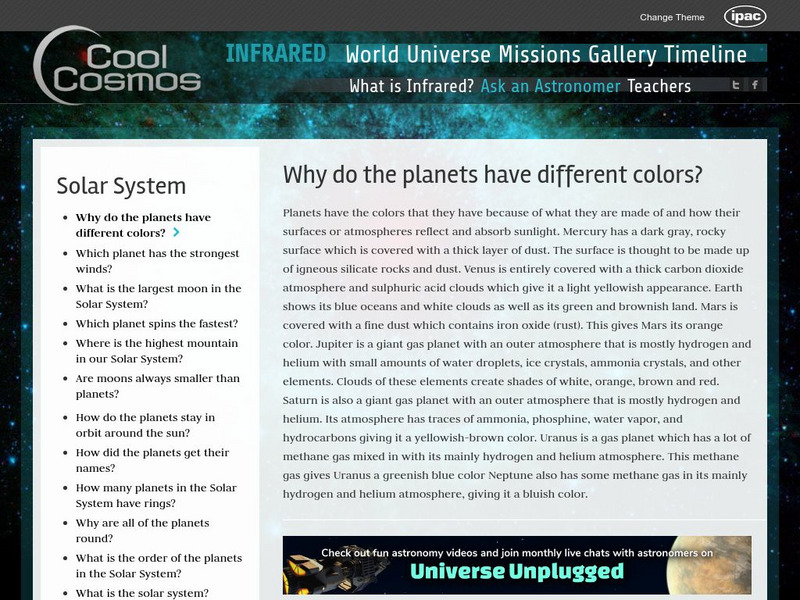
Cool Cosmos: Ask an Astronomer for Kids: Solar System
Resource presents information about the solar system through a list of most frequently asked questions. Click on each question and be transported to a wealth of knowledge about our solar system and the planets within it.

Ducksters
Ducksters: Astronomy for Kids: The Planet Earth
This site is astronomy for kids and teachers! Here students can learn about the planet Earth of the Solar System including fun facts, mass, day, year, and distance from the Sun.

Ducksters
Ducksters: Astronomy for Kids: The Planet Saturn
Kids learn about the planet Saturn of the Solar System including its rings, mass, day, year, and distance from the Sun. Astronomy for kids and teachers.
Annenberg Foundation
Annenberg Learner: Planet Earth
A series of seven instructional, hour-long videos presenting Earth-science topics such as plate tectonics, oceans, climate changes, natural resources, the Sun, and the future of our planet. Closed captioning option provided for each video.
PBS
Pbs: Journey to Planet Earth: On the Brink
A part of the PBS series "Journey to Planet Earth," this section examines "how severe environmental problems can lead to political crises and increased hostilities around the world." Includes video clips and educational resources.
Other
The Astronomy Cafe
NASA scientist Sten Odenwald calls this his "web site for the astronomically disadvantaged." Do you have lots of questions about space that you can't seem to get answers to? Would you like to learn about a career in astronomy, Big Bang...
Planet Pals
Planet Pals: Earth Day
This PlanetPals.com site provides the "Greatest Earth Day Pages Ever!" Includes activities, teaching aides, earth science and history, and more.
Nine Planets
The Eight Planets: Just for Kids
Here is a clear, simple picture of the solar system. Click on the names of the planets to learn more about each. Clicking on underlined terms takes you to more and more detailed scientific information.
Curated OER
U.s. Department of the Interior
Has great information on environmental clean up sites around the U.S. as well as articles about protecting the environment. It is a very clear and educational way to learn about environmental restoration.
University of Arizona
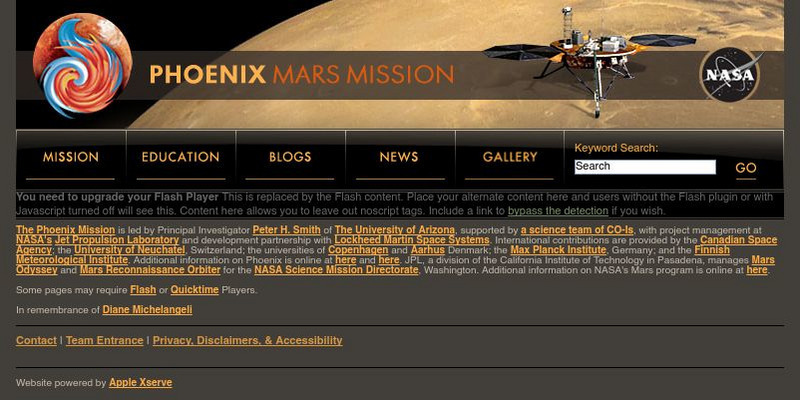
Nasa: The History of Mars Exploration
Explore the time line from 1960 to the 2000s about Mars Missions. Choose from news, explorations, blogs, gallery, and missions to learn more about Mars exploration.
Other
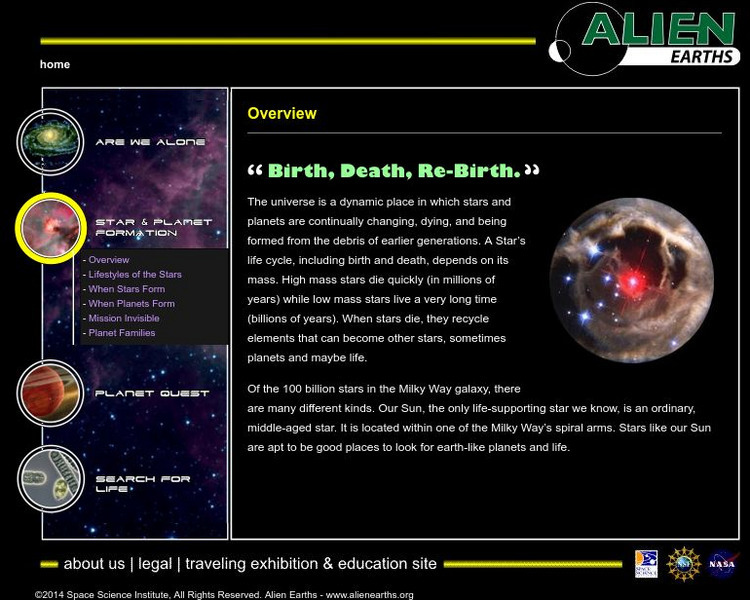
Space Science Institute: Alien Earths: Star and Planet Formation
Learn about the lives of stars, and how stars and planets form. The Interactive activity, 'Planet Families' requires Adobe Flash and cannot be launched.
PBS
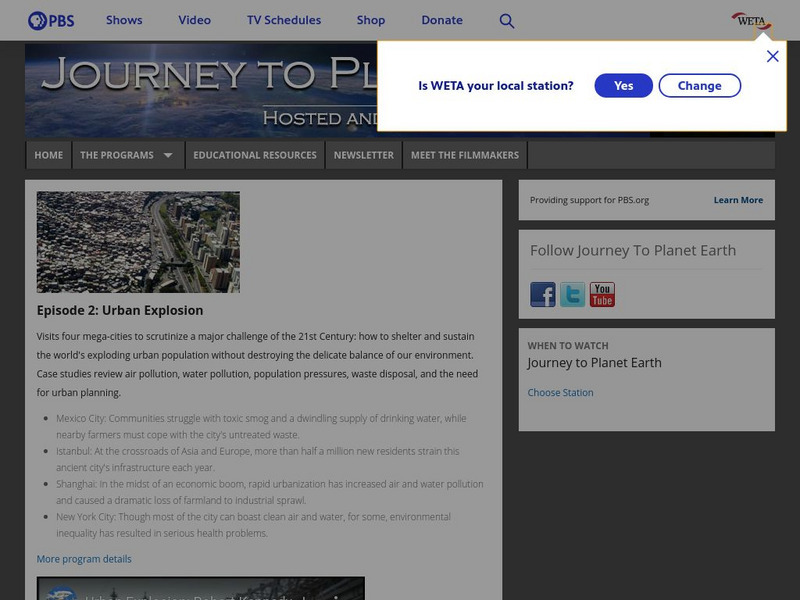
Pbs: Journey to Planet Earth: Urban Explosion
From the "Journey to Planet Earth" series, PBS takes a look at the world's exploding urban population. Includes video clips and educational resources.
NASA
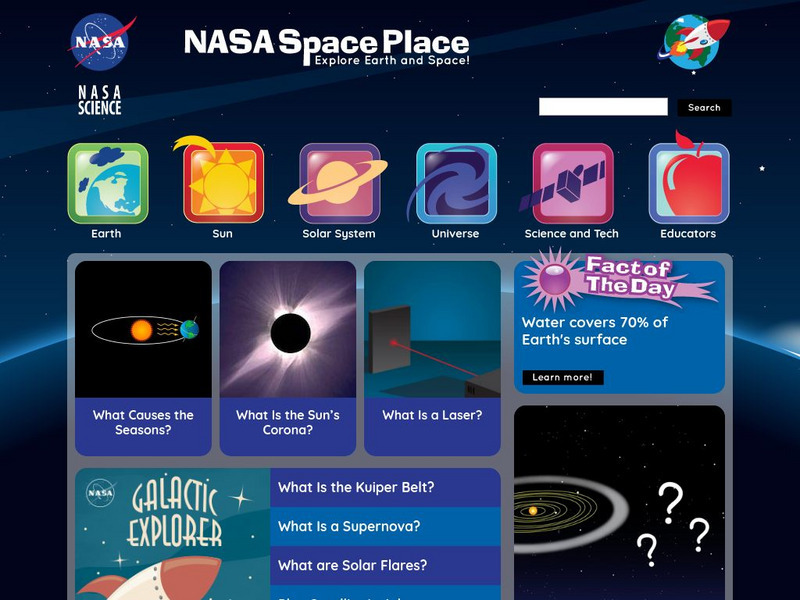
Nasa: The Space Place
Do you know what a solar eclipse is? Or how about a galaxy? Space Place has the answers to all your questions about space! Site includes information to explore about planets, satellites, moons, and much more. Also on the website are...