Hi, what do you want to do?





Science Buddies
Science Buddies: Riprap: It's Not Hip Hop but Erosion Stop
The Grand Canyon serves as an excellent example of just what water can do over a period of millions of years. This week long lab will help you understand how erosion works, how engineers work to help prevent erosion.
Science Buddies
Science Buddies: Goo Be Gone: Cleaning Up Oil Spills
Oil spills devastate wildlife and our precious water resources. Test the absorptivity of different materials (sorbents) to discover which ones are best at removing oil from water in this brief lab.
Science Buddies
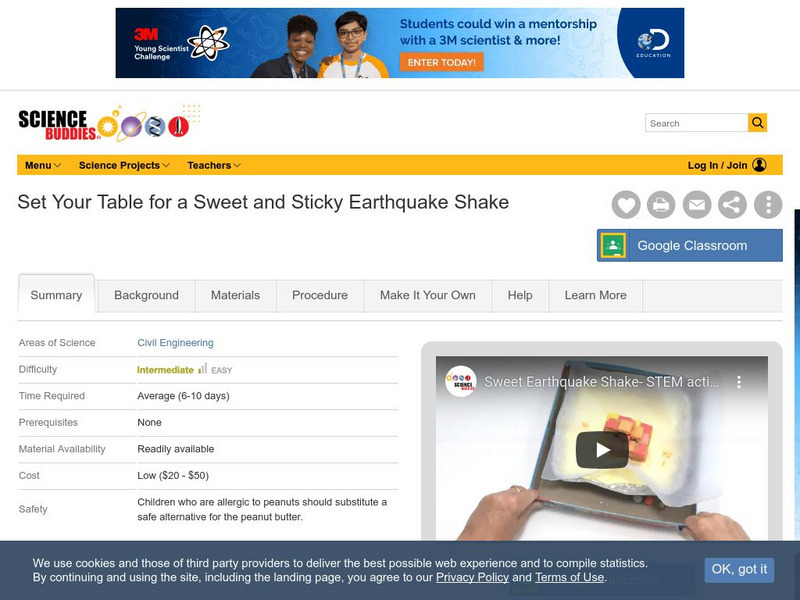
Science Buddies: Set Your Table for a Sweet and Sticky Earthquake Shake
Earthquakes can have different affects depending on their location. This week long exercise asks you to build a model house and a special table to shake it on, and see how different soil types can amplify shaking.
Science Buddies
Science Buddies: Pick This Project!
This lab will help you understand the physics of vibrating strings, and find out why the tone of an electric guitar changes when you switch between the different pickups. If playing guitars is a hobby of yours, this experiment makes an...
Science Buddies
Science Buddies: Under Pressure: Ball Bouncing Dynamics
Many sports use a ball in some way or another. We throw them, dribble them, hit them, kick them, and they always bounce back. What makes a ball so bouncy? In this experiment you can investigate the effect of air pressure on ball bouncing.
Science Buddies
Science Buddies: Does a Cell Phone Conversation Affect Reaction Time?
Does talking on a cell phone make one a more dangerous driver? Here is an experiment you can do to investigate whether reaction time is adversely affected by a simultaneous phone conversation.
Science Buddies
Science Buddies: Camera Lens Testing
This activity helps students learn more about cameras, and how to take better pictures.
Science Buddies
Science Buddies: Think Fast!
Are you a piano player or a video gamer? Then you might have a quick reaction time that can come in handy while playing sports. Find out how to measure your reaction time and compare it to your friends and family with this fun experiment.
Science Buddies
Science Buddies: Are Laminates Stronger?
If you love to hit the half pipe with your snowboard or skateboard, then you have tested the strength and durability of laminates. Laminates are sandwiches of different materials that are glued together in layers to give strength and...

Science Buddies
Science Buddies: Digital Photo Resolution
Do you have a favorite picture? When you have a photo that you treasure, you want it to look as good as possible. Find out how the resolution of a digital photo effects the way it looks when you print it out. How does the quality of the...
Science Buddies
Science Buddies: A Puzzling Parallax
Did you know that ancient astronomers could measure the distance to other stars? They could also distinguish between stars and planets. How could they do that without modern technology of telescopes? See if you can discover the link...

Science Buddies
Science Buddies: Color Saturation
Lively, vivid colors can add pizzazz and turn a dull photo into a work of art. Learn how changing the saturation levels of the colors in your photo can really make it pop.
Science Buddies
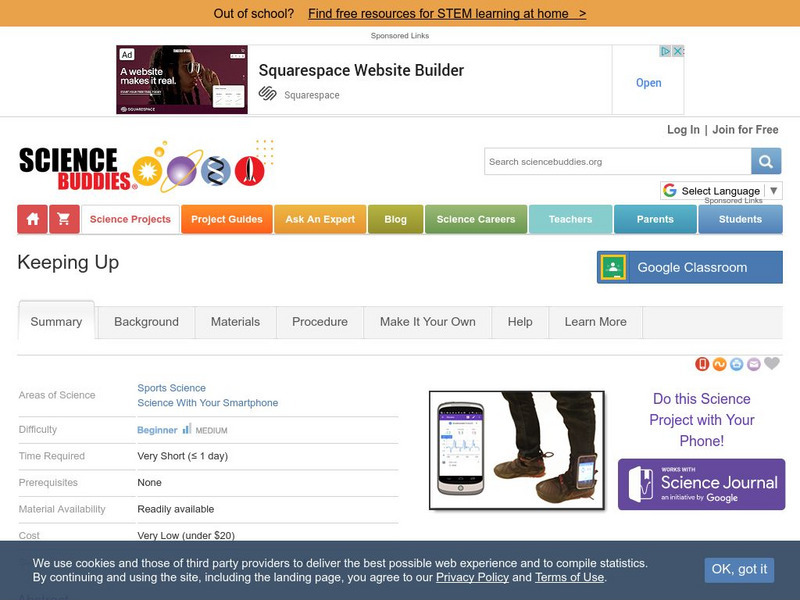
Science Buddies: Keeping Up
Do you ever feel like you need to walk faster than your parents just to keep up with them? This is because of the difference in leg length between you and your parents. In this experiment you will test if the height of a person is...
Science Buddies
Science Buddies: Digital Photo Contrast
What do you do if you take a photo and it turns out too dark or too bright? You can use your computer to fix it for you. In this experiment you will investigate how changing the contrast of a digital photo will change the colors and...
Science Buddies
Science Buddies: Color Profiles
Did you know that the same digital photo you see on a computer monitor may not look as good in print? When it comes to color profiles, there are a lot of options: RGB, CMYK, grayscale and indexed color are just a few. Learn how to choose...

Science Buddies
Science Buddies: Bit Depth, Colors and Digital Photos
How many bits of information are in a digital photo? It depends on how many possible colors there are. Learn how to choose the right number of colors and bits to post your photo on the web or send it to your best friend.
Science Buddies
Science Buddies: Pinholes, Light and Aperture Size
Pinhole cameras are not a thing of the past. Even compared to all of the latest technology, a pinhole camera still gets beautiful results. Find out how this very simple aperture design works to control the way light enters the lens of...
Science Buddies
Science Buddies: Macro for Micro?
If the prefix "macro" means large and "micro" means small, then why will the macro setting of a digital camera help take a better picture of a small object? Do this experiment and get the big picture.

Science Buddies
Science Buddies: Yogurt Cultures
Find out in this experiment how good bacteria can turn milk into a treat by investigating the optimal starter cultures for making yogurt from whole milk.
Science Buddies
Science Buddies: How Well Do Disinfectants Work?
Germs are everywhere. We try and clean our home with disinfectants, but do we really get rid of all the germs? Find out with this "hands-on" experiment.
Science Buddies
Science Buddies: Getting Critical Over Colloids
What is a colloid? If you have made Oobleck out of corn starch and water, then you know that a colloid is a mixture that acts like a solid and a liquid at the same time. This activity helps you determine the critical factors that...
Science Buddies
Science Buddies: Timing the Tides
Have you ever been to a tide pool during low tide? Some intertidal animals in the low tide zone are left in a tiny pool of water when the tides go out. Other intertidal animals that live in high tide zones may be left to dry out during...
Science Buddies
Science Buddies: How Salty Is the Sea?
Have you ever been swimming at the beach and gotten some water in your mouth by mistake? Then you know that the ocean is very salty. Bodies of freshwater also contain some salt, but much less compared to oceans. In this experiment you...

Science Buddies
Science Buddies: Which Is the Better Insulation Material?
You've probably noticed that the price of gasoline can fluctuate a great deal from one year to the next. Using good insulation material is one way to conserve energy and save money. Learn here which insulation materials work better than...