Hi, what do you want to do?





E-learning for Kids
E Learning for Kids: Science: Denmark: What Are Light and Darkness?
In this module, students learn about the different sources of light, what causes darkness, and about shadows.

PBS
Pbs Teachers: Scientific American: Hot Times in Alaska: Light Absorption
Investigate the science behind global warming with these classroom activities. Compare light and dark objects to see how they respond to light absorption and heat generation, and describe the albedo values of various materials.
TED Talks
Ted: Ted Ed: Patricia Burchat Sheds Light on Dark Matter
Watch as physicist, Patricia Burchat, discusses two basic ingredients of our universe, dark matter and dark energy, and the effects they have in the expanding universe. [17:09]

Louisiana Department of Education
Louisiana Doe: Louisiana Believes: English Language Arts: Grade 9: Romeo and Juliet
Young scholars explore how patterns and contrasts in language (diction, imagery, figurative language) reveal central ideas in texts and develop various motifs (light vs. dark, dreams vs. reality, high vs. low, etc.) in Romeo and Juliet....
CommonLit
Common Lit: "A Teen & a Trolley Reveal Society's Dark Side" by Bethany Brookshire
In 2015, a high school senior named Tiffany Sun conducted a social science experiment and presented her results at the Intel Science Talent Search in Washington, D.C. The results of her experiment shed light on an age-old question: are...
Science is Fun
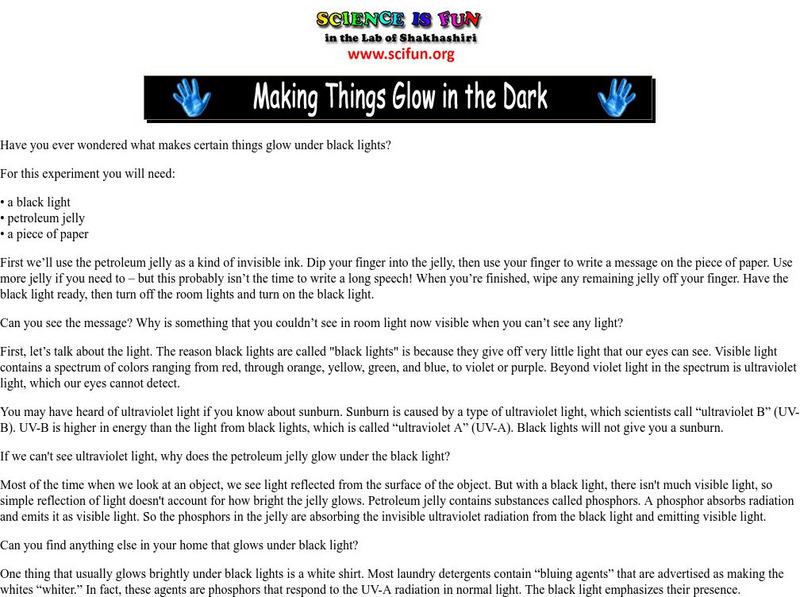
Science Is Fun: Making Things Glow in the Dark
Try this experiment to learn how to make things glow under a black light, why this happens, and some applications of this phenomenon.
Other
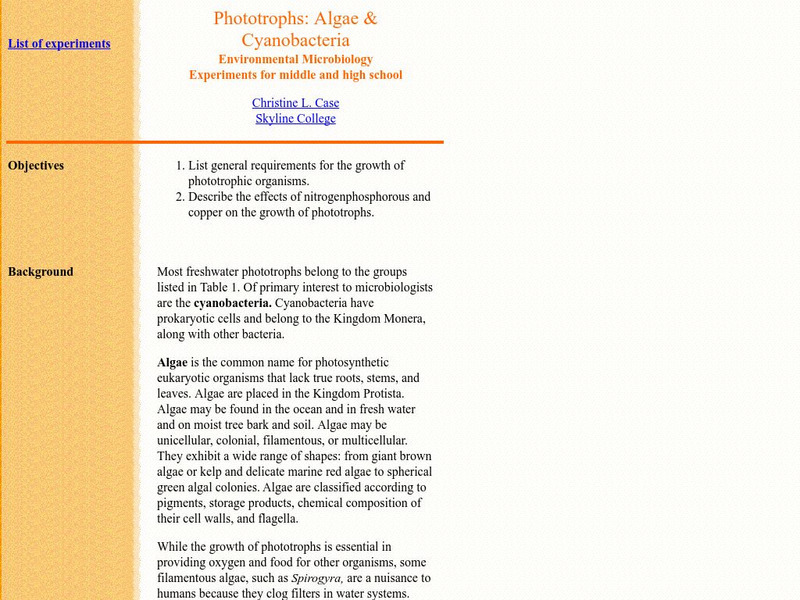
Skyline College: Phototrophs: Algae and Cyanobacteria
A lab activity where pond water samples are collected to observe the requirements for the growth of phototrophic organisms. To observe these requirements samples are separated into different variable groups. One group is incubated in the...
Annenberg Foundation
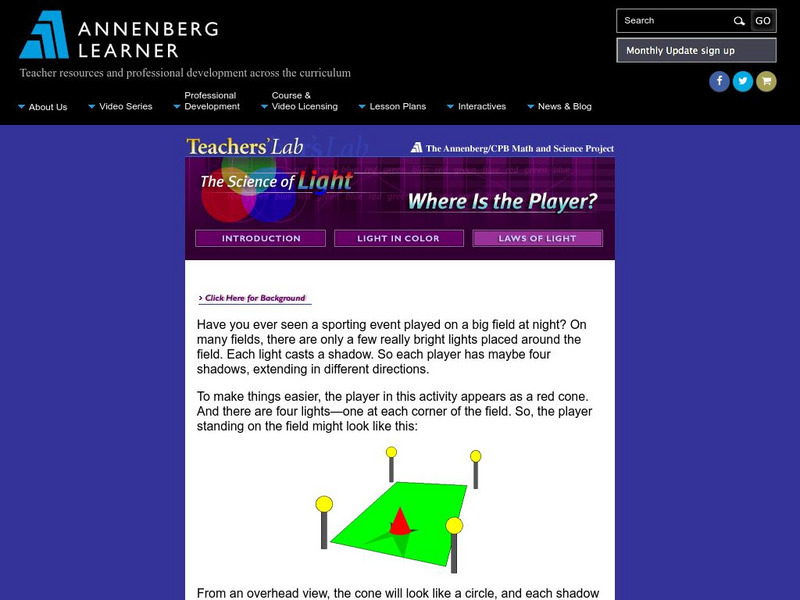
Annenberg Learner: Where Is the Player?
Examine how multiple light sources produce shadows of differing darkness and length. Move a player (with four light sources) around the field until your image matches the five other images on the page so you can identify where the player...
Sophia Learning
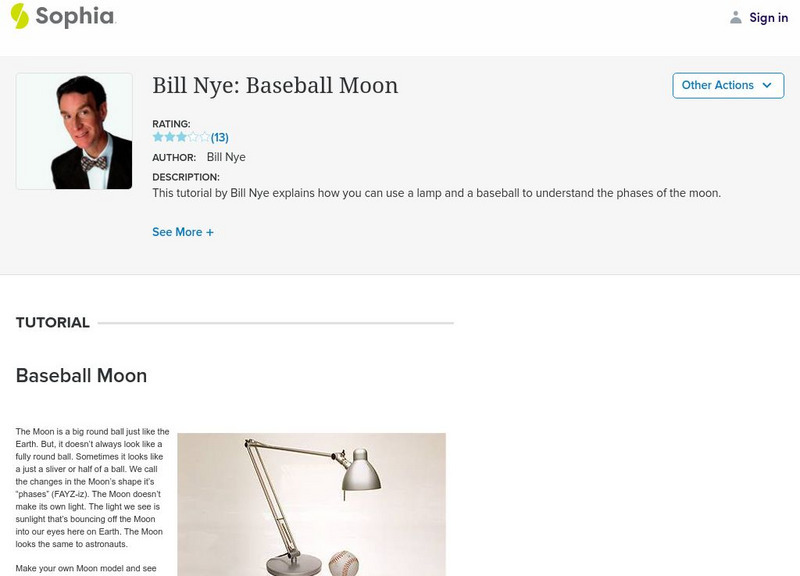
Sophia: Bill Nye: Baseball Moon
Bill Nye explains the phases of the moon with an experiment using a baseball, a lamp on a table, a dark room, and a stool or chair that swivels. As the person moves around, the changes in reflected light show the phases of the moon. The...