Hi, what do you want to do?





Exploratorium
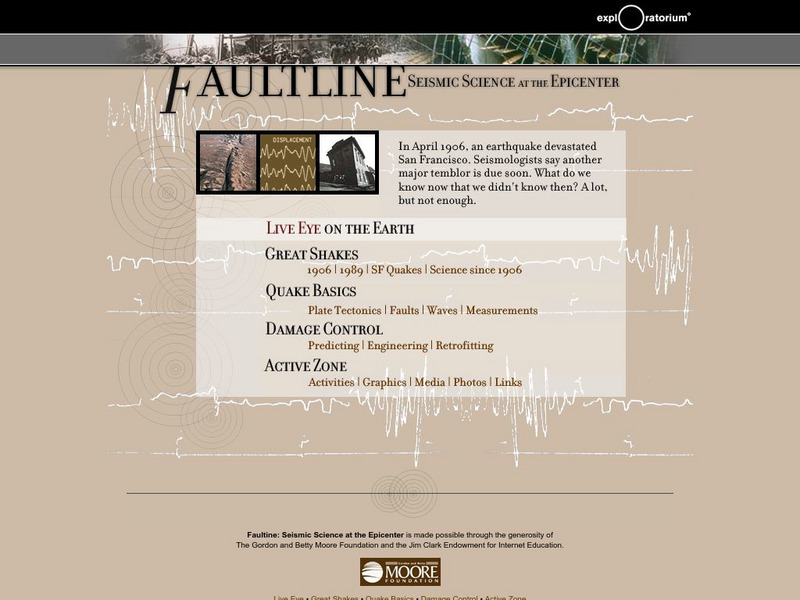
Exploratorium: Earthquake Faultline Earthquake Activities
This outstanding website provides an excellent variety of hands-on earthquake activities to help you understand what causes earthquakes.
Other
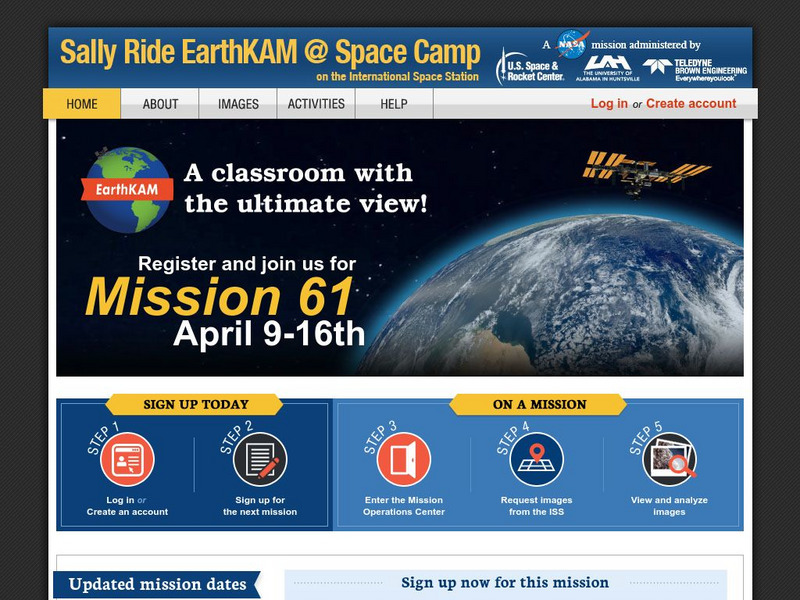
Nasa: Iss Earth Kam
Students get a whole new perspective of the world through images obtained from the International Space Station. Students can even request images to be taken through ISS EarthKAM. Activities and educator guides are provided.
Georgia Department of Education
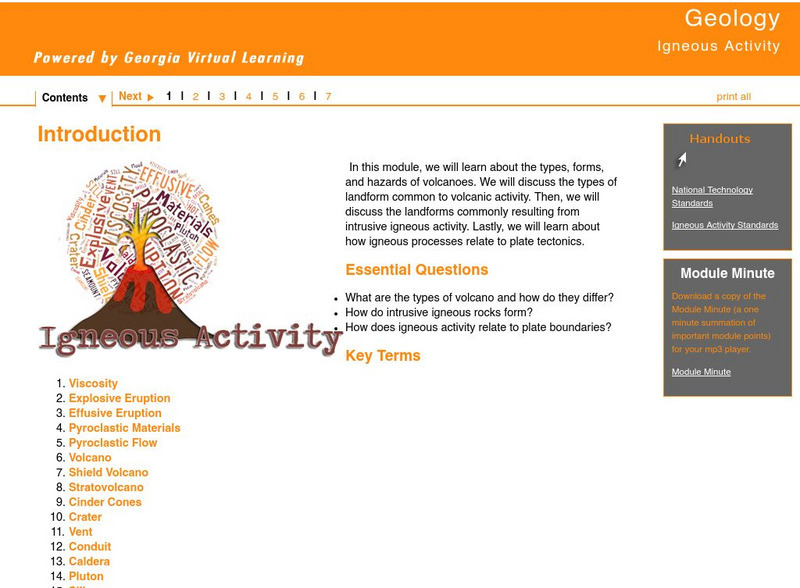
Ga Virtual Learning: Igneous Activity
In this interactive tutorial you will learn about the types, forms, and hazards of volcanoes. The types of landform common to volcanic activity is discussed. Then, the landforms commonly resulting from intrusive igneous activity are...

Bill Nye
Bill Nye: Move Mountains
This tutorial from Bill Nye uses newspaper to show how tectonic plates can crush together to create mountains.
Science Education Resource Center at Carleton College
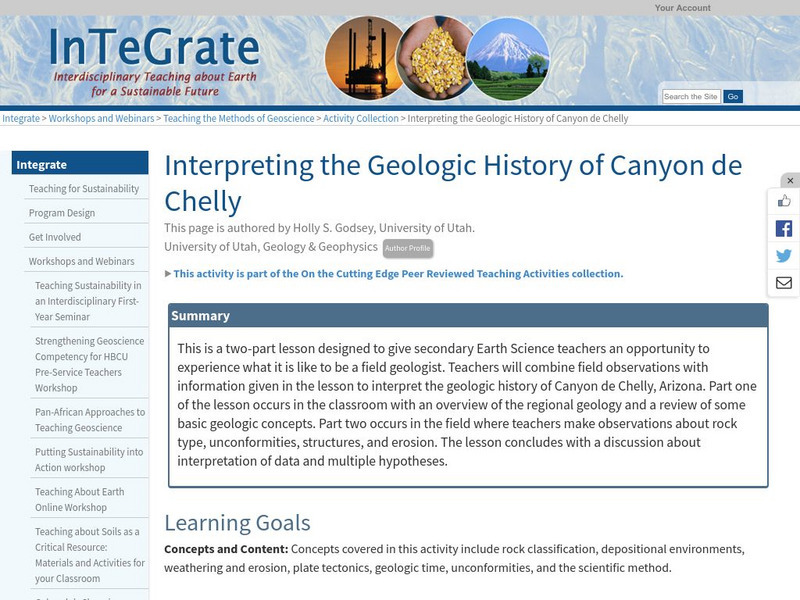
Serc: Interpreting the Geologic History of Canyon De Chelly
Earth Science teachers will combine field observations with the information given in the classroom to interpret the geologic history of Canyon de Chelly, Arizona.
Annenberg Foundation
Annenberg Learner: Earth and Space Science: The Geologic Timeline
Take this online quiz and test your knowledge of geological history, and the formation of our atmosphere, water, crust, oxygen, tectonic plates, Moon, and the rest of the Earth.
Science Struck
Science Struck: Facts About the Cenozoic Era and Its Life Forms
Describes the different periods, epochs, and stages of the Cenozoic Era and the events that took place in them. Looks at geology and tectonic plate movements, climate, flora and fauna, and the emergence of mammals as the dominant life...

Science Education Resource Center at Carleton College
Serc: Hotspot Lesson: Mantle Plumes
A lesson that explains a theory on magma generation at hotspots called the mantle plume theory. The goal of this lesson is to introduce students to a theory that scientists are actively trying to prove or refute. Through this, students...
Read Works
Read Works: Cracking Up
[Free Registration/Login Required] This passage shares information about crevices in the earth and earthquakes.This passage is a stand-alone curricular piece that reinforces essential reading skills and strategies and establishes...
Science Struck
Science Struck: How Was the Mid Atlantic Ridge Formed?
Learn what the Mid-Atlantic Ridge is, how it was formed in the Triassic Period, the volcanic activity that takes place there, and the benefits and negative impact of this activity.
PBS
Pbs News Hour Extra: You Don't Need a Seismograph to Study Earthquakes
Three part lesson will provide students with information about earthquakes and how to predict them using various Web sites. Activities include historical background on major earthquakes, investigating mechanical waves, and simulating...

PBS
Wnet: Thirteen: Savage Earth: Waves of Destruction, a Tsunami Animation
View a brief animation that explains the science behind a tsunami.
CK-12 Foundation
Ck 12: Magnetic Polarity Evidence for Continental Drift
How magnetic polarity provided more evidence for moving continents.[Free Registration/Login may be required to access all resource tools.]