Hi, what do you want to do?






Famous Scientists
Famous Scientists: Theodor Schwann
Learn about German Physiologist, Theodor Schwann, one of the scientists who helped develop the cell theory.

Ducksters
Ducksters: Biography for Kids: Scientists and Inventors
This site contains links to biographies of famous scientists and inventors such as Albert Einstein, Isaac Newton, Galileo, and Marie Curie. Learn how these men and women made discoveries that changed the world forever.

Ducksters
Ducksters: Biography for Kids: Scientist: Louis Pasteur
Kids learn about Louis Pasteur's biography. He was a scientist who studied microorganisms like bacteria. He discovered pasteurization, vaccines, and proved that germs cause disease.
Purdue University
Spotlight Scientist: Inge Lehmann
Inge Lehmann ,(1888-1993) the female scientist, life and accomplishments are described on this site.

Ducksters
Ducksters: Word Search: Scientists and Inventors
A fun word search game with terms about Scientists and Inventors. Play online or print out a version for use in class or at home.
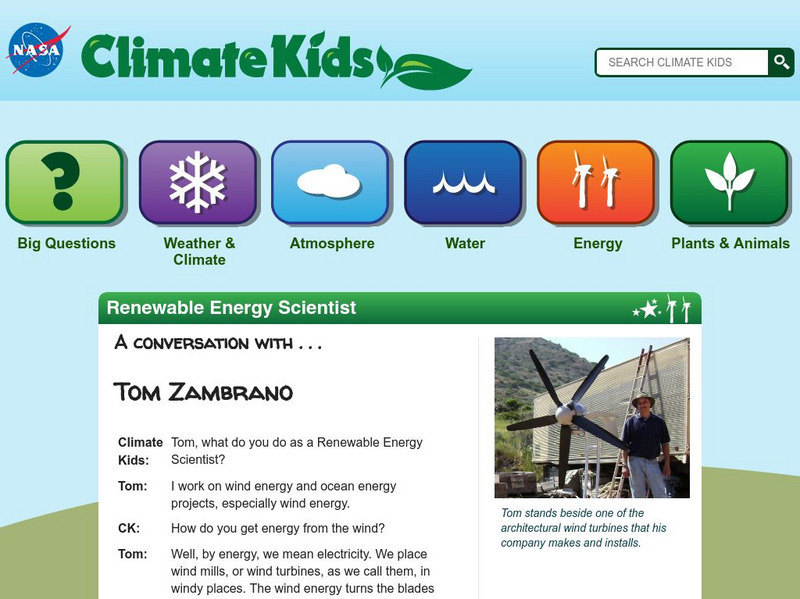
NASA
Nasa: Climate Kids: Renewable Energy Scientist
A conversation with Tom Zambrano, a scientist who studies wind and ocean energy.
Famous Scientists
Famous Scientists: Francis Galton
Learn about the life and work of the father of eugenics, and find out how he contributed to the research on human intelligence.
Other
The Happy Scientist: Why Is a Full Moon So Bright?
Activity helps students find out why a full moon is so bright.
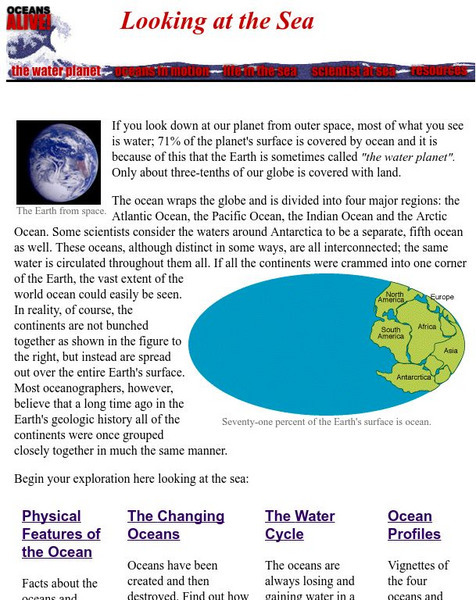
Museum of Science
Museum of Science: Looking at the Sea
There are 5 parts to this resource. You can click on the water planet, oceans in motion, life in the sea, scientists at sea and resources. There are also activities for teachers.
Other
The Happy Scientist: Making a Density Column
This experiment is one of the classics that is still a lot of fun to play with. It has to do with density. Density can be a difficult concept to grasp, but it is much easier once you have played with a density column. Although the video...
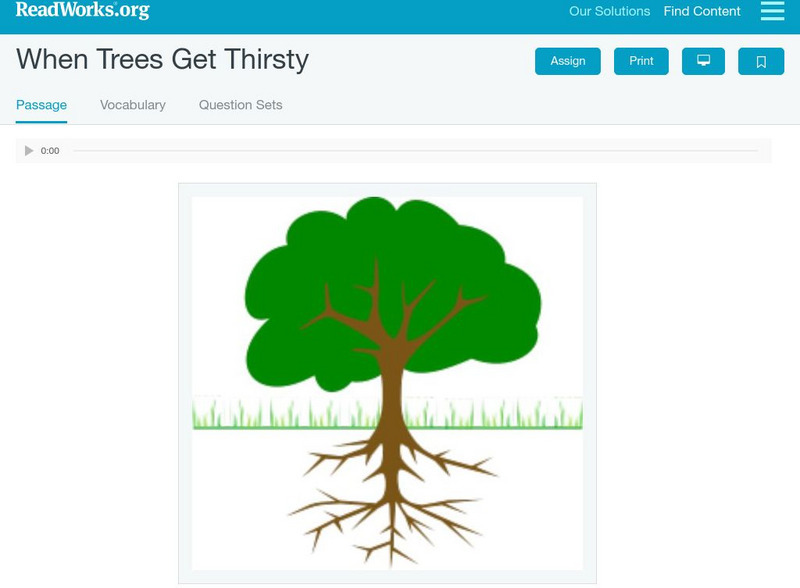
Read Works
Read Works: When Trees Get Thirsty by Mimi Jorling
[Free Registration/Login Required] This passage explains that trees need water everyday and how scientists believe they get that water using their roots. It is followed by a comprehension question set.
Enchanted Learning
Enchanted Learning: Birds
This site from Enchanted Learning can answer your questions about birds. What type of scientist studies birds? What is the fastest running bird? Which bird lays the largest birds' eggs? Come and find out the answer to these questions and...
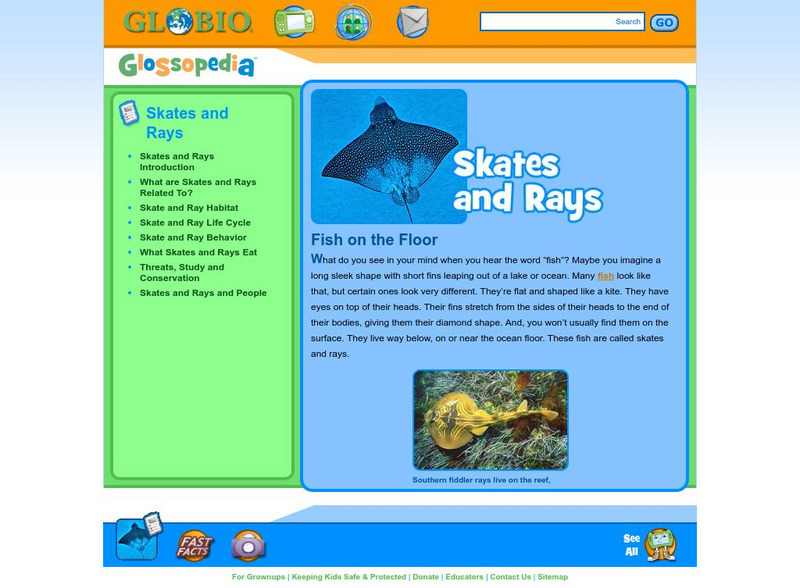
Globio
Glossopedia: Skates and Rays
There are more than five hundred different species of skates and rays in our oceans. Scientists say that these fish are closely related to sharks, sharing a common ancestor from around 400 million years ago. This article provides an...
Texas A&M University
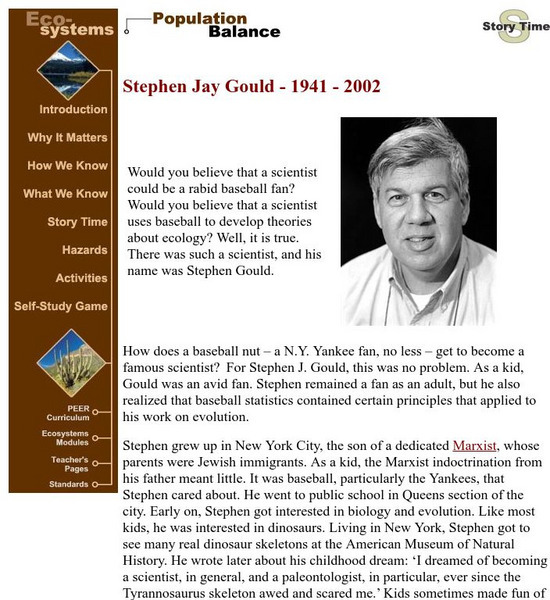
Eco Systems: Story Time: Stephen Jay Gould
See how Stephen Jay Gould's early interest in baseball influenced his thought process as a scientist.
Other
Engineer Girl: Careers
Doesn't an engineer drive a train? Yes, but the career of engineering is so much more! Explore this comprehensive list of all types of engineering careers. Learn what each entails, find out how to plan for them, learn how to set up job...
Princeton University
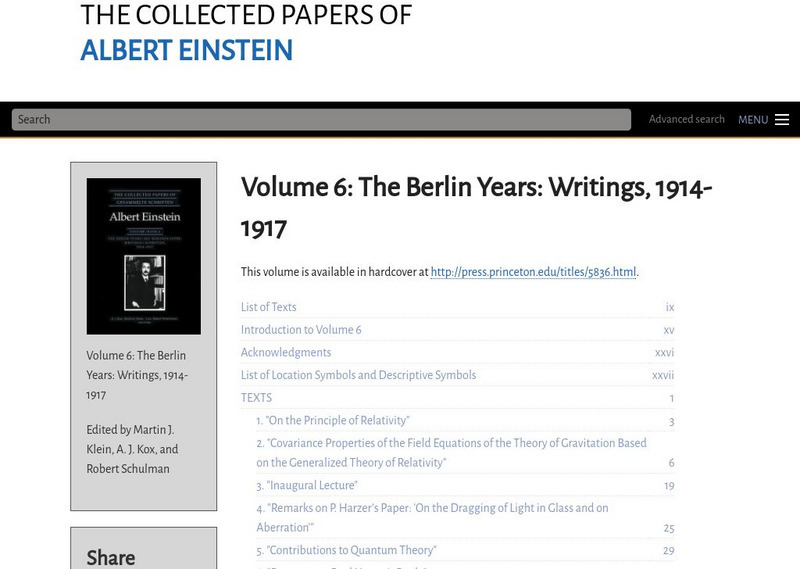
The Collected Papers of Einstein:volume 6: The Berlin Years: Writings, 1914 1917
A publication of Albert Einstein's written legacy presented in the original language version with in-depth English language annotation readers can access. This volume focuses on his life and work in Berlin.

Texas A&M University
Peer Curricula: Story Time: Thomas H. Huxley
A biography of the remarkable life of Thomas Huxley, who began his life in abject poverty, but through self-education and dedication, became a star in world science.

E-learning for Kids
E Learning for Kids: Science: Denmark: How Can We Define Living and Non Living Things?
Martin Dahl, a Danish scientist, does research on living things and non-living things. Come see what he discovers.
University of Illinois
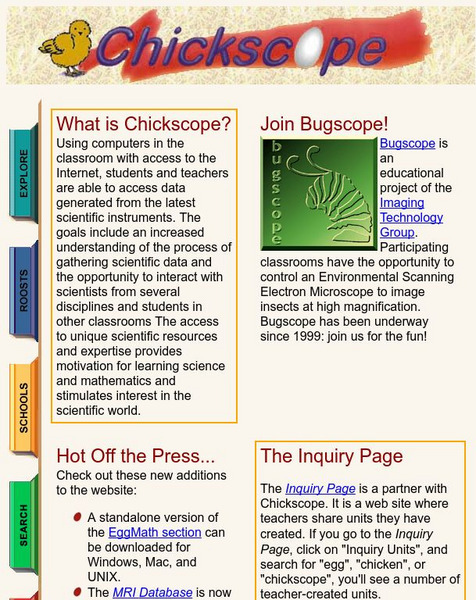
University of Illinois Urbana Champaign: Chickscope
Learn how to build your own incubator and download your own "EggMath." Learn about mitosis, genetics, and more. Don't miss the "Yolk of the Day." This site is designed to allow classrooms to collaborate over the Internet with other...
University of Illinois
University of Illinois Urbana Champaign: Chickscope
Learn how to build your own incubator and download your own "EggMath." Learn about mitosis, genetics, and more. Don't miss the "Yolk of the Day." This site is designed to allow classrooms to collaborate over the Internet with other...
University of California
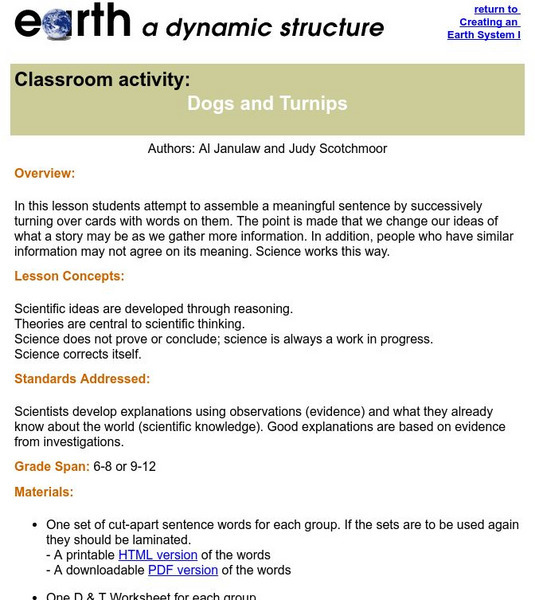
Ucmp: Understanding Science: Dogs and Turnips
A simple lesson where each group of students turns over word cards creating sentences from them. As the student turns over more cards, the group modifies the meaning of the sentence, leading them to discuss how scientists change their...
American Museum of Natural History
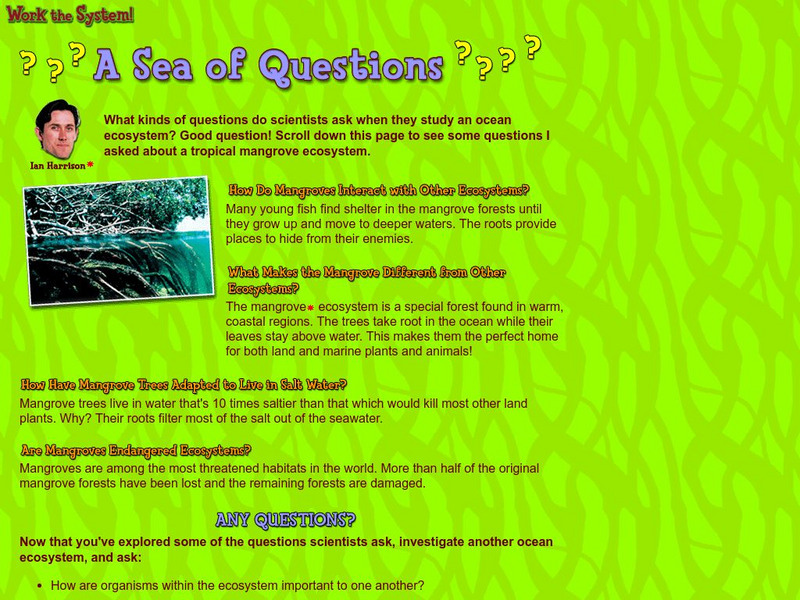
American Museum of Natural History: O Logy: A Sea of Questions About Mangroves
An engaging piece featuring questions that scientists ask when they are researching the seas. Click on the red asterisks and discover even more information!
American Museum of Natural History
American Museum of Natural History: Ology: Astronomy: In Pictures: Beyond Planet Earth
What would it be like to travel across the solar system and explore space? Take a look at some of the places that humans might go to someday, and the questions that scientists are asking.

PBS
Pbs Teachers: Seismometer
Build an instrument for measuring movement to learn about how scientists measure the Earth's movement with a seismometer.
Other popular searches
- Famous Scientists
- Famous Scientists Alive
- 10 Famous Scientists
- Cell Theory Scientists
- Famous Scientists Botany
- Social Scientists
- Famous Scientists From Italy
- 5 Famous Scientists
- Famous Scientists Reports
- Famous Scientists Project
- 40 Famous Scientists
- Famous Scientists in Florida