Hi, what do you want to do?





Science Buddies
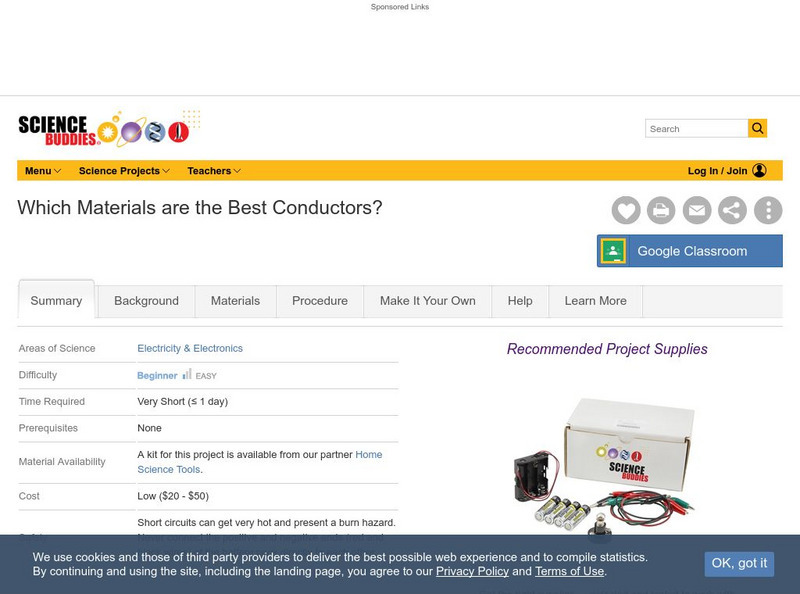
Science Buddies: Project Ideas: Which Materials Are the Best Conductors?
A simple science fair project to test whether electricity can flow between two things. The Science Buddies project ideas are set up consistently beginning with an abstract, objective, and introduction, followed by a section on terms,...
Science Buddies
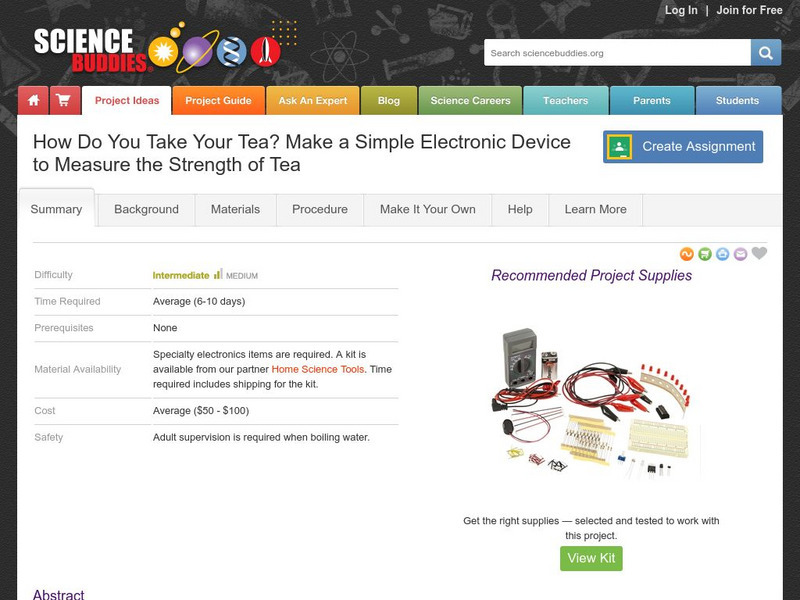
Science Buddies: Project Ideas: Simple Device to Measure the Strength of Tea
In this science fair project, measure the strength of tea, using plastic cups, a photoresistor, and a multimeter. The Science Buddies project ideas are set up consistently beginning with an abstract, objective, and introduction, followed...
Science Buddies
Science Buddies: Gears Go Round!
Music boxes, bicycles, and clocks all have one thing in common: GEARS. You might say that gears make the world turn, since they are in so many mechanical instruments. How do they work and how do you know which gears to use? Find out in...
Exploratorium
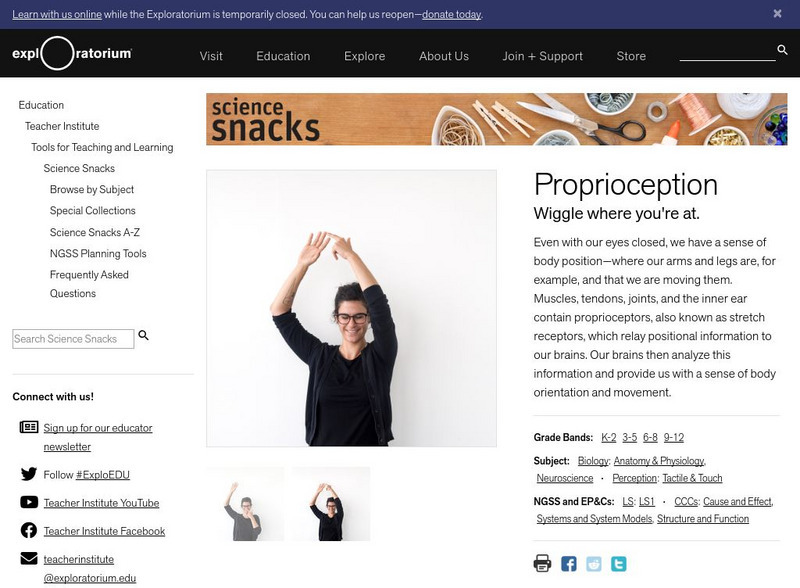
Exploratorium: Science Snacks: Proprioception
The human body has proprioceptors that send signals to the brain so that we are aware of our body's position and movements. Try these simple experiments to learn about proprioception and about other visual and tactile clues that assist...

Exploratorium
Exploratorium: Science Snacks: Radioactive Decay Model
A simple experiment where pennies are thrown, then half are removed, to simulate how radioactive decay works.
Optical Society
Optical Society of America: Exploring the Science of Light: Easy Activities
A collection of simple experiments for exploring the basic properties of light and color.
Other
Lapeer County Schools Science Resources: Density Lab
A simple lab experiment for students to find the density of two solids and a liquid (does not use water displacement). Note that number 1d should not state "weighs" since mass is being found.
Science is Fun
Fun Science: Lumpy Liquids and Squishy Solids
Investigate the properties of a strange substance which acts like a liquid and a solid. This simple experiment can be done with corn starch and water.
American Geosciences Institute
American Geosciences Institute: Earth Science Week: Energy Efficiency
In this simple experiment, students learn about the insulating characteristics of soil and how this relates to energy efficiency.

Science Made Simple
Science Made Simple: Why Is the Sky Blue?
This website has three different projects from which to choose on the topic of why the sky is blue. Also, you can scroll up to learn more about why the sky is blue.

Optical Society
Optical Society of America: Optics for Kids: Make Money Appear Before Your Eyes
A simple experiment that clearly demonstrates how light bends when it passes through water. Accompanied by a good explanation of what's happening, and a link to an article on refraction.
Optical Society
Optical Society of America: Optics for Kids: Mirror, Mirror on the Wall
A simple experiment that clearly demonstrates angles of reflection when light hits a mirror. Accompanied by a good explanation of what's happening, and a link to an article on reflection.
Bill Nye
Bill Nye: Barometer in a Bottle
This tutorial by Bill Nye explains how to make a simple barometer using a jar and a balloon. The barometer is an old and accurate first look at predicting the weather by examining the pressure of the atmosphere. Discover how atmospheric...

Alabama Learning Exchange
Alex: Build a Solar Hot Water Heater
This exercise will allow the students to explore solar energy by building a simple solar hot water heater with clean two liter soda bottles.
Science Struck
Science Struck: The Concept and Meaning of Capillary Action
Defines capillary action and discusses its applications. The physics of surface tension, cohesion, and adhesion are explained and a simple experiment is provided. Includes a number of examples where capillary action takes place.
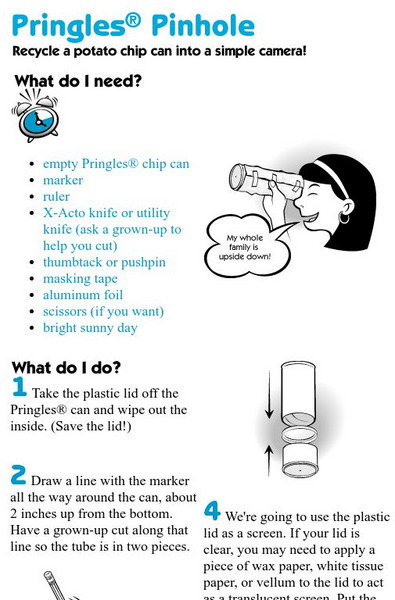
Exploratorium
Exploratorium: Pringles Pinhole
Simple directions to make a pinhole camera from a pringles can! Try this experiment. You'll be surprised at what you find.
Bill Nye
Bill Nye: Burn Rubber
This tutorial from Bill Nye explains how to perform a simple experiment with a rubber band. The experiment demonstrates how friction can dissipate energy as heat.
Bill Nye
Bill Nye: Don't Be Nerve Ous
This tutorial from Bill Nye explains the brain's process of "habituation." It presents a simple experiment that a learner can perform using socks to help understand how habituation works.