Hi, what do you want to do?





PBS
Wnet: Thirteen: Slavery & the Making of America
Using primary documents, oral histories, and other historical resources, discover how the arts of Africa, Europe, and pre-Civil War America influenced the culture of enslaved African Americans.

PBS
Wnet: Thirteen: Slavery and the Making of America: Slave Religion
What religions did slaves bring from Africa to America? This PBS series site provides the historical overview of how early African Americans preserved African spiritual beliefs and practices while enslaved, converted to Christianity, and...

Other
Mo Ad: Slavery Narratives
A collection of narratives taken from autobiographies, letters and diaries of slaves. Read the text or listen to the haunting stories.
The Henry Ford
Living Under Enslavement: African Americans on Hermitage Plantation
This virtual tour of the slave quarters of the Hermitage Plantation tells of the family life of slaves, their skills, and their resistance to the institution of slavery.
British Library
British Library: Caribbean Views
Learn about plantation life during the 18th and 19th centuries by viewing images, maps, and text material in this virtual exhibition from the British Library. Writer Mike Phillips gives his personal interpretation of this exhibit on...
Have Fun With History
Have Fun With History: Slavery in America
Learning module includes multi-media reasources and links for students and teachers learning about slavery in America. Includes several videos on various historical topics on slavery.

Khan Academy
Khan Academy: Us History: 1844 1877: Life for Enslaved Men and Women
During the nineteenth century, enslaved African Americans worked on large plantations in the US South under brutal conditions.

Smithsonian Institution
National Museum of American History: Slave Life and the Underground Railroad
A brief summary of the history of African American slavery and the Underground Railroad. Activities and books pertaining to slave life, plantations, and the Underground Railroad are suggested.
Jamestown-Yorktown Foundation
History Is Fun: Tobacco and Labor [Pdf]
A clear explanation of the system of indentured servitude that supplied Virginia tobacco plantations with the labor force they needed in order to manage their crops. Explains how such servants were able to earn their own land, and how...
Digital History
Digital History: Solomon Northup and Mammy Harriet [Pdf]
Solomon Northrup, a free man, was captured and sold into slavery. Read his account of what plantation life was like from his book, 12 Years a Slave. In addition, read the remembrances of a house slave and what her life was like. [pdf]

Independence Hall Association
U.s. History: Mount Vernon and the Dilemma of a Revolutionary Slave Holder
Read about George Washington's dependence on slaves to increase his wealth, and his private views on slavery. What were the possibilites had he expressed these views in public?
Digital History
Digital History: Responses to Slavery: Spirituals and Stories [Pdf]
Find the lyrics to spirituals slaves sang that gave a glimpse into their lives and gave them hope for freedom. In addition, read some of the stories slaves told that showed how they offered passive resistance to their plight of slavery....
Henry J. Sage
Sage American History: Life on the Plantation in the Ante Bellum South
Article provides an in-depth look at the cruel institution of slavery. The author confronts the mythology of slave life and attempts to find some truth while offering readers a glimpse of slave plantation life in the Ante-Bellum South.
Other
Smithsonian Institution: Remembering Slavery
Gain access to radio and TV broadcasts featuring first-person narratives about being a slave. Learning guides are included online for teacher use.
Duke University
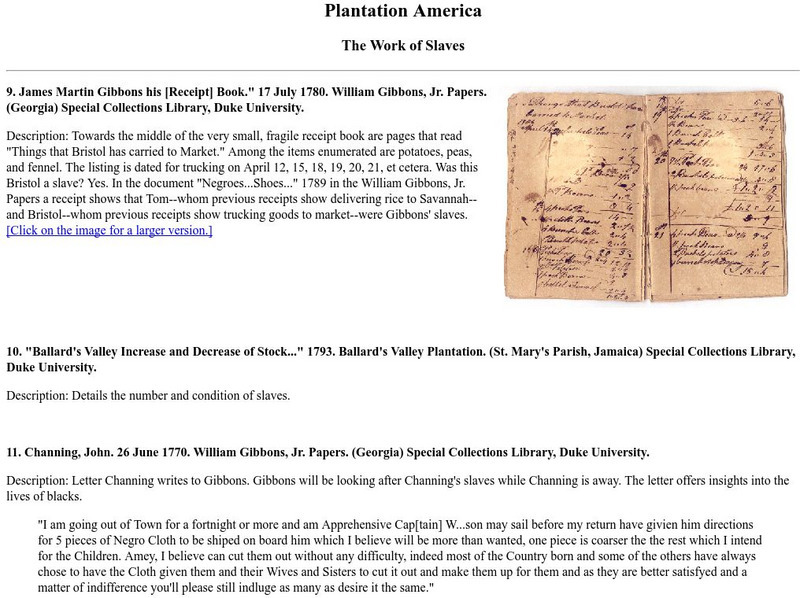
Plantation America: The Work of Slaves
On this webpage, the primary text contains selected entries from letters and journals. It also describes slaves delivering rice to Savannah, slave numbers, their condition on a plantation, how slaves were used, and a map and a drawing of...
PBS
Wnet: Thirteen: The Slave Experience: Living Conditions
This PBS series site reveals the diverse circumstances and living conditions experienced by slaves and indentured servants in America by reading documents dating to the Colonial, Antebellum, and Reconstruction periods.
Independence Hall Association
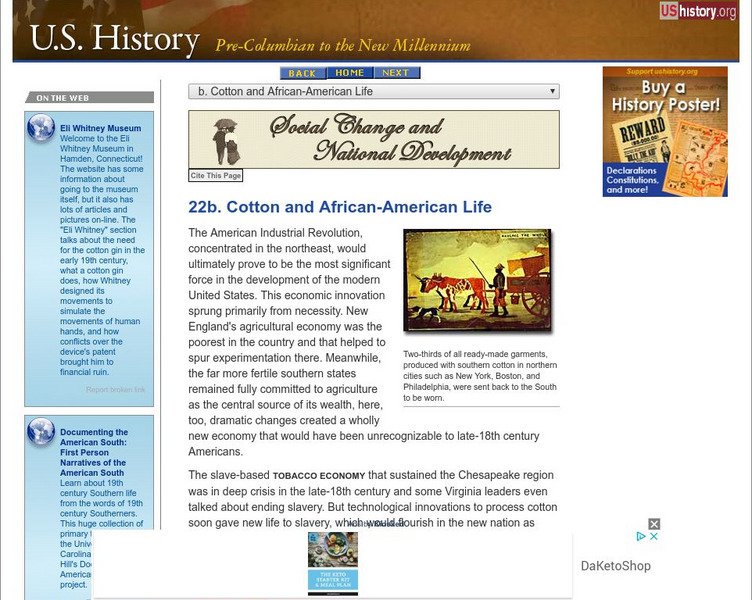
U.s. History: Cotton and African American Life
But for the invention of the cotton gin, slavery perhaps would have died out in the United States in the early 19th century. Read about why technological advances caused the spread of slavery in the South and read about how slaves clung...
PBS
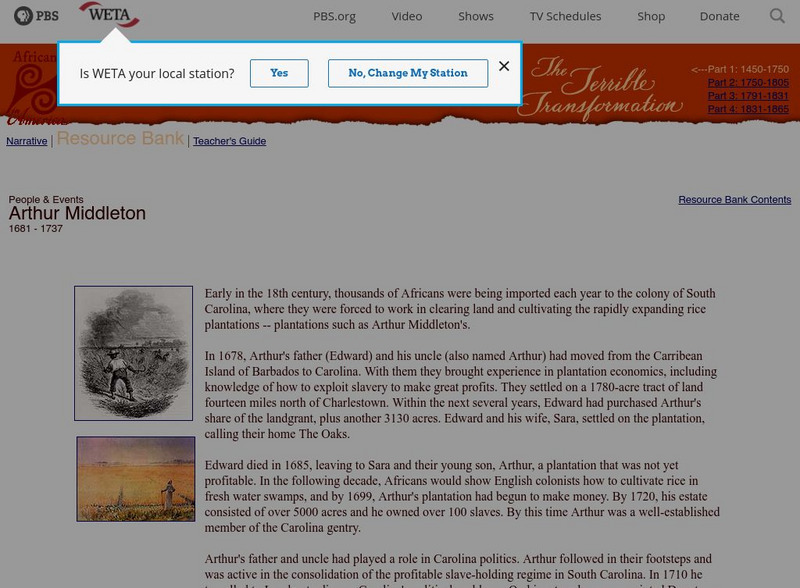
Pbs: Cet: Africans in America: Arthur Middleton
This lesson plan describes the rice cultivation on Arthur Middleton's South Carolina plantation and the importance of slaves to this cultivation. It also offers a description of the Middleton Family. Click on Teacher's guide for teaching...
New York Times
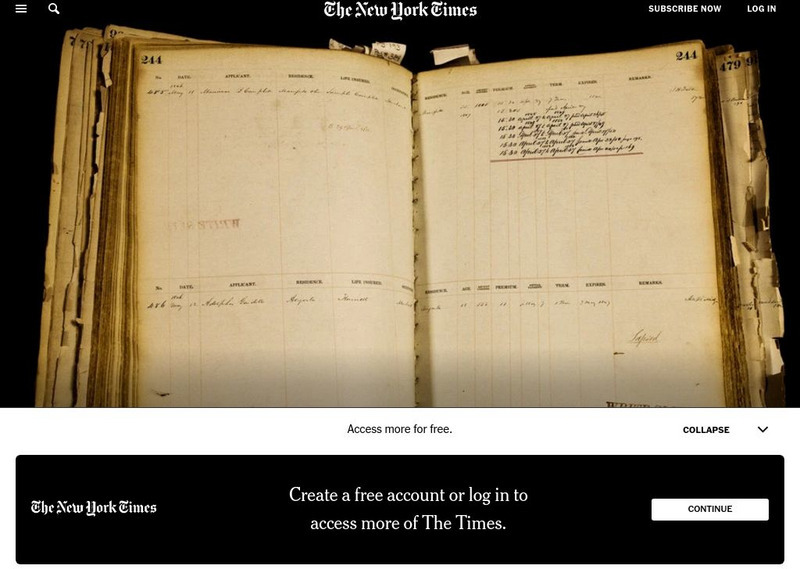
New York Times: Insurance Policies on Slaves
[Free Registration/Login Required] Read this intriguing article about the newly unearthed insurance policies that were sold to plantation owners to insure their slaves. This is a superb example of how the U.S. viewed slaves as a...
Other
United States History: Ch. 3 Sec. 1: The Southern Colonies [Pdf]
A chapter from a history text that looks at the development of the Southern Colonies. It discusses the Southern agricultural economy that relied on slave labor, tobacco as a cash crop, Southern society, indentured servitude, Bacon's...
University of Groningen
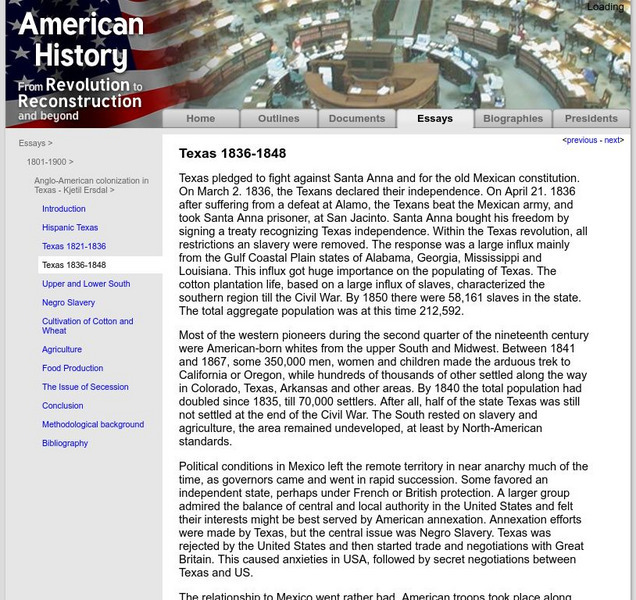
American History: Essays: Anglo Amer. Colonization in Texas: Texas 1836 1848
A brief look at the declaration of independence from Mexico by Texas in 1836, the removal of restrictions on slavery, and how this dramatically increased the population and led to a much greater reliance on the cotton industry in the...
National Humanities Center
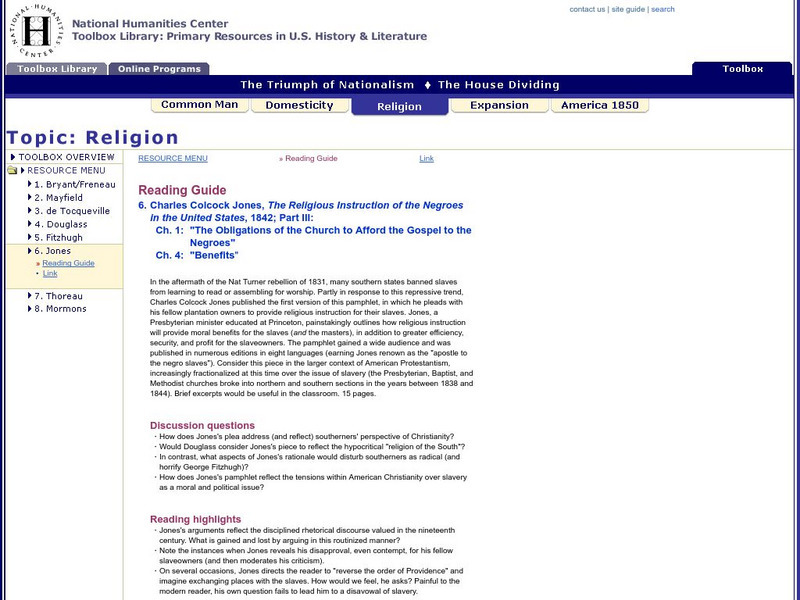
National Humanities Center: Toolbox Library: Charles C. Jones, Triumph of Nationalism: America, 1815 1850
Plantation owner, Charles Colcock Jones, argues in two chapters from his book on promoting religious education for blacks that plantation owners have an obligation to offer religious instruction to slaves.
University of North Carolina
Documenting the American South: Thirty Years a Slave
From the extensive site, "Documenting the American South," read Louis Hughes' "Thirty Years a Slave: From Bondage to Freedom: The Institution of Slavery as Seen on the Plantation and in the Home of the Planter," which was originally...
Independence Hall Association
U.s. History: Sacred Beliefs
At the beginning of the Civil War people in both the North and the South held firm beliefs about the reasons for the war. Some wanted to preserve the Union, others to end slavery. In the South the question was about states' rights and...