Hi, what do you want to do?





TeachEngineering
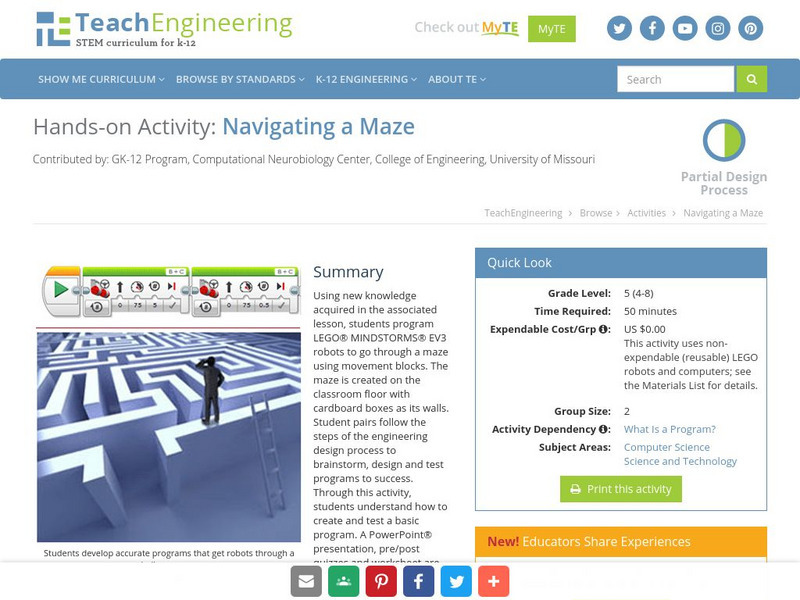
Teach Engineering: Navigating a Maze
Students program LEGO MINDSTORMS NXT robots to go through a maze using movement blocks.
TeachEngineering
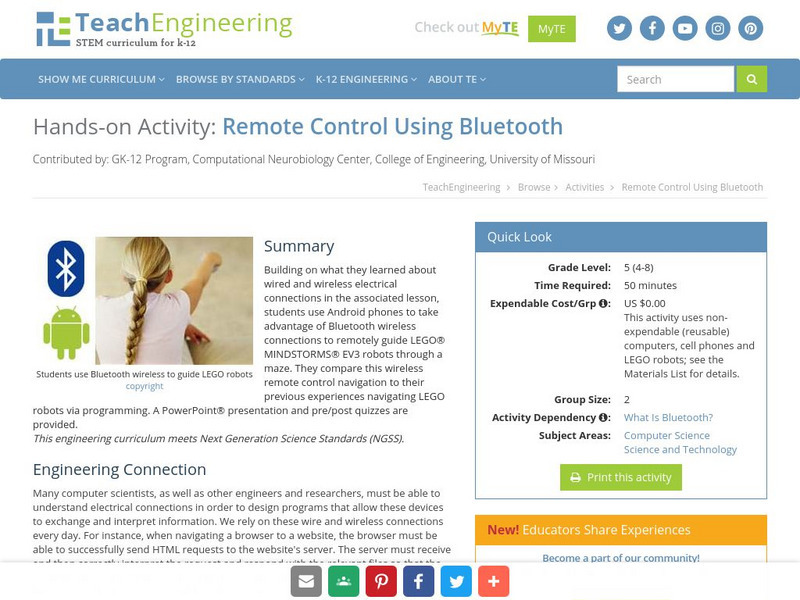
Teach Engineering: Remote Control Using Bluetooth
Building on what they learned about wired and wireless electrical connections in the associated lesson, students use Android phones to take advantage of Bluetooth wireless connections to remotely guide LEGO MINDSTORMS NXT robots through...
TeachEngineering
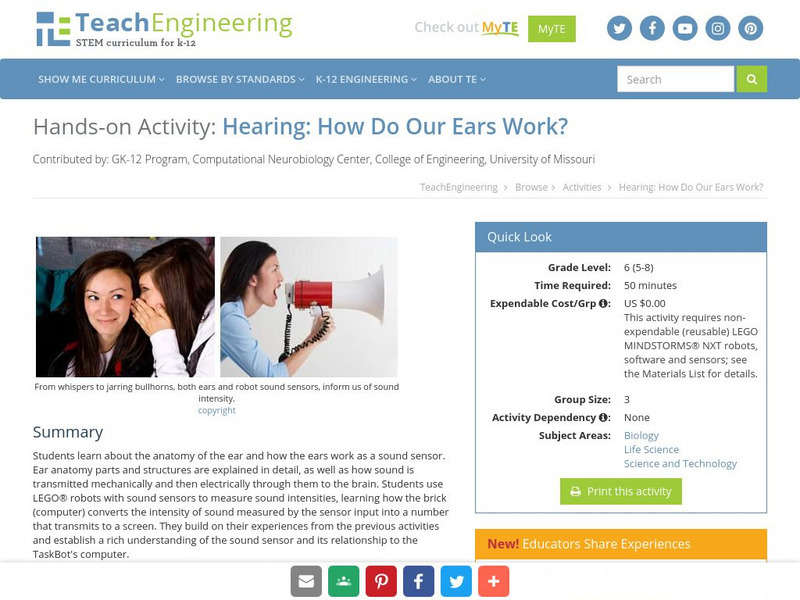
Teach Engineering: Hearing: How Do Our Ears Work?
Students learn about the anatomy of the ear and how the ears work as a sound sensor. Ear anatomy parts and structures are explained in detail, as well as how sound is transmitted mechanically and then electrically through them to the...
TeachEngineering
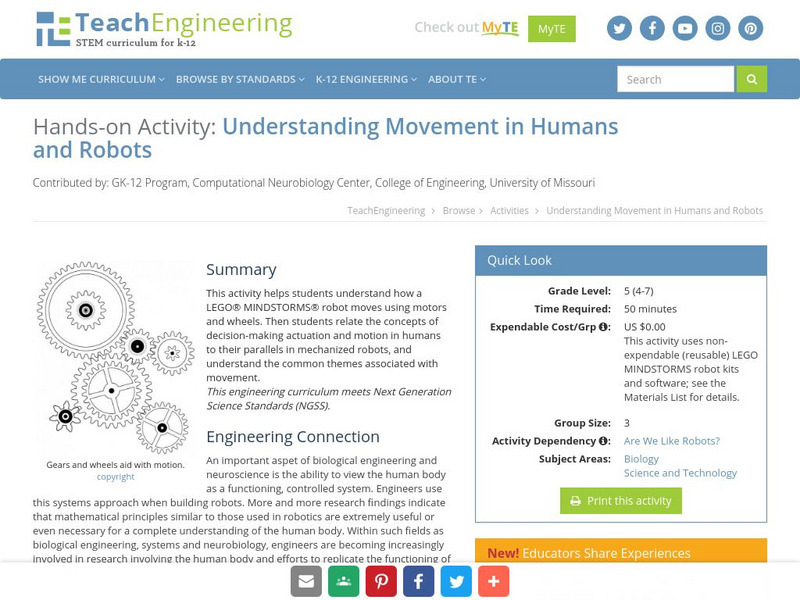
Teach Engineering: Understanding Movement in Humans and Robots
This activity helps students understand how a LEGO MINDSTORMS NXT robot moves using motors and wheels. Then students relate the concepts of decision-making actuation and motion in humans to their parallels in mechanized robots, and...
TeachEngineering
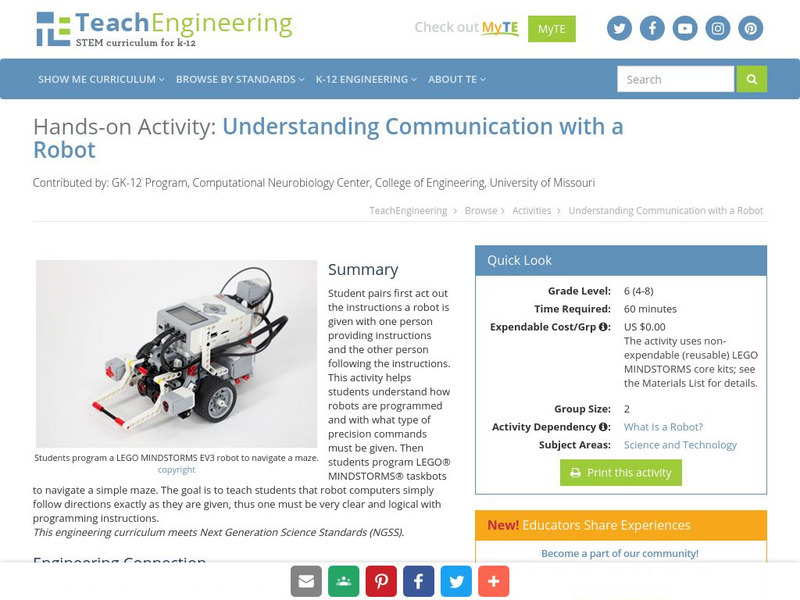
Teach Engineering: Understanding Communication With a Robot
Student pairs first act out the instructions a robot is given with one person providing instructions and the other person following the instructions. This activity helps students understand how a robot is programmed and with what type of...
TeachEngineering
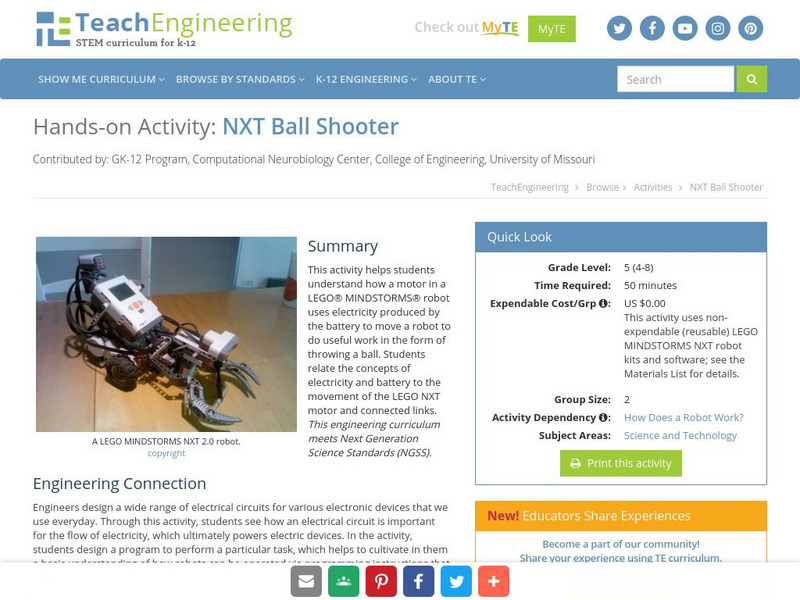
Teach Engineering: Nxt Ball Shooter
This activity helps students understand how a motor in a LEGO MINDSTORMS NXT robot uses electricity produced by the battery to move a robot to do useful work in the form of throwing a ball. Students relate the concepts of electricity and...
TeachEngineering
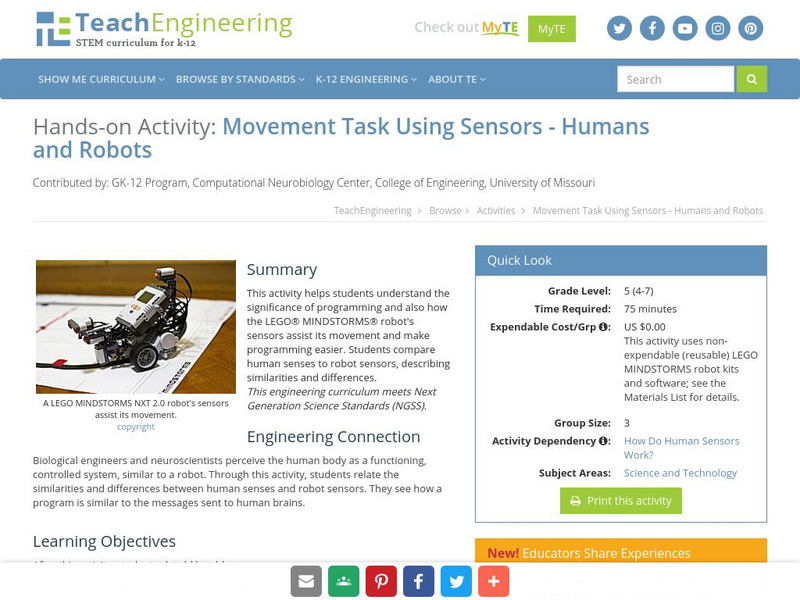
Teach Engineering: Movement Task Using Sensors Humans and Robots
This activity helps students understand the significance of programming and also how the LEGO MINDSTORMS NXT robot's sensors assist its movement and make programming easier. Students compare human senses to robot sensors, describing...
TeachEngineering
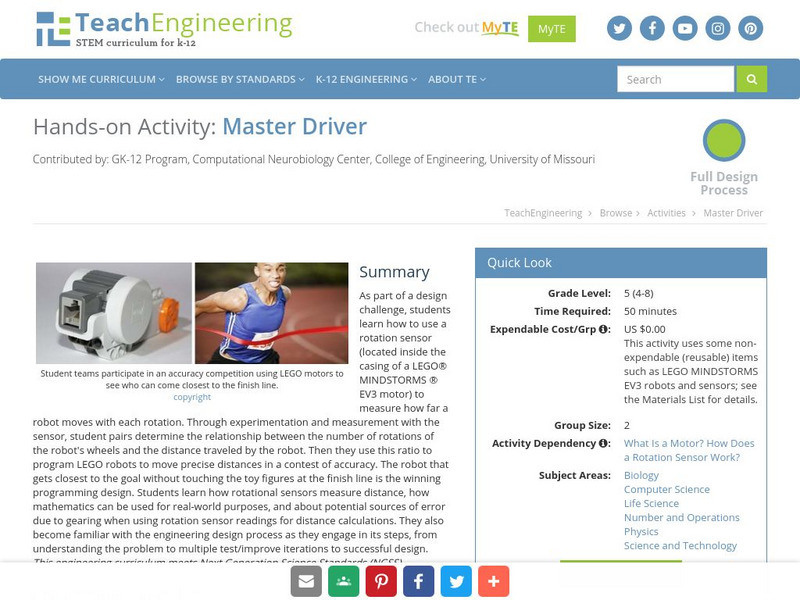
Teach Engineering: Master Driver
Students learn how rotational sensors measure distance, how mathematics can be used for real-world purposes, and about potential sources of error due to gearing when using rotation sensor readings for distance calculations.
TeachEngineering
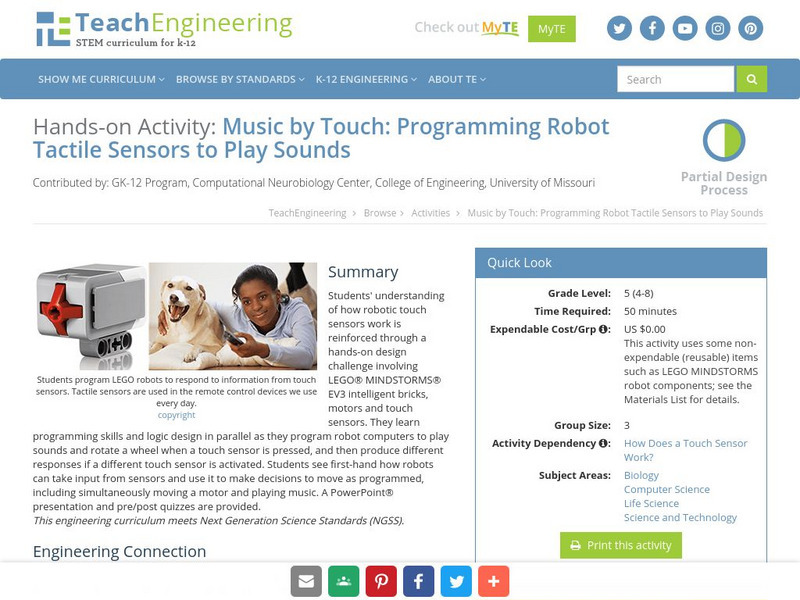
Teach Engineering: Music by Touch
Through a hands-on design challenge involving LEGO MINDSTORMS NXT robots, students learn programming skills and logic design as they program robot computers to play sounds and rotate a wheel when a touch sensor is pressed, and then...
TeachEngineering
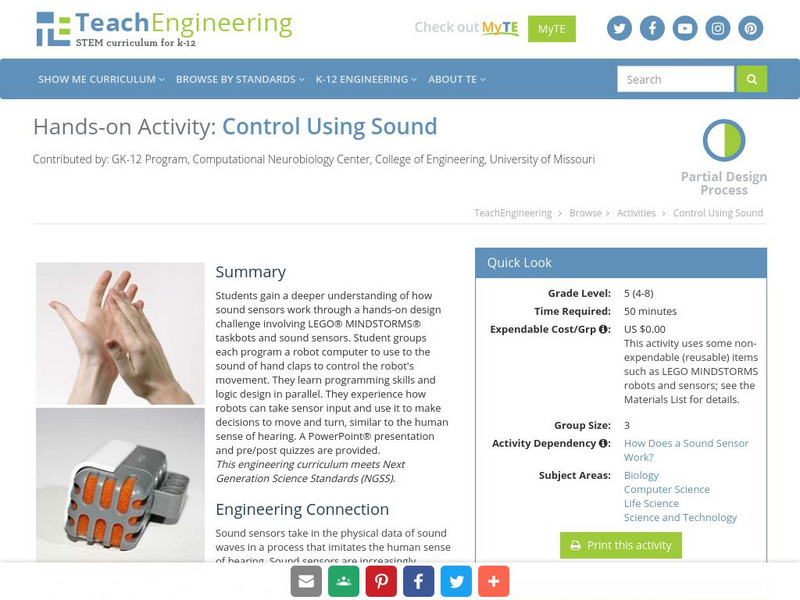
Teach Engineering: Control Using Sound
Students gain a deeper understanding of how sound sensors work through a hands-on design challenge involving LEGO MINDSTORMS NXT taskbots and sound sensors.
TeachEngineering
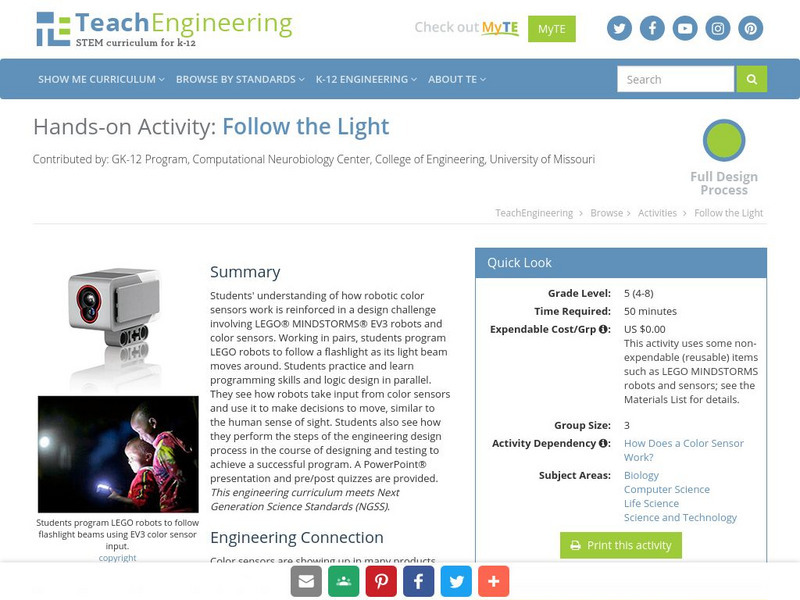
Teach Engineering: Follow the Light
A lesson involving LEGO MINDSTORMS NXT robots and light sensors, student pairs program the robots to follow a flashlight as its light beam moves around.
TeachEngineering
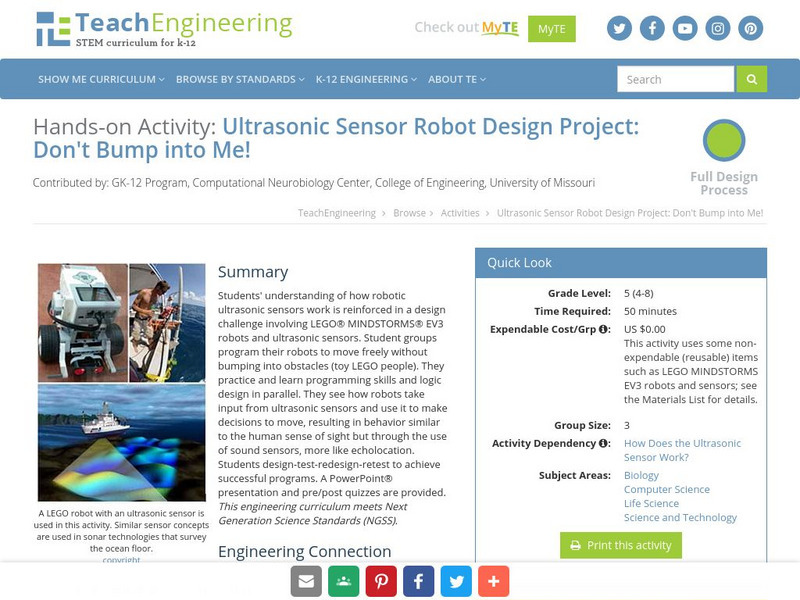
Teach Engineering: Don't Bump Into Me!
Students' understanding of how robotic ultrasonic sensors work is reinforced in a design challenge involving LEGO MINDSTORMS NXT robots and ultrasonic sensors.
TeachEngineering
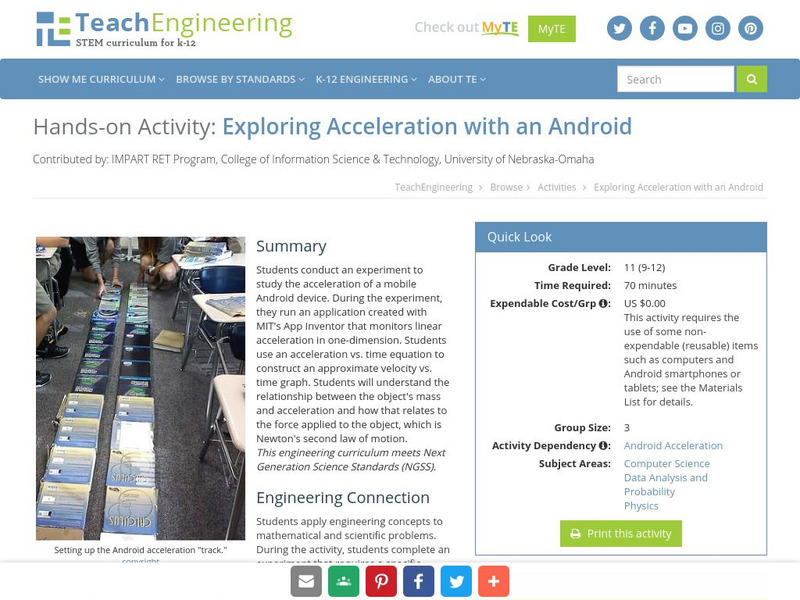
Teach Engineering: Exploring Acceleration With an Android
Students conduct an experiment to study the acceleration of a mobile Android device. During the experiment, they run an application created with MIT's App Inventor that monitors linear acceleration in one-dimension. Students use an...
TeachEngineering
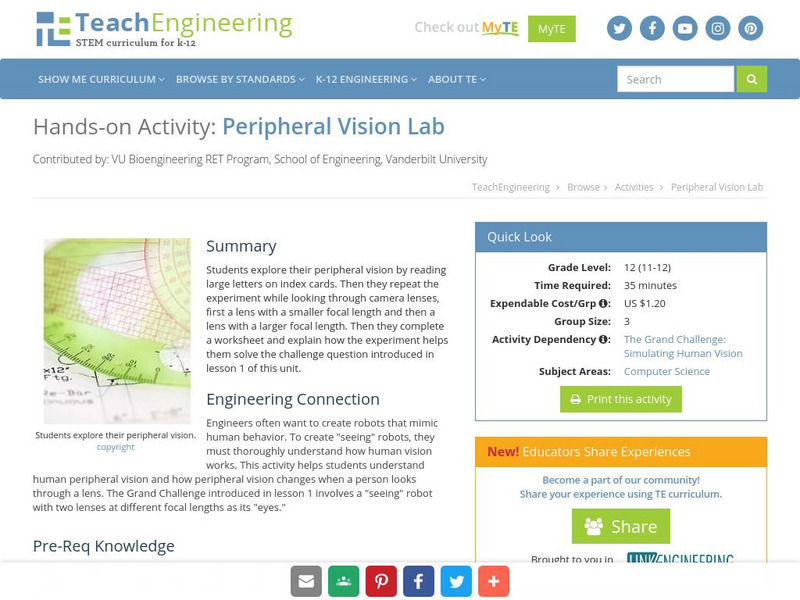
Teach Engineering: Peripheral Vision Lab
Students explore their peripheral vision by reading large letters on index cards. Then they repeat the experiment while looking through camera lenses, first a lens with a smaller focal length and then a lens with a larger focal length....
TeachEngineering
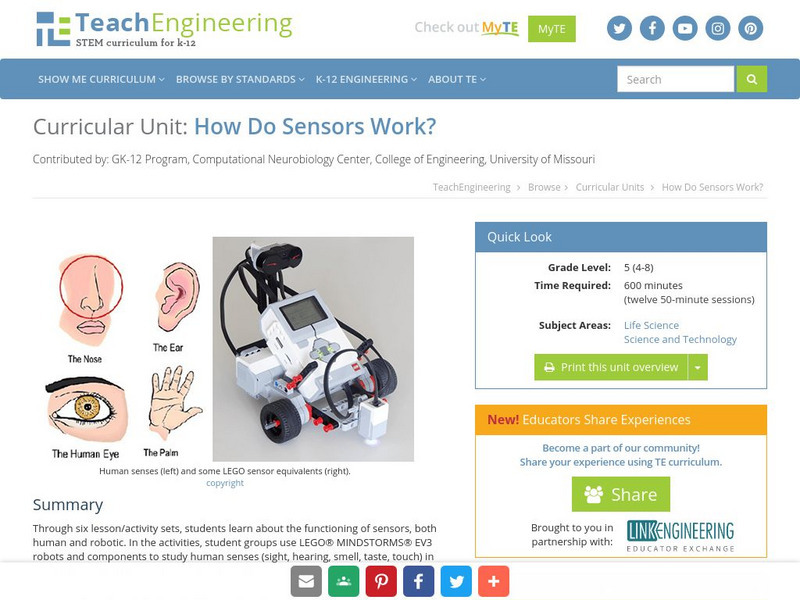
Teach Engineering: How Do Sensors Work?
Through six lesson/activity sets, students learn about the functioning of sensors, both human and robotic
TeachEngineering
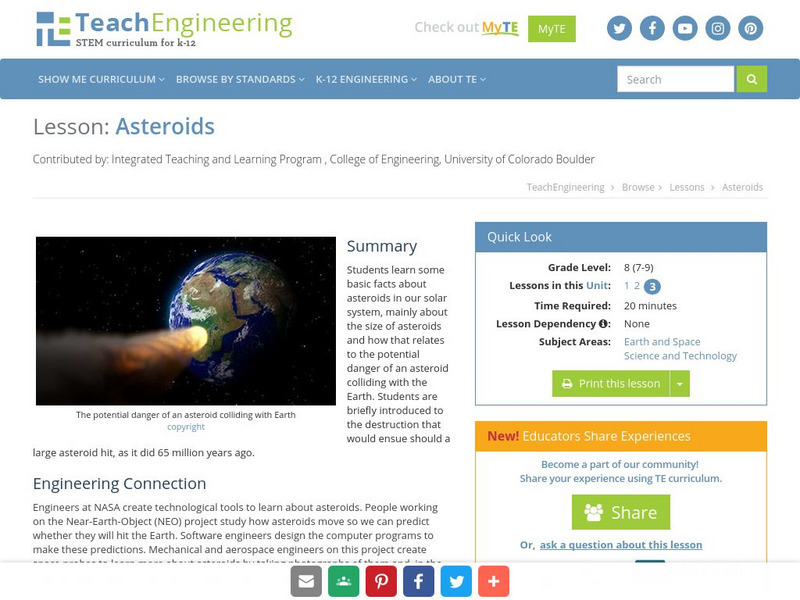
Teach Engineering: Asteroids
Students learn some basic facts about asteroids in our solar system, mainly about the size of asteroids and how that relates to the potential danger of an asteroid colliding with the Earth. Students are briefly introduced to the...
TeachEngineering
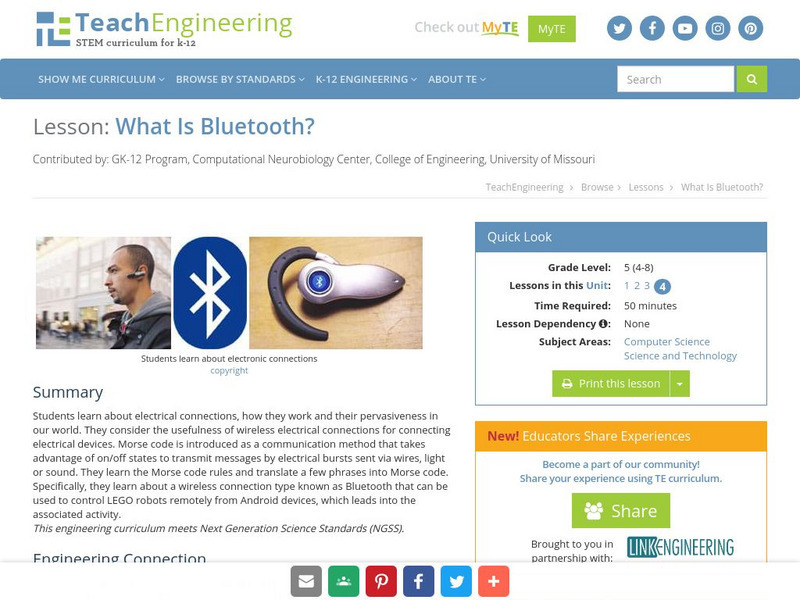
Teach Engineering: What Is Bluetooth?
Students learn about electrical connections, how they work, and their pervasiveness in our world. Two specific skills explored are Morse code and the function of Bluetooth. Using bluetooth, they control LEGO robots remotely from Android...
TeachEngineering
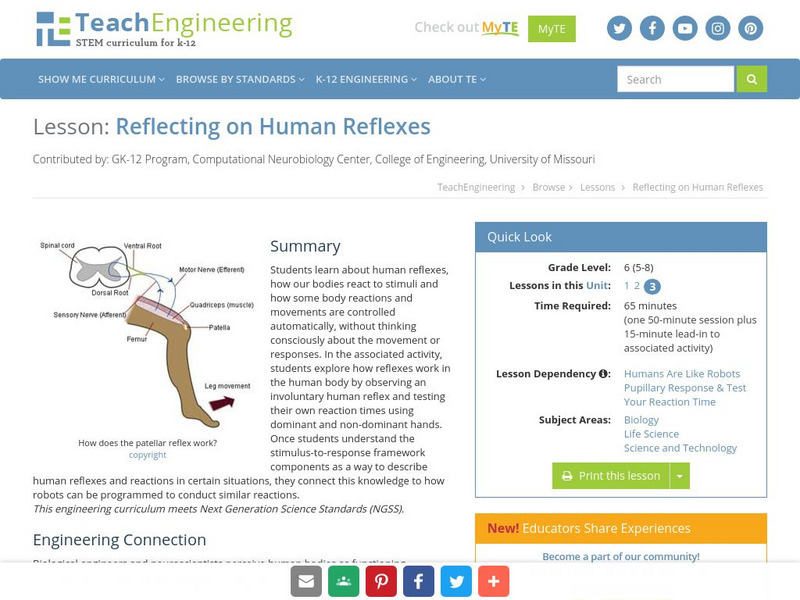
Teach Engineering: Reflecting on Human Reflexes
Students learn about human reflexes, how our bodies react to stimuli and how some body reactions and movements are controlled automatically, without thinking consciously about the movement or responses. In the associated activity,...
TeachEngineering
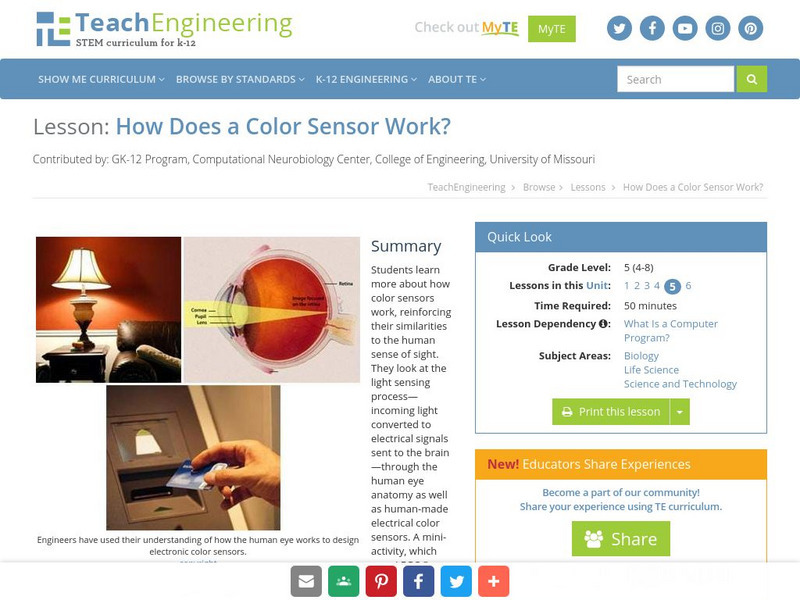
Teach Engineering: How Does a Light Sensor Work?
A mini-activity, which uses LEGO MINDSTORMS NXT intelligent bricks and light sensors gives students a chance to investigate how light sensors function in preparation for the associated activity involving the light sensors and taskbots.
TeachEngineering
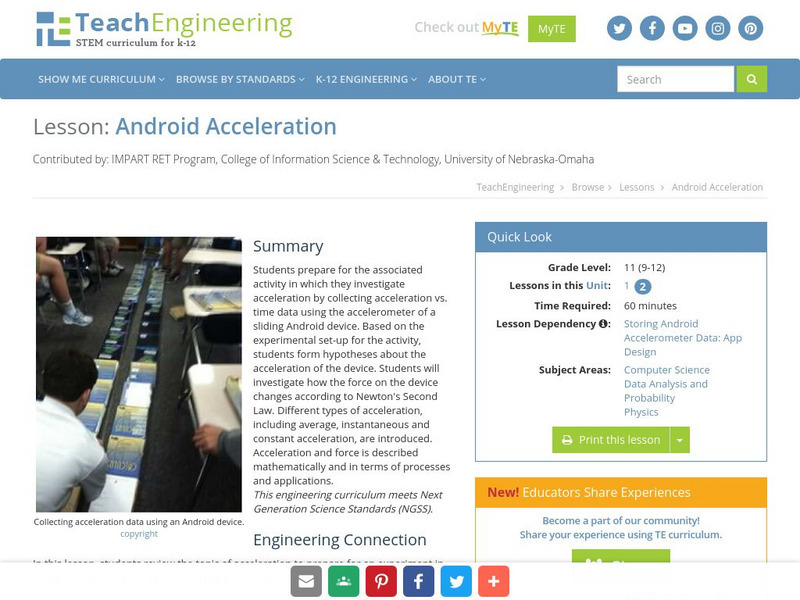
Teach Engineering: Android Acceleration
Students prepare for the associated activity in which they investigate acceleration by collecting acceleration vs. time data using the accelerometer of a sliding Android device. Based on the experimental set-up for the activity, students...
TeachEngineering
Teach Engineering: How Do You Store All This Data?
During this lesson, students start to see the data structure they will use to store their images, towards finding a solution to this unit's Grand Challenge. Students are introduced to two-dimensional arrays and vector classes. Then they...
TeachEngineering
Teach Engineering: Save the Stuffed Animal! Push & Pull
Students develop an understanding of the concepts of "push" and "pull" as they "save" stuffed animals from danger using LEGO MINDSTORMS NXT robots. After learning more about the concepts through a robot demonstration, students explore...

Khan Academy
Khan Academy: Programming Case Study: Going Beyond the Ka Curriculum
To give fellow teachers ideas for how they can teach the KA curriculum in a classroom setting, they created case studies. Here's how software engineer-turned-teacher Jenny Oliver builds upon the curriculum in her classroom.

Khan Academy
Khan Academy: Bonus Points
After completing the electrical engineering project called Ant Bot, improve your machine and share your ideas with others.