Hi, what do you want to do?






Curated OER
Ny Times Learning Network: Wild Wildlife
In this lesson, students investigate the moral, economic and ecological impacts of the extinction of various animal species. Students first assess how and why people support and refute actions that lead to the extinction of animals. They...

Scholastic
Scholastic: The Awesomely Evolved Human Brain
This lesson reinforces comprehension of key facts and concepts in the student article "The Awesomely Evolved Human Brain." Students will understand that the brain's reward system has evolved to help ensure the survival of the species....
American Institute of Biological Sciences
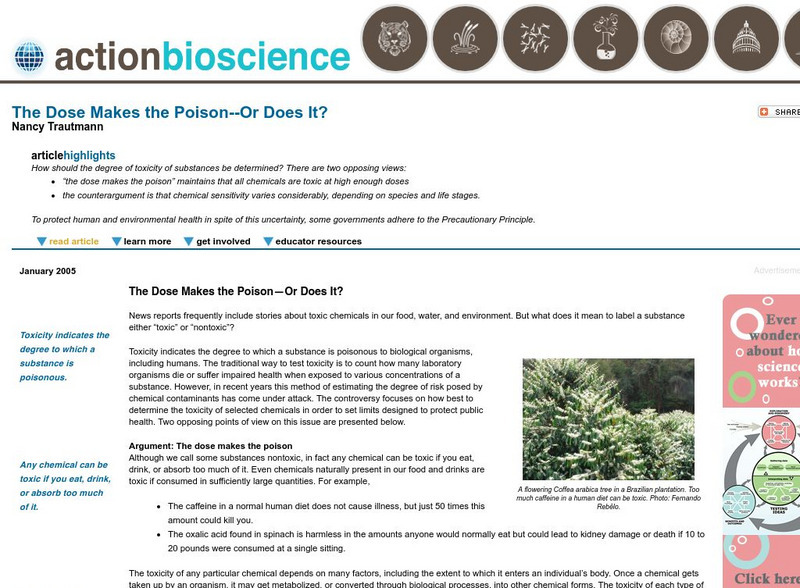
Action Bioscience: The Dose Makes the Poison or Does It?
In an interest to protect humans and the environment a question arises: how does one determine the toxicity level in various substances? Two sides of the argument are presented with support in this article. One side says all substances...
Ed Koday
Web Archive: Spittle Bug
There are 23,000 species of spittle bugs, but you may not have ever seen one because of the unusual way that they protect themselves. They actually produce a liquid that they whip up into a mass of bubbles, and then they hide in it! This...
TED Talks
Ted: Ted Ed: How Poachers Became Caretakers
In his home of Namibia, John Kasaona is working on an innovative way to protect endangered animal species: giving nearby villagers (including former poachers) responsibility for caring for the animals. [15:47]
US Fish and Wildlife Service
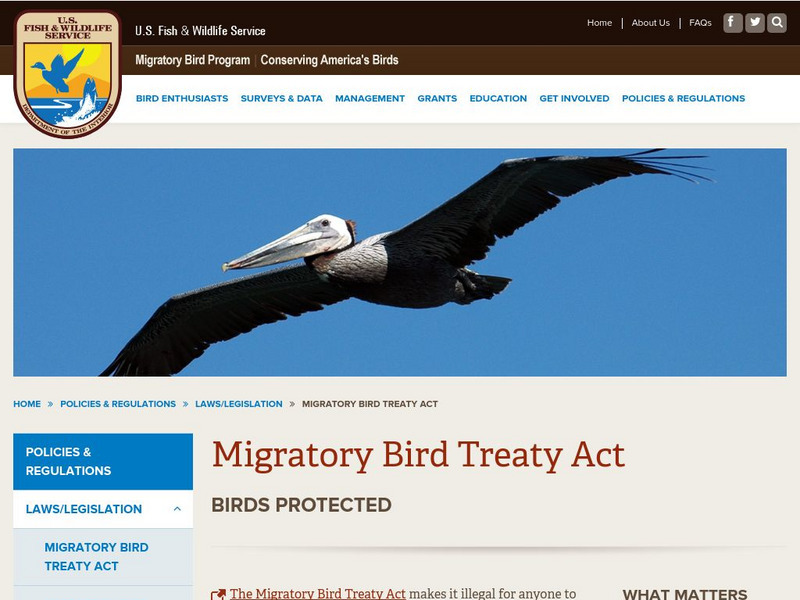
U.s. Fish and Wildlife: Migratory Bird Treaty Act
A good article from the U.S. Fish and Wildlife Service on those birds that are protected by some legislation. Also includes some information on the hunting rules for several species.
CommonLit
Common Lit: "Kenyan Discovery: Let There Be Lights to Save Lions" by Nina Gregory
Kenya is a country in East Africa; the capital city, Nairobi, is well-known for its National Park: the world's only game reserve found within a major city. The park's large wildlife population includes baboons, rhinos, gazelles, zebras,...

Alabama Learning Exchange
Alex: Wearing Away the Mountains
The Tennessee River Gorge outside Chattanooga is recognized as a protected biosphere reserve by the United Nations due to its immense proportion of species to acres. Understanding the formation of the gorge helps explain why so many...

Khan Academy
Khan Academy: Selected Ref: Harnessing Sci & Ed for Biodiversity Conservation
This source is a series of links to references related to harnessing science for biodiversity conservation.

Khan Academy
Khan Academy: Exploration Question Ans: Harnessing Sci & Ed for Biodiversity Con
See if you can answer these short essay questions on biodiversity. Answers provided.
Nature Canada
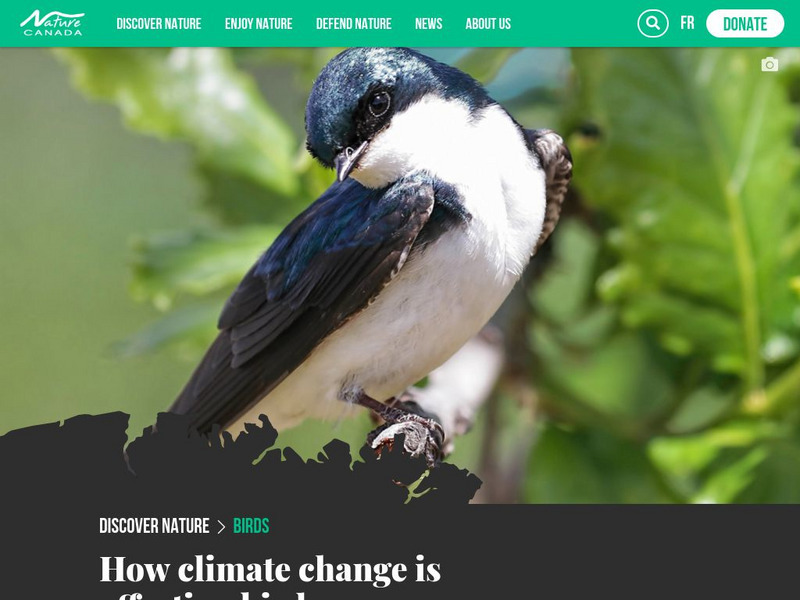
Nature Canada: How Is Climate Change Affecting Birds?
An in-depth look at how climate change is affecting Canadian birds. The site looks at how bird distribution, abundance, behavior, even genetic composition are all being altered due to climate change.
Other
Save the Whales
The Blue Whale, Beluga Whale, Southern Right Whale, Gray Whale, and Sperm Whale are endangered. Find out why in this informative and colorful site.
Smithsonian Institution
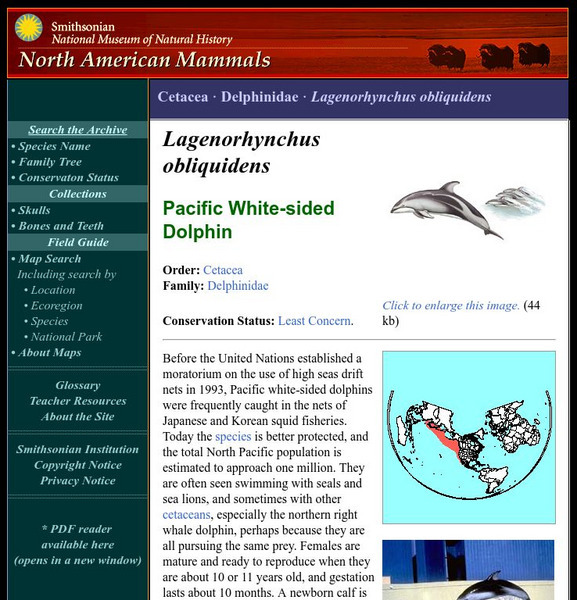
National Museum of Natural History: American Mammals: Pacific White Sided Dolphin
Before the United Nations established a moratorium on the use of high seas drift nets in 1993, Pacific white-sided dolphins were frequently caught in the nets of Japanese and Korean squid fisheries. Today the species is better protected,...
American Museum of Natural History
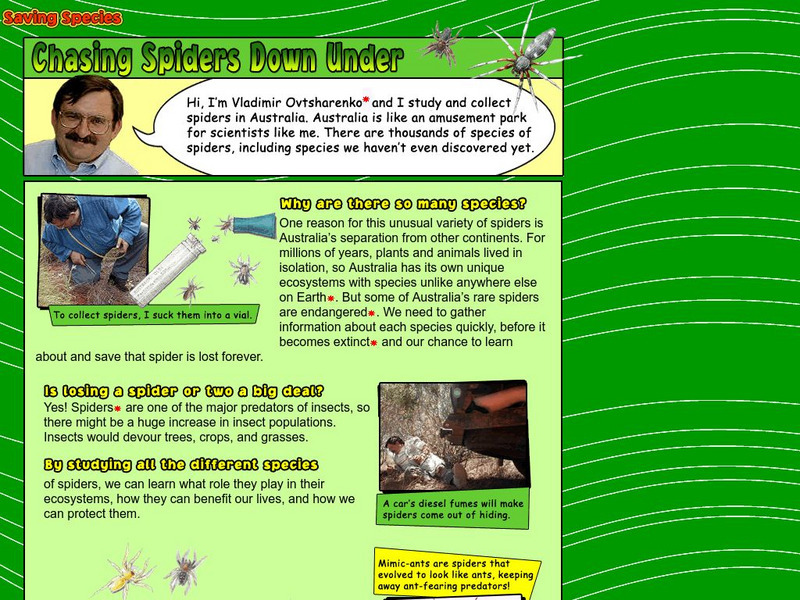
American Museum of Natural History: O Logy: Chasing Spiders Down Under
Naturalist Vladimir Ovtsharenko explains why Australia is home to so many different species of spiders, why spiders are important, and why spiders should be protected.

Ducksters
Ducksters: Giraffe for Kids: Learn All About the Tallest Animal on Earth
Did you know that giraffes are the world's tallest animal? On this site kids learn about this protected species found in Africa.
Smithsonian Institution
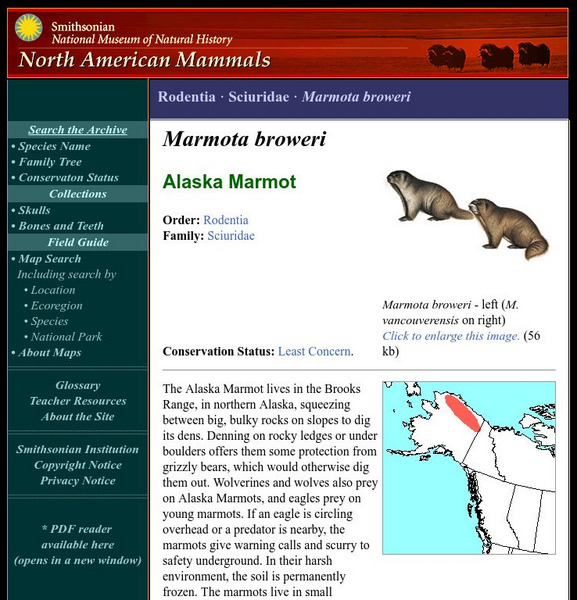
National Museum of Natural History: American Mammals: Alaska Marmot
The Alaska Marmot lives in the Brooks Range, in northern Alaska, squeezing between big, bulky rocks on slopes to dig its dens. Denning on rocky ledges or under boulders offers them some protection from grizzly bears, which would...
Smithsonian Institution
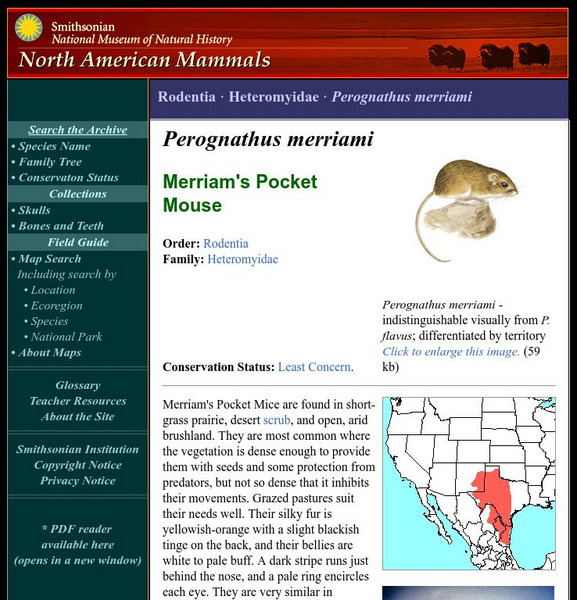
National Museum of Natural History: American Mammals: Merriam's Pocket Mouse
Merriam's Pocket Mice are found in short-grass prairie, desert scrub, and open, arid brushland. They are most common where the vegetation is dense enough to provide them with seeds and some protection from predators, but not so dense...
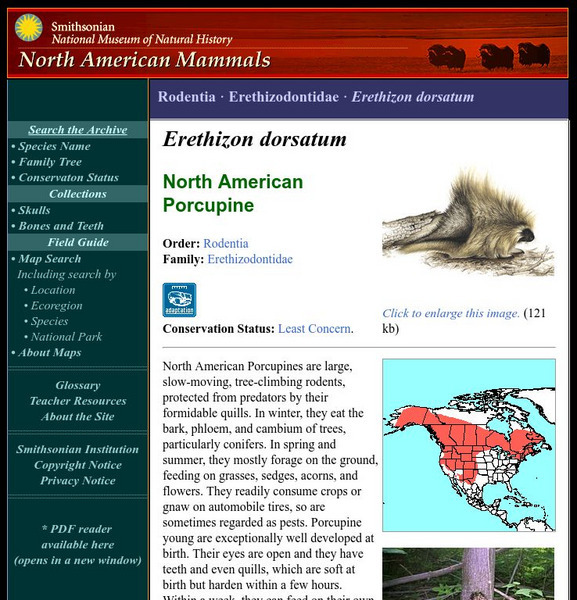
Smithsonian Institution
National Museum of Natural History: American Mammals: North American Porcupine
North American Porcupines are large, slow-moving, tree-climbing rodents, protected from predators by their formidable quills. In winter, they eat the bark, phloem, and cambium of trees, particularly conifers. Learn more about the...

Smithsonian Institution
National Museum of Natural History: American Mammals: Eastern Spotted Skunk
Spotted skunks are smaller than Striped skunks and more weasel-like in appearance. Like all skunks, they have anal scent glands and can emit a foul-smelling spray to protect themselves. Learn more about the Spilogale putorius, more...
The History Cat
The History Cat: Geography: Places: Africa's Serengeti
Discusses the wildlife of Africa and how many species are being threatened by poaching as well as by those who hunt them for food. Some countries try to protect their wildlife, recognizing that it is a rich natural resource that attracts...

PBS
Pbs Teachers: A Giraffe Debate
Research, take and defend a position on the question of why the giraffe population is threatened and which is more important: survival in a wildlife sanctuary or quality of life in the wild.
Curated OER
Unesco: Brazil: Central Amazon Conservation Complex
The Central Amazon Conservation Complex makes up the largest protected area in the Amazon Basin (over 6 million hectares) and is one of the planet’s richest regions in terms of biodiversity. It also includes an important sample of varzea...
Curated OER
Unesco: Kazakhstan: Saryarka Steppe and Lakes of Northern Kazakhstan
Saryarka - Steppe and Lakes of Northern Kazakhstan comprises two protected areas: Naurzum State Nature Reserve and Korgalzhyn State Nature Reserve totalling 450,344 ha. It features wetlands of outstanding importance for migratory water...
Curated OER
Unesco: Iceland: Surtsey
Surtsey, a volcanic island approximately 32 km from the south coast of Iceland, is a new island formed by volcanic eruptions that took place from 1963 to 1967. It is all the more outstanding for having been protected since its birth,...