Hi, what do you want to do?






Curated Video
How to Make Your Writing Sound Smarter (Informal vs. Formal Tone)
In this video, I discuss the difference between formal and informal writing. I give an example of each and then go through a bunch of tips and tricks to write formally. If you follow the information in this video, your writing will sound...
Teaching Without Frills
How To Retell a Story For Kids
In this video, you will learn how to retell a fiction story by describing the characters, setting, and major events from beginning to end!
Kids’ Poems and Stories With Michael Rosen
Story Mapping – Francesca Simon
Story Mapping – Francesca Simon
Kids’ Poems and Stories With Michael Rosen
The Fried Pepper of Hemelin – Hairy Tales
The Fried Pepper of Hemelin – Hairy Tales
Teaching Without Frills
How to Write an Imaginative Narrative for Kids Episode 7: Revising Your Story
In this video, you will learn how to revise your imaginative narrative or fantasy story. We will review how to add, change, or remove parts of your story to make it even better!
Curated Video
Analysing model answers on poetry from the Eduqas anthology
Pupil outcome: I can recognise excellent writing practice in a model answer. Key learning points: - When comparing poems, you should choose a poem that matches the poem you have been given thematically. - Use comparative connectives like...
Teaching Without Frills
How to Write an Imaginative Narrative for Kids |Episode 6: Writing a Closing|
In this video, you will learn how to write a closing or conclusion for your imaginative narrative or fantasy story. We will discuss a variety of ways to end your story, including circular endings, lessons learned, themes, and questions.
Brainwaves Video Anthology
Eric Walters - Authentic Learning Experiences
Eric A. Walters serves as the Director of STEM Education at Marymount School of New York, where he teaches Upper School science and technology. An Apple Distinguished Educator, Google Certified Educator and ISTE Certified Educator, Eric...
Cerebellum
The Elements Of Fiction - Plot Structure And Types Of Narrative
The Elements of Fiction - Ernest Hemingway, Mark Twain, Robert Louis Stevenson . These are just three of the renowned authors whose work is cited in The Elements of Fiction, which explores: Plot elements, character, conflict, flashback,...
Curated Video
Sources: Primary and Secondary
Sources: Primary and Secondary explains the differences between primary and secondary sources, citing at least examples of each type of source.
Curated Video
Engaging with 'The Moon Dragons'
Pupil outcome: I can read and summarise the story of 'The Moon Dragons'. Key learning points: - ‘The Moon Dragons’ is a picture book and narrative fiction text that belongs to the genre of fantasy. - The plot of the story is based around...
Curated Video
Revising topic sentences and selecting precise evidence from 'The Dark Lady'
Pupil outcome: I can select a range of precise evidence from Akala's 'The Dark Lady' to support my topic sentences. Key learning points: - Good topic sentence: At the [place in text], [author name] shows us [link back to intention]...
Curated Video
Thinking from Paddington and Floella Benjamin's perspectives
Pupil outcome: I can think from another person or character's perspective. Key learning points: - One way of inferring a character's feelings is looking at their expressions in an illustration. - One way of inferring a character's...
HOMER
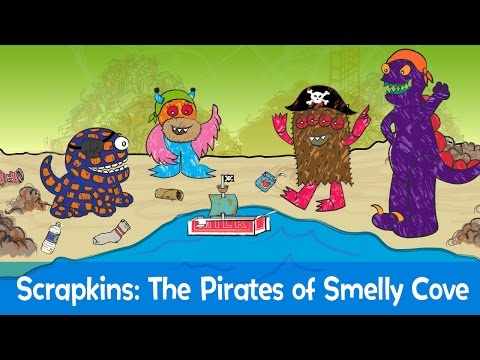
Scrapkins : The Pirates of Smelly Cove
The ScrapKins are a tribe of monsters who build their world, Scrap City, out of the things we throw away. They love to “scrapvent” things from old junk. When Digger finds a treasure map, he, Swooper, Wrecks, and Itcher set off on a...

Curated Video
What Is Magical Realism?
Get your free two-month subscription to Skillsharettps://skl.sh/thebookchemist' targ101'_blank' rel='nofollow'>Skillshare Daniel José Older's Storytelling

PBS
Pbs: Setting a Purpose for Reading Story Map, Part 1
In this video, effective for engaging students with significant cognitive disabilities, the teacher uses a literature book to set a purpose for reading and the students successfully listen to achieve the purpose: to identify the...