Hi, what do you want to do?






NASA
Nasa: Imagine the Universe: Gamma Rays From Supernovae and Supernova Remnants
Astronomers use gamma decay to study the lives of the stars.
University of Wisconsin
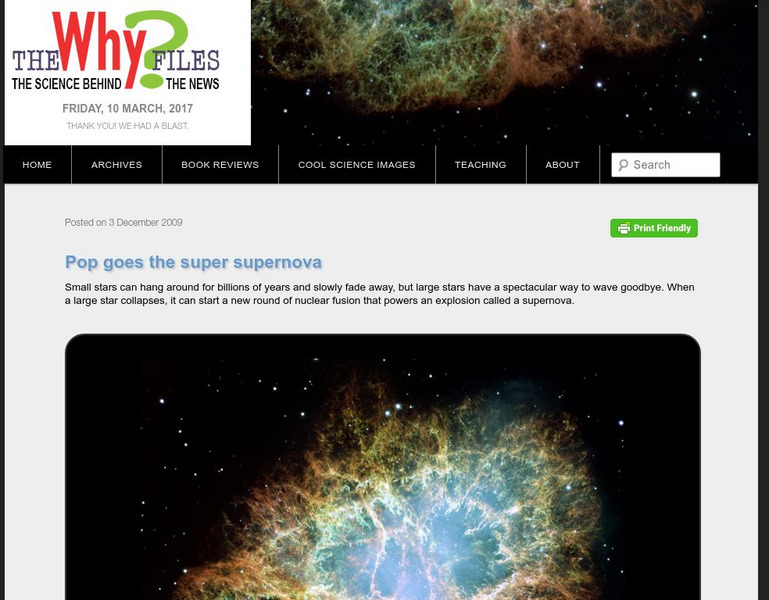
The Why Files: Pop Goes the Super Supernova
Small stars can hang around for billions of years and slowly fade away, but large stars have a spectacular way to wave goodbye. When a large star collapses, it can start a new round of nuclear fusion that powers an explosion called a...
NASA
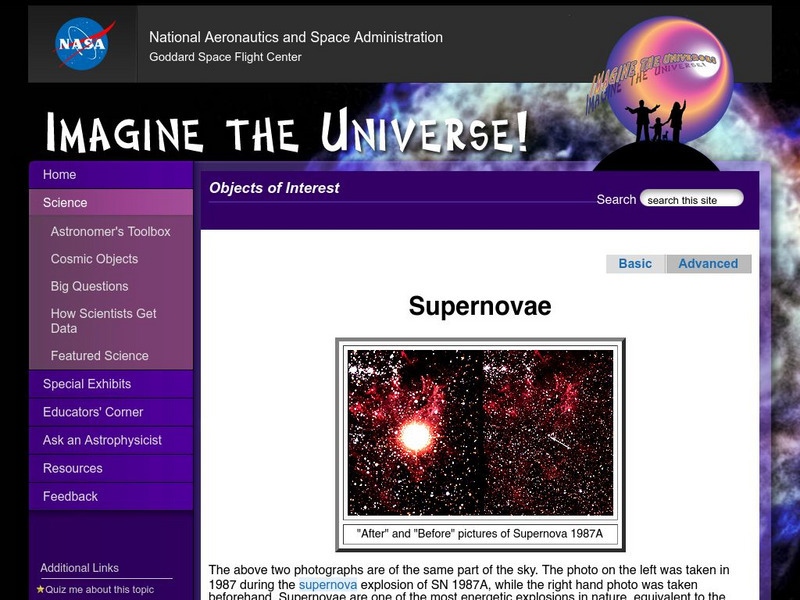
Nasa: Imagine the Universe: Supernovae (Advanced)
Supernovae are divided into two basic physical types, including a description of supernova types and how they are classified based on the existence of hydrogen spectral lines. Definitions of key terms are provided.
California Institute of Technology
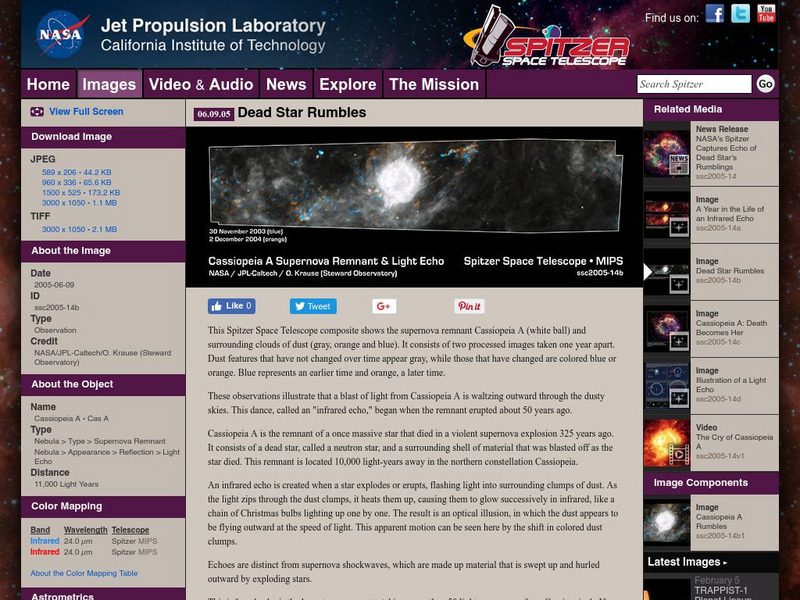
Spitzer Science Center: Dead Star Rumbles
This image, titled "Dead Star Rumbles" features a medium-sized image of the remnants of Cassiopeia A and its surrounding infrared echo. The text under the image details various specifics about the picture.
NASA
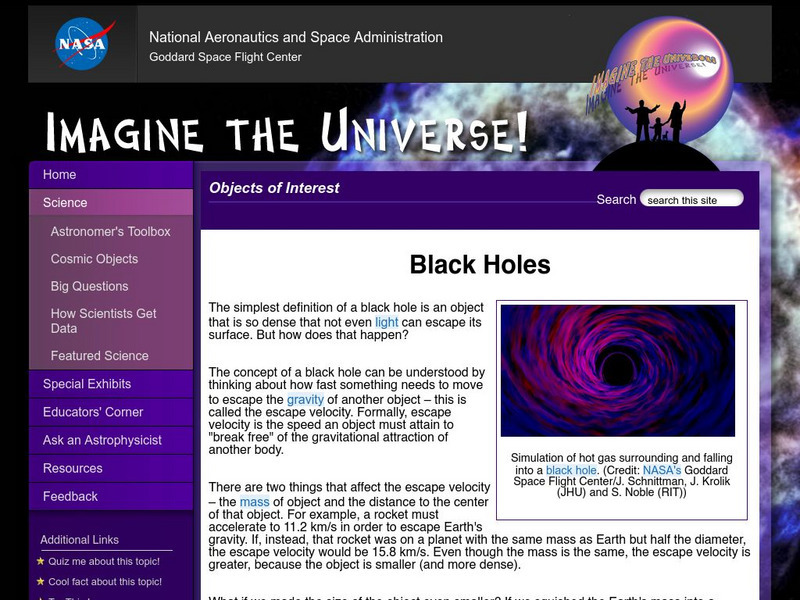
Nasa: Imagine the Universe: Black Holes
Learn what black holes are and the myths that surround them.