Hi, what do you want to do?






Constitutional Rights Foundation
Constitutional Rights Foundation: The u.s. Supreme Court: Fdr Tries to "Pack" the Supreme Court
Lesson and activity in which students learn about the importance of the Supreme Court, balance of power, and judicial reform.

PBS
Pbs American Experience: Sandra Day O'connor and Ruth Bader Ginsburg Changed the Supreme Court, and the Country
Despite their differences, the first and second female Supreme Court justices found common ground on women's equality.
FOX News
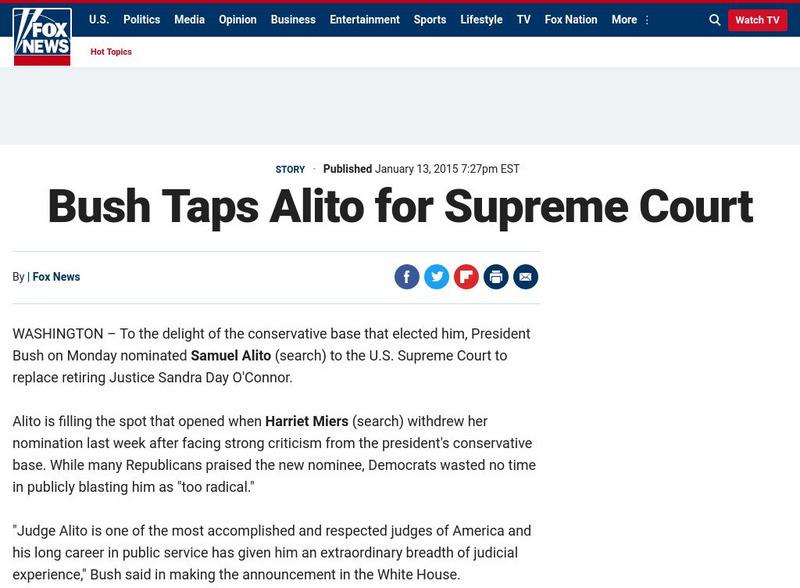
Fox News: Bush Taps Alito for Supreme Court
With much controversy surrounding his pick, President George W. Bush chooses Samuel Alito to replace Sandra Day O'Connor on the Supreme Court. Along with this November, 2005, article, are links to photos, videos, and other resources.
PBS
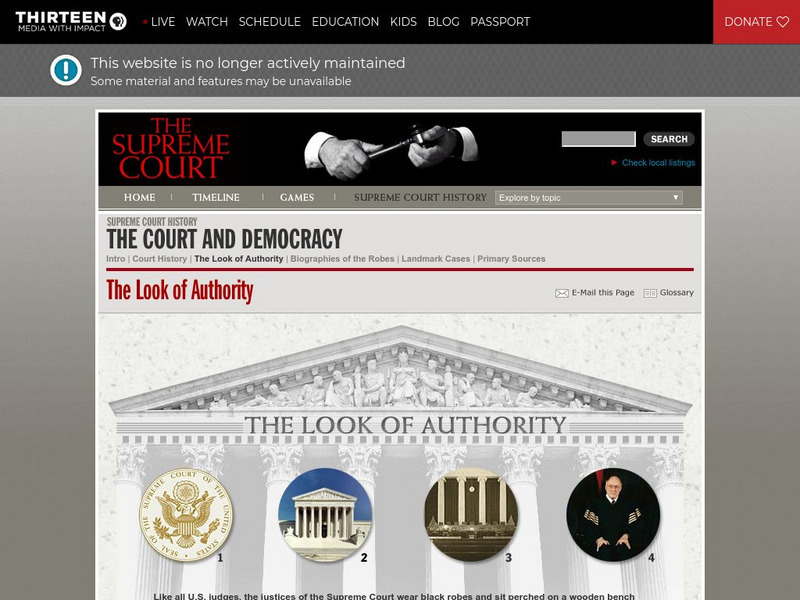
Wnet: Thirteen: The Court and Democracy: The Look of Authority
The Supreme Court presents an image of authority. Here you can find what symbols, objects, and architecture are used to create that look of authority in the highest court in the United States.
Illinois Institute of Technology
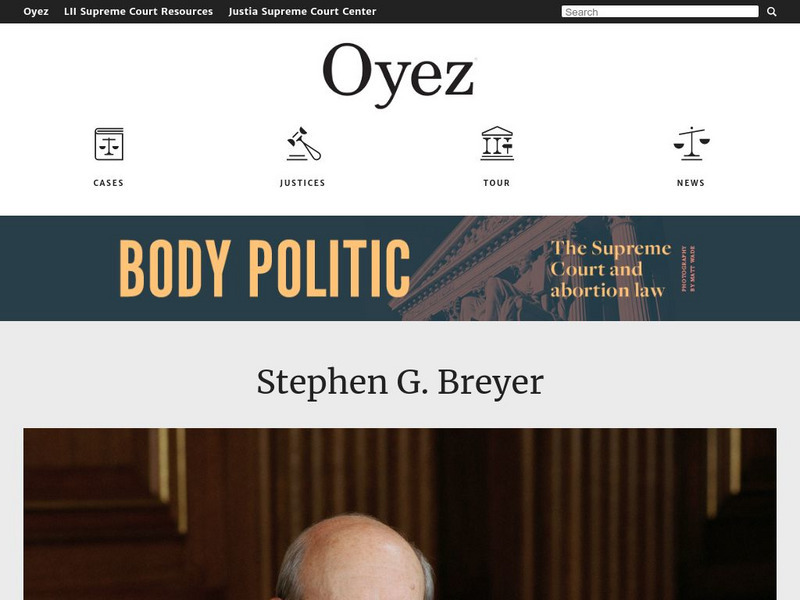
The Oyez Project: Stephen G. Breyer
A lengthy biography of Supreme Court justice, Stephen G. Breyer. Read about the influences in his life, his education, and his experience before joining the Supreme Court. Site also offers a recounting of court opinions in which he has...

A&E Television
History.com: Why Do 9 Justices Serve on the Supreme Court?
The Constitution doesn't stipulate how many justices should serve on the Court, in fact, that number fluctuated until 1869.
PBS
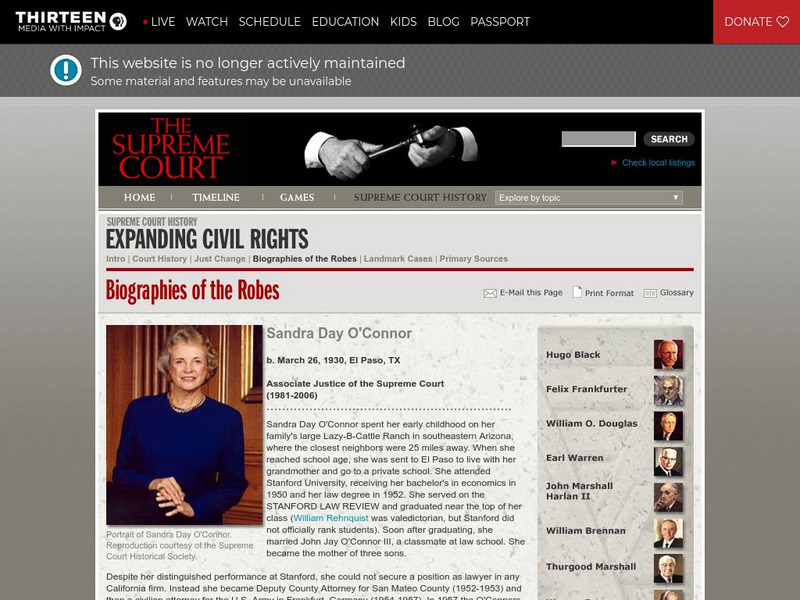
Wnet: Thirteen: The Supreme Court: Biographies of the Robes: Sandra Day O'connor
Biographical account of Supreme Court Justice Sandra Day O'Connor, appointed by Ronald Reagan in 1981. She was the first woman to ever serve as a justice on the Supreme Court.
PBS
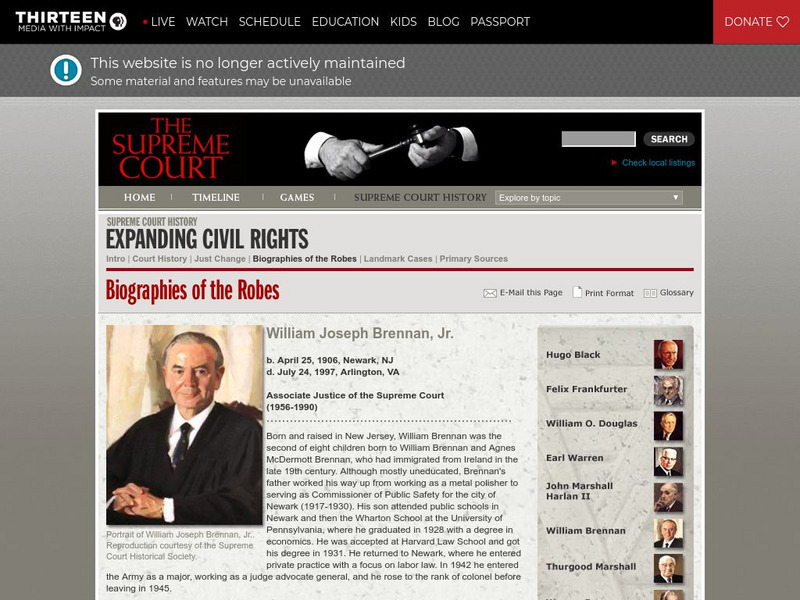
Wnet: Thirteen: The Supreme Court: Biographies of the Robes: William Brennan, Jr.
Biographical account of Supreme Court Justice William Brennan, Jr. appointed by Dwight Eisenhower in 1956. He was considered to be one of the most influential liberal justices to ever serve on the Supreme Court.

PBS
Wnet: Thirteen: The Supreme Court: Biographies of the Robes: Harry Blackmun
Biographical account of Supreme Court Justice Harry Blackmun, appointed by Richard Nixon in 1970. He was best known for writing the opinion in the case of Roe v. Wade in 1973.
PBS
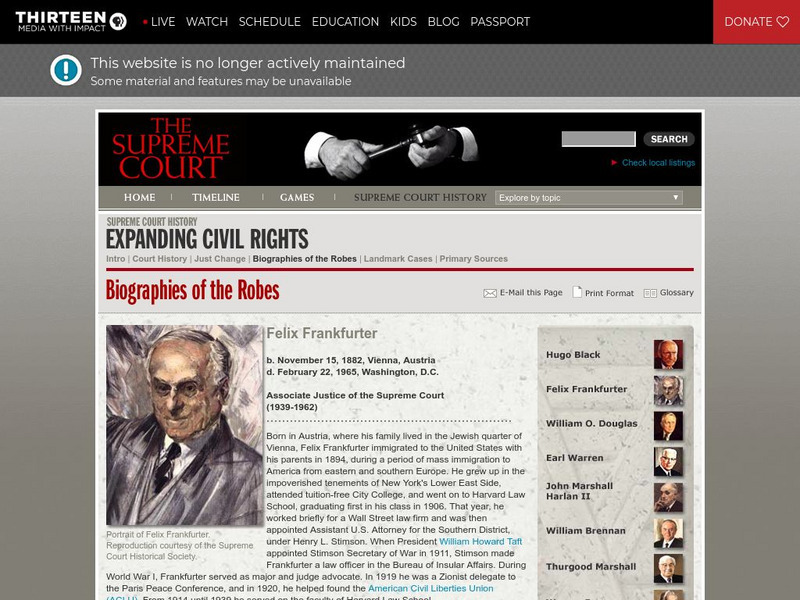
Wnet: Thirteen: The Supreme Court: Biographies of the Robes: Felix Frankfurter
PBS online resource for learning biographical details about the life and career of Supreme Court Justice, Felix Frankfurter, appointed by President Franklin Roosevelt in 1939.

PBS
Wnet: Thirteen: The Supreme Court: Landmark Cases: Dred Scott v. Sandford (1857)
PBS features a summary of the landmark Supreme Court case of Dred Scott v. Sanford which ruled that African Americans are not American citizens, and therefore could not sue in federal court. Decision written by Chief Justice Roger B. Taney.
PBS
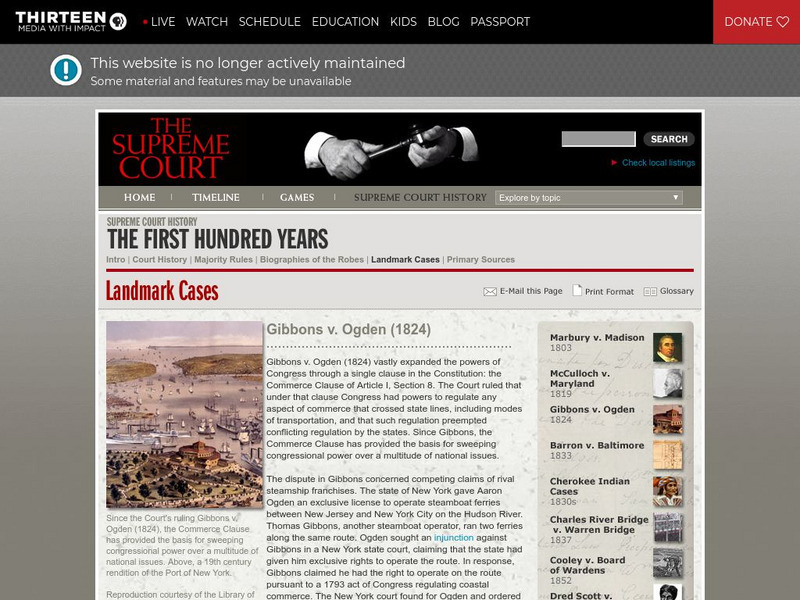
Wnet: Thirteen: The Supreme Court: Landmark Cases: Gibbons v. Ogden (1824)
PBS features a summary of the landmark Supreme Court case of Gibbons v. Ogden which dealt with congressional powers through the Commerce Clause of Article I, Section 8. Decision written by Chief Justice John Marshall.

Other
Age of Jefferson and Jackson:john Marshall: The "Man Who Made the Court Supreme"
Read a thorough essay discussing the many important decisions handed down by the Supreme Court while John Marshall was Chief Justice. There are hyperlinks to each of the decisions.
PBS
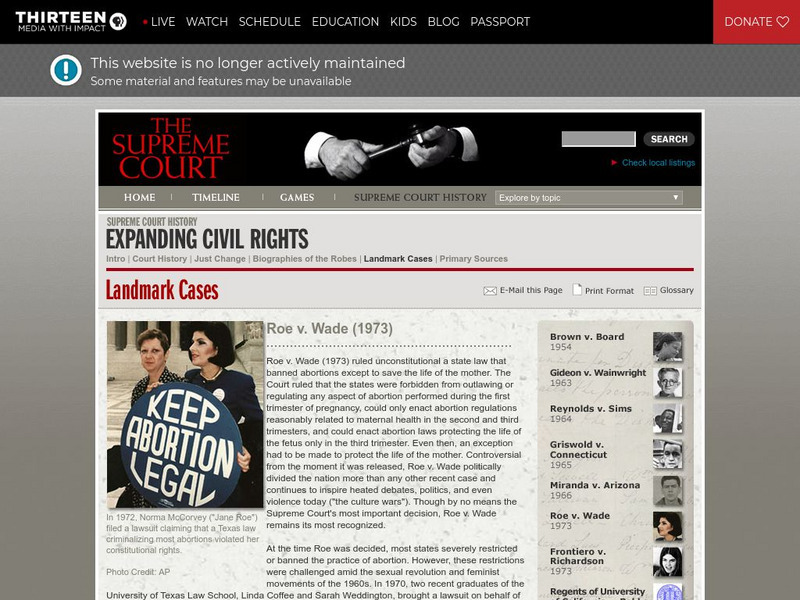
Wnet: Thirteen: Supreme Court History: Expanding Civil Rights: Roe v. Wade (1973)
PBS' series on the Supreme Court covers several landmark cases, perhaps the most controversial of which is Roe v. Wade. Read about the case here, the reasons for the ruling that was made, and the exceptions to the ruling.
Thomson Reuters
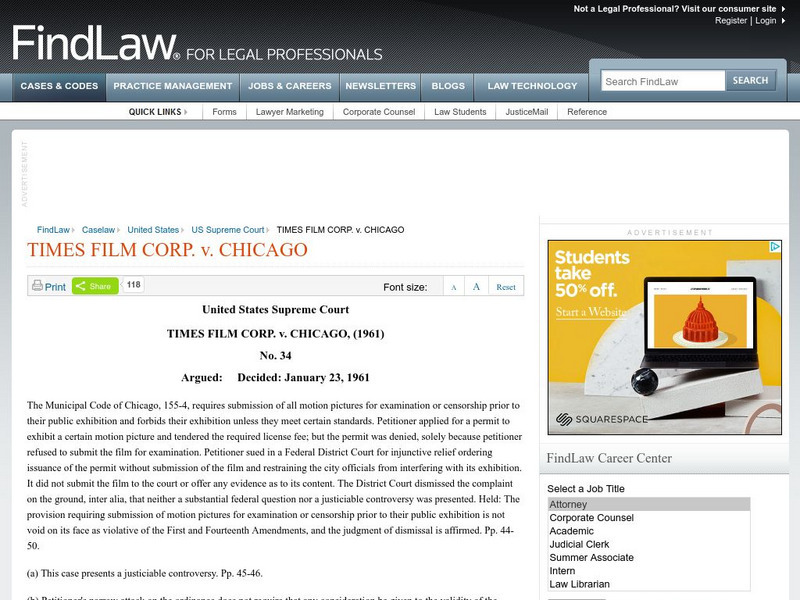
Find Law: u.s. Supreme Court: Times Film Corp. V. City of Chicago (1961)
Read the majority opinion of the U.S. Supreme Court in Times Film Corp. v. City of Chicago, a 1961 case that focused on free speech and obscenity.

American Academy of Achievement
Academy of Achievement: Ruth Bader Ginsburg
A biography of Ruth Bader Ginsburg, a Supreme Court Justice. She was one of the first female attorneys and fought gender inequality for much of her career as a lawyer, even arguing cases before the Supreme Court prior to herself taking a...
Digital History
Digital History: Simple Justice
Follow the civil rights quest for integrated schools from the beginning in 1849 through the 1954 Supreme Court decision in Brown v. the Topeka Board of Education and the struggle that ensued for decades following in the most reluctant...

Independence Hall Association
U.s. History: A Federalist Stronghold: John Marshall's Supreme Court
John Marshall was the fourth Chief Justice of the Supreme Court, but his decisions, especially in Marbury v Madison, set the influence of the Court for the next many decades. Read about Marshall's decisions and why they were so important.
PBS
Pbs News Hour: Alito Appearance Marks Shift in Court
An interesting discussion on Justice Samuel Alito's first day and what his presence on the Supreme Court will mean. Transcript, audio, video, and a link to analysis of the arguments he heard on his first day are included.
CPALMS
Florida State University Cpalms: Florida Students: Journey Through Justice: Our Federal Courts
In this tutorial, students learn about the various levels in the federal judicial system and look at a famous Supreme Court case, Tinker v. Des Moines.
Other
Thomas P. Vincent Law Office: Common Law: Holmes Pollock Letters
These excerpts from a long-running correspondence between Associate Justice Oliver Wendell Holmes, Jr. and Frederick Pollock, offer insight into the ideology of this Supreme Court Justice and American history.
NPR: National Public Radio
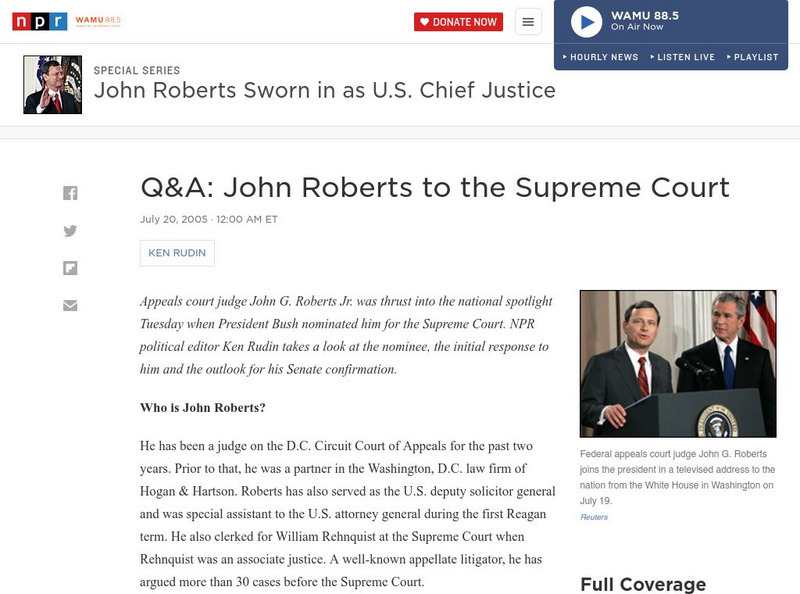
Npr: Q&a: John Roberts to the Supreme Court
Background of John Roberts is given in a Q&A format. Roberts' biography, possible impact on court, stance on issues, and more. Article is from July, 2005.
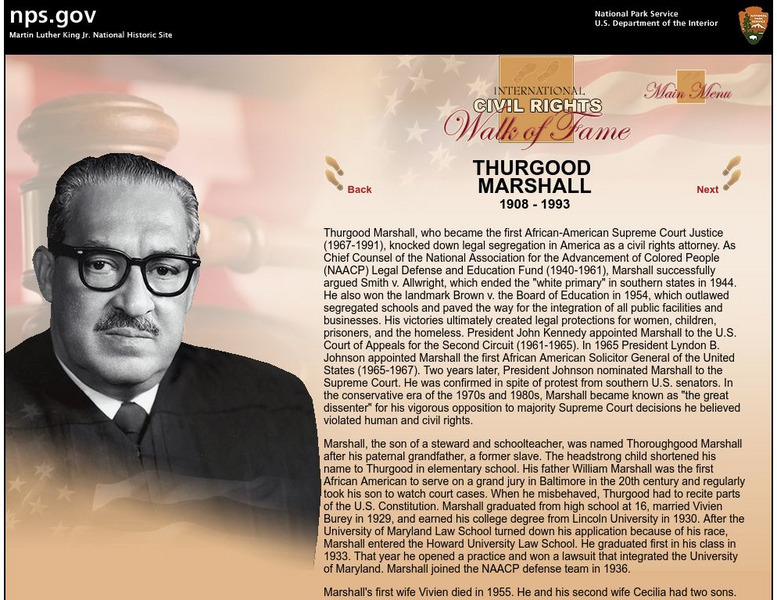
Curated OER
National Park Service: International Civil Rights Walk of Fame: Thurgood Marshall
This is an informative biography discussing the role Thurgood Marshall had in the Civil Rights Movement, particularly as a U.S. Supreme Court Justice.
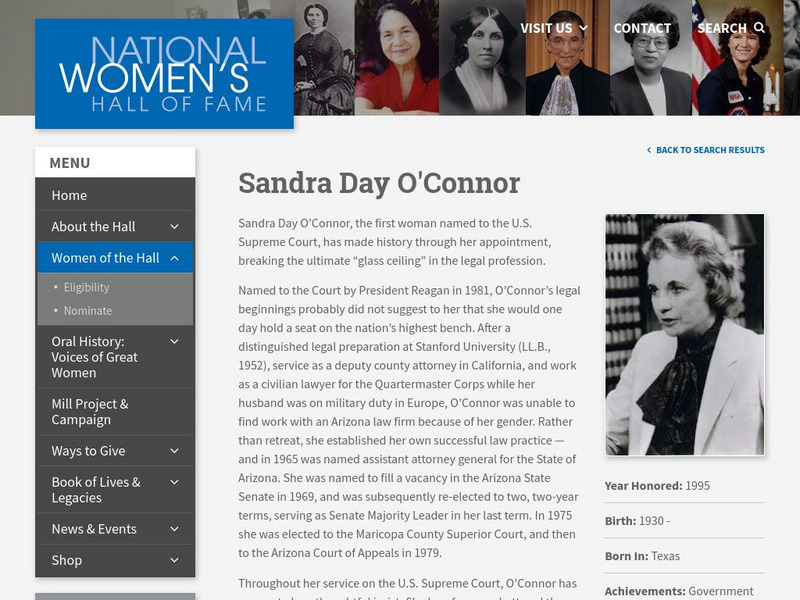
National Women's Hall of Fame
National Women's Hall of Fame: Sandra Day O'connor
The National Women's Hall of Fame provides a brief biographical sketch of the first woman to serve as a U.S. Supreme Court Justice.