Hi, what do you want to do?





Read Works
Read Works: Grade 2: Three Lesson Unit: Cause and Effect
[Free Registration/Login Required] A series of three lesson plans designed to teach students to identify effects, causes, and the relationship between them. Lessons are based on the books Chrysanthemum by Kevin Henkes, Why Do You Cry?:...
![Fcat Express: Teaching Strategies (Reading) [Pdf] Study Guide](https://statictemp.lp.lexp.cloud/images/attachment_defaults/resource/large/FPO-knovation.png "Fcat Express: Teaching Strategies (Reading) [Pdf] Study Guide")
University of South Florida
Fcat Express: Teaching Strategies (Reading) [Pdf]
Printable, fifty-five page PDF file of a staff development manual containing strategies for teaching reading. Includes chapters on vocabulary, main ideas and supporting details, author's purpose, chronological order, plot and conflict...
![Scholastic: So That's the Reason! [Pdf] Unknown Type](https://content.lessonplanet.com/knovation/original/32238-436f863b7c91b994bd9fe2e7c4a03769.jpg?1661264711 "Scholastic: So That's the Reason! [Pdf] Unknown Type")
Scholastic
Scholastic: So That's the Reason! [Pdf]
Simple, one-page printable worksheet to introduce your students to cause and effect. Gives one set example, and has space at the bottom to apply to any story you read.
Scholastic
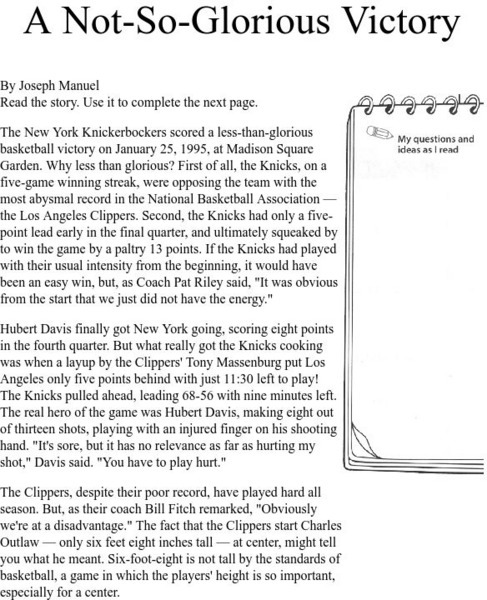
Scholastic: A Not So Glorious Victory
After reading "A Not-So-Glorious," Victory, which is included on this page, have your students practice identifying cause and effect using the printable worksheet.

ClassFlow
Class Flow: Herbie and Annabelle
[Free Registration/Login Required] This flipchart teaches the comprehension skill of cause and effect has web links to practice cause and effect, uses a word web to build background knowledge before reading the selection story and it...
University of South Florida
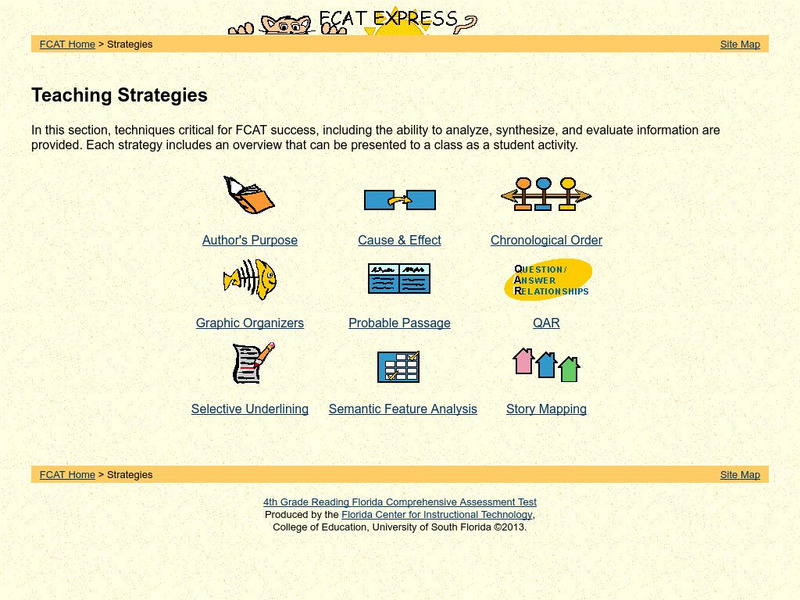
Fcat Reading Grade 4: Teaching Strategies
This is a great resource that concentrates strategies and student activities in one place in an easy to use format, and can be navigated easily. Find great examples of probable passage, selective underlining, and semantic feature...
TeachEngineering
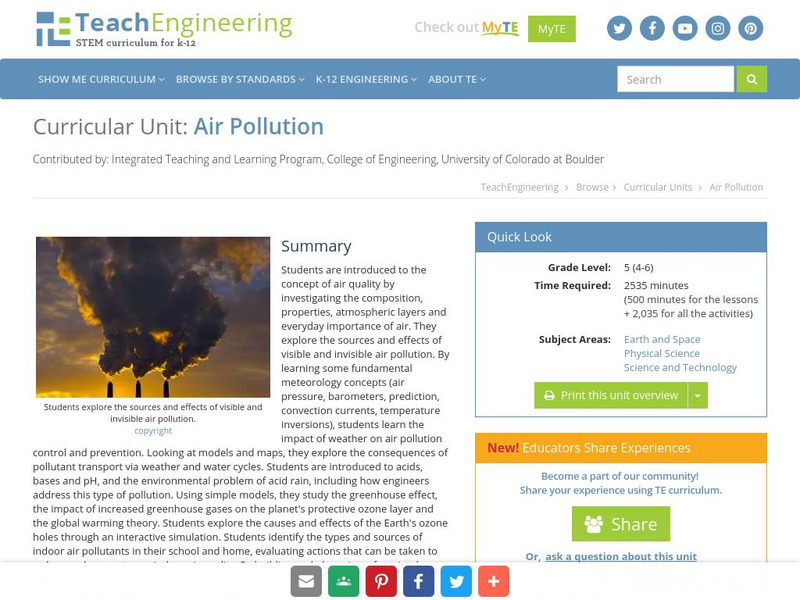
Teach Engineering: Air Pollution
Students are introduced to the concept of air quality by investigating the composition, properties, atmospheric layers and everyday importance of air. They explore the sources and effects of visible and invisible air pollution. By...

TeachEngineering
Teach Engineering: Environment
Through 10 lessons and more than 20 hands-on activities, students are introduced to the concept of an environment and the many interactions within it. As they learn about natural and human-made environments, as well as renewable and...
TeachEngineering
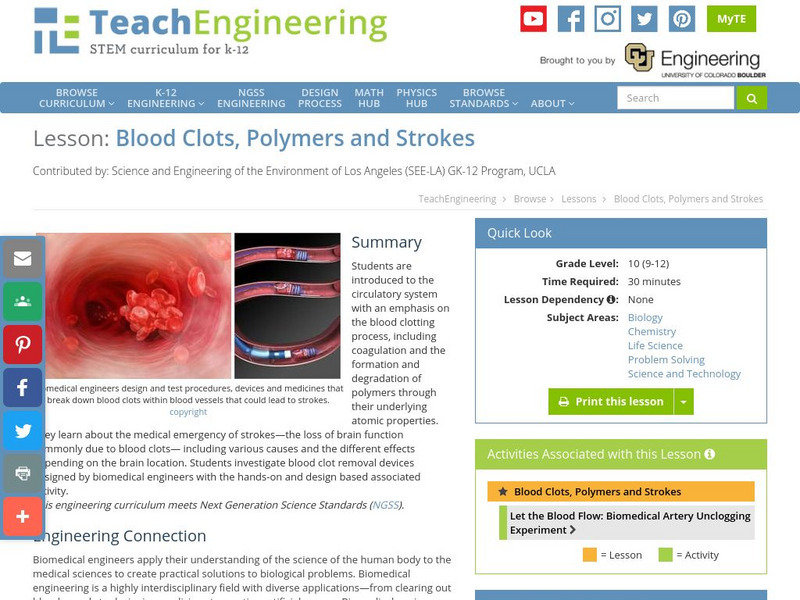
Teach Engineering: Blood Clots, Polymers and Strokes
Students are introduced to the circulatory system with an emphasis on the blood clotting process, including coagulation and the formation and degradation of polymers through their underlying atomic properties. They learn about the...

ReadWriteThink
Read Write Think: Sequence of Events Chart
A printable graphic organizer to help students sequence events and recognize cause and effect relationships within a story. Directions on how to use this graphic organizer as well as lists of teaching ideas and related resources are also...
Other
Nclr: The Essentials of Teaching Reading
Find out what the essentials are for teaching reading. This site provides vital information for teachers in developing the most successful reading program for their students.
Other
Educeri: Compare & Contrast the Overall Structure in Two or More Texts [Pdf]
A 10-page handout that explains clearly what text structure is and four different types, with accompanying examples. Different types are then presented along with two pieces of informational text and a modeled analysis, then two other...
TeachEngineering
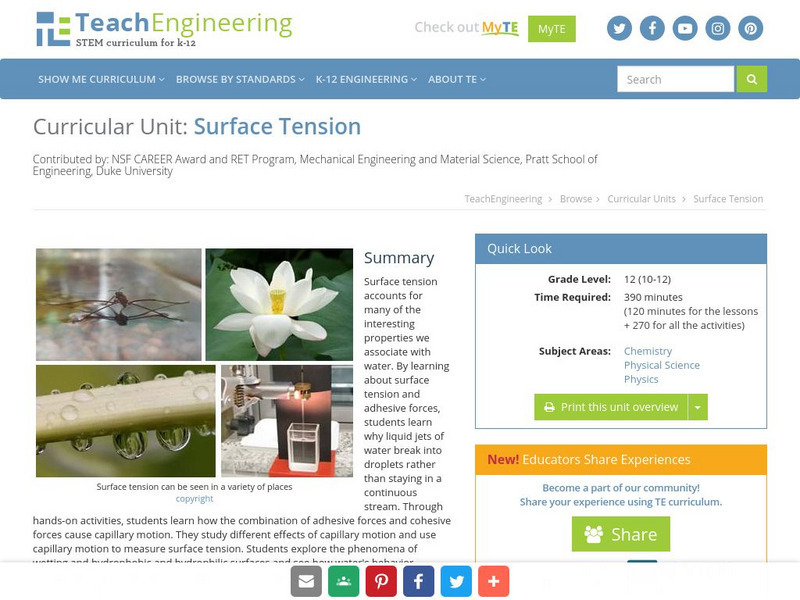
Teach Engineering: Surface Tension
Surface tension accounts for many of the interesting properties we associate with water. By learning about surface tension and adhesive forces, students learn why liquid jets of water break into droplets rather than staying in a...
TeachEngineering
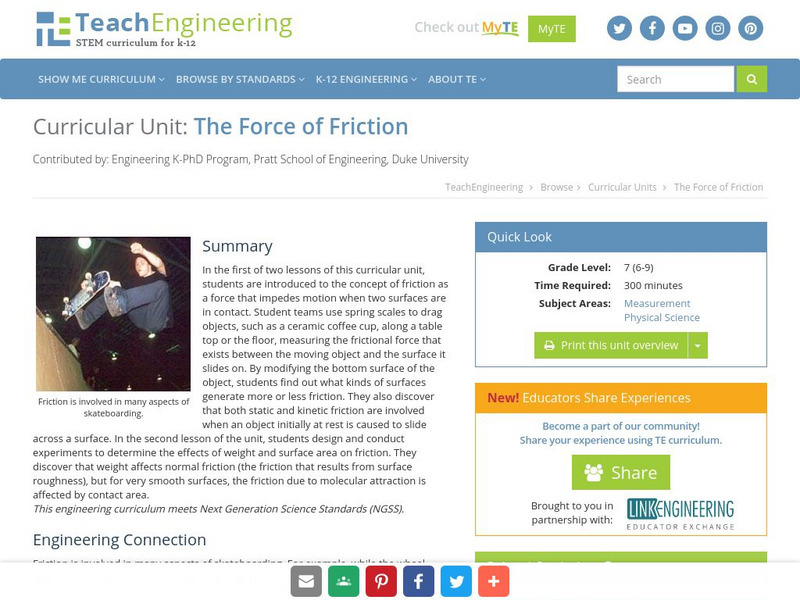
Teach Engineering: The Force of Friction
In the first of two lessons of this curricular unit, students are introduced to the concept of friction as a force that impedes motion when two surfaces are in contact. Student teams use spring scales to drag objects, such as a ceramic...
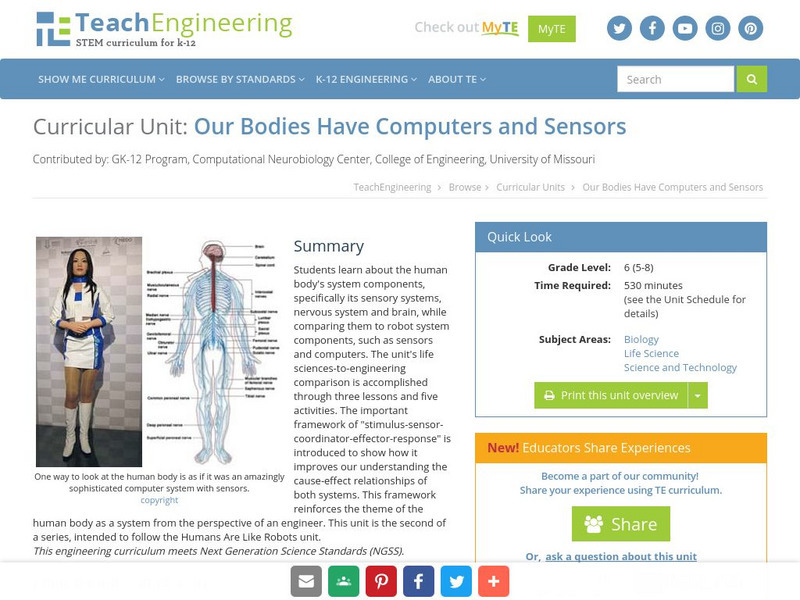
TeachEngineering
Teach Engineering: Our Bodies Have Computers and Sensors
Students learn about the human body's system components, specifically its sensory systems, nervous system and brain, while comparing them to robot system components, such as sensors and computers. The unit's life sciences-to-engineering...
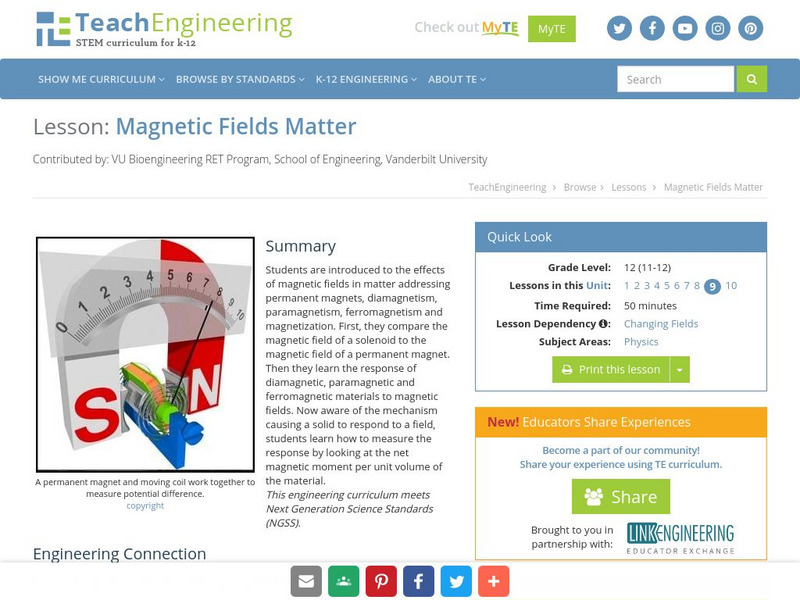
TeachEngineering
Teach Engineering: Magnetic Fields Matter
This instructional activity introduces students to the effects of magnetic fields in matter addressing permanent magnets, diamagnetism, paramagnetism, ferromagnetism, and magnetization. First students must compare the magnetic field of a...
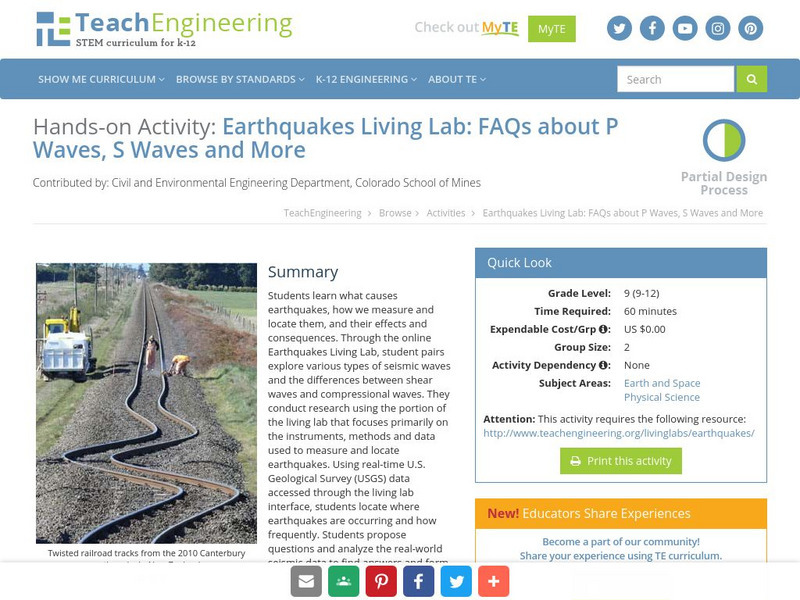
TeachEngineering
Teach Engineering: Earthquakes Living Lab: P Waves, S Waves and More
Students learn what causes earthquakes, how we measure and locate them, and their effects and consequences.
Other
Nsf International: Nsf Scrub Club
Keep yourself clean, kill bacteria, and stay healthy all year long by washing your hands (and under your fingernails) with warm soapy water. Play the "6 Steps Game" to learn how to properly clean your hands, meet the "villains" that...

ClassFlow
Class Flow: Conditionals
[Free Registration/Login Required] This flipchart teaches about conditionals (if, then, might, could, would) and their uses in deduction, speculation, and supposition. Students are asked to construct sentences that express possibilities,...