Hi, what do you want to do?





NOAA
Noaa: Freshwater
This site is designed to assist the educator in teaching concepts and processes related to freshwater environments and to increase stewardship of these important resources. There are links to resources regarding the Great Lakes...
TeachEngineering
Teach Engineering: Swim to and From the Sea!
Students are introduced to the basic biology behind Pacific salmon migration and the many engineered Columbia River dam structures that aid in their passage through the river's hydroelectric dams. Students apply what they learn about the...
TeachEngineering
Teach Engineering: Biodomes
Students explore the biosphere's environments and ecosystems, learning along the way about the plants, animals, resources and natural cycles of our planet. Over the course of lessons 2-6, students use their growing understanding of...
TeachEngineering
Teach Engineering: Solar System!
An introduction to our solar system: the planets, our Sun and our Moon. Students begin by learning the history and engineering of space travel. They make simple rockets to acquire a basic understanding Newton's third law of motion. They...
TeachEngineering
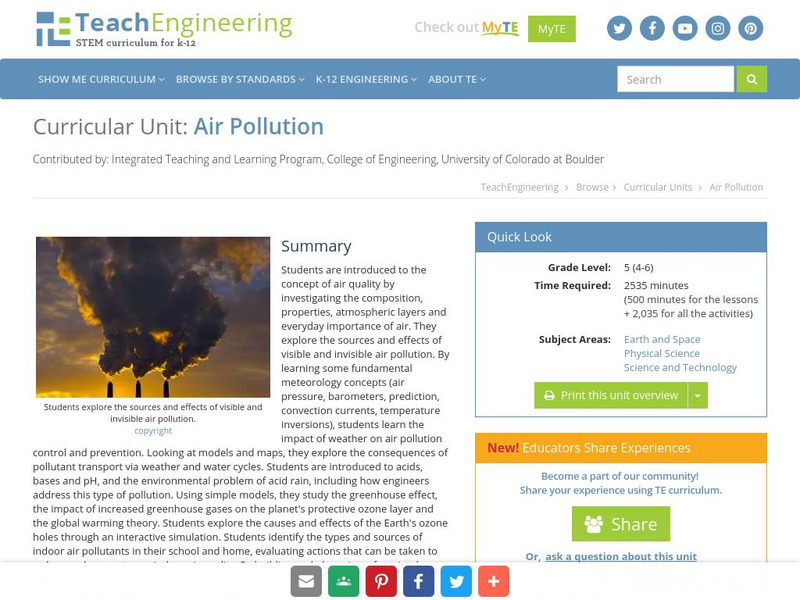
Teach Engineering: Air Pollution
Students are introduced to the concept of air quality by investigating the composition, properties, atmospheric layers and everyday importance of air. They explore the sources and effects of visible and invisible air pollution. By...
TeachEngineering
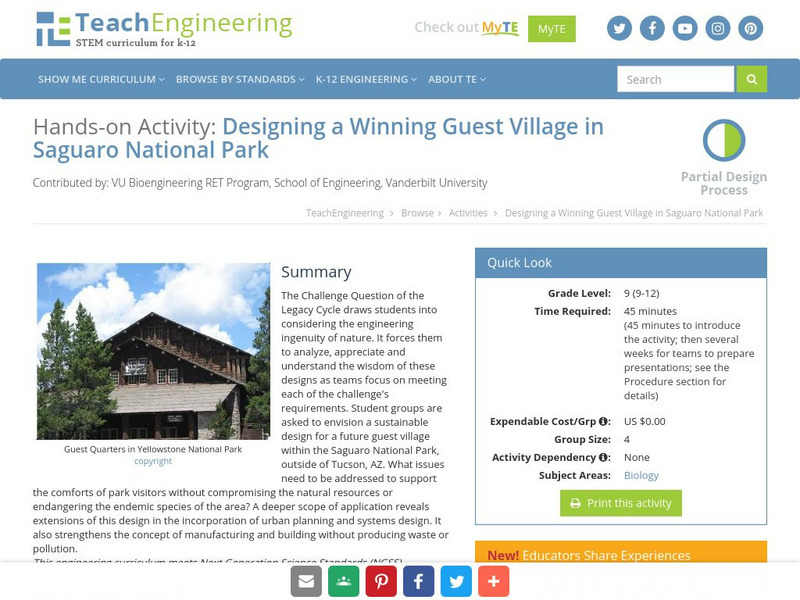
Teach Engineering: Designing a Winning Guest Village in the Saguaro National Park
The Challenge Question of the Legacy Cycle draws the student into considering the engineering ingenuity of nature. It will force him to analyze, appreciate and understand the wisdom of these designs as the student team focuses on meeting...
TeachEngineering
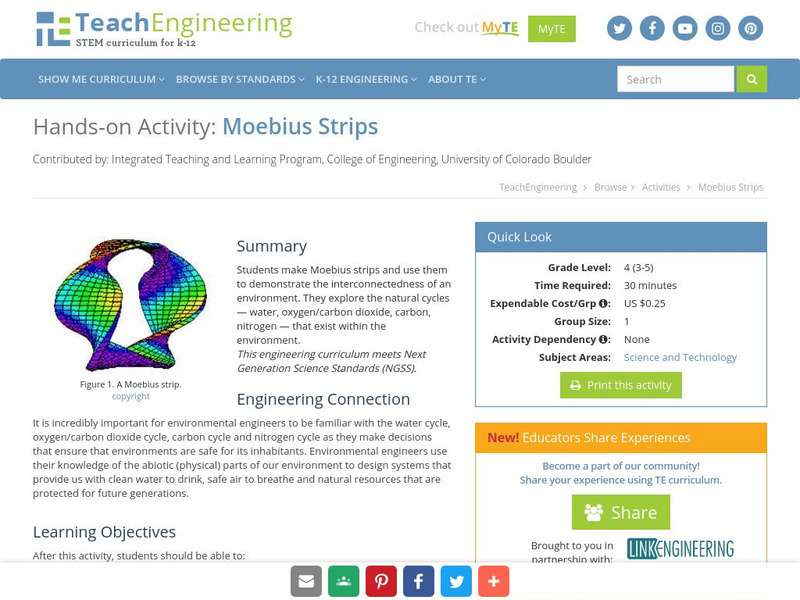
Teach Engineering: Moebius Strips
In this activity, students make Moebius strips and use them to demonstrate the interconnectedness of an environment. They will explore the natural cycles (water, oxygen/carbon dioxide, carbon, nitrogen) within the environment.
TeachEngineering
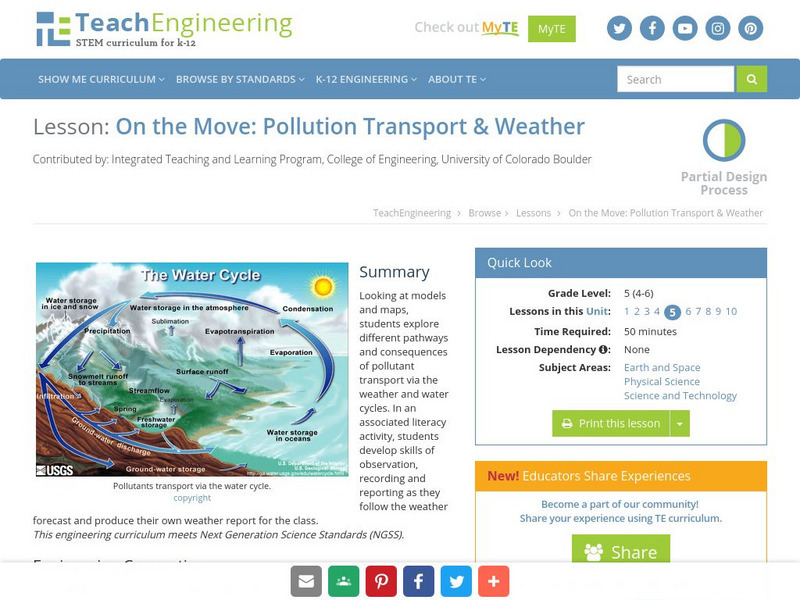
Teach Engineering: On the Move
Looking at models and maps, students explore different pathways and consequences of pollutant transport via the weather and water cycles. In an associated literacy activity, students develop skills of observation, recording and reporting...

TeachEngineering
Teach Engineering: Environment
Through 10 lessons and more than 20 hands-on activities, students are introduced to the concept of an environment and the many interactions within it. As they learn about natural and human-made environments, as well as renewable and...
TeachEngineering
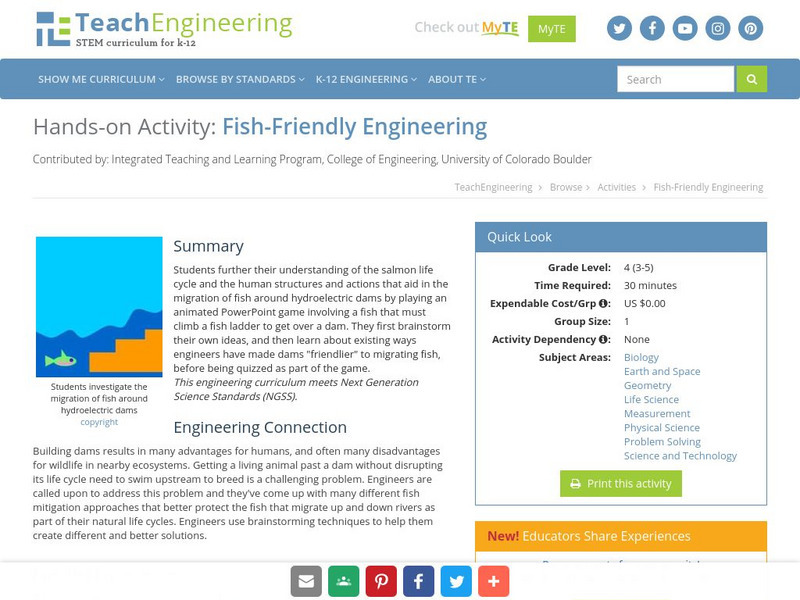
Teach Engineering: Fish Friendly Engineering
Students further their understanding of the salmon life cycle and the human structures and actions that aid in the migration of fish around hydroelectric dams by playing an animated PowerPoint game involving a fish that must climb a fish...
Science and Mathematics Initiative for Learning Enhancement (SMILE)
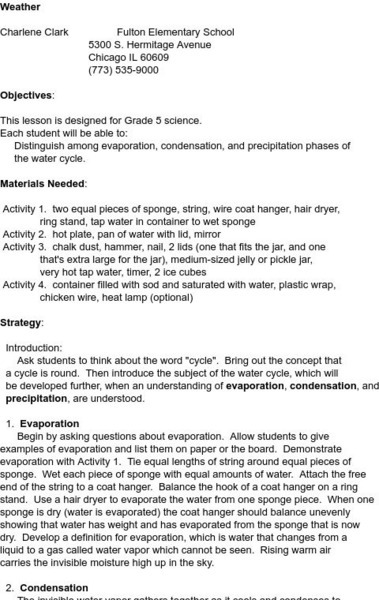
Smile: Weather
This lesson plan focuses on teaching students to distinguish among the evaporation, condensation,and precipitation phases of the water cycle.
TeachEngineering
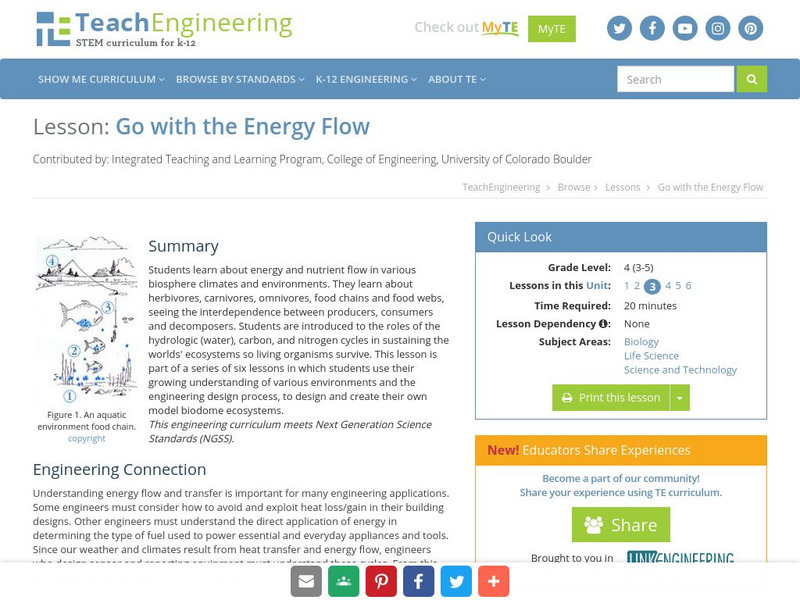
Teach Engineering: Go With the Energy Flow
Students learn about energy and nutrient flow in various biosphere climates and environments. They learn about herbivores, carnivores, omnivores, food chains and food webs, seeing the interdependence between producers, consumers and...
Scholastic
Scholastic Instructor: Seashore Science
Come and learn with this incredible seashore science resource. The content includes fun facts, experiments, reproducible activities, resources and more.

BioMan Biology
Bio Man Biology: Angry Aliens: Ecology
Teach aliens about ecology as you play this game, and review your own understanding in the process. Topics covered include levels of organization, ecological relationships, nutrition and energy, cycles (water, carbon, and nitrogen), and...
Scholastic
Scholastic: Where Do Rainy Days Come From?
Find out more about rainy days when you check out this resource, which features hands-on interactive activities, experiments, fun facts, and more.