Better Lesson
Better Lesson: Analyzing Text Complexity of Non Fiction Sources
This lesson will help students read and comprehend nonfiction, specifically biographies, through determining criteria for text complexity. Included is a PDF and Smart Notebook titled Determining Text Complexity, and an example of a...

Annenberg Foundation
Annenberg Learner: Analyzing Complex Text
During this lesson, students will use close reading strategies to analyze aspects of the setting in The Adventures of Huckleberry Finn by Mark Twain. [7:57] CCSS.ELA-Literacy.CCRA.R.10, RL.11-12.10a/b Text Complexity
ReadWriteThink
Read Write Think: Background for the Graphic Novel Persepolis: A Web Quest on Iran
This instructional activity focuses on students researching and learning about Iran's culture, society, and leadership before and after the 1979 Revolution in preparation for reading the graphic novel Persepolis. Students work in small...
AdLit
Ad lit.org: Seven Strategies to Teach Students Text Comprehension
Comprehension strategies are conscious plans - sets of steps that good readers use to make sense of text. Comprehension strategy instruction helps students become purposeful, active readers who are in control of their own reading...
AdLit
Ad lit.org: Key Literacy Component: Text Comprehension
Text comprehension allows readers to extract or construct meaning from the written word. Students who misread words or misinterpret their meanings are at a disadvantage. Proper instruction can boost students' skills in this key area.
Better Lesson
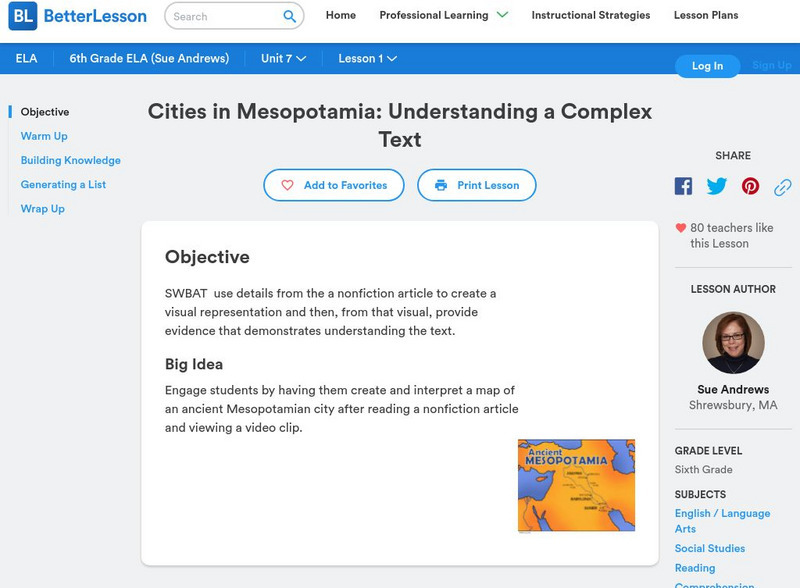
Better Lesson: Cities in Mesopotamia: Understanding a Complex Text
In this lesson, 6th graders use details from a nonfiction article to create a visual representation and then, from that visual, provide evidence that demonstrates their understanding of the text. Includes samples of student work and lots...

Other
The Wondering Minstrels
The Wondering Minstrels website provides a poem a day, complete with analysis, criticism, biographical information, literary anecdotes, trivia, and our own skewed sense of humor. RL.9-10.10a&b text complexity, RL.11-12.10a/b Text...
Reading Rockets
Reading Rockets: Building World Knowledge: Informational Text
Before, during, and after-reading ideas for introducing students to informational texts in the early-elementary grades in order to boost reading achievement through the upper-elementary grades.
Library of Congress
Loc: Teachers: Personal Stories and Primary Sources
Students will explore the value of personal stories and first-hand accounts when exploring history, in this case, the events of the early twentieth century, which included World War I and the Great Depression. Through this five-unit...
Better Lesson
Better Lesson: Speaking, Listening and Writing Compound Contrasting Sentences
Students will be answering text-dependent questions in which they will have to describe the differences between the different characters, settings, and major events in our stories using complex contrasting sentences. The students will...
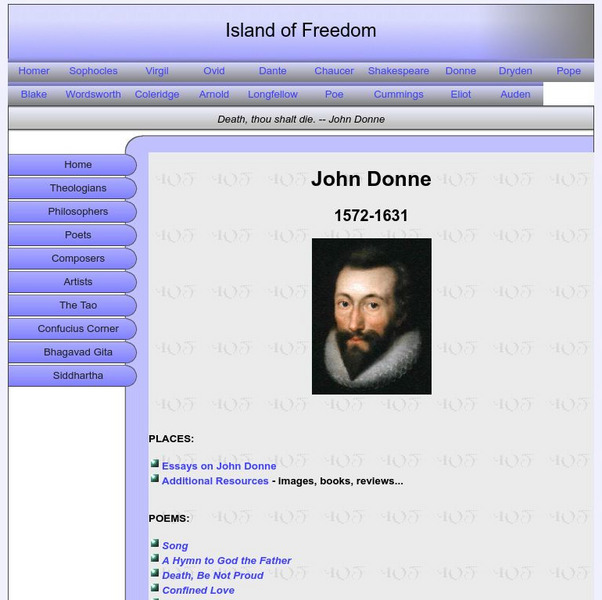
Robert H. Sarkissian
Island of Freedom: John Donne
A nice, easy-to-read page with info on John Donne. Gives good insight into the metaphysical style of poetry with links to several of his poems. RL.9-10.10a&b text complexity
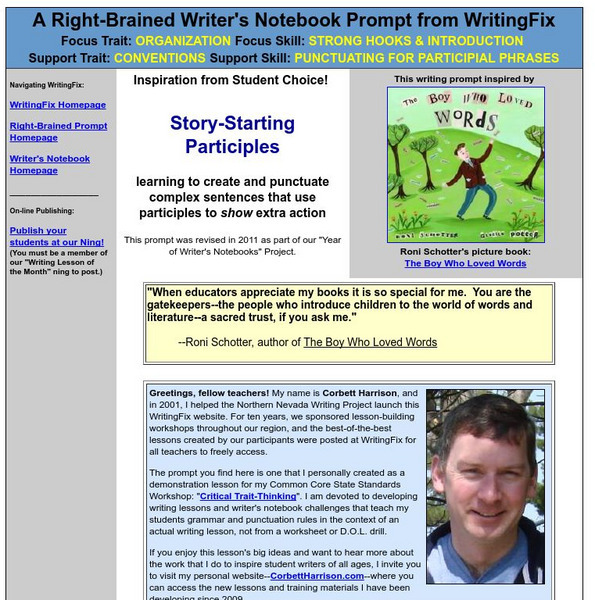
Writing Fix
Writing Fix: Story Starting Participles
In this activity, Roni Schotter's picture book entitled The Boy Who Loved Words is used as the mentor text. This Language Arts Common Core Standards-aligned activity pre-writing task engages students in writing a collection of ideas of...

Thinkport Education
Thinkport: Read Like This a Strategy for Close Reading of Literature
Learn and practice close reading strategies to help increase your understanding of how to approach challenging and complex texts.
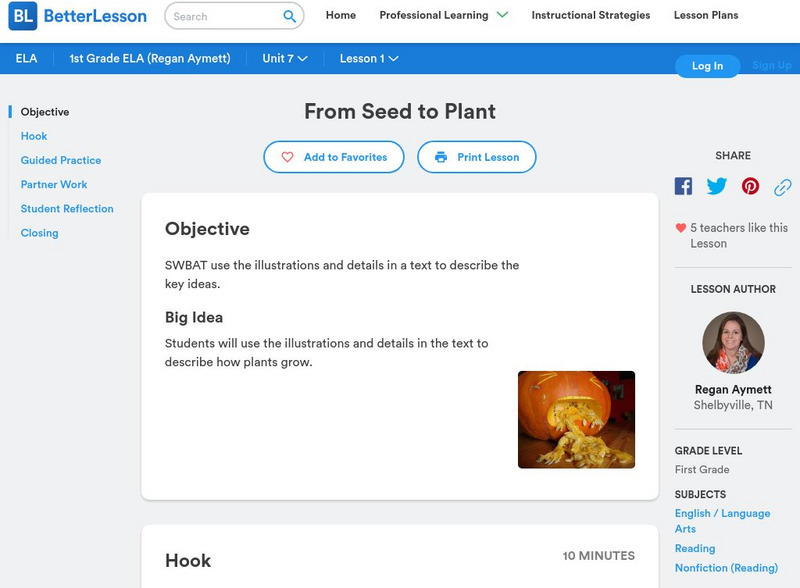
Better Lesson
Better Lesson: From Seed to Plant
Students will use the illustrations and details in the text to describe how plants grow. This instructional activity uses a complex text to allow students to analyze the pictures in From Seed to Plant and From Seed to Pumpkin. Included...
Other
Reading Quest: Making Sense of Social Studies
Teaching students to read well in areas other than language arts requires teaching and reinforcing the kinds of reading strategies taught here. There are 27 strategies, ranging from brainstorming to word mapping. The site includes PDF...
Other
Grays Harbor College: Writing Essays: Four Tips
This resource explores four tips for writers: "Center Your Thinking," "Organize Your Thinking," "Specify Your Thoughts," and "Present Your Thoughts Clearly." The information is presented in an easy-to-follow outline with examples given...
AdLit
Ad lit.org: For Middle Schoolers: Activities to Build College Level Reading Skills
ACT has developed this list of activities to help middle-school students improve their reading ability. Parents and educators can use this information to help ensure that these students are on target for college and career readiness.
Lumen Learning
Lumen: Rhetorical Reading: Academic Reading Strategies
This lesson focuses on reading strategies including understanding your purpose, and before, during, and after reading strategies.
Curated OER
Mc Graw Hill: Craft and Structure: Determine the Meaning of Words and Phrases
Learn how to use context clues to determine the meaning of an unfamiliar word in a Social Studies passage.
ReadWriteThink
Read Write Think: Teaching Poetry Through Riddles
Excellent teaching resource that attempts to teach poetic concepts to middle schoolers by using riddles. Discusses riddles' use of metaphor, simile, and imagery, and relates these concepts to the students' understanding of poetry....
ReadWriteThink
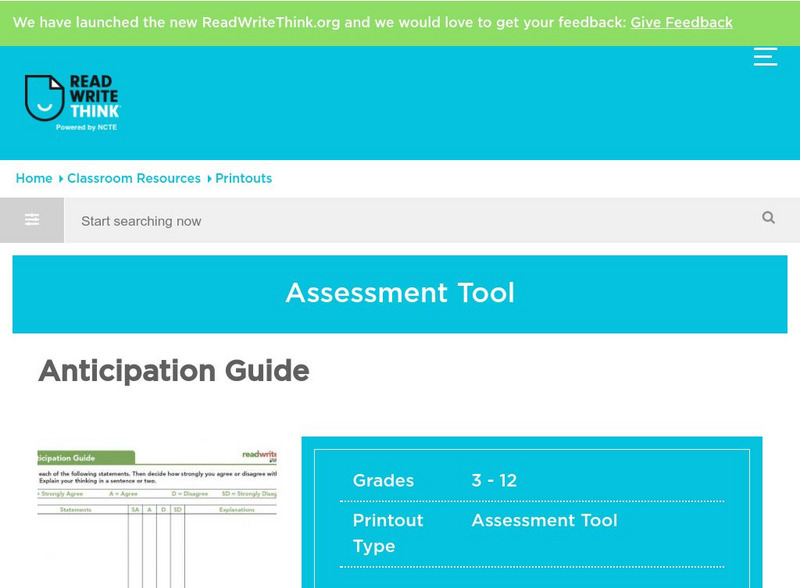
Read Write Think: Anticipation Guide
Anticipating is an effective reading strategy for readers of all ages. Utilize this template and graphic organizer to help your students become better readers.
AdLit
Ad lit.org: Create Reading Accountability
Engaged, accountable reading requires students to interpret, and respond, often creatively. This article suggests several personalized ways to hold students accountable for their reading.
National Humanities Center
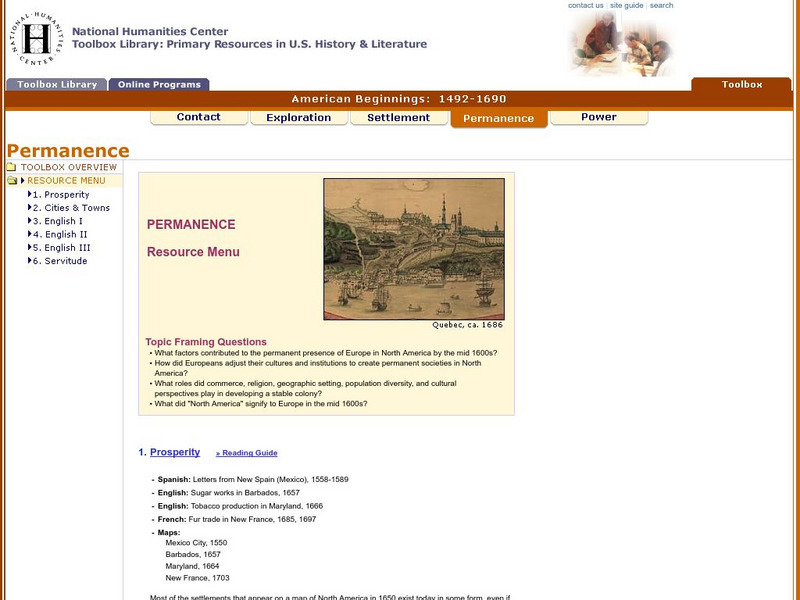
National Humanities Center: Toolbox Library: Permanence, American Beginnings: 1492 1690
Forty-two primary sources-historical documents, literary texts, and visual images-that explore the complex and interrelated factors that led to a permanent European presence in the New World.