Hi, what do you want to do?






Khan Academy
Khan Academy: Quiz: How Did the First Humans Live?
15 question quiz on the topic of the evolution of humans and how the first humans lived.

Khan Academy
Khan Academy: Gallery: How Did the First Humans Live?
Follow the human migration with this gallery that allows you to observe how our ancestors lived and gathered food.

Khan Academy
Khan Academy: Stepanova, the Results of the First Five Year Plan
Have you ever wondered what came before Photoshop? After the First World War, artists in Germany and the Soviet Union began to experiment with photomontage, the process of making a composite image by juxtaposing or mounting two or more...
Other
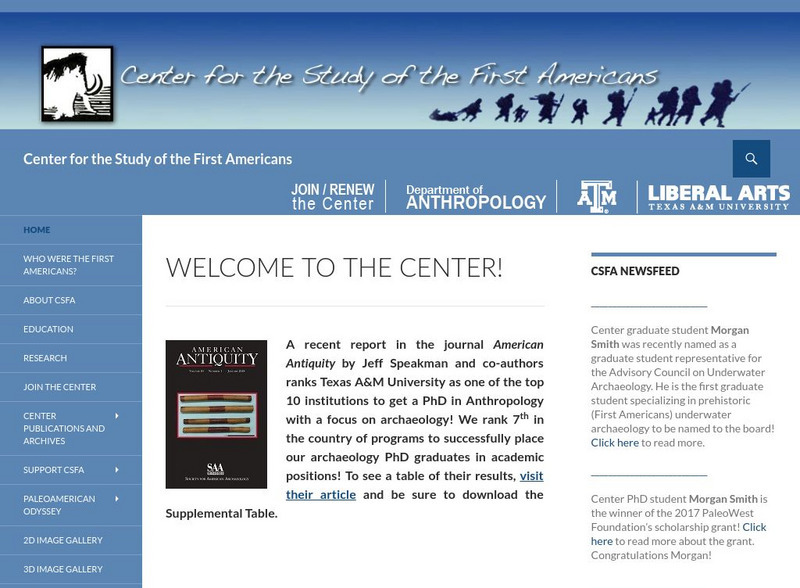
Center for the Study of the First Americans
This institute attempts to provide answers to the questions: when did the first people enter the Americas, who were the first immigrants, where did they come from, and how did they get here?

National Health Museum
Access Excellence: The First Steps of Human Vision
Describes the contributions of scientists over hundreds of years leading to our current understanding of the eye and vision.
Other
Council for Economic Education: The Neolithic Agricultural Revolution [Pdf]
This source includes general information and the chronology of the Neolithic Agricultural Revolution, or the time of development of the first human communities. After learning about the revolution, read a brief short-story about a...

Khan Academy
Khan Academy: Guaman Poma and the First New Chronicle and Good Government
This letter written by Guaman Poma is the most famous manuscript from South America dated to this time period in part because it is so comprehensive and long, but also because of its many illustrations. View pictures of the illustrations...

Khan Academy
Khan Academy: The Intolerable Acts and the First Continental Congress
An overview of the American colonists response to the Intolerable Acts and how it began to unify the colonists.

Khan Academy
Khan Academy: Activity: Human Migration Patterns
Use this activity to figure out where the first humans lived. This activity requires students to read clues and use their understanding of the clues to create a map to give them a visual representation of early humans movements.

Khan Academy
Khan Academy: Terracotta Warriors From Mausoleum of First Qin Emperor of China
The underground terracotta army found in the burial complex of Qin Shihuang reveals much about an ancient way of life. We gain a window of insight to the First Emperor's worldview and enduring influence.
University of Groningen
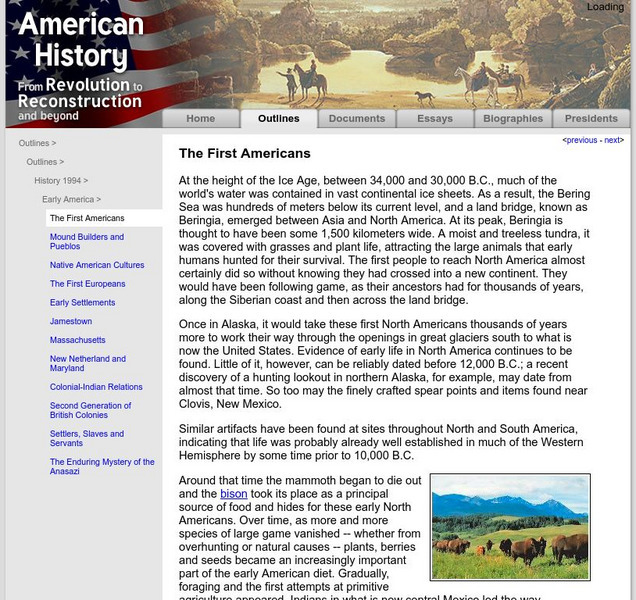
American History: Outlines: Early America: The First Americans
Gives an overview of the timeline of humans establishing themselves in the Americas, starting with the crossing of the Bering Sea land bridge some time before 12,000 B.C. Archaeological evidence shows humans moving south and eventually...

Independence Hall Association
U.s. History: George Washington: The First Administration
Read about George Washington's presidency. See why his role was so important in setting precedents to be followed by future chief executives. Find out about some of the warts in his personality too, all of which made him more human.
Smithsonian Institution
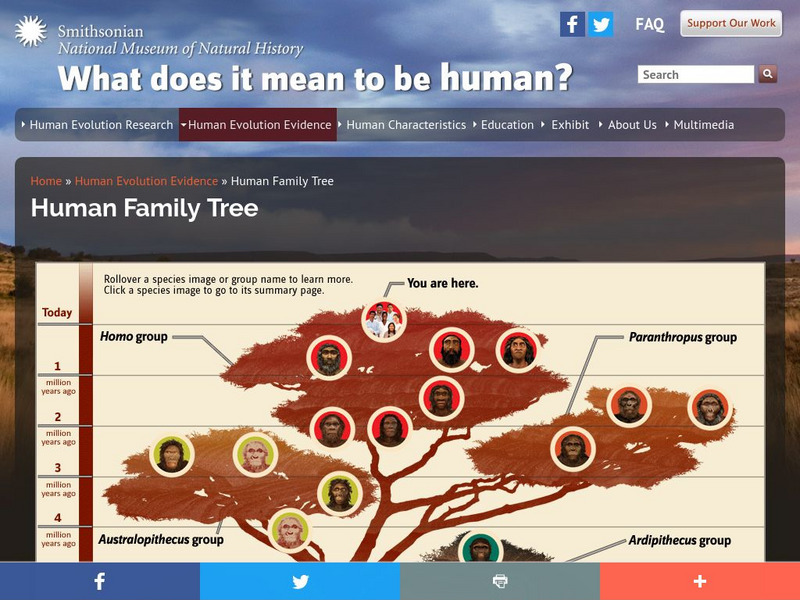
National Museum of Natural History: Human Origins: Human Family Tree
Find the human ancestor you are interested in and click on it either in the timeline or the list below for more details. Each fossil or reconstruction pictured includes links to more details about it.
Knowledge Share
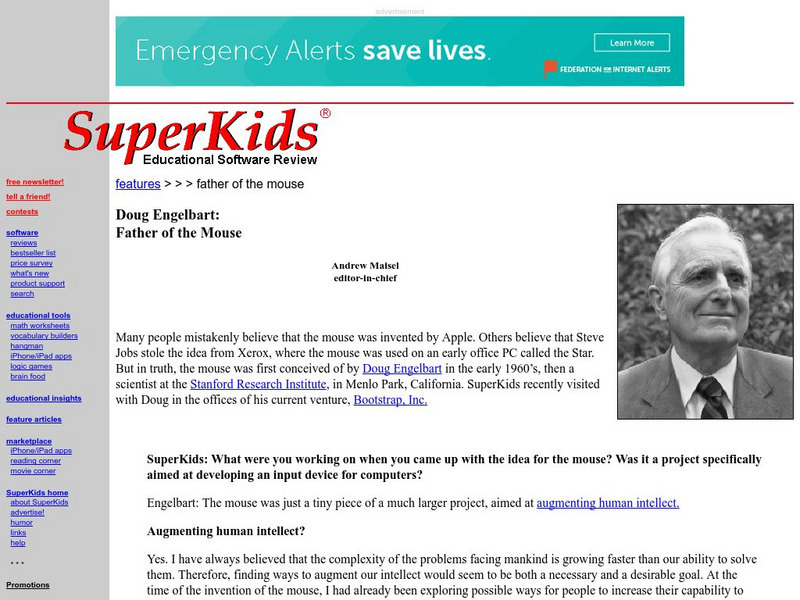
Super Kids: Doug Engelbart: Father of the Mouse
An informative article that presents an interview with Douglas Engelbart. Includes information on inventing the mouse, augmenting human intellect, and a photograph of the "first" mouse.
National Endowment for the Humanities
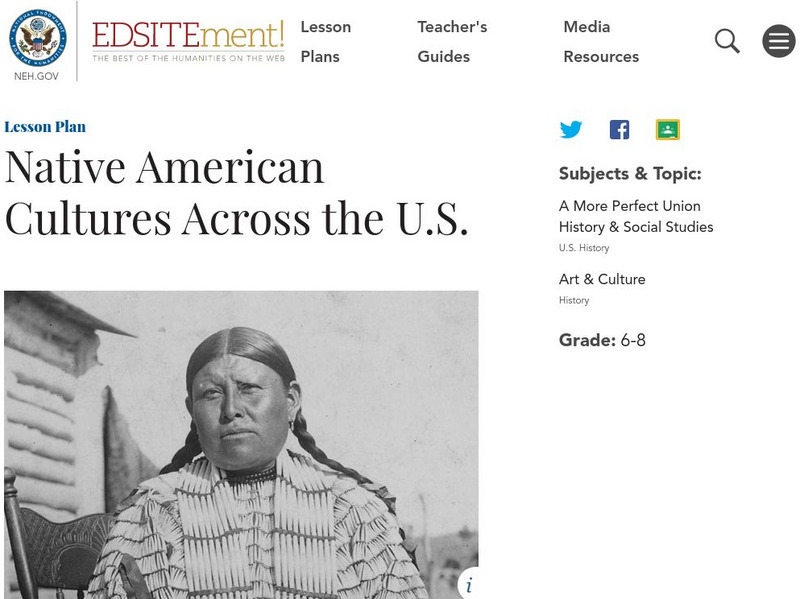
Neh: Edsit Ement: Native American Cultures Across the United States
Learners explore different aspects of the cultures of the First Americans in this lesson plan. Stereotypes are often associated with Native Americans through movies and in the context of the Thanksgiving holiday. Specific information and...
Other
Libcom: Climate, Class, and the Neolithic Revolution
This is the first in a series of articles about food under global warming. This article takes a long view of the relationship between climate, agriculture, and class society.
University of Chicago
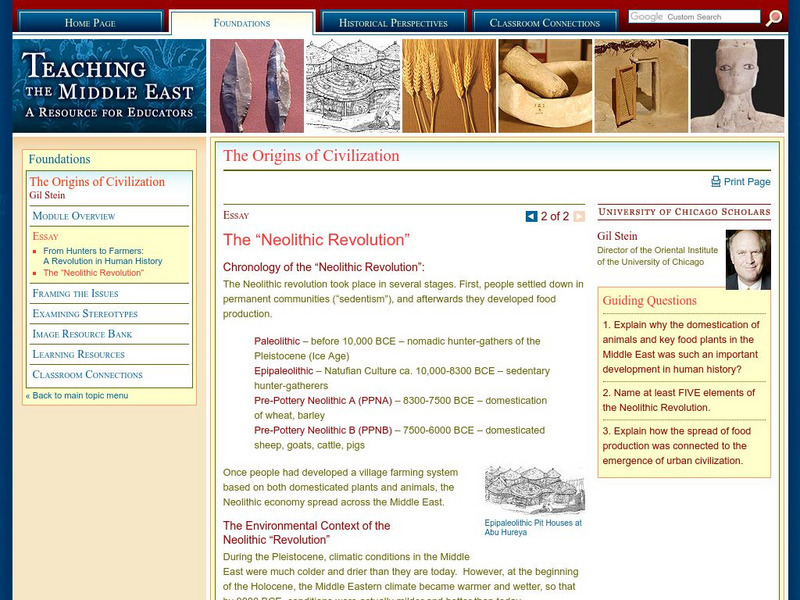
Teach the Middle East: The Neolithic Revolution
In this article you will learn about the chronology of the Neolithic Revolution. Stages include the Paleolithic age, a time of nomadic hunter-gatherers roamed the globe and the Epipaleolithic age, when sedentary hunter-gatherers...

Khan Academy
Khan Academy: Activity: Social Status, Power, and Human Burials
This activity provides you with an opportunity to start thinking about the impact that farming can have on the way humans live and relate to each other. It will also allow you to think about the kinds of questions archaeologists and...
Smithsonian Institution
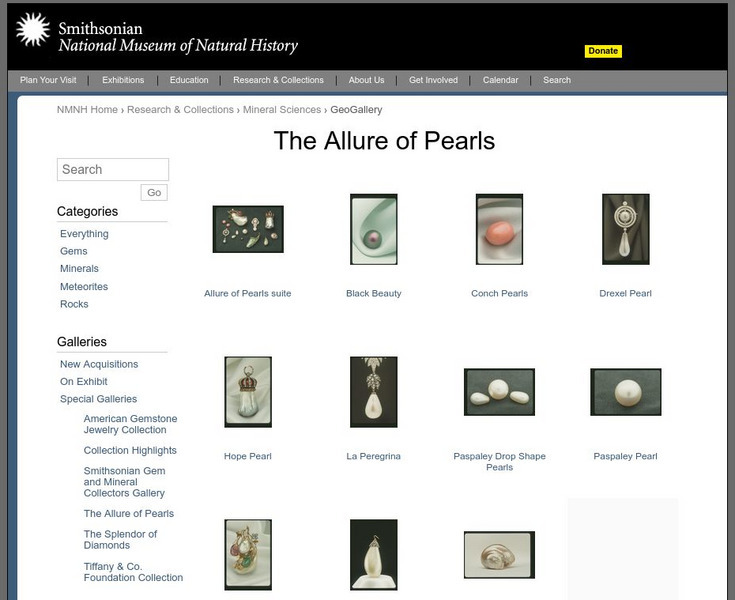
National Museum of Natural History: The Allure of Pearls
Exhibition of some of the first known gems to early humans, this collection of pearls includes several world famous precious stones.

Khan Academy
Khan Academy: Us History: 1754 1800: The Presidency of George Washington
As the first president of the United States, George Washington set several important precedents for the federal government.

Khan Academy
Khan Academy: Us History: 1754 1800: The Bill of Rights
The first ten amendments to the US Constitution guarantee citizens' essential freedoms and rights.

Khan Academy
Khan Academy: Us History: 1945 1980: The Korean War
Learn about the first hot war in the Cold War: Korea.

Khan Academy
Khan Academy: Us History: 1800 1848: Women's Rights and the Seneca Falls Convent
The first women's rights movement advocated equal rights for white women by leveraging abolitionist and Second Great Awakening sentiment.

Khan Academy
Khan Academy: Native American Culture of the Northeast
Hopewellian culture dominated the Northeast region from 200 BCE to 500 CE, where Native American groups began large-scale three-sister farming. Read more about these tribes and find out why many historians argue that the Iroquois League...