Hi, what do you want to do?






Library of Congress
Loc: Bound for Glory
A fascinating look at American life from 1939 to 1943 through photographs. The buildings, cars, clothing, and stores are very different from today. This is an excellent way to get a feel for the turn of the decade -- from the Depression...
Independence Hall Association
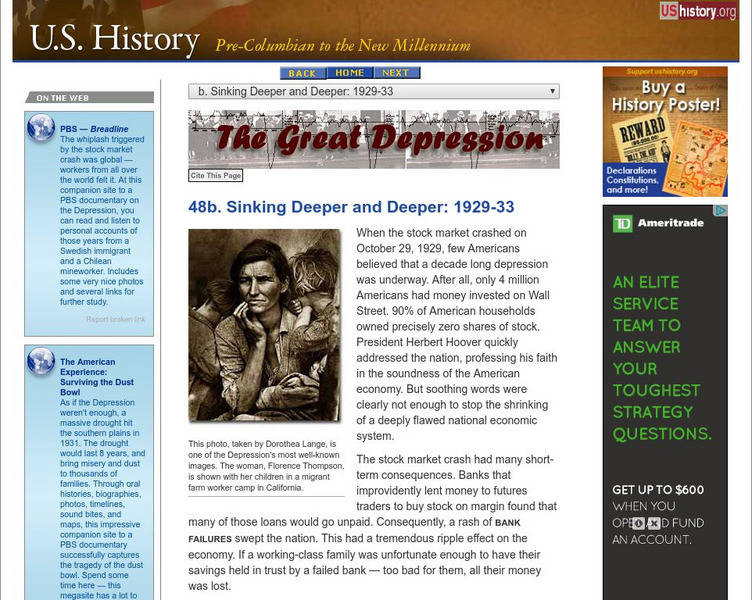
U.s. History: Sinking Deeper and Deeper
Read about the creeping descent into depression in the United States upon the crash of the stock market. Find out how the economy collapsed, and how that affected employment and the lives of millions.
PBS
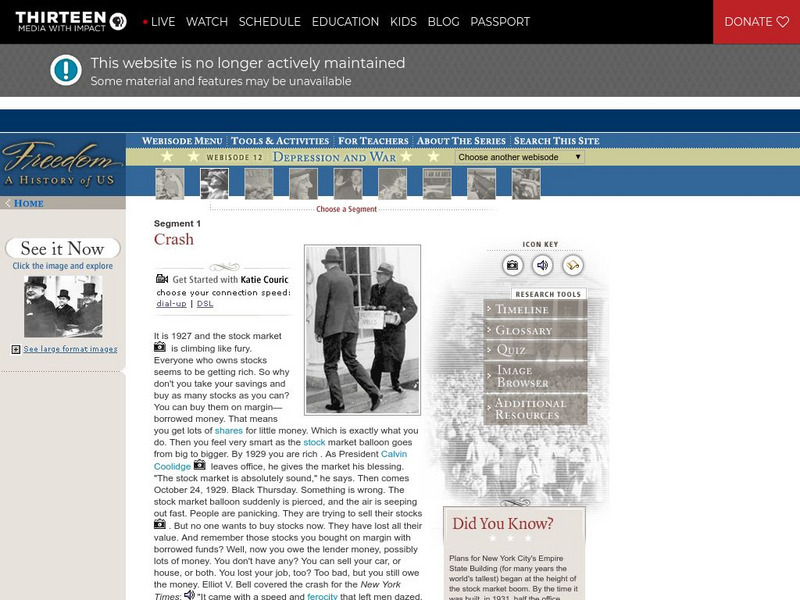
Wnet: Thirteen: Freedom: A History of Us: Crash
From the extensive and very approachable series, Freedom: A History of US, based on the books by Joy Hakim, read about the stock market crash in 1929 and its ramifications.
Digital History
Digital History: Mexican Americans
Read about the terrible treatment of Mexican American citizens and immigrants during the Hoover presidency. See how they received some help with the New Deal.
Flow of History
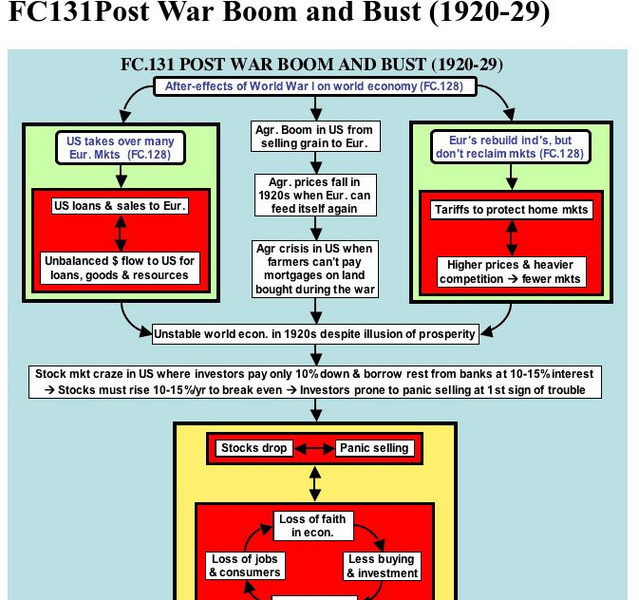
Flow of History: Post War Boom and Bust
A great graphic and explanatory text that give a succinct description of the boom and bust cycle and resulting problems in the 1920s.
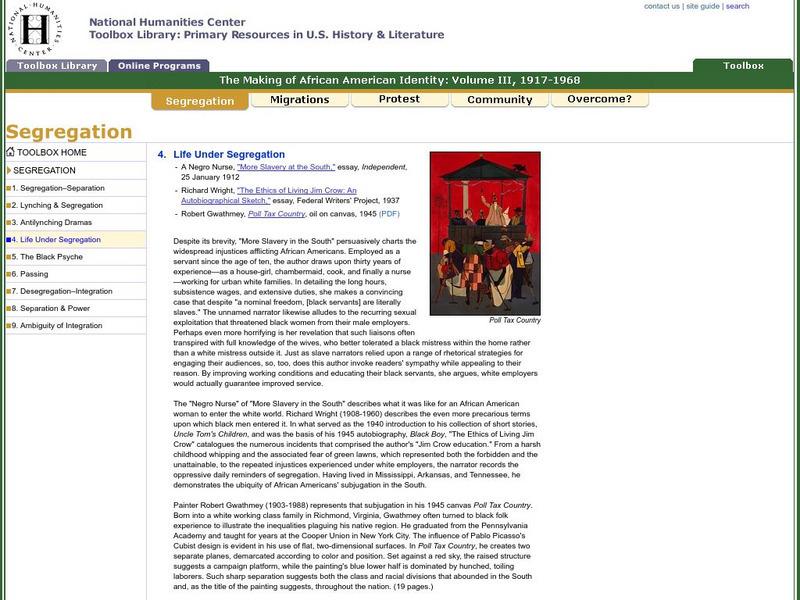
National Humanities Center
National Humanities Center: Toolbox Library: Life Under Segregation: Making of African American Identity: V. 3
Memoirs and a painting illustrating African American life under segregation. These resources help describe what it was like for an African American man or woman to enter the white world.
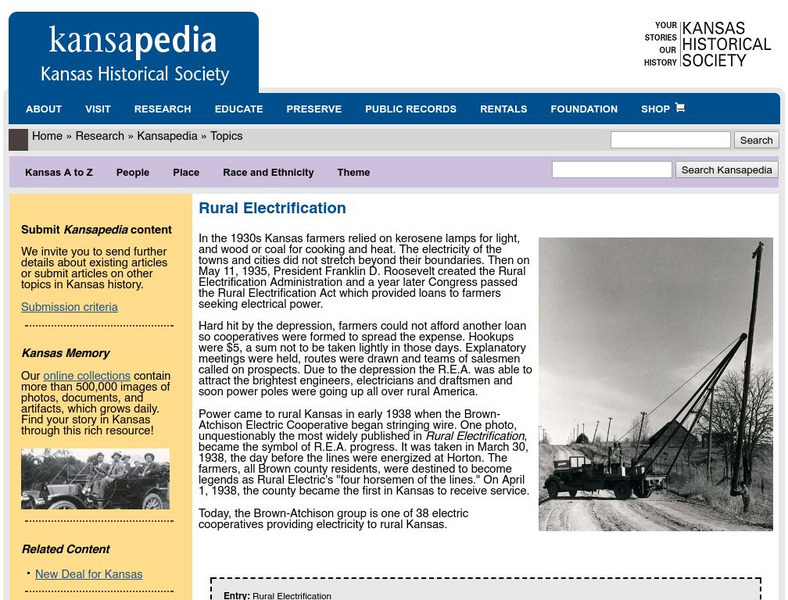
Kansas Historical Society
Kansapedia: Rural Electrification
As part of Franklin Roosevelt's New Deal was the expansion of electric lines across rural America. This article explains why it was important to Kansas farmers and how they could afford to hook up to the grid.
Digital History
Digital History: Charles Ponzi
The stock market crash on October 29, 1929, was the culmination of fraudulent practices of many forms in the 1920s. Read about Charles Ponzi and his schemes to make money, stock swindles, and stock speculation.
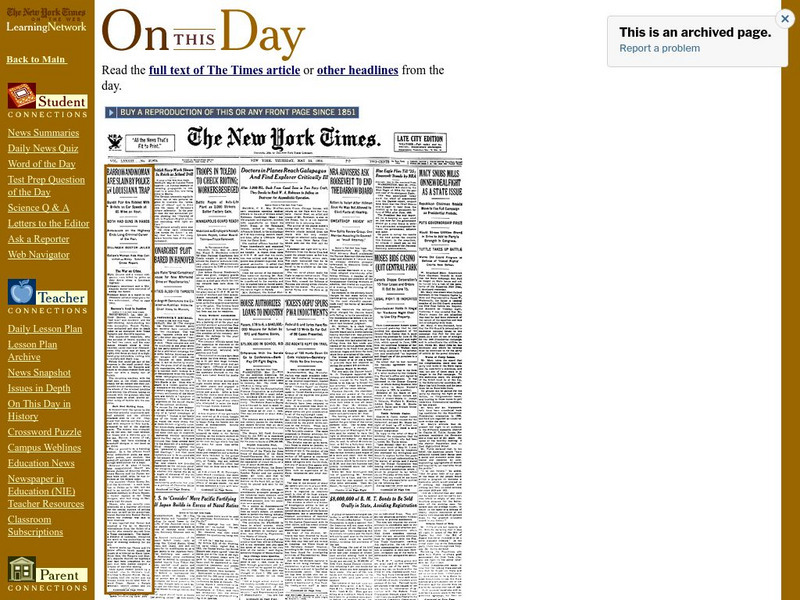
New York Times
New York Times: On This Day: Barrow and Woman Are Slain by Police in Louisana Trap
This article takes readers back to the day of Clyde Barrow and Bonnie Parker's famous capture in a small Louisiana town. The article from the 1934 archives is written in harrowing "old-time" journalistic detail.
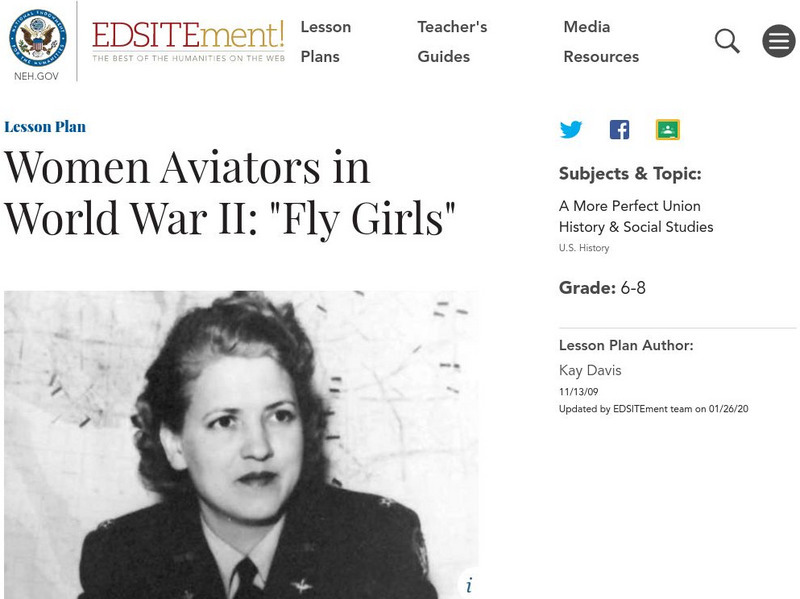
National Endowment for the Humanities
Neh: Edsit Ement: Women Aviators in World War Ii: "Fly Girls"
This lesson plan explores the contributions of the Women Airforce Service Pilots (WASPs) during World War II, and their aviation legacy. They will examine portrayals of women in World War II posters (and newsreels) and compare and...
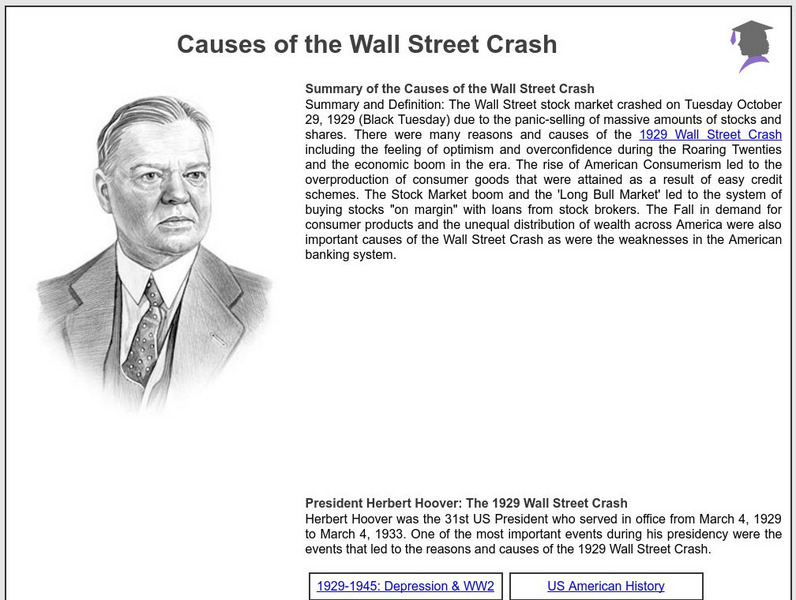
Siteseen
Siteseen: American Historama: Causes of the Wall Street Crash
Discussion of the causes and effects of the 1929 Wall Street Crash.
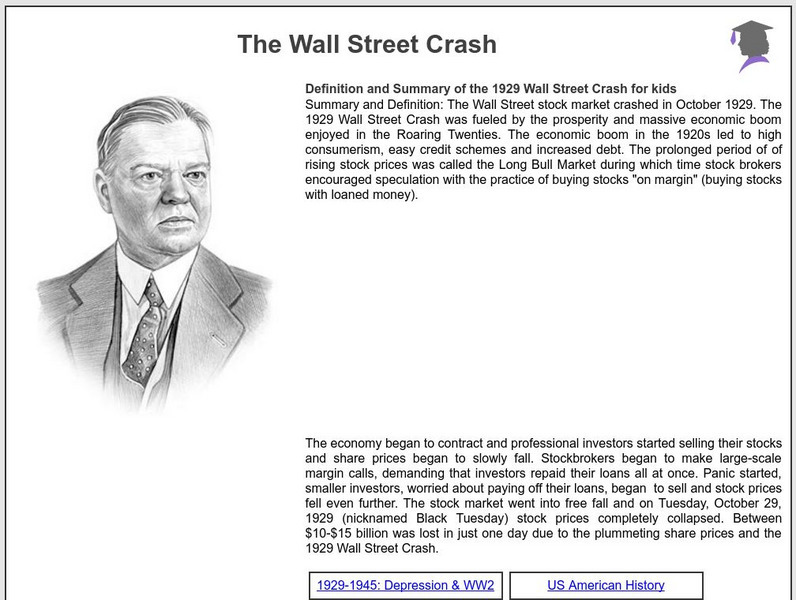
Siteseen
Siteseen: American Historama: The Wall Street Crash
Features interesting facts and information on the story of the history and events in the 1929 Wall Street Crash and Black Tuesday.
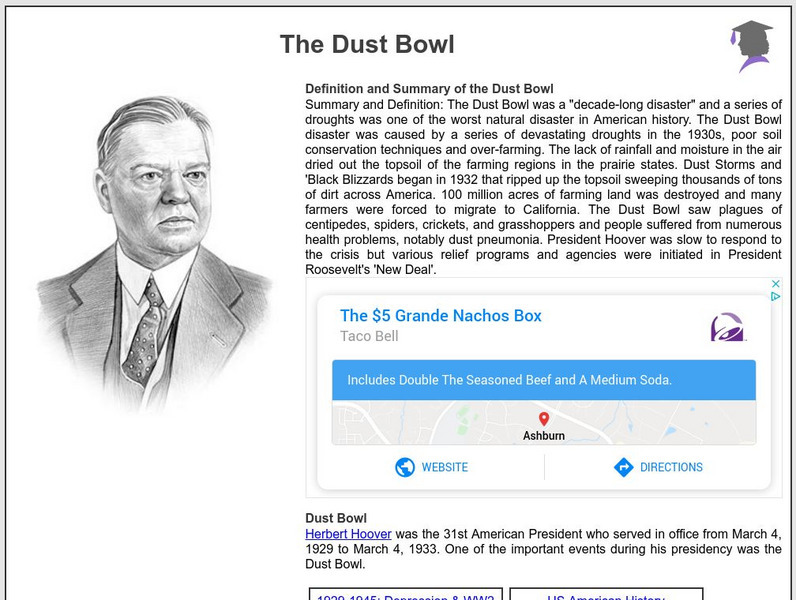
Siteseen
Siteseen: American Historama: The Dust Bowl
Discover the causes, effects, the Black Blizzards, and the response to the Dust Bowl.

Khan Academy
Khan Academy: The Keynesian Perspective on Market Forces
They Keynesian economic perspective argues for government intervention in certain cases, but market forces are still valuable.
Other
The President: Herbert Hoover
Excerpt from the book, "Washington Merry-Go-Round" published in 1931 discusses why Hoover failed as a president and the events following the Stock Market Crash of 1929.

Library of Congress
Loc: Teachers: Out of the Dust: Visions of Dust Bowl History
The Dust Bowl experience is brought to life through historical photos and Karen Hesse's award-winning "Our of the Dust", a historical fiction depicting a child's life during this time in American history.

Country Studies US
Country Studies: United States History: The Second New Deal
This site describes how as a result of mounting criticisms and a need for more economic relief and recovery, FDR introduced another series of programs, known as the Second New Deal, aimed at fighting unemployment and poverty and...
Encyclopedia Britannica
Encyclopedia Britannica: Britannica Kids: Women Who Changed the World: Eleanor Roosevelt
Encyclopedia Britannica provides a biography of Eleanor Roosevelt, the First Lady who was also a noted writer, diplomat, and humanitarian. Additional content includes a video clip of Roosevelt promoting the National Youth Administration...
Indiana University
Wpa Exhibit Project: The Works Projects Administration in Indiana
Although this site concerns itself with the WPA in Indiana, the information provides a good overall look at the Works Progress Administration in the rest of country during the New Deal era.
Texas State Library and Archives Commission
Texas State Library and Archives Commission: Aftermath: African American Women and the Vote
Though the suffrage movement failed to exclude African-American women, and many obstacles came in the way of their voting (e.g., poll taxes, literacy tests, etc.), "African-American women were not strangers to community activism." Learn...
University of Washington
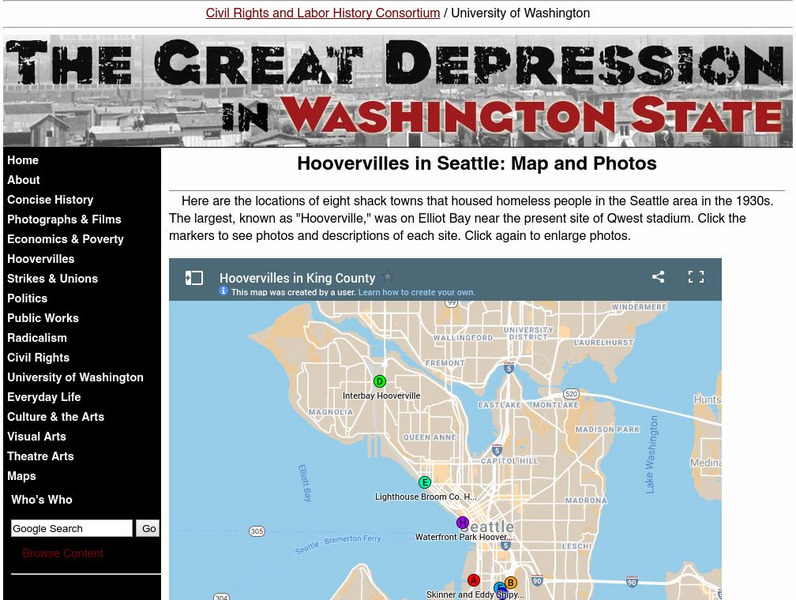
University of Washington: Hoovervilles in Seattle: Map and Photos
Shack towns, known as Hoovervilles, housed the homeless during the Great Depression. Use the following pictures and map to visualize what these Hoovervilles looked like and where they were located throughout the state of Washington.
Other
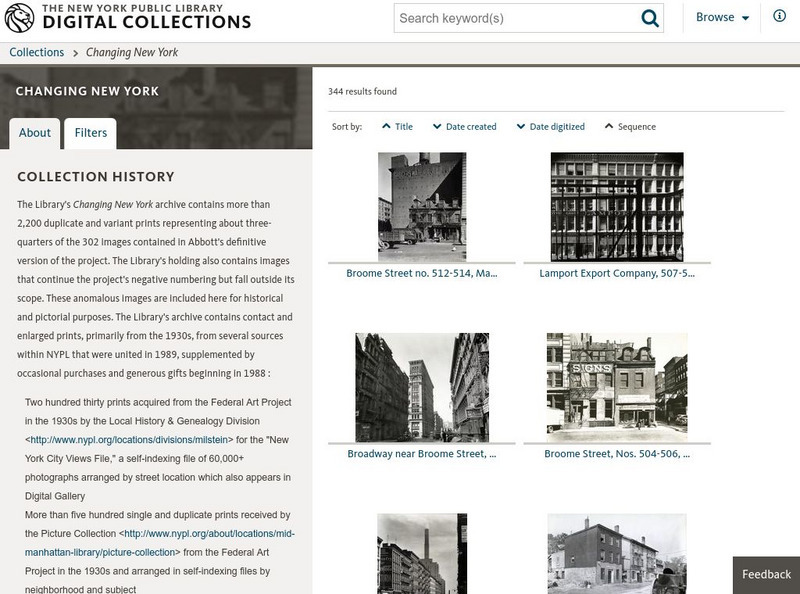
Nypl Digital Gallery: Changing New York: Photographs by Berenice Abbott
See photographs taken by Berenice Abbott as part of the New Deal's Federal Artist Program. Her project was entitled Chaning New York. Find information about Abbott as a photographer and read information about each photograph.
University of Virginia
Miller Center at Uva: u.s. Presidents: Franklin Delano Roosevelt: Domestic Policies
Read about the scope of Roosevelt's New Deal from 1933 until 1939 and continue with his domestic policies during World War II. Find out how important Roosevelt's personality was to the implementation of his ideas.
Curated OER
History Matters: "One Third of a Nation": Fdr's Second Inaugural Address
Read and listen to Franklin D. Roosevelt's second inaugural address where he points out the problems and progress made in his previous four years. He goes on to lay out his plans for his next term.
Other popular searches
- Causes of the Great Depression
- The Great Depression Jobs
- The Great Depression Project
- Black the Great Depression
- The Great Depression Panic
- The Great Depression Germany
- 1930's the Great Depression
- Music of the Great Depression
- 1940's the Great Depression
- The Great Depression Timeline
- Life in the Great Depression
- Fdr and the Great Depression