Hi, what do you want to do?





Other
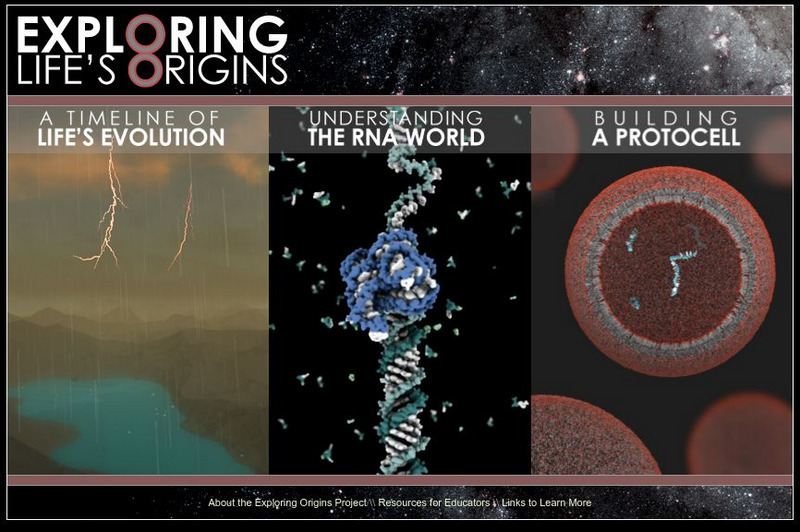
Exploring Origins Project: Exploring Life's Origins
Explore life's evolutionary history on the planet through molecular illustrations and animations. Pictorial evidence is based on origin of life research and theory.

Khan Academy
Khan Academy: Gallery: How Do Earth and Life Interact?
Explore the biosphere, zoom in on some unique ecosystems, and learn how activity in the Solar System and plate tectonics can affect the climate and life on the planet.

US Geological Survey
U.s. Geological Survey: Fossils, Rocks, and Time
Publication delves into the importance of studying the Earth's history and how we go about doing it. View pictures and diagrams showing the geological time scale and fossil succession.
Stanford University
Stanford Encyclopedia of Philosophy: Creationism
An entry from the Standard Encyclopedia of Philospohy that analyzes creationism from scientific, philosophical, and theological viewpoints and finds it lacking on all three measures.

American Museum of Natural History
American Museum of Natural History: It Takes All Kinds to Make a World
Learn about the biodiversity found in the ocean by looking at examples of marine life.
BBC
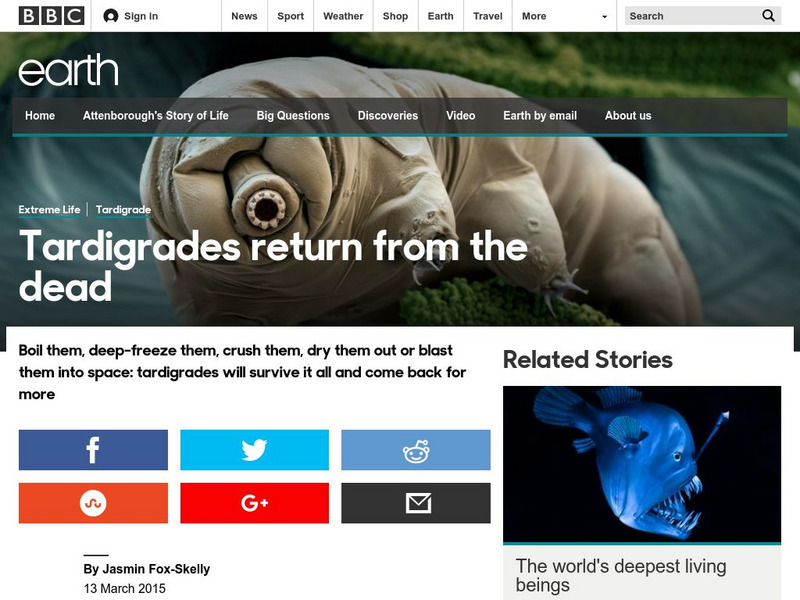
Bbc: Earth: Tardigrades Return From the Dead
Tardigrades are ancient, fascinating creatures that can survive conditions that would kill most life forms, including extreme heat and absolute zero, extreme pressure and a vacuum, and deadly radiation. They can even survive being...
Other
Interational Copper Association: Copper Info
A great site with extensive information about copper and its role in life on Earth. Includes history of copper as well as a 59-page book on copper production around the world, published in 2012.
PBS
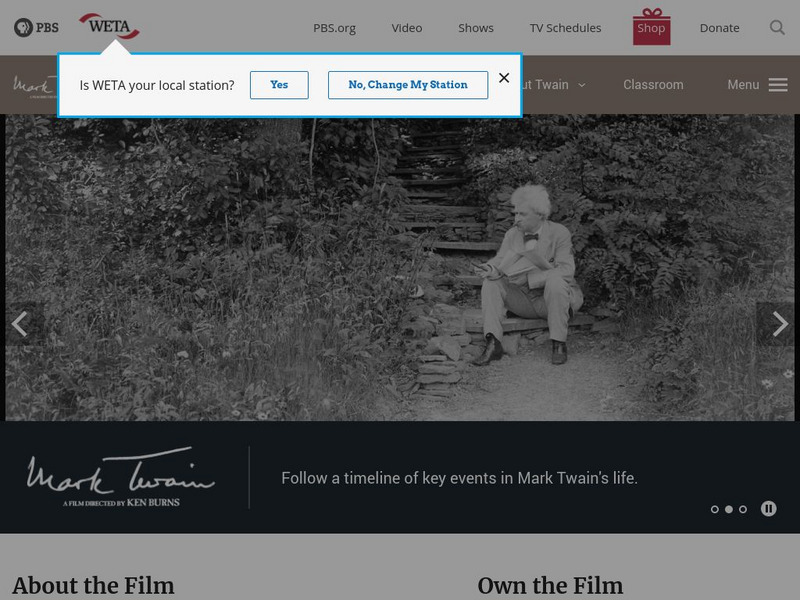
Pbs Ken Burns: American Lives: Mark Twain
In his time, Mark Twain was considered the funniest man on earth. Yet he was also an unflinching critic of human nature, using his humor to attack hypocrisy, greed and racism. In this series, Ken Burns has created an illuminating...
CK-12 Foundation
Ck 12: Life Science: Human Population
[Free Registration/Login may be required to access all resource tools.] How quickly is the human population growing? If we look at worldwide human population growth from 10,000 BCE through to today, our growth looks like exponential...

Khan Academy
Khan Academy: Infographic: Chemical Abundances: The Oceans
The chemical composition of our oceans varies depending on location, but the primary ingredients are oxygen, hydrogen, chlorine, and sodium. View this downloadable infographic on the earth's oceans.

Khan Academy
Khan Academy: Acceleration
Acceleration, an increase in the rate of change, is occurring both in the Universe and in human culture on planet Earth. This article explains these fascinating changes.
Curated OER
European Space Agency: Story of the Universe
The story of the universe is told in this engaging site by the European Space Agency. The history of European space science is timelined with dates ranging from 1066 to present day. The birth of galaxies, the big bang, and the beginnings...
TeachEngineering
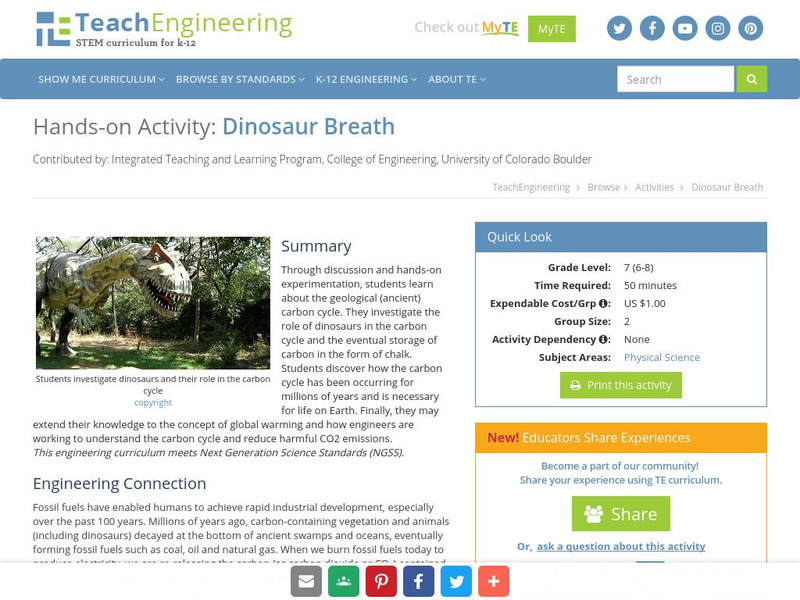
Teach Engineering: Dinosaur Breath
Through discussion and hands-on experimentation, students learn about the geological (ancient) carbon cycle. They investigate the role of dinosaurs in the carbon cycle and the eventual storage of carbon in the form of chalk. Students...

Khan Academy
Khan Academy: Guide, Slides, and Text Reader
A unit guide for teachers who want to use the Big History Project. Unit includes resources on how life began and changed, how do Earth and life interact, and evolution.
Wonderville Media
Wonderville: Charles Darwin
Charles Darwin was born in England on February 12, 1809. He was a "naturalist," best known for his theories of evolution. Darwin collected evidence that all life on Earth "evolved" from a common ancestry. He studied the process of...
University of California
Ucmp: Adventures at Dry Creek
For this lesson, students embark on an adventure to find out what life was like in Montana 60-70 million years ago. Students "join" a research lab to collect fossils from Montana and analyze them to find direct and indirect evidence of...
The National Gallery (UK)
National Gallery, London: Teacher's Notes Touring Partnership Exhibition
Five paintings and their artists are discussed in these notes. Also included are some suggestions on using the painting in the primary classroom, ideas for activities and cross-curricular links.
TeachEngineering
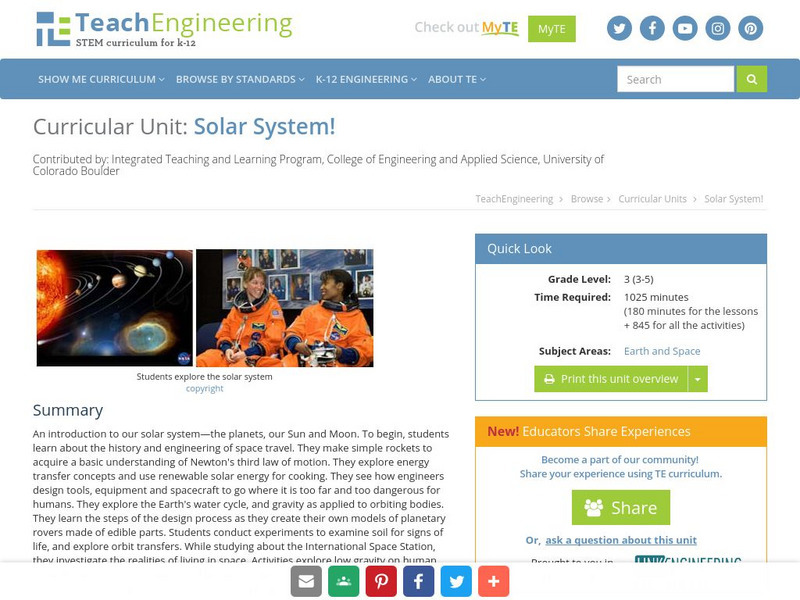
Teach Engineering: Solar System!
An introduction to our solar system: the planets, our Sun and our Moon. Students begin by learning the history and engineering of space travel. They make simple rockets to acquire a basic understanding Newton's third law of motion. They...

TED Talks
Ted: Ted Ed: What Happens When Continents Collide?
Tens of millions of years ago, plate tectonics set North and South America on an unavoidable collision course that would change the face of the Earth and spell life or death for thousands of species. Juan D. Carrillo explains the massive...