Hi, what do you want to do?





TeachEngineering
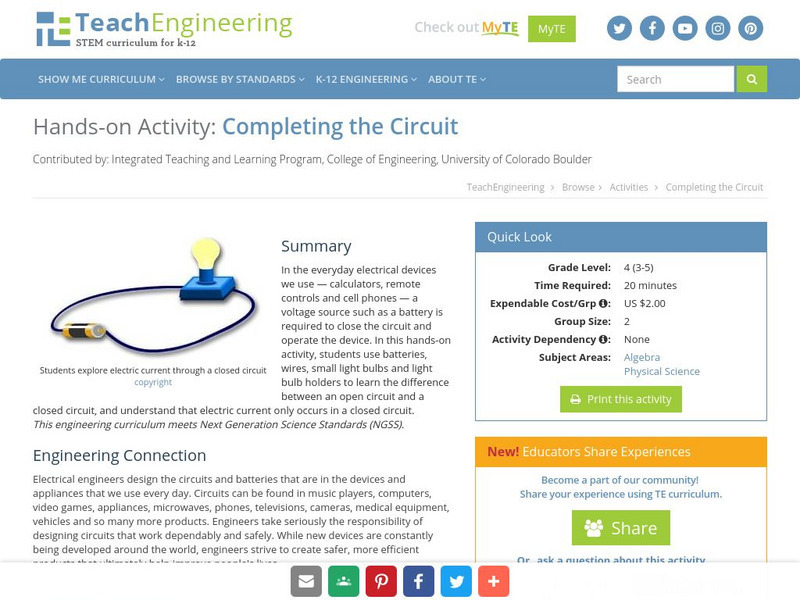
Teach Engineering: Completing the Circuit
In the everyday electrical devices we use - calculators, remote controls and cell phones - a voltage source such as a battery is required to close the circuit and operate the device. In this hands-on activity, students use a battery,...
TeachEngineering
Teach Engineering: Ohm's Law 2
This extension to the Ohm's Law I activity, students will observe just how much time it takes to use up the "juice" in a battery, and if it is better to use batteries in series or parallel.

Physics Classroom
The Physics Classroom: Electric Circuits: Circuit Builder
Students manipulate this virtual electronic circuit board where they can add resistors, light bulbs, wires, and ammeters to build a circuit, explore Ohm's law, and compare and contrast series, parallel, and combination circuits. Three...
TeachEngineering
Teach Engineering: Ohm's Law I
Students will work to increase the intensity of a light bulb by testing batteries in series and parallel circuits. It analyzes Ohm's Law, power, parallel and series circuits, and ways to measure voltage and current.
University of Colorado
University of Colorado: Ph Et Interactive Simulations: Blackbody Spectrum
How does the blackbody spectrum of the sun compare to visible light? Learn about the blackbody spectrum of the sun, a light bulb, an oven, and the earth. Adjust the temperature to see the wavelength and intensity of the spectrum change....
Smithsonian Institution
Smithsonian Education: Spotlight Biography Inventors
This site provides information on American inventors Benjamin Franklin, Robert Fulton, Eli Whitney, Thomas Jefferson, Isaac Singer, Wilbur Wright, Thomas Alva Edison, Elias Howe, and Alexander Graham Bell. It offers pictures from and...
Smithsonian Institution
Lemelson Center: Thomas Edison's Places of Invention
An article by Paul Israel from the Prototype newsletter discusses the various laboratories used by Thomas Edison as he was developing his inventions.
Rutgers University
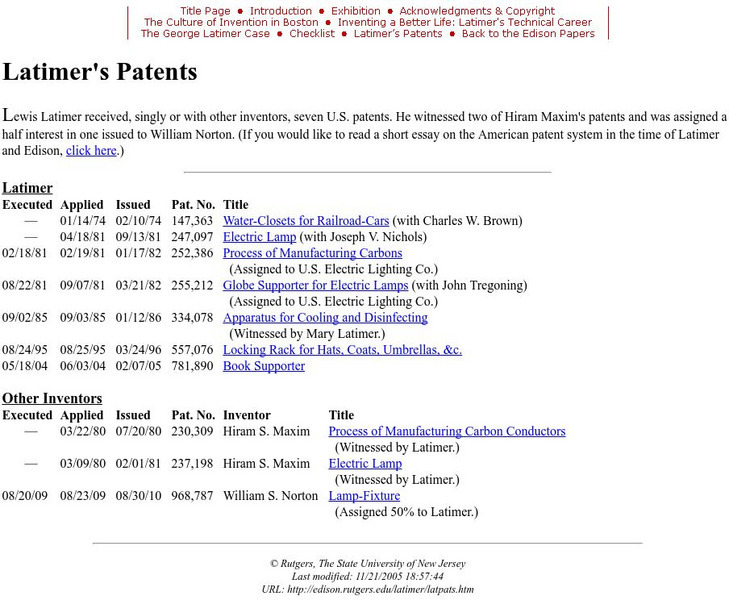
Thomas Edison Papers: Latimer's Patents
Find a list of patents issued to African-American inventor, Lewis Latimer, to him individually or with another inventor. Clicking on the invention takes you a diagram of the invention as well as its description submitted to the U.S....
TeachEngineering
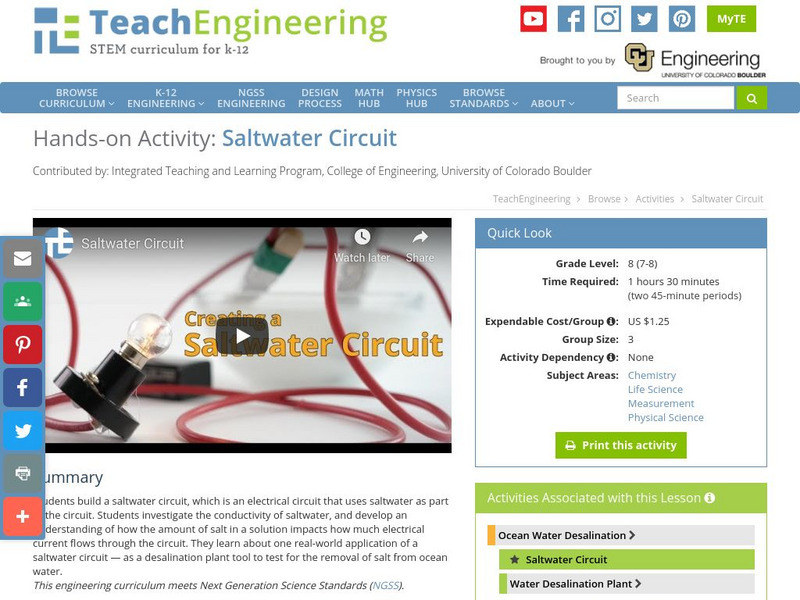
Teach Engineering: Saltwater Circuit
Students build a saltwater circuit, which is an electrical circuit that uses saltwater as part of the circuit. Students investigate the conductivity of saltwater, and develop an understanding of how the amount of salt in a solution...
Rutgers University
Rutgers: The Thomas Edison Papers
Links to copies of papers written by Thomas Edison. Also includes biographical information and copies of his patents and companies.
US National Archives
Our Documents: A National Initiative on American History, Civics, and Service
Our Documents is home to one hundred milestone documents that influenced that course of American history and American democracy. Includes full-page scans of each document, transcriptions, background information on their significance, and...
TeachEngineering
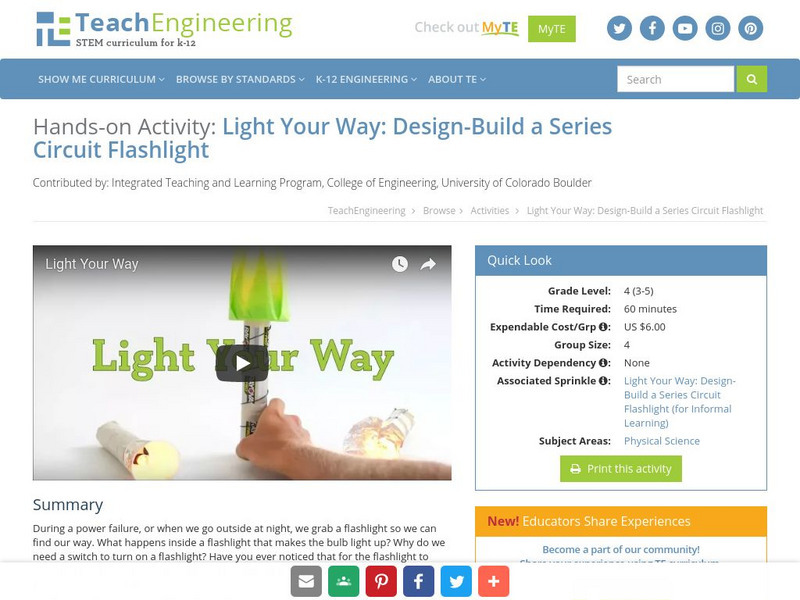
Teach Engineering: Light Your Way
When there is a power failure, or when we go outside at night, we grab a flashlight so we can find our way. What happens inside a flashlight that makes the bulb light up? Why do we need a switch to turn on a flashlight? Have you ever...
TeachEngineering
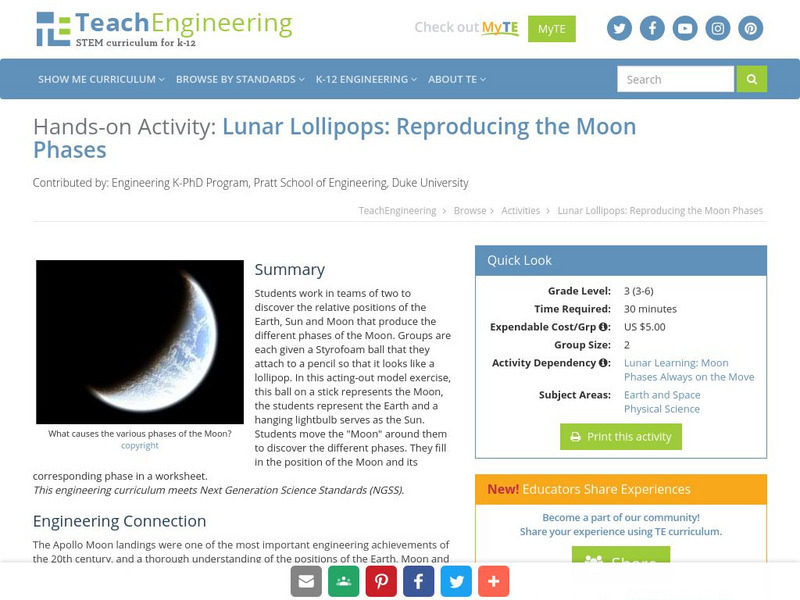
Teach Engineering: Lunar Lollipops
The students work in teams of two to discover the relative positions of the Earth, Sun and Moon that produce the different phases of the Moon. The students will be given a Styrofoam ball that they will attach to a pencil so that it looks...
Other
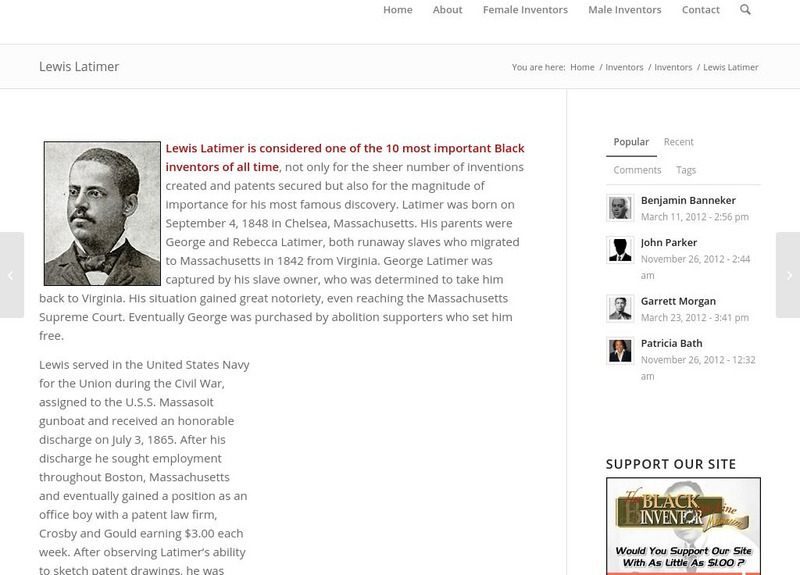
Black Inventor Online Museum: Lewis Latimer
The biography of the fascinating African-American inventor, Lewis Latimer. In addition to finding out about his development of the carbon filament for the incandescent lamp, you can read about his expertise in patent law, his association...
Digital Public Library of America
Dpla: Electrifying America
This primary source set explores the development, commercialization, and impact of electricity.
PBS
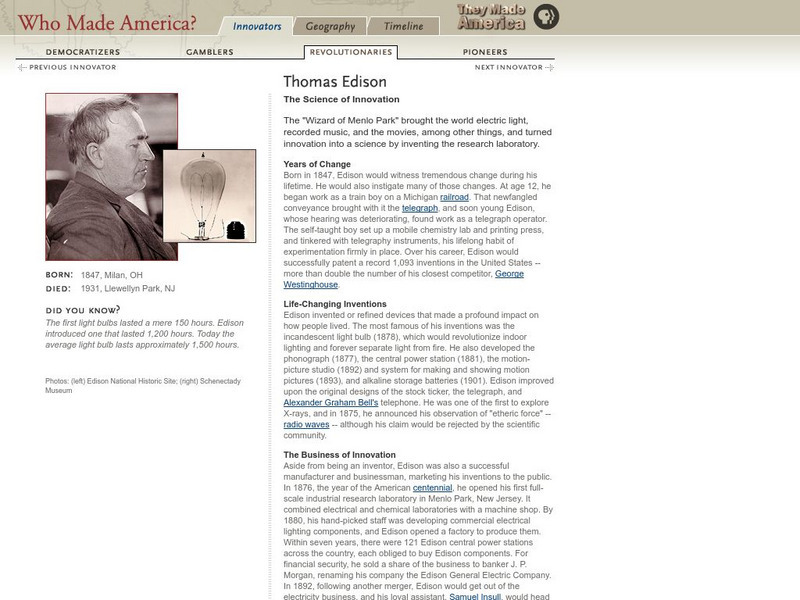
Pbs: Who Made America?: Innovators: Thomas Edison
The "Wizard of Menlo Park" brought the world electric light, recorded music, and the movies, among other things, and turned innovation into a science by inventing the research laboratory.
Houghton Mifflin Harcourt
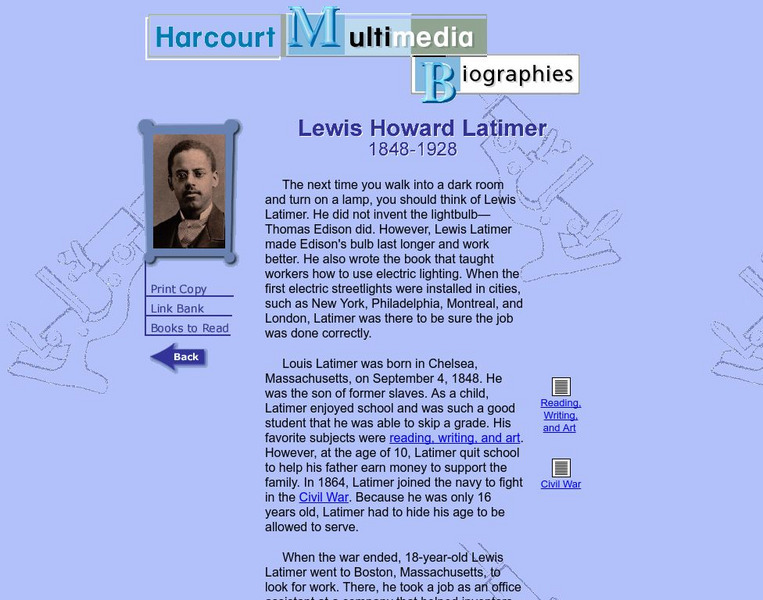
Harcourt: Biographies: Lewis Howard Latimer
This is an excellent biography of Lewis Howard Latimer. It discusses his joy of learning throughout his entire life, and also includes additional links to help illustrate the topics presented.
Other
Edision Birthplace Museum: Birthplace of Edison
Biographical look at Thomas Edison from the museum of his birthplace. Provides information on his life and his inventions. Also gives a tour of Edison's birthplace.
Science Struck
Science Struck: Facts About Thomas Edison
Read about the life of Thomas Edison and his many inventions.
US National Archives
Nara: American Originals
A collection of important documents highlighting events in United States history. These at one point were on display in the Rotunda of the National Archives Building. Each document is accompanied by a short description of its significance.
Smithsonian Institution
Lemelson Center: Invention Features: Lewis Latimer
Smithsonian site features the life and many accomplishments of Lewis Latimer, the famous African-American inventor.
TeachEngineering
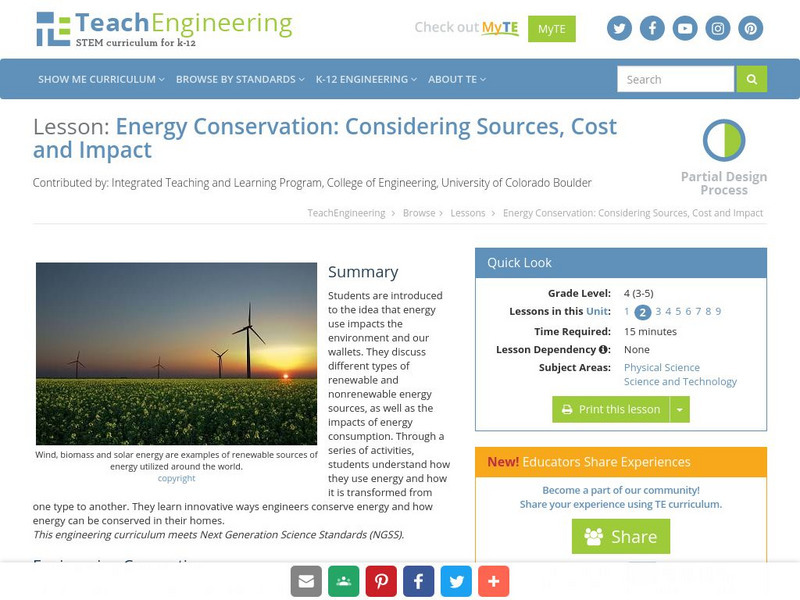
Teach Engineering: Energy Conservation
Students are introduced to the idea that energy use impacts the environment and our wallets. They discuss different types of renewable and nonrenewable energy sources, as well as the impacts of energy consumption. Through a series of...
Library of Congress
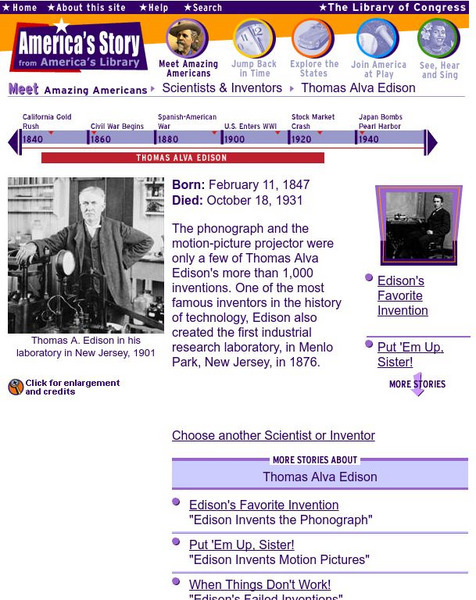
Loc: America's Story: Thomas Alva Edison
A variety of images, photographs, and information on the life of Thomas Alva Edison (1847-1931) can be found in the site by the Library of Congress. Information can be found here regarding his invention and influence on American society....
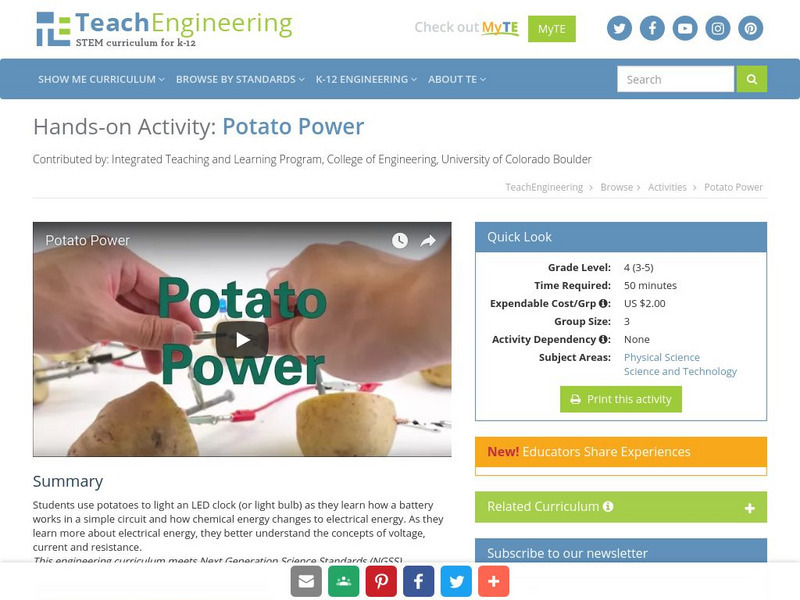
TeachEngineering
Teach Engineering: Potato Power
Students use potatoes to light an LED clock (or light bulb) as they learn how a battery works in a simple circuit and how chemical energy changes to electrical energy. As they learn more about electrical energy, they better understand...