Hi, what do you want to do?






University Corporation for Atmospheric Research
Ucar: The Nature of Science
This teaching box engages middle and high school students in the Nature of Science - what it is and what it isn't - along with activities to ensure engagement and enhance science understanding explicitly.
California State University
Csun: Nature of Science
This California State University Northridge essay on the "Nature of Science, the Scientific Method, and Measurement" includes a historical perspective.
Vision Learning
Visionlearning: Culture of Science: Nature of Scientific Knowledge
Explore what science really is with this explanation of scientific knowledge.
The Wonder of Science
The Wonder of Science: Ms Ess3 1: Uneven Distribution of Earth's Resources
Work samples, phenomena, assessment templates, and videos that directly address standard MS-ESS3-1: uneven distribution of Earth's resources.
Indiana University
Ensi: Comparison of Human: Chimpanzee Chromosomes Lesson
This is a great lesson plan that combines Karoytypes and evolution. Students will recognize that the chromosomes of chimpanzees and humans are remarkably similar, then correlate that to their evolutionary relationship.

Open Curriculum
Open Curriculum: Darwin and the Theory of Evolution
Students will be able to identify important ideas Darwin developed during the voyage of the Beagle, and give examples of his observations that supported those ideas.

Science Buddies
Science Buddies: Career Profile: Physical Therapist
This career profile from Science Buddies explains what a physical therapist does. Find out the nature of the work, the work environment, the education requirements, and what a physical therapist's daily work looks like. Included are...
Science Buddies
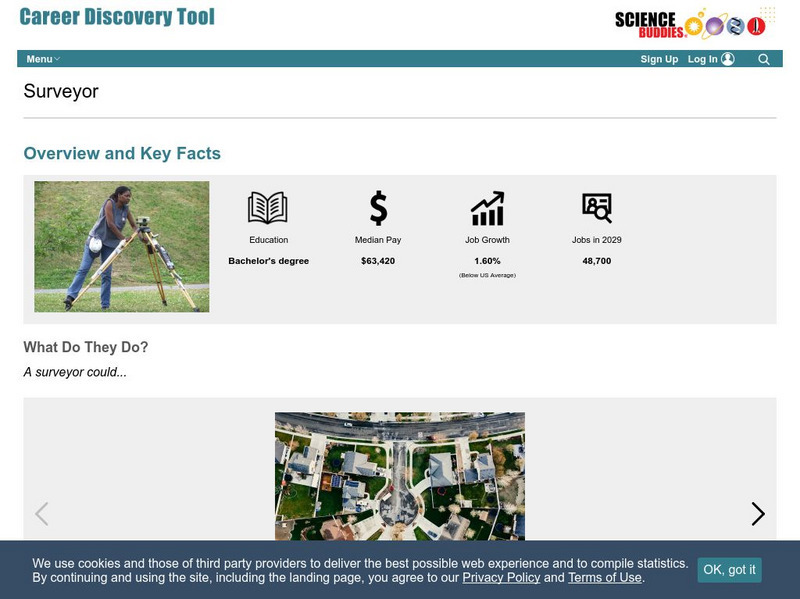
Science Buddies: Career Profile: Surveyor
George Washington started out as a surveyor. This career has potential in many areas above ground, underground, and even in space. Find out about the nature of the work of a surveyor as well as the educational requirements in this...
Science Buddies
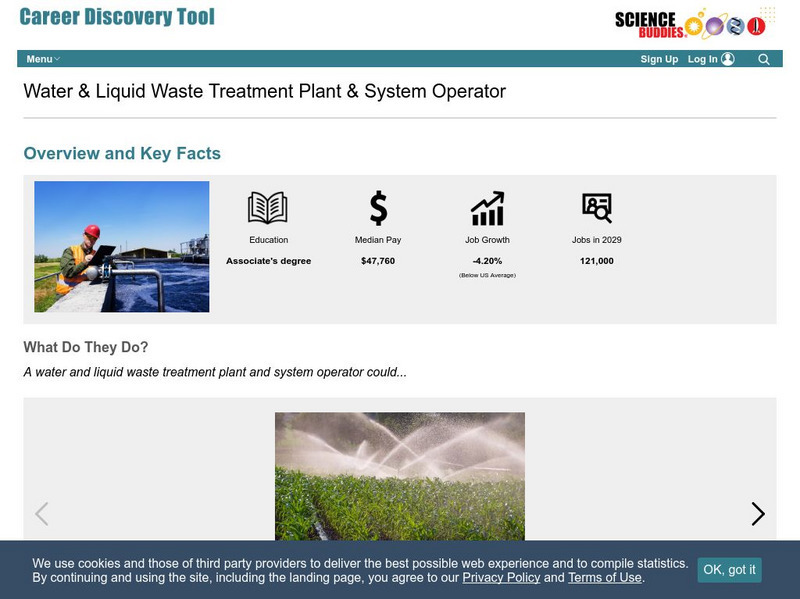
Science Buddies: Career Profile: Liquid Waste Treatment System Operator
Wastewater treatment plants are essential for providing us with clean water. The job of the liquid waste treatment system operator is to keep these plants operating. Find out about the education requirements for this job as well as the...
Science Buddies
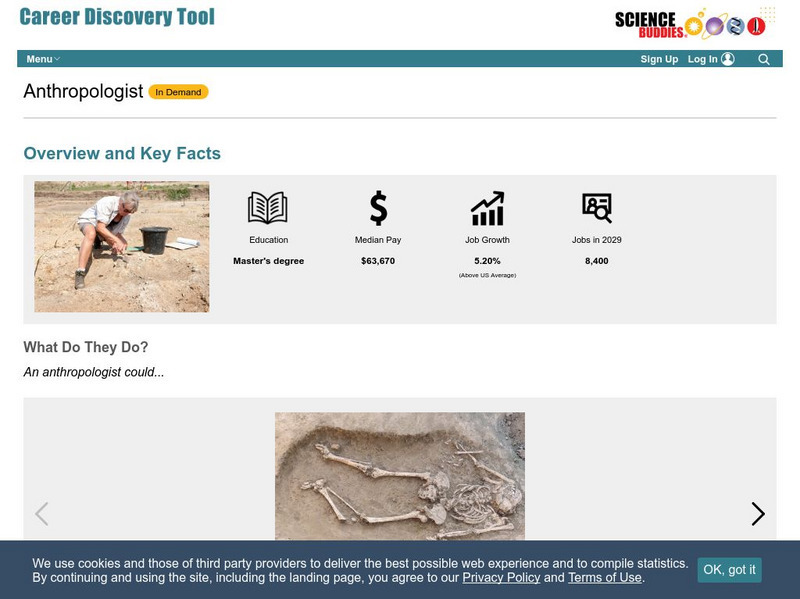
Science Buddies: Career Profile: Anthropologist
Does examining all aspects of human life appeal to you? Would you like to explore the origins of man, of language, of culture? This Science Buddies site gives a good overview of what is involved in the career of anthropologist. Find out...
University of California
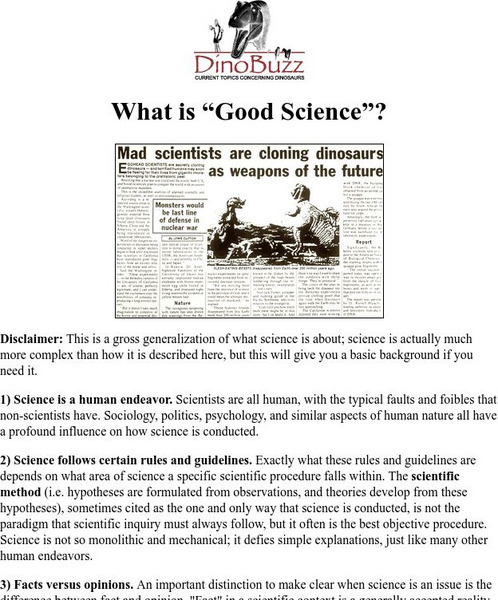
Ucmp: What Is "Good Science"?
A very good explanation of the scientific process and the differences between science and non-science. This is a concise and clearly written description.

Indiana University
Indiana University: Science vs. Non Science
This mini-lesson at the Evolution and Nature of Science Institute site from Indiana University provides a criteria by which students can evaluate an idea or explanation for scientific credibility.
Curated OER
National Park Service: Cuyahoga Valley: Nature and Science: Nonnative Species
Describes the impact of invasions of non-native plant and insect species in Cuyahoga Valley National Park in Ohio, including the gypsy moth and the emerald ash borer.
Other
Denver Museum of Nature and Science: Follow a Fossil
Students examine paleontology, the study of ancient life on Earth. Some topics explored are vertebrates, invertebrates, and plants.
Cornell Lab of Ornithology
Habitat Network: The Special Nature of Arid Landscapes
Find out how to make the most of a desert environment in order to foster a wide array of species diversity.
Vision Learning
Visionlearning: General Science: The Scientific Method
Instructional module focusing on the scientific method as a process of investigation into the natural world rather than a linear collection of facts. Site also includes an interactive practice quiz and links relating to the topic.
Science Buddies
Science Buddies: Career Profile: Science Manager
Imagine teams of scientists off in all directions doing their research. Someone has to plan and be the administrator to be sure everything runs smoothly. That is the job of the natural sciences manager. This career requires not only...
Science Buddies
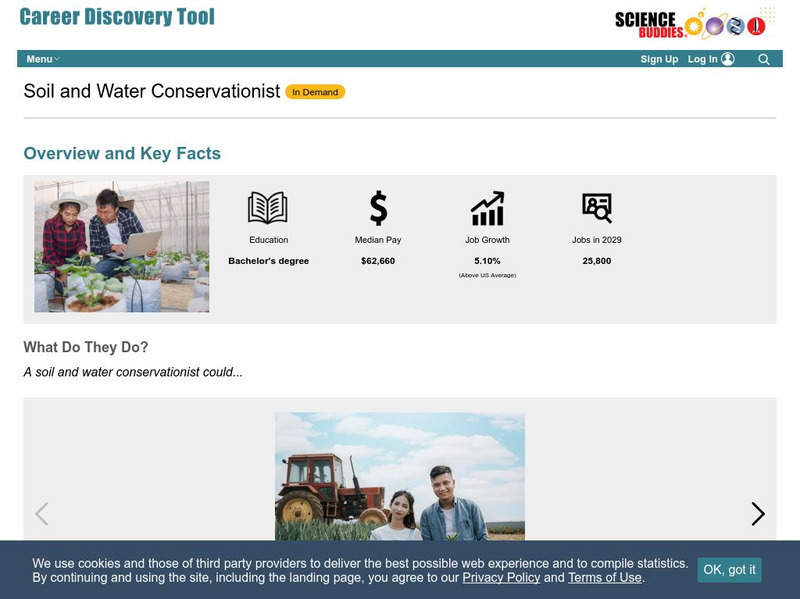
Science Buddies: Career Profile: Soil and Water Conservationist
Soil and water conservation are important in the protection of the earth's natural resources. Read about the careers that study and encourage conservation. Find out about the educational requirements necessary to become a soil or water...
Science Buddies
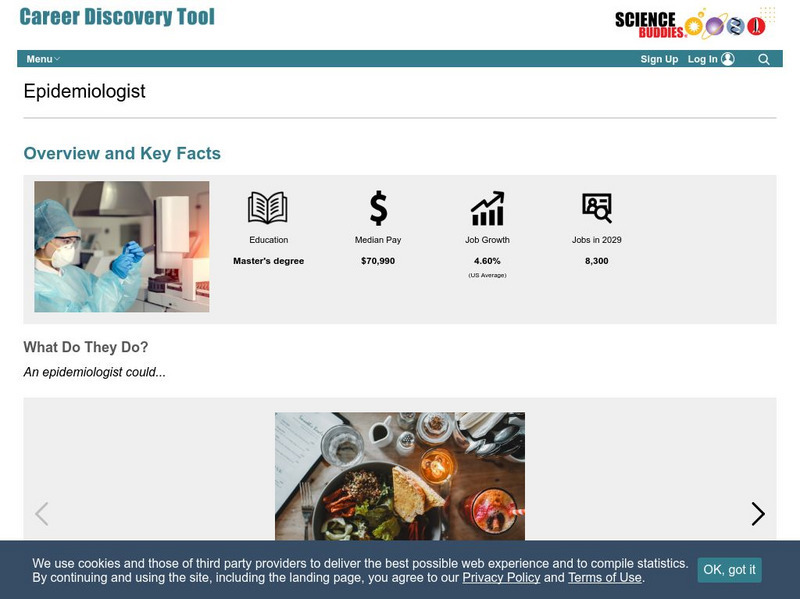
Science Buddies: Career Profile: Epidemiologist
Being an epidemiologist is like being a detective, at least a medical detective. Read about the many different ways the epidemiologist looks into medical conditions to see what causes them. Science Buddies' career profile lays out the...
US Department of Labor
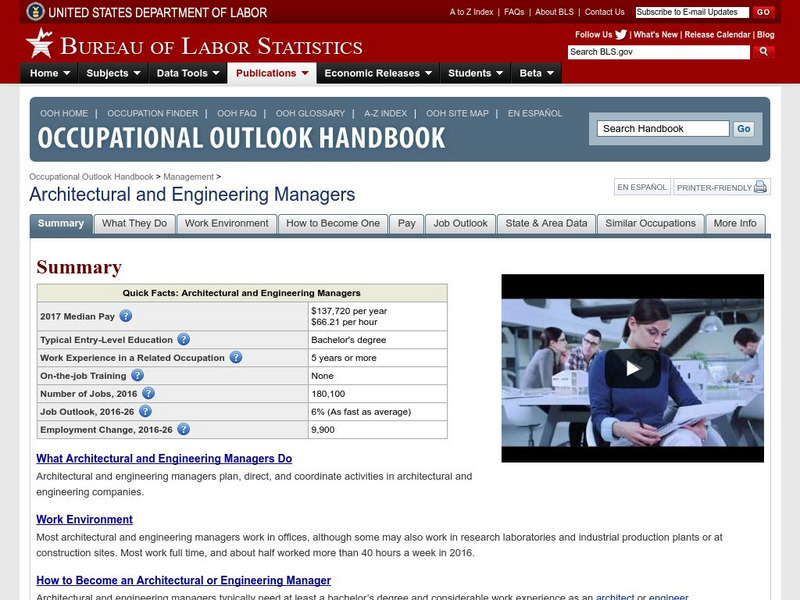
Bureau of Labor Statistics: Architectural and Engineering Managers
Read about the work of engineering, science and computer systems managers, their training requirements and the prospects for these occupations.
US Department of Labor
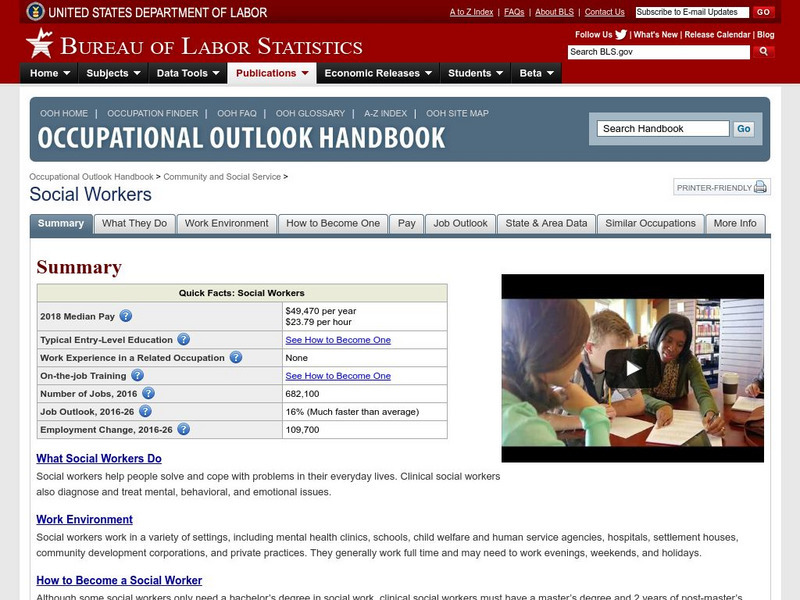
Bureau of Labor Statistics: Social Workers
Describes a day in the life of a social worker. Include info on education requirements and expected earnings.
Texas Education Agency
Texas Gateway: 4.8 Extended Topic: The Four Basic Forces: An Introduction
By the end of this section, you will be able to understand the four basic forces that underlie the processes in nature: gravitational, electromagnetic, weak nuclear, strong nuclear forces.
Bryn Mawr College
Bryn Mawr College: Evolution, Ecology, Diversity: Evolution by Natural Selection
After looking at examples of natural selection and doing a simulation activity, learners investigate further by playing a simulation game and analyzing the data they collect. They then examine evidence of natural selection for the...
Other
Linda Hall Library of Science: The Grandeur of Life
Online exhibit of scientific illustrations from rare books of natural history. Earliest examples date from the fifteenth century.