Hi, what do you want to do?





World InfoZone
World Info Zone: Solomon Islands
Great resource for finding background and current information about the Solomon Islands in the Pacific Ocean. Content includes geography, environment, architecture, religion, food, history, economy, arts, sports, and news. Be sure to...

Curated OER
Science Kids: Science Images: Pacific Ocean
This is a satellite image of the Pacific Ocean, the largest ocean in the world. For more information on the Pacific Ocean and other oceans of the world, check out our fun ocean facts for kids.

Science Education Resource Center at Carleton College
Serc: Lab 3: Oh What a Tangled Web: Ecosystem Based Management
A lab experiment in a series of experiments that looks at fisheries. In this particular lab, students use tools like Pacific Ocean Shelf Tracking to learn about the management of fisheries through an ecosystem-based approach. During this...
Smithsonian Institution
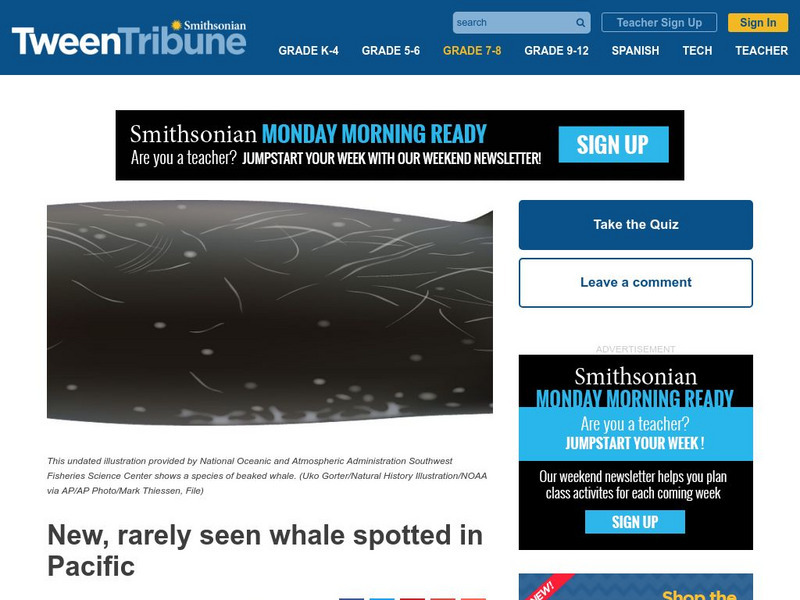
Tween Tribune: Week of 8 8 16: New, Rarely Seen Whale Spotted in Pacific
Genetic tests confirm that a mysterious, unnamed species of beaked whale only rarely seen alive by Japanese fishermen roams the northern Pacific Ocean. This is according to newly published research.
Other
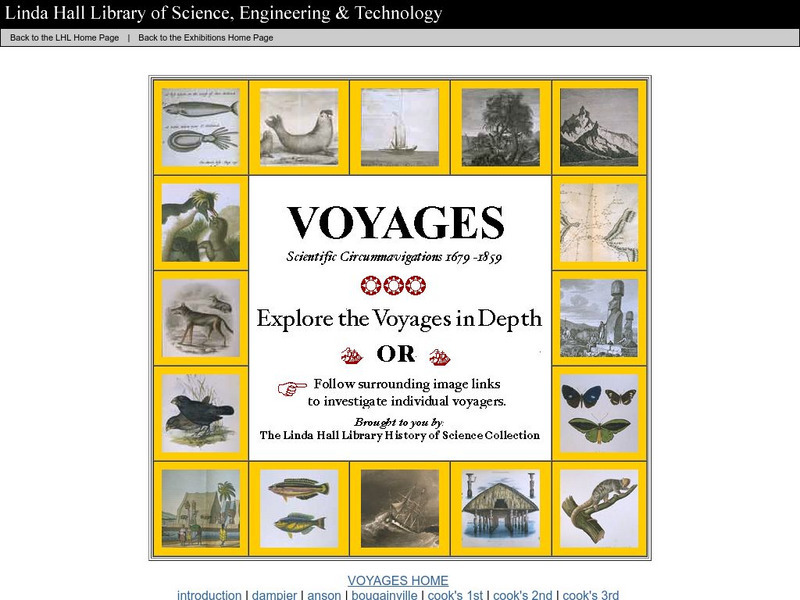
Voyages: Scientific Circumnavigations: Dampier
Read about the unlikely journals and observations of William Dampier, an English pirate who sailed the Pacific, making landfall in the Philippines, East Indies, and Australia. See his maps, descriptions of the Pacific, and observations...
University of Groningen
American History: Essays: Manifest Destiny: The New Manifest Destiny
While many thought that the doctrine of Manifest Destiny had spent itself when Americans reached the Pacific Ocean, it could also be seen to extend beyond the shores of the United States. For example, Hawaii and Alaska were acquired later.
NOAA
Noaa: Ocean and Coasts
This website highlights the oceans of the world. Even though June is World Ocean Month, learning about oceans never ends! There are links here to many resources and lesson plans regarding the Arctic, Atlantic, Indian, Pacific, and...
Science Struck
Science Struck: What Are Ocean Trenches and How Are They Formed?
Around 72 percent of the Earth's surface is found under the oceans. It has always been contributing to the dynamically changing face of the Earth through the tectonic phenomenon occurring at its depths. Such a naturally occurring...
Microsoft
Microsoft: The Story of Sacagawea's Son Pomp
Lewis and Clark traveled for two years and covered 4,000 miles to reach the Pacific Ocean. They had the help of a young Native American girl, Sacagawea, who carried with her a small baby! Students will learn about the Lewis and Clark...
University of Nebraska
University of Nebraska Lincoln: The Journals of the Lewis and Clark Expedition
Learn about this historic journey to the Pacific Ocean and back through the most extensive collection of journals, images, and audio files. This online collection of full text entries lets you explore the journey through the journals of...
Other
Nanoos: Ocean Observation [Pdf]
This lesson is designed to help familiarize students with methods scientists use to study the coastal ocean in the Pacific Northwest. It will encourage them to pose and investigate their own questions about the ocean.
NOAA
Noaa: International Year of the Ocean: Pacific Coral Reef
"This [online] coral book was created to provide the reader with an introduction to the Pacific's fascinating coral reef ecosystem." The resource is for young students learning about life under the sea. Translated in English, Hawaiian...
PBS
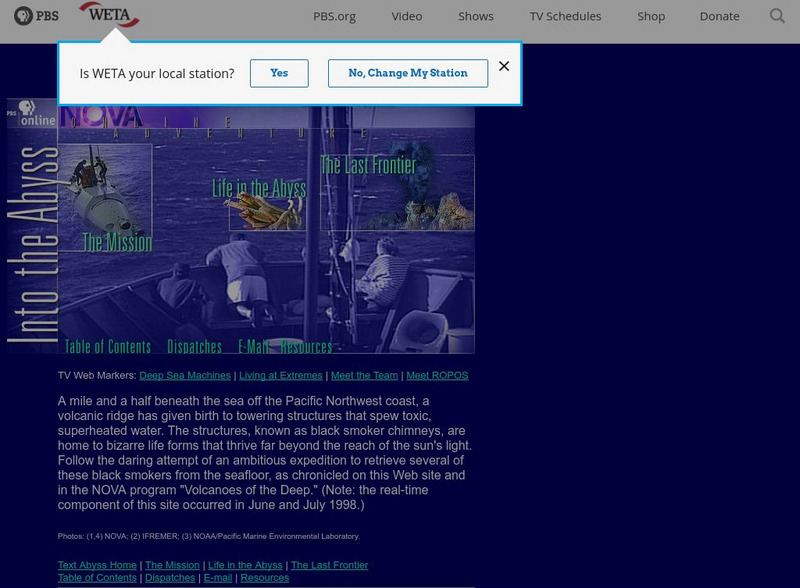
Pbs: Journey Into the Abyss
Go on an interactive journey to the Pacific Northwest Coastline. You will be able to view a black smoker chimney along with the scientist. GREAT SITE!

Khan Academy
Khan Academy: Activity: Visions of the Future
In this activity, you will brainstorm a problem affecting the world, envision how you think this problem will affect the world in 100 years, and propose a solution. The Great Pacific Garbage Patch is used as an example of a current world...
Other
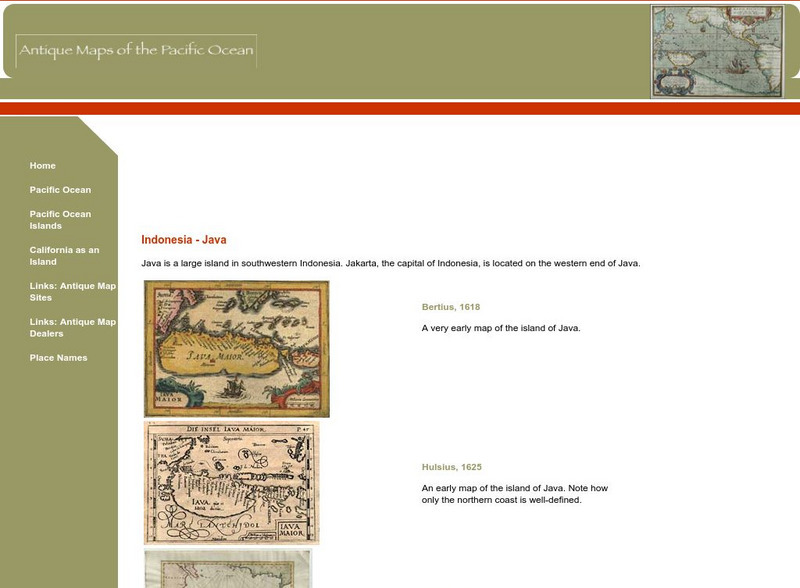
Antique Maps of the Pacific Ocean: Indonesia Java
Contains five different maps of Java, an island in Indonesia. The map dates from the 1600s and 1700s.

Siteseen
Siteseen: Land of the Brave: Vasco De Balboa Facts
Overview and biographical facts on the life of Vasco de Balboa, the first European to lead an expedition to reach the Pacific Ocean from the New World.
Museum of Science
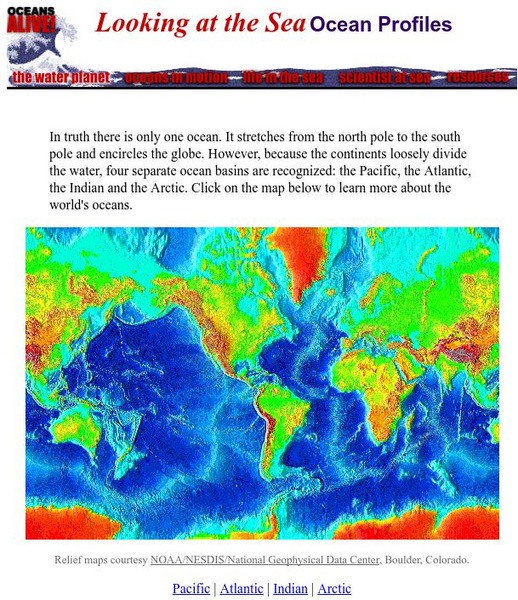
The Museum of Science: Oceans Alive: Ocean Profiles
An interactive map of the world's oceans allows you to access profiles for each of the four oceans.
The Franklin Institute
Missouri Botanical Garden: Ocean Facts
Click on all the links to find out many interesting facts about the ocean. Why is the ocean blue? Why is it salty? Where do most of the animals and plants live? Which ocean is the biggest? The deepest? How much of the Earth is covered by...
NPR: National Public Radio
Npr: Rubber Ducks Make Cross Oceanic Voyage
This radio broadcast describes the tracking of rubber ducks that were accidentally dumped into the north Pacific Ocean in 1992. Scientists are learning a lot about ocean currents as the ducks arrive on land in various countries.
Nature Conservancy
Nature Conservancy: California, Protecting the Golden State
Explore the rich habitats and natural beauty of the California landscape in this interactive video.
American Academy of Achievement
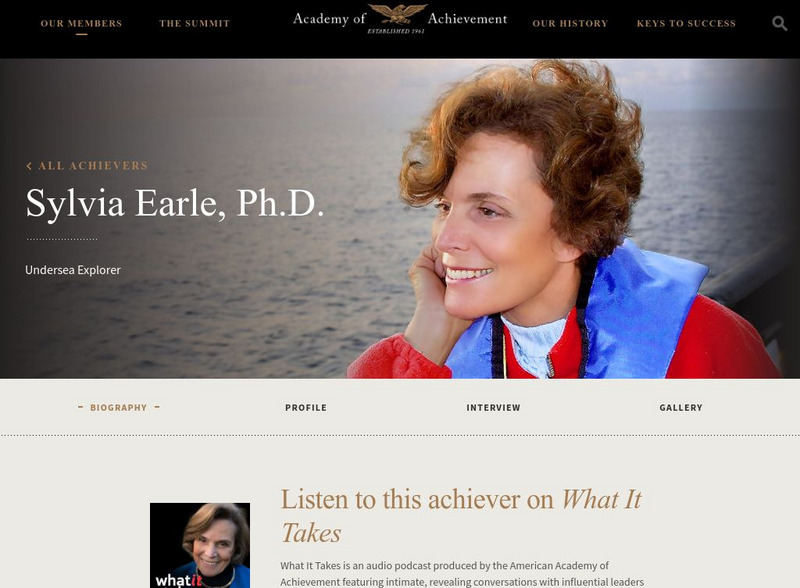
Academy of Achievement: Sylvia Earle, ph.d.
Site provides biographical information on scientist, Earle, Earle. This article talks about her childhood, education, and work "in the forefront of deep ocean exploration."

Wikimedia
Wikipedia: Pacific Ring of Fire
Wikipedia offers information on the location of the Pacific Ring of Fire, an area of frequent earthquakes and volcanic eruptions. Map included.
World Geography Games
World Geography Games: Oceania
Explore Oceania, a region centered on the islands of the tropical Pacific Ocean.
Other
Art Gallery of Nova Scotia: The Inside Current
This is a lesson plan for Grade 8 that focuses on ocean currents and wind patterns. Part of it looks at the lessons learned from studying the flow of the rubber ducks accidentally dumped into the north Pacific Ocean in 1992.