Hi, what do you want to do?





Encyclopedia Britannica
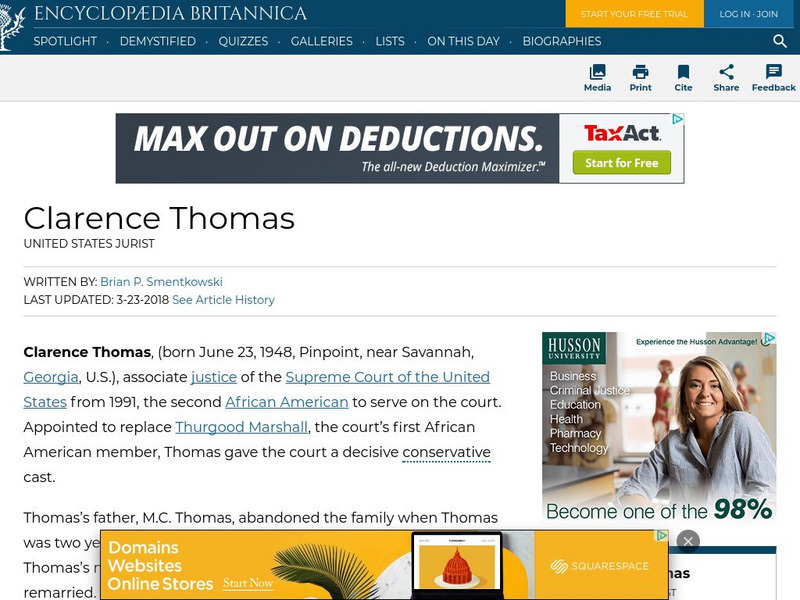
Encyclopedia Britannica: Clarence Thomas
Learn biographical details on Clarence Thomas, associate justice of the Supreme Court of the United States from 1991, the second African-American to serve on the court.
Cornell University
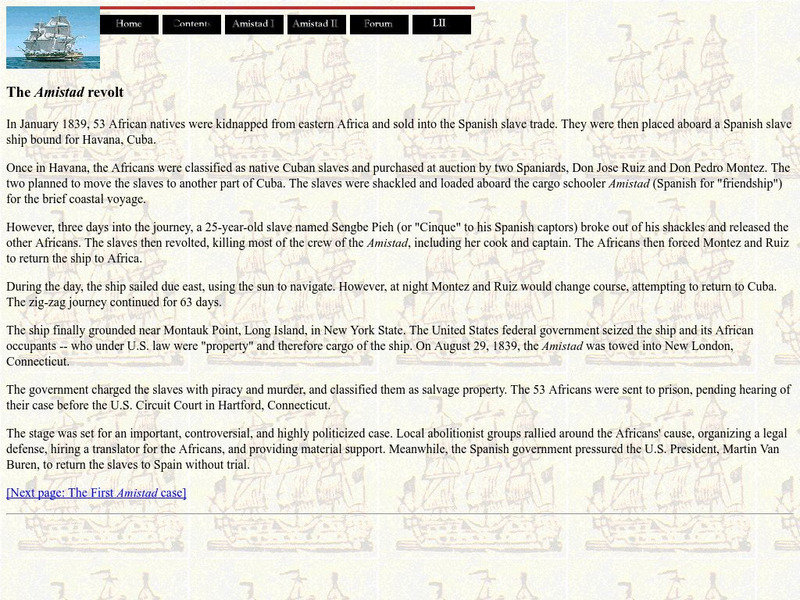
Cornell University: Law School: Amistad Revolt
This site from the Cornell University School of Law provides a brief description of what happened during the Amistad Revolt and gives details concerning the Supreme Court that followed.

Other
Freedom Forum: First Amendment Struggles & Triumphs
Find out how the First Amendment serves citizens in real life by reading about Daniel Ellsberg, Mary Beth Tinker, and Alton T. Lemon, all of whom were principal litigants in landmark Supreme Court cases regarding the freedom of expression.
NPR: National Public Radio
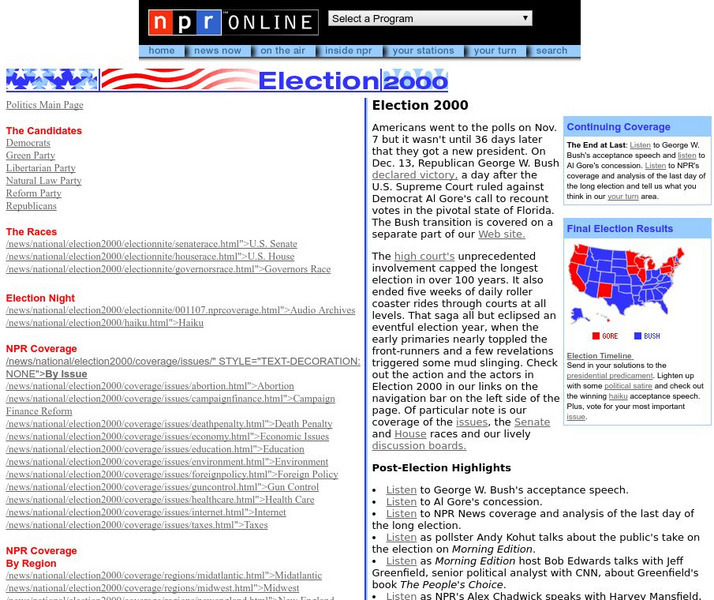
Npr: Election 2000
An excellent and thorough website that explores the Election 2000. Includes information on the presidential race and election, as well as the races and elections for Congress and state governors. Also includes extensive coverage of the...
Other
Federal Judicial Center
Travel throughout the Federal Judicial Center at this site. "The Federal Judicial Center is the education and research agency for the federal courts." This is a comprehensive site that outlines the publications, federal judicial history...
Harry S. Truman Library and Museum
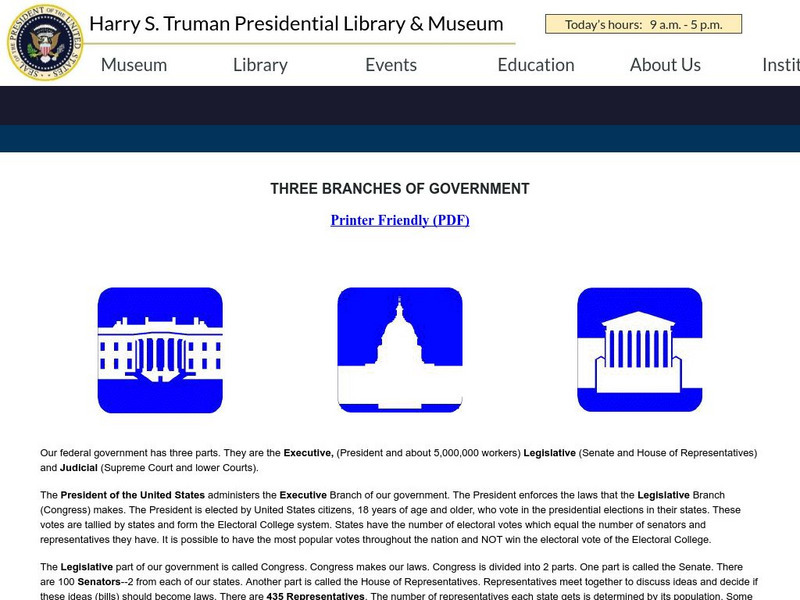
Harry S. Truman Library & Museum: Three Branches of Our Government
This slide and the six that follow it (use the advance button near the bottom of the screen) offer an explanation of each of the three branches of government and the duties they perform, including discussion of the tensions arising from...

US National Archives
Docsteach: From Dred Scott to Civil Rights Act of 1875: Eighteen Years of Change
In 1857, the U.S. Supreme Court ruled in the Dred Scott decision that African-Americans were not citizens of the United States. Yet within 18 years, Black Americans would not only have citizenship, but would be guaranteed the right to...
Other
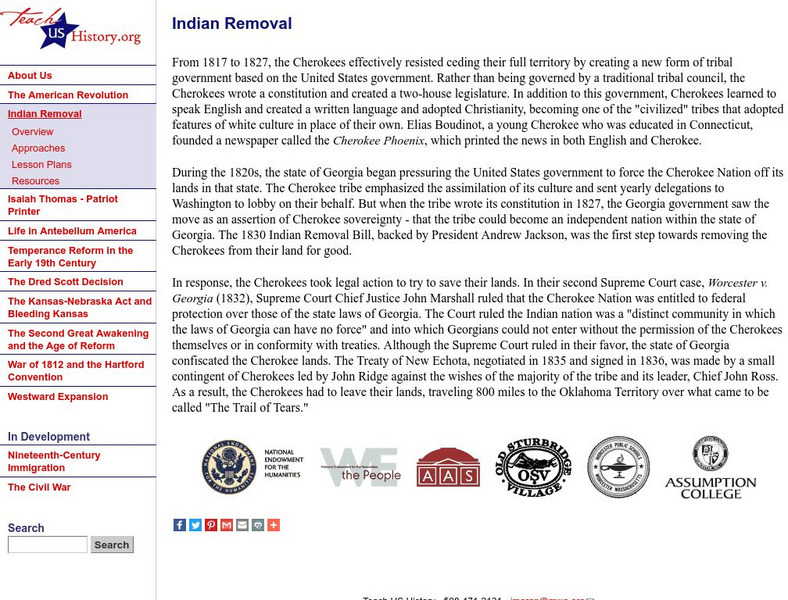
Teach Us History: Indian Removal
A lesson unit that looks at the efforts of the Cherokee Nation in Georgia between 1817 and 1827 to establish their own system of governance and to keep their lands from being ceded. Even though the Supreme Court ultimately ruled in their...
Curated OER
Wikipedia: National Historic Landmarks in Massachusetts: Joseph Story House
Joseph Story (1779-1845) was an influential United States Supreme Court Justice on the John Marshall court. Story's jurisprudence and legal thought were highly influential during his tenure on the court (1811-45). Story lived in the...
Curated OER
Educational Technology Clearinghouse: Clip Art Etc: Stephen Johnson Field
Associate justice of the United States Supreme Court and 5th Chief Justice of the California Supreme.
Curated OER
Wikipedia: National Historic Landmarks in Massachusetts: Louis Brandeis House
Bought in 1922 by liberal United States Supreme Court Justice Louis Brandeis (1856-1941), this Cape style house (whose construction dates to the late 19th century) was used by the Brandeis family as a summer retreat.
Curated OER
Wikipedia: Natl Historic Landmarks in Massachusetts: Oliver Wendell Holmes House
This 1877 frame house was the summer home of United States Supreme Court Associate Justice Oliver Wendell Holmes, Jr. (1841-1935). Holmes is known for his longevity on the bench, and his opinions on freedom of speech.
Curated OER
Educational Technology Clearinghouse: Clip Art Etc: John Marshall
(1755-1835) Chief Justice of the United States Supreme Court.
Curated OER
Educational Technology Clearinghouse: Clip Art Etc: Roger Brooke Taney
(1777-1864) "Chief Justice of the United States Supreme Court, who gave the decision in the Dred Scott Case." -Foster, 1921
Curated OER
Educational Technology Clearinghouse: Clip Art Etc: Stephen Johnson Field
Stephen Johnson Field (November 4, 1816 - April 9, 1899) was an associate justice of the United States Supreme Court from May 20, 1863, to December 1, 1897.
George Washington University
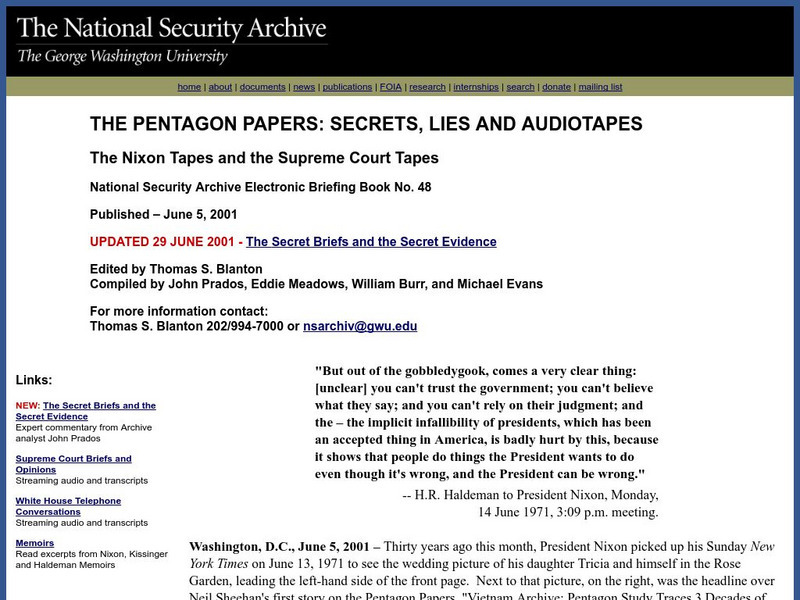
Nsa: The Pentagon Papers: Secrets, Lies, and Audiotapes
This site offers an extensive history of the 1971 Pentagon Papers case. Features include transcripts of President Nixon's tapes, White House phone conversations, memoirs, and other primary resources.
CNN
Cnn: How We Got Here: A Timeline of the Florida Recount
Very informative timeline that thoroughly explains the events surrounding the disputed Presidential Election of 2000. In particular, this article effectively chronicles the controversy in Florida. 12/2000
US National Archives
Nara: Teaching With Documents: The Amistad Case
The National Archives and Records Administration (NARA) provides background information for the Amistad case, several of the actual documents involved in the case, and teaching activities that correlate the information (at the bottom of...
US Government Publishing Office
U.s. Government Publishing Office: Our American Government, 2000 Edition
A popular introductory guide for American citizens and those of other countries who seek a greater understanding of our heritage of democracy. The question-and-answer format covers a broad range of topics dealing with the legislative,...
University of Missouri
Famous Trials: Brown v Topeka Board of Ed. (1951)
Brown v. Board of Education of Topeka is widely known as the Supreme Court decision that declared segregated schools to be "inherently unequal." The story behind the case, including that of the 1951 trial in a Kansas courtroom, is much...
Other
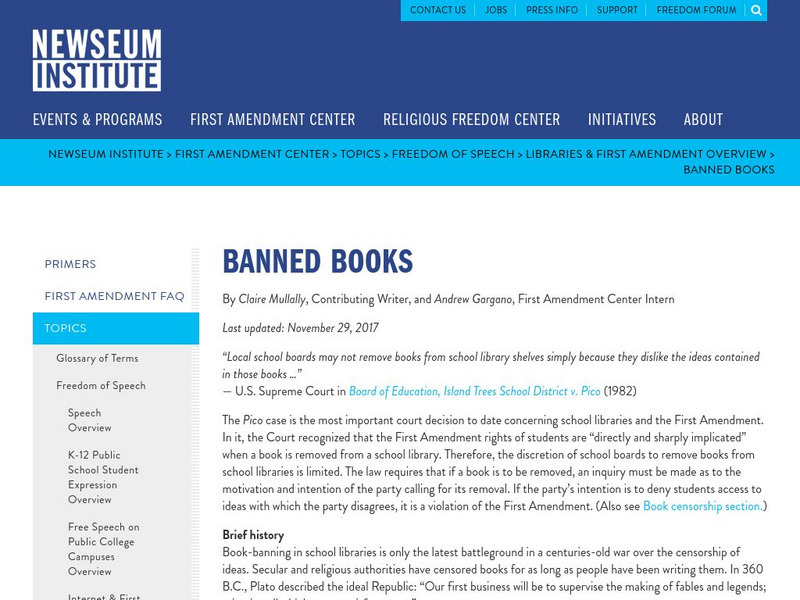
Libraries & First Amendment: Banned Books
This overview of censorship in the United States cites Supreme Court decisions and links to a number of other resources. (Date of Article: Sept. 13, 2002)

Khan Academy
Khan Academy: Us History: 1945 1980: Brown v. Board of Education of Topeka
Learn about the Supreme Court ruling that outlawed school segregation in the United States.
Syracuse University
Syracuse University: Youth Due Process Gerald Gault
This site contains a description of the juvenile justice system, background on the case involving Gerald Gault, and learning exercises for teachers to use in class.
Other
Louis D. Brandeis School of Law: Harlan's Great Dissent
An article from the University of Louisville about Justice John Harlan, who courageously cast the sole dissenting vote in the Plessy vs. Ferguson case, which approved of the principles of separate but equal.