Hi, what do you want to do?





Exploratorium
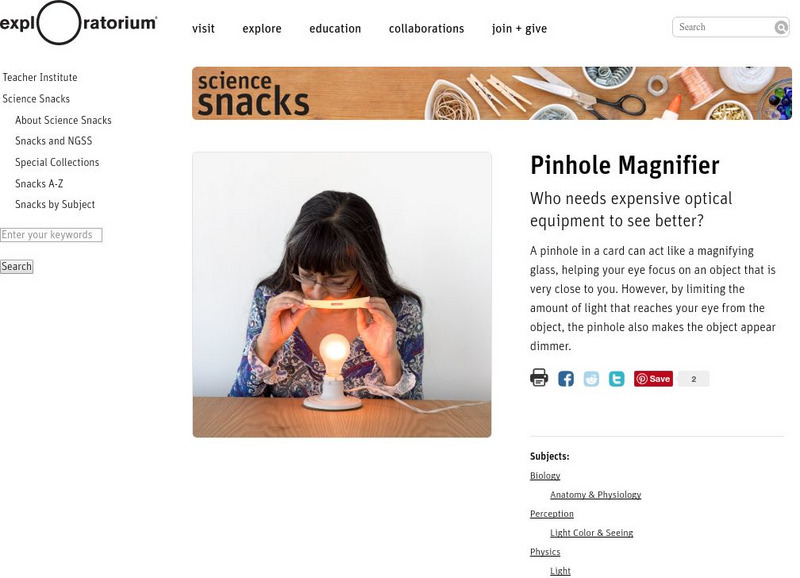
Exploratorium: Science Snacks: Pinhole Magnifier
Explore properties of light by making a pinhole magnifier using simple materials and a light source.

CK-12 Foundation
Ck 12: Physics Simulation: Magnifying Glass
[Free Registration/Login Required] Learn about the type, size, location, and orientation of the image that forms when a thin lens is used to view an object using this interactive simulation. A PDF worksheet and a video tutorial are also...
BioEd Online
Bio Ed Online: The Science of Microbes: Tools of Magnification
The invention of magnifiers that allow us to see things that are otherwise invisible to us has revolutionized science. For this lesson, students use several types of magnifiers to investigate magnification, and record their observations....
Exploratorium
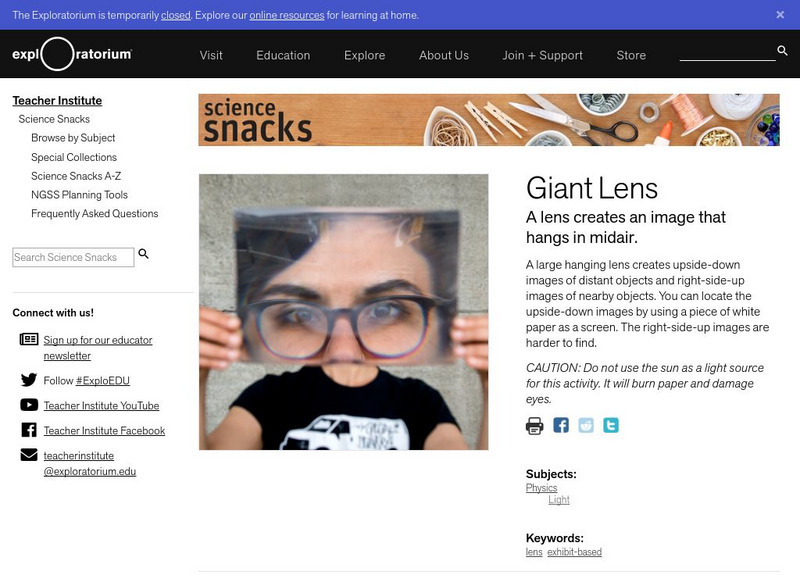
Exploratorium: Science Snacks: Giant Lens
A discussion of how to make a refraction exhibit using a Fresnel lens. Consists of assembly instructions and a "To do and notice" section.
Georgia State University
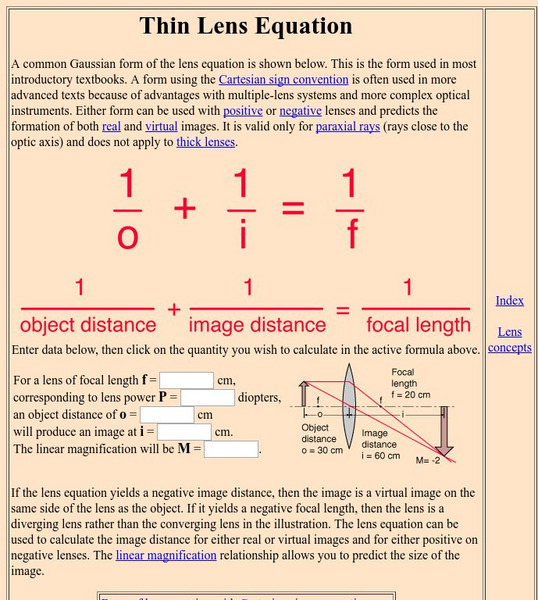
Georgia State University: Hyper Physics: Thin Lens Equation
This is an informative site from Georgia State University. It gives a discussion of the thin lens equation and an illustration of its use in determining the image distance based upon the object distance and the focal length.

PBS
Pbs Kids: Elinor Wonders Why: Elinor's Nature Adventure
Come explore with Elinor! Use the tools provided to observe your environment as you take a nature walk. What will you find?
Science Education Resource Center at Carleton College
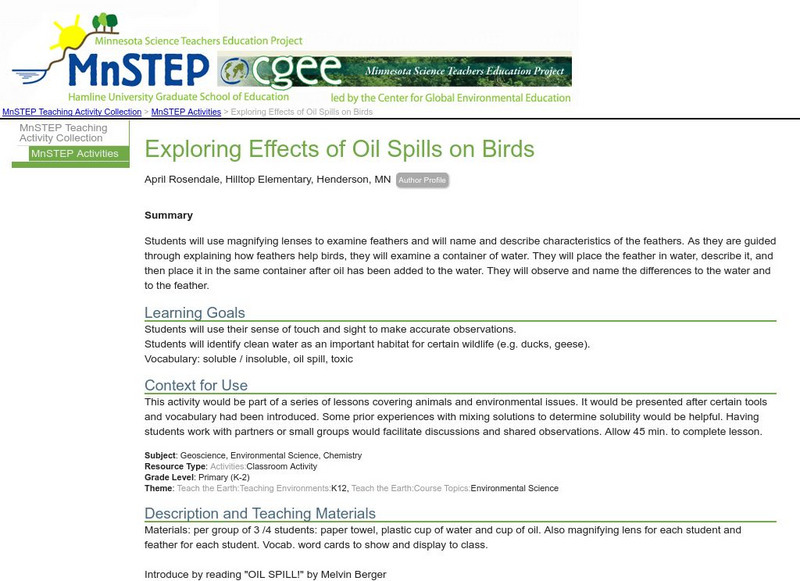
Serc: Exploring Effects of Oil Spills on Birds
To learn about the devastating effects of oil spills, students use magnifying lenses to examine feathers, and name and describe characteristics of the feathers.
Science Education Resource Center at Carleton College
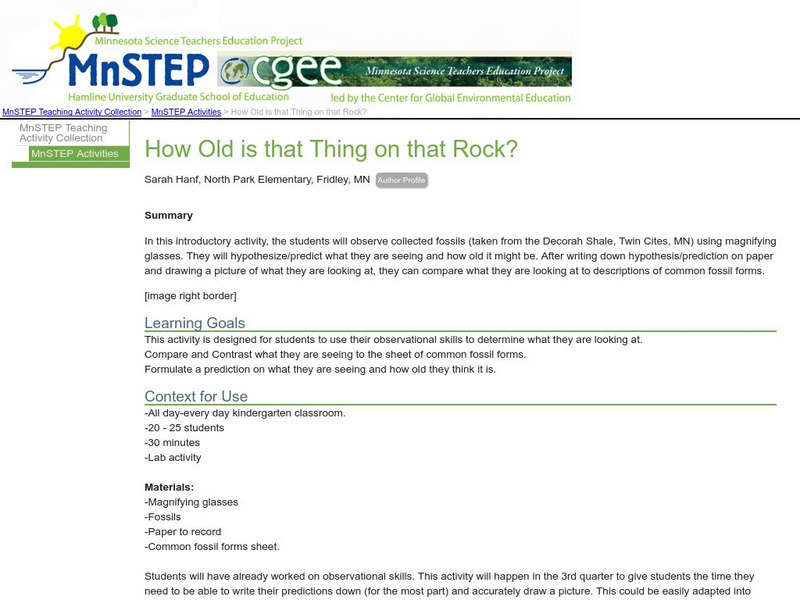
Serc: How Old Is That Thing on That Rock?
Students using magnifying glasses to observe collected fossils, and then make inferences and hypotheses about the age of the specimens.
American Museum of Natural History
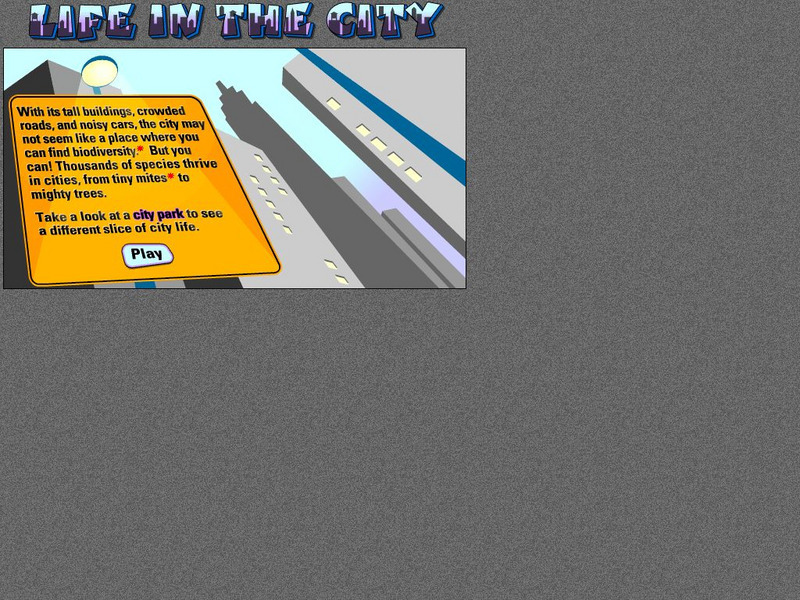
American Museum of Natural History: O Logy: Life in the City
Biodiversity can be found in many places, including city parks. At this OLogy learning game site, players use a magnifying glass to find organisms that live there and also learn something about how each organism relates to others nearby.
TOPS Learning Systems
Tops Learning Systems: Top Science: Pinhole Microscope [Pdf]
Create and use a pinhole magnifier.
Exploratorium
Exploratorium: Water Sphere Lens
A discussion of how to make a magnifying lens exhibit using a water-filled flask and a light bulb. Consists of assembly instructions and a "To do and notice" section. Great for a teacher demonstration or a student project.
Optical Society
Optical Society of America: Optics for Kids: Watch Tv Upside Down
An experiment to invert a television image using a magnifying lens. Accompanied by an explanation of what's happening.

Integrated Publishing
Integrated Publishing: The Wheel & Axle
A solid chapter explanation of the wheel & axle simple machine. Examples, the basic math, explanation of mechanical advantage, drawings, solved problem. Use the Next button. There are four pages in this chapter.
Curated OER
Highly Magnified View of a Ice Crystal (Snowflake)
Using household items, one can demonstrate "the forces of pressure and how it can affect other objects."
TeachEngineering
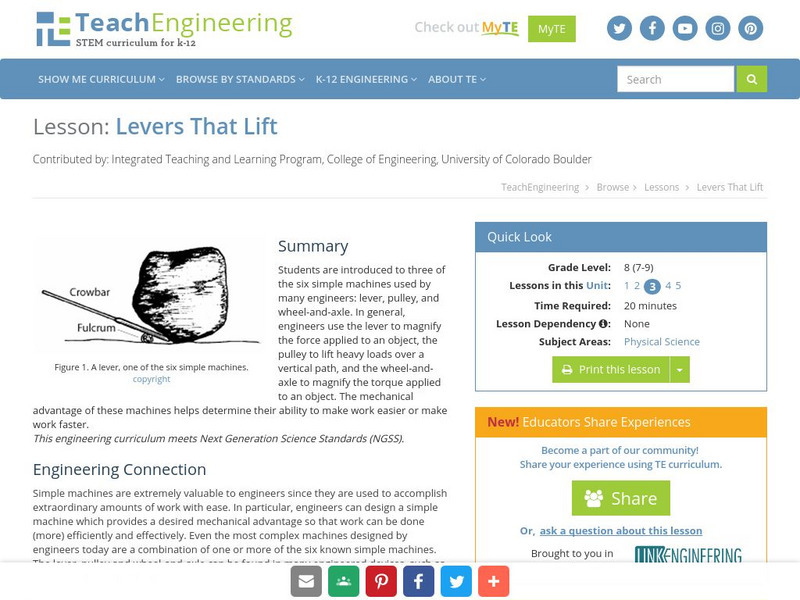
Teach Engineering: Levers That Lift
This lesson introduces students to three of the six simple machines used by many engineers: the lever, the pulley, and the wheel-and-axle. In general, engineers use the lever to magnify the force applied to an object, the pulley to lift...
Georgia State University
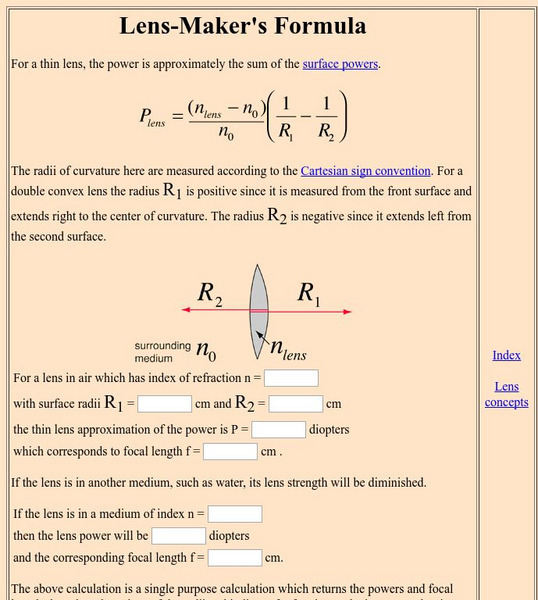
Georgia State University: Hyper Physics: Lens Maker's Formula
A discussion of the lens-maker's formula and its use in determining the effect of lens shape and index of refraction upon the magnifying power of a lens. Includes an interactive problem-solving section.
Science Buddies
Science Buddies: A Soluble Separation Solution
Have you ever mixed together salt and pepper? Isn't it fun to see how all of those tiny grains of salt and pepper mix together. But what if you had to separate them out again? Do you have nightmares of tiny tweezers, a magnifying glass,...

Science Education Resource Center at Carleton College
Serc: Investigating Oranges How Many Sections Are Inside?
In this biology investigation students will be asked to attempt to determine how many sections exist in an orange without having peeled it. Students will work in small cooperative groups. Each group will be able to use a small magnifying...
Other
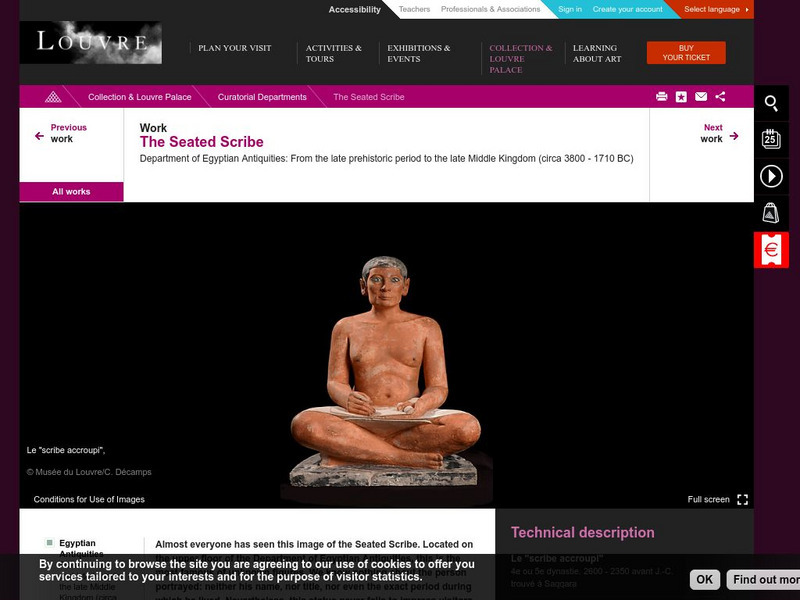
Louvre Museum: A Closer Look at the Seated Scribe
Take a closer look at a work of Egyptian sculpture wherein you can see details of the work through a virtual magnifying glass. Accompanying commentaries and animations provide historical and artistic analysis. Useful in-context tools...
TeachEngineering
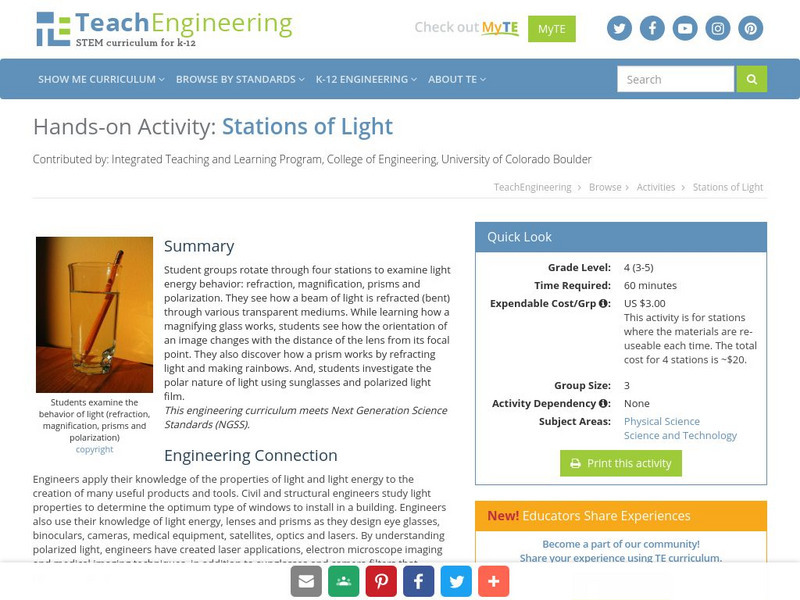
Teach Engineering: Stations of Light
Student groups rotate through four stations to examine light energy behavior: refraction, magnification, prisms and polarization. They see how a beam of light is refracted (bent) through various transparent mediums. While learning how a...
University of Colorado
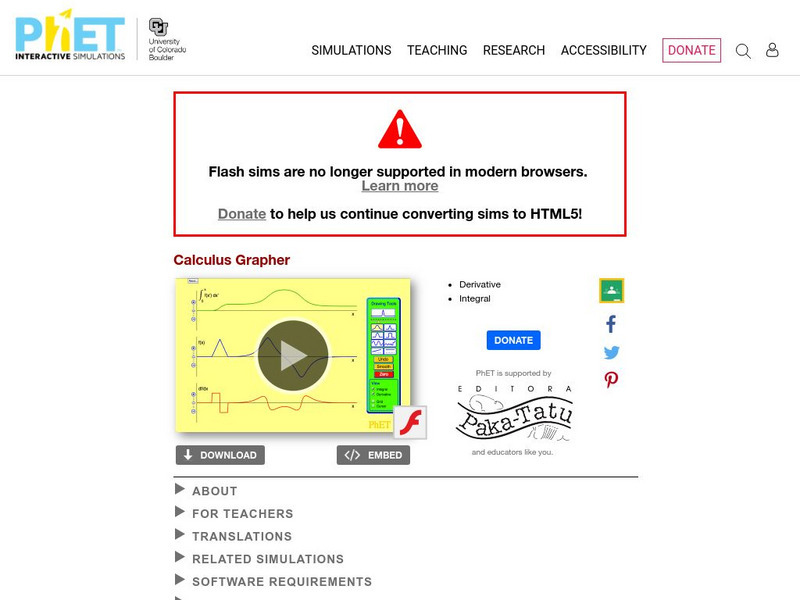
University of Colorado: Ph Et Interactive Simulations: Calculus Grapher
Draw a graph of any function and see graphs of its derivative and integral. Don't forget to use the magnify/demagnify controls on the y-axis to adjust the scale.
Tate
Tate Online: Case of the Mysterious Object
A clever and compelling interactive introduction to art appreciation and visual literacy. Parent and child or older child/younger child can pair up to solve an art gallery mystery. The object of this activity is to answer questions about...
TeachEngineering
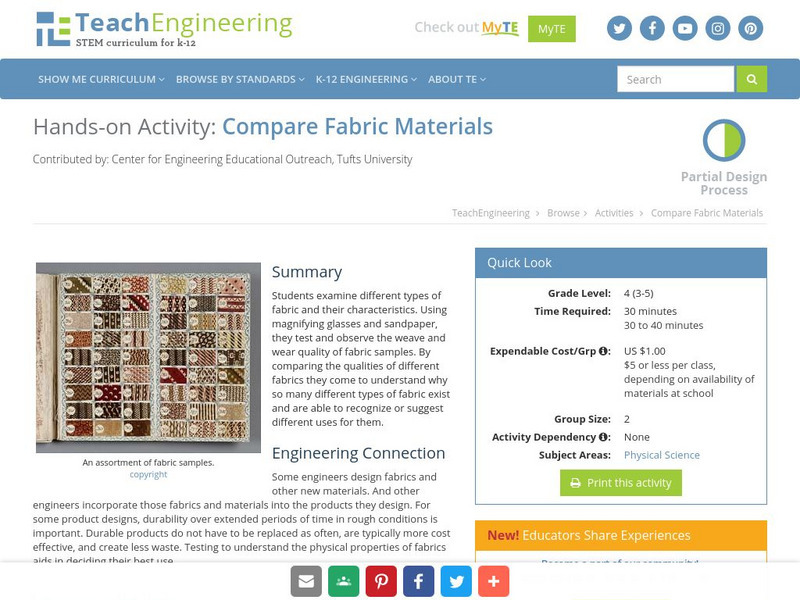
Teach Engineering: Compare Fabric Materials
Students will look at different types of fabric and their respective individual properties. Using a magnifying glass and sandpaper they will test and observe the weave of fabrics and the wear quality of sample fabrics. By comparing the...
University of Colorado
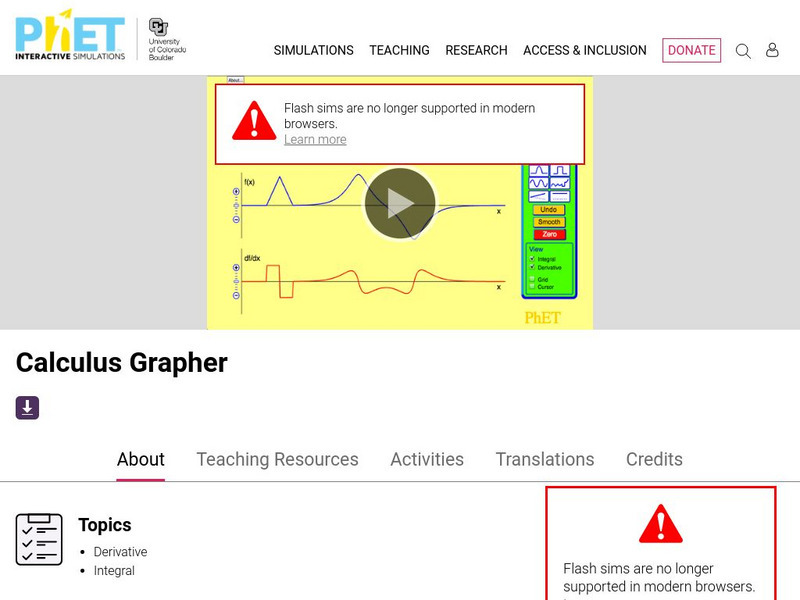
University of Colorado: Ph Et Interactive Simulations: Calculus Grapher
Draw a graph of any function and see graphs of its derivative and integral. Don't forget to use the magnify/demagnify controls on the y-axis to adjust the scale.