Hi, what do you want to do?





Other
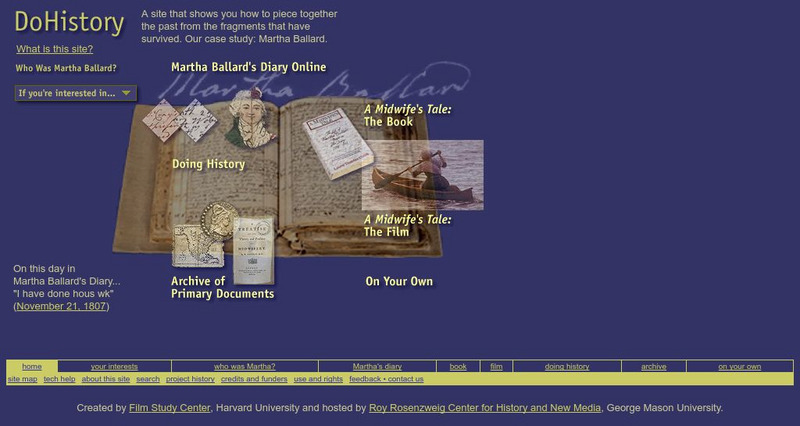
Do History: Using Primary Sources
This site explains the difference between a primary and secondary source. It also provides students with questions to ask when gathering evidence about a primary source document.

Alabama Learning Exchange
Alex: Using Primary Sources
This is an interdisciplinary inquiry-based lesson that focuses on critical thinking. Students are introduced to the true story of the first Thanksgiving with the reading of a NCSS Notable Trade Book Thanksgiving: The True Story. Working...
Stanford University
Stanford History Education Group: Roman Republic
[Free Registration/Login Required] Lesson using primary resources in which students investigate how democratic the Roman Republic was. Includes downloads for student materials, teacher mateials, PowerPoint, and original sources.

Library and Archives Canada
Nlc: Defining Primary and Secondary Sources
Libraries and archives hold documents and books that can be used for your research projects. Learn how to divide and identify them into primary and secondary sources in this tutorial.
Stanford University
Sheg: Document Based History: Reading Like a Historian: Pocahontas
[Free Registration/Login Required] Students use primary source documents to investigate central historical questions. In this investigation, students use evidence to explore whether Pocahontas actually saved John Smith's life and...

Stanford University
Sheg: Document Based History: Reading Like a Historian:examining Passenger Lists
[Free Registration/Login Required] Students use primary source documents to investigate central historical questions. In this investigation, students critically examine the passenger lists of ships headed to New England and Virginia to...
Stanford University
Sheg: Document Based History: Reading Like a Historian: Slavery in Constitution
[Free Registration/Login Required] Students use primary source documents to investigate the central historical question about slavery. In this investigation students consider the positions of delegates to the Constitutional Convention...
Stanford University
Sheg: Document Based History: Reading Like a Historian: Chicago Race Riots
[Free Registration/Login Required] Students use primary source documents to investigate central historical questions. In this investigation, students deliberate the origins of the Chicago race riots by exploring five documents that...
Curated OER
Mc Graw Hill: Key Ideas and Details: Use Text Evidence
Learn how to analyze primary and secondary sources using text evidence. An example is provided. (Note: Exercises don't load in archived copy.)
Stanford University
Sheg: Document Based History: Reading Like a Historian: The Puritans
[Free Registration/Login Required] Learners solve a problem surrounding a historical question by reading primary source documents. This historical inquiry lesson plan allows students to source, corroborate, and contextualize speeches...
Stanford University
Sheg: Document Based History: Reading Like a Historian: Salem Witch Trials
[Free Registration/Login Required] Students read primary source documents to solve a problem surrounding a historical question. This document-based inquiry lesson allows students to use four historical sources to build a more textured...
Roy Rosenzweig Center for History and New Media
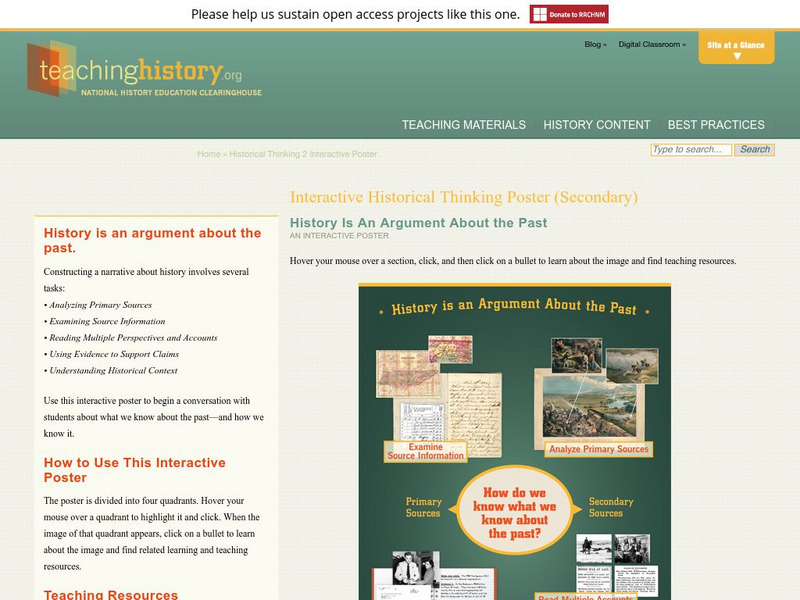
Teaching History: Interactive Historical Thinking Poster (Secondary)
This is an interactive historical thinking poster. History is an argument about the past. Constructing a narrative about history involves several tasks: Analyzing Primary Sources, Examining Source Information,Using Evidence to Support...
PBS
Pbs Learning Media: Election Central 2016: Elections Throughout History
This link from the Election Central 2016 website focuses on elections throughout history with the use of primary source documents such as campaign posters, newspaper headlines, and video clips from various Presidential elections...
National Archives (UK)
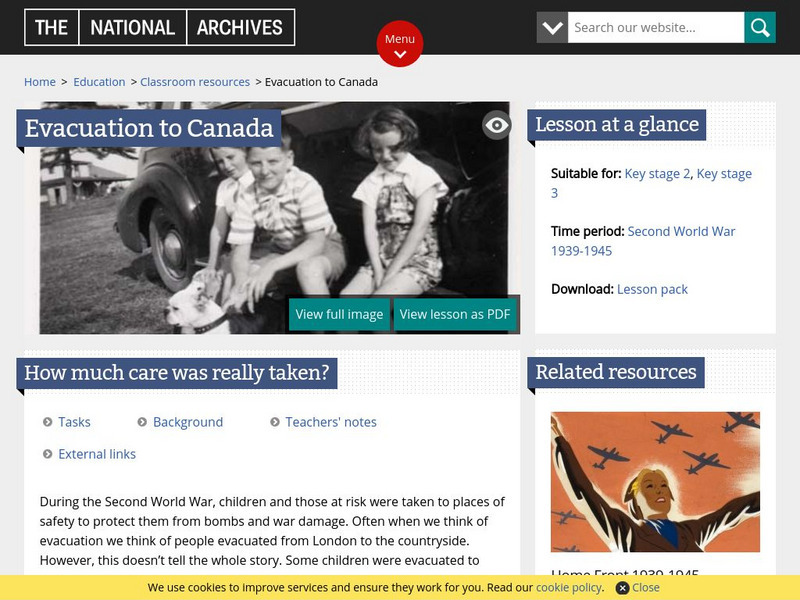
National Archives: Wwii Evacuation to Canada
Through the lens of the British National Archives and with the use of primary sources, young scholars assess the quality of care children received when they were evacuated into Canada during World War II.
US National Archives
National Archives: To What Extent Was Reconstruction a Revolution? (Part 1)
Should Reconstruction be viewed as a revolution or not? Using primary source documents, students can weigh the evidence and come up with their conclusion. This lesson can be used as a whole class, small group, or individual activity.
Yad Vashem, The World Holocaust Remembrance Center
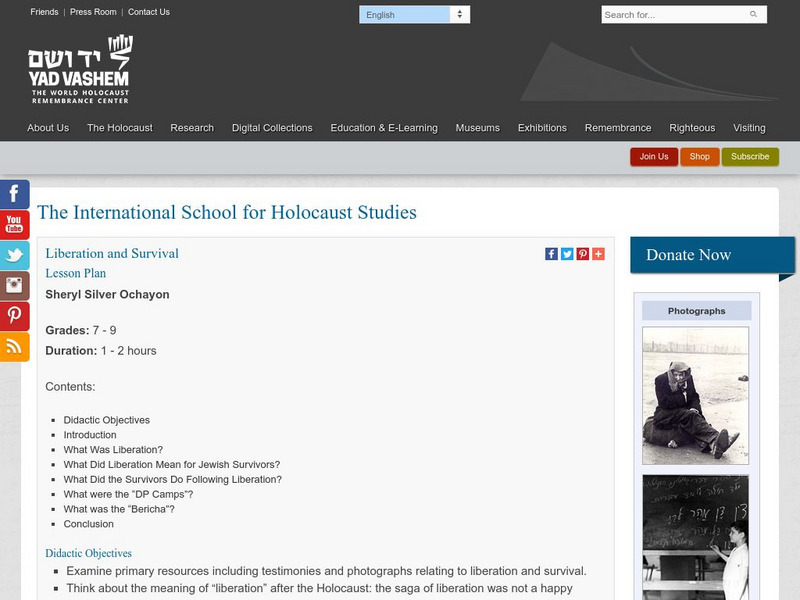
Yad Vashem: Liberation and Survival
The return to life after liberation was a hard time for many Jewish survivors. Many of the people had no home, family, or community to return to. Using primary sources such as pictures and testimonies, students will learn how the Jewish...
New Deal Network
New Deal Network: Franklin and Eleanor Roosevelt Institute: Dear Mrs. Roosevelt
Resources and lesson plans concerning the thousands of letters Mrs. Roosevelt received from young people asking for help during the Depression. Students learn how to use primary source documents.
Stanford University
Stanford History Education Group: Egyptian Pyramids
[Free Registration/Login Required] Lesson on the Egyptian Pyramids in which students use primary resources to determine who the workers were that built the pyramids. Lesson plan, PowerPoint and original documents included.
US National Archives
Docsteach: Oh Freedom! Sought Under the Fugitive Slave Act
This activity includes primary sources from the official records of the U.S. District Court at Boston that tell the story of William and Ellen Craft, a young couple from Macon, GA, who escaped to freedom in Boston in 1848. Students will...
University of California
History Project: The Trial and Execution of John Brown
Using primary source documents, high school lesson plan focuses on John Brown, the events at Harper's Ferry, and his trial and execution. Included are excerpts from 16 primary source documents to aid in the research of writing this paper.
National Endowment for the Humanities
Neh: Edsit Ement: The First Amendment
This resource presents lessons on the First Amendment. It contains many resources for use with children, and links to primary source documents.

Library of Congress
Loc: Family Customs Past and Present: Exploring Cultural Rituals
In this lesson, students will use photos, documents, and music from the Library's digital collection. Then they will students investigate rituals and customs of various cultures.
Energy for Sustainable Development
Esd Bulgaria: Kids & Energy: Electricity
Electricity is the flow of electrical power or charge. It is a secondary energy source which means that we get it from the conversion of other sources of energy, like coal, natural gas, oil, nuclear power and other natural sources, which...

US National Archives
Docsteach: How Effective Were the Efforts of the Freedmen's Bureau?
In this activity, students will analyze documents from the War Department's Bureau of Refugees, Freedmen, and Abandoned Lands - better known as the Freedmen's Bureau - that Congress established on March 3, 1865, as the Civil War was...